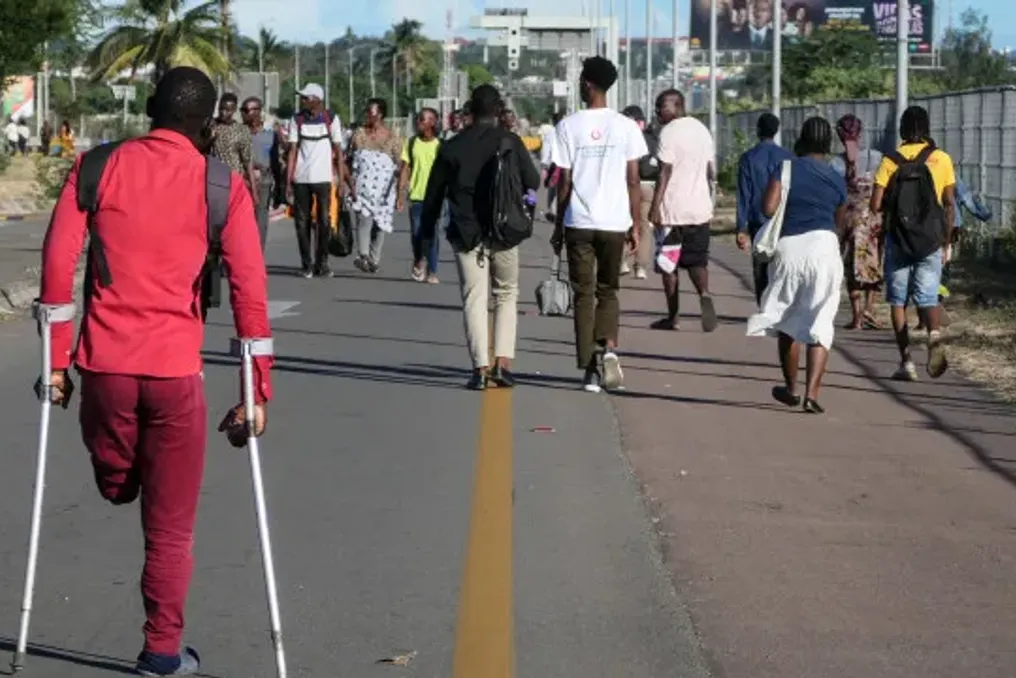
CNDH of Mozambique strengthens partnerships with civil organizations to promote the inclusion of people with disabilities
Read more
Noticias ao Minuto
noticiasaominuto.com

CNDH of Mozambique strengthens partnerships with civil organizations to promote the inclusion of people with disabilities

The National Commission for Human Rights (CNDH) of Mozambique has established new memorandums with three civil society organizations, aiming to intensify the protection of people with disabilities. These agreements seek to ensure that these individuals actively participate in the conception, execution, and evaluation of projects.

The documents were formalized in Maputo and involve People-to-People Development Aid (ADPP Mozambique), Girls' Child Rights, and Humanity & Inclusion. The main focus of these collaborations is to foster human rights, improve service accessibility, and increase the participation of vulnerable groups.

Albachir Macassar, president of the CNDH, emphasized that it is essential to involve people with disabilities from the recognition of their needs up to the project evaluation phase, including the definition of activities and their respective budgets. He stated that no project, whether development or emergency response, should be planned without the participation of those who are most frequently marginalized.

Macassar also pointed out that the Commission's monitoring revealed situations of exclusion caused by planning failures, such as holding meetings in inaccessible locations, providing information in a single format, and having complaint channels that are not usable by everyone. The official guaranteed that the CNDH will maintain its autonomy in monitoring human rights, including the actions of partners, affirming that cooperation does not compromise its independence.

These memorandums will be valid for five years. Furthermore, the Commission plans to define specific inclusion measures, establishing responsible parties and deadlines, and conducting annual evaluations to measure achieved results and removed barriers.

The collaboration with ADPP covers training and awareness campaigns on human rights and the protection of vulnerable groups, in addition to strengthening complaint and grievance management systems. Ana Margarida Lemos, president of the ADPP Steering Committee, highlighted the organization's vast experience in community work, operating in all 11 provinces of the country. She expressed a desire to transform the agreement into practical actions through joint plans, capacity building, and awareness initiatives that promote a culture of respect.

Humanity & Inclusion, meanwhile, commits to assisting in improving the accessibility of complaint and reporting mechanisms, as well as reinforcing access to justice. This will include training public servants, collecting data on disabilities, and involving these individuals in decision-making processes. Baltasar Ussaca, operations manager, stated that inclusion constitutes an imperative of social justice and human rights, not just an option.

The signing of these memorandums is part of the Boost Rights project, which is part of the Include program implemented by the Italian NGO AIFO and its partners, and is financed by the Italian Agency for Development Cooperation. Simona Casar, national representative of AIFO, mentioned that the initiative aims to strengthen both the capacities of the CNDH and the articulation with civil society organizations.

In February 2026, the CNDH received the mandate as a national mechanism to monitor the application of the Convention on the Rights of Persons with Disabilities. Macassar clarified that the institution will monitor compliance with accessibility standards and may suggest corrections for administrative irregularities, while criminal cases will be referred to the Public Prosecutor's Office.
Similar stories

African leaders defend health sovereignty and domestic financing of health systems on the continent
Read more
noticiasaominuto.com

African leaders defend health sovereignty and domestic financing of health systems on the continent

Leaders from various African countries and organizations, gathered in Ethiopia, expressed Africa's commitment to managing its own health systems. The main objective is to find creative methods to increase funding and consequently ensure the continent's health sovereignty.

Jean Kaseya, Director-General of the Africa Centres for Disease Control and Prevention (Africa CDC), opened the 5th International Public Health Conference in Africa (CPHIA 2026) in Addis Ababa, stating that in Africa, sovereignty is intrinsically linked to responsibility, which in turn depends on good governance, trust, and accountability.

This meeting, also organized by the African Union's public health agency (AU) and the Ethiopian Government, will bring together African leaders, specialists, and sector representatives until November 27. The conference takes place amid significant cuts in international aid, notably from the United States and other nations since last year.

Under the theme 'Health Security and Sovereignty in Africa: Transforming Health Dependence and Vulnerability into Autonomy and Resilience,' Kaseya reported that over 46,000 delegates from more than 100 countries were registered. He emphasized the need for Africa to produce its own goods, finance the sector, lead outbreak responses, and implement digital transformation to ensure the continent is respected, concluding that they will never again accept partners who try to dictate their actions.

During the event, the head of the Africa CDC addressed the second deadliest Ebola epidemic in global history, affecting the Democratic Republic of Congo (DRCongo). He highlighted the rapid action of the pan-African organization and cooperation with the governments of Uganda, Kenya, and Nigeria, which recorded cases related to the outbreak. Kaseya criticized the use of African suffering for commercial purposes, mentioning that despite international donors allocating about $962 million (€879.94 million) for the Ebola response in DRCongo, there was no clarification on how more than $700 million (€640.57 million) was spent.

Mahmoud Ali Youssouf, President of the AU Commission, reinforced that epidemics do not respect borders and that isolated responses are insufficient, requiring 'permanent cooperation' between states. Although he thanked international support, Youssouf requested that partners adjust their plans to African priorities, as the health of Africans cannot depend, in the long term, on external budgetary priorities. He stressed that assuming greater self-responsibility is crucial, given that health is a pillar for the continent's economic development, stability, and security.

For his part, Évariste Ndayishimiye, Head of State of Burundi and interim President of the AU, encouraged Health and Finance ministers to explore innovative mechanisms, such as public-private partnerships, new forms of health taxation, and mobilization of African savings. Ndayishimiye underlined that priority research must be defined in Africa and that the generated data must primarily serve local populations.

Popular