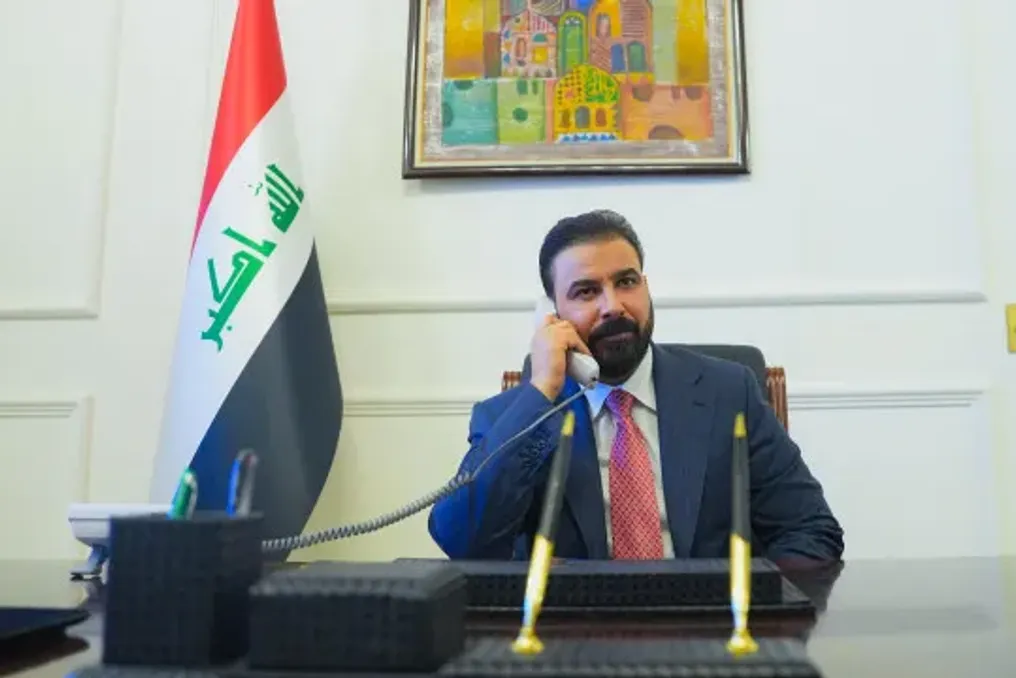
Iraq restructures oil and gas sector after discovery of crude oil smuggling
Read more
Noticias ao Minuto
noticiasaominuto.com

Iraq restructures oil and gas sector after discovery of crude oil smuggling

The Prime Minister of Iraq and Commander-in-Chief of the Armed Forces, Ali Al-Zaydi, ordered the restructuring of organizations related to the oil and gas sector after a scheme for crude oil smuggling was uncovered in the Northern Oil Company.

According to the Prime Minister's representative, Saba Al-Numman, these steps are aimed at restoring state control over this industry.

The decision to dismiss several high-ranking employees of the Northern Oil Company, including the CEO and several deputies, as well as heads of security and police services in Kirkuk (northeastern region), was made after reviewing a report from a special investigative committee established to audit the company's activities.

Furthermore, this decision provides for strengthening federal authority in the semi-autonomous Kurdistan region of Iraq. It was established that permits for the export of crude oil and its derivatives must now be processed through the Ministry of Oil, and border control is transferred to customs posts.

This measure followed the Iraqi government's campaign against oil smuggling networks in recent weeks. One of the first incidents of this operation was the investigation into the theft of petroleum products in Jurf al-Sahar, Babyl province, where authorities conducted an inspection in an area under the strong influence of pro-Iranian militia.


Similar stories

Entrepreneur pays weavers up to 35% more for preserving ancient Tamil Nadu craft
Read more
thebetterindia.com

Entrepreneur pays weavers up to 35% more for preserving ancient Tamil Nadu craft

In the traditional textile Jamakkalam, which can be examined closely, one can notice a smile. Hidden within its classic stripes is a pattern called Pallu Mutham, which means pearl-like teeth. A young entrepreneur recognized the potential of this pattern.

This entrepreneur is Varsha Sivakumar, who grew up in Bhavani, Tamil Nadu, among Jamakkalam looms. Today, through her company House of Jamakkalam, she collaborates with 30–35 weavers to present this traditional textile to new buyers.

What is Jamakkalam? This dense striped cotton fabric appeared almost 300 years ago in Bhavani and neighboring Kumarapalayam. Initially woven by the Jangamar community, it became a familiar part of life in Tamil homes.

Previously, the market for this fabric included wedding trousseaus, temple courtyards, and everyday household items. In 2005–2006, the craft even received a geographical indication mark. Nevertheless, recognition could not prevent the main problem—declining demand.

Reports indicate that over two decades, the number of active weavers in Bhavani has dropped from approximately 20,000 to about 3,000. Orders from cooperatives have decreased, finished products have accumulated unsold, and the younger generation has begun choosing other occupations instead of weaving.

Varsha viewed this situation differently after a presentation in a class in 2017. A guest lecturer at the National Institute of Fashion Technology presented Jamakkalam as a craft worthy of study. Varsha wondered why she hadn't noticed this sooner.

She returned to the weaving centers, documented the techniques, and listened to the artisans. Her biggest discovery was that the craft did not require an entirely new design language. Its existing patterns simply needed to reach modern buyers.

Take, for example, the 'Smiling Bag.' Its distinctive look is due to Pallu Mutham—a traditional stripe arrangement that already resembles a woven smile. Varsha did not invent this pattern; she recognized what generations had created.

Another important change is that House of Jamakkalam takes on the higher cost of fine yarn, provides an advance payment, and offers a premium of 30–35% for complex orders, without penalizing artisans for defective items.

Instagram has also helped connect weavers with international clients, especially Tamils from Sri Lanka, who order Jamakkalam for weddings. Varsha's ambition is to secure regular monthly orders for every loom. The traditional three-hundred-year-old fabric finds new homes thanks to each such order.

Fintech startup Vegapay to raise 38.4 million rupees in Series A funding round led by Prosus
Read more
yourstory.com

Fintech startup Vegapay to raise 38.4 million rupees in Series A funding round led by Prosus

Vegapay, a platform for card management and digital lending headquartered in Mumbai, plans to raise 38.4 crore rupees in a Series A funding round led by Prosus.

According to regulatory documents from Vegapay, existing investors, including Elevation Capital, Vertex Ventures, and Eximius Ventures, will also participate in this round. This information was previously reported by Entrackr.

Vegapay has made a special resolution to issue 18,090 convertible preference shares (CCPS) at a price of 21,221.92 rupees per share, which will secure a total fundraising amount of 38.4 crore rupees.

Prosus is investing 28.80 crore rupees through its investment firm MIH Investments One BV. Meanwhile, Elevation Capital will contribute 6.04 crore rupees, Vertex Ventures will contribute 2.30 crore rupees, and Eximius Ventures will provide 1.25 crore rupees.

Previously, Vegapay had raised 37.9 crore rupees in a pre-Series A round led by Vertex Ventures. Elevation Capital and Eximius Ventures also participated in that round.

The company was founded in 2022 by Gaurav Mittal, Himanshu Agrawal, Puneet Sharma, and Abhinav Garg. Vegapay develops a technology stack for lending and a card management system that allows regulated entities and fintech companies to issue and expand the penetration of cards and lending in India.

The platform offers a flexible pay-as-you-go model, which helps reduce financial barriers. Vegapay claims that the key advantages of its platform are speed, scalability, and flexibility.

Prosus has established itself as an active investor in the Indian startup ecosystem's fintech segment. The company invested $100 million in Navi, led by Sachin Bansal, and $10 million in Bachatt.

Popular