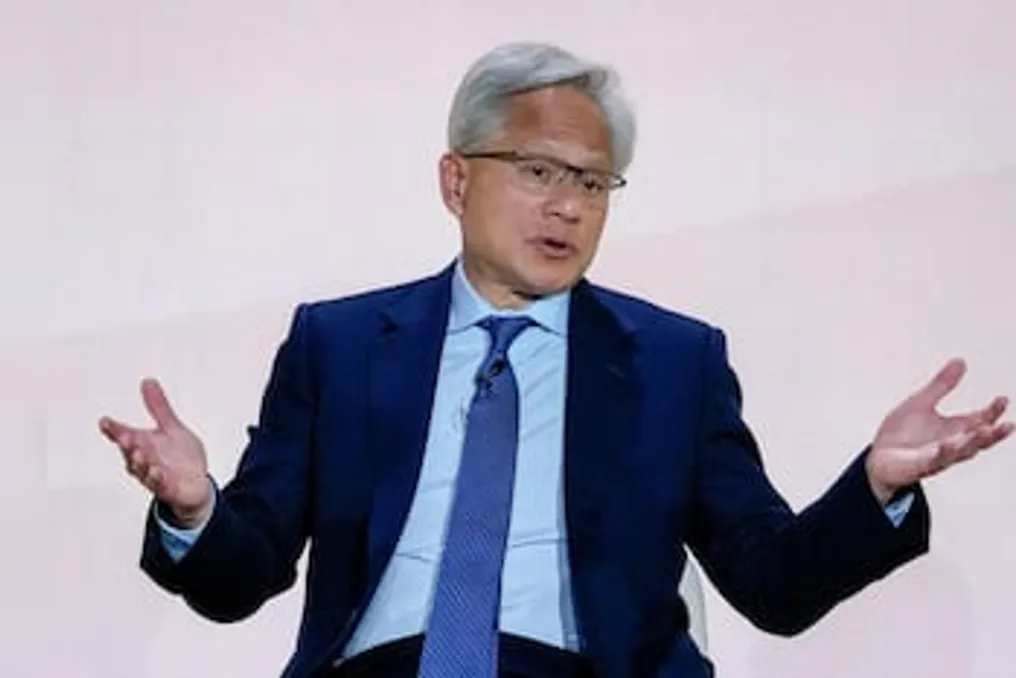
Former RBI Governor Radjou Ram expressed concerns about Nvidia's corporate governance after Huang's return
Read more
Business Standard
business-standard.com

Former RBI Governor Radjou Ram expressed concerns about Nvidia's corporate governance after Huang's return

The return of Jensen Huang to lead Nvidia Corp. has drawn attention to corporate governance issues and the company's key role in the artificial intelligence boom, according to former Reserve Bank of India governor Radjou Ram.

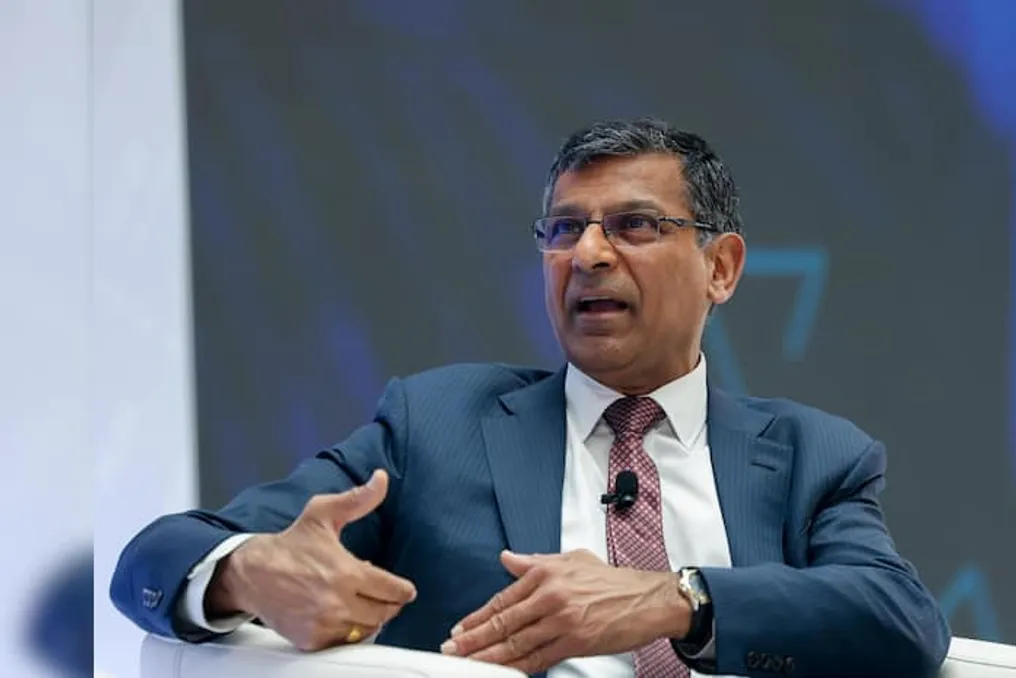
Ram, who is a professor of finance at the Chicago Booth School of Business, noted that the global growth following this event has raised questions about the role of the US government in his return to leadership, as well as the governance system at Nvidia under his new management.

In an interview with Bloomberg Television's Haslinda Amin, Ram questioned whether there are mechanisms to control Huang and whether the American chip manufacturer will conduct a thorough investigation into possible abuses.

Huang's return to the company, which is at the center of the AI boom, has restored confidence in tech stocks after his departure earlier this month caused market turmoil. However, Ram emphasized that a more fundamental question remains: can revenues from trillions of dollars invested in computing power justify debt-funded expenditures?

Ram compared Nvidia to American International Group Inc. during the 2008 global financial crisis, as the company is at the center of numerous contracts and contributes to sustaining the boom. He stated that systemic risk is not currently significant but could increase given the scale of planned investments.

Ram refrained from calling AI a bubble, suggesting that such a claim might reflect excessive optimism. He also warned that security issues, especially in the event of a major cyberattack, could trigger a sharp drop in demand.

Similar stories

Jensen Huang criticized the new Nvidia CEO before resigning from his post
Read more
olhardigital.com.br

Jensen Huang criticized the new Nvidia CEO before resigning from his post

Months before leaving Nvidia's leadership, Jensen Huang criticized Colette Kress, who was appointed interim CEO of the chip manufacturer. During a meeting held in August, the executive interrupted a presentation by Kress, referring to her as "a deer in the headlights," according to a source close to the events.

Huang also assessed Kress as a financial director focused on reporting, rather than someone capable of assisting in strategy definition or decision-making. This confrontation occurred while discussing billions of dollars in financial guarantees that Nvidia offered to companies unable to acquire its chips.

Among the businesses discussed were operations managed by Nico Caprez, Huang's son-in-law and promoted to vice president in January. Alongside Vice President Raj Mirpuri, Caprez provided financing to cloud providers and data center developers, aiming to convert them into long-term customers. Kress, in turn, raised doubts about the criteria used to select agreements, evaluate guarantees, and calculate return on investment, while also attempting to restrict Caprez's activities, according to employee reports.

In a notable example, Kress modified negotiations with OpenAI regarding a data center complex in Ohio, planned to be the world's largest. OpenAI planned to lease all the infrastructure, which would receive approximately $300 billion worth of chips from Nvidia (equivalent to about R$ 1.66 trillion). Initially, the manufacturer proposed a guarantee of $250 billion (about R$ 1.39 trillion) to facilitate bank loans. After this proposal was disclosed, Nvidia's shares fell by 5% on July 27, resulting in a loss of $250 billion in market value. Kress halved this financial commitment, and the companies formalized the reduced version of the agreement on August 17.

Kress took over provisional management after Huang's resignation on Thursday, due to revelations about two extramarital relationships: one with a woman suspected of being a Chinese spy and another with an employee. Nvidia is under federal and internal investigation and has announced it will consider both internal and external candidates for the permanent role. In a memo sent to employees, Kress praised the former leader and stated that she would continue "building upon the extraordinary foundation that Jensen created over the last 33 years."

At Nvidia, where he spent over a decade after experiences at Cisco, Microsoft, and Texas Instruments, the executive now has to deal with issues that were already a concern for Huang. Publicly, Kress defended the company's investments in artificial intelligence, refuting accusations that the model constituted circular financing. She stated at the end of August: "We recognize the scale of this support and we know some will call it circular financing. We see it differently." Additionally, she declared that "The returns on invested capital will be excellent."

Apprehension about Nvidia's valuation also grew; the average monthly stock multiple decreased from 23 in May to 16 in October. To calm investors, the company implemented measures such as the largest share buyback program in its history and, during the same period, began restricting new financial commitments.

This change in approach was also evident in October, during a conference in Berlin. Facing CEOs of major chip buyers, Huang shared the story of a soup vendor in Japan who refused to serve a second portion to preserve stock intended for other customers. The executive considered this merchant superior to those present. With this analogy, Huang argued that Nvidia should not commit its inventory or its commercial terms just to satisfy the demands of large buyers, demanding that customers recognize the value of the manufacturer's products. He told the executives: "You are not setting the value of my products."

Succession Questions at Nvidia After Jensen Huang Scandal
Read more
business-standard.com

Succession Questions at Nvidia After Jensen Huang Scandal

Nvidia co-founder and CEO Jensen Huang has repeatedly stated his intention to lead the company for as long as possible. However, an investigation into whether he was the target of foreign intelligence operations following reports of his romance has once again drawn attention to a question Nvidia rarely discusses: who could take over if Huang steps down or is forced out?

On Sunday, Huang acknowledged having a romantic relationship in a message to employees. Following this, Nvidia's board of directors announced an independent investigation to determine if he was subjected to a targeted attack by foreign intelligence. The board expressed confidence in Huang and stated that there were no grounds to believe that national security or the company's trade secrets had been compromised.

In a statement to Business Insider, Nvidia also emphasized that 'Jensen intends to continue leading Nvidia as CEO without interruption.' Nevertheless, this incident has once again raised the topic of succession planning at Nvidia. Huang, who founded the company over thirty years ago, remains closely involved in its operations, with about 60 executives reporting directly to him.

Who could replace Jensen Huang?

Nevertheless, analysts do not expect Huang to leave his post. Bob O'Donnell, president, founder, and chief analyst at TECHnalysis Research, noted that Nvidia hires over 40,000 people worldwide and has 'many other great leaders' within the company, but he does not predict Huang's departure.

Analyst Bernstein Stacy Rasgon gave a similar assessment to CNBC, stating: 'Jensen is Nvidia. Nvidia is Jensen.' He described Huang as someone who manages the company from the top and effectively pulls the strings.

However, Huang owns only about 3.6 percent of Nvidia shares and does not hold controlling voting rights. If Huang were to leave or be removed by the board of directors, speculation has focused on several executives, including CFO Colette Kress and Nvidia co-founder Chris Malachowsky, according to the Associated Press.

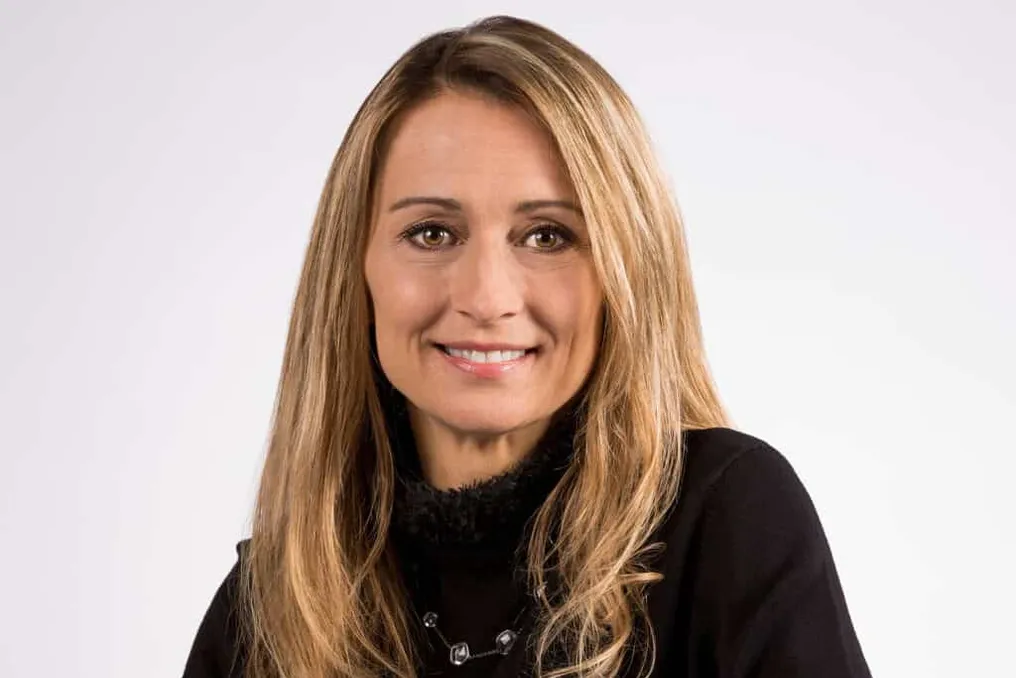
According to analysts quoted by Business Insider, Kress is one of the most prominent senior executives at the company and could be considered for the role of interim CEO. She has worked at Nvidia for 13 years, overseeing its finances during a period of rapid growth, and previously held financial positions at Cisco and Microsoft.

Another name being discussed is Ian Buck, a long-time Nvidia executive who helped develop CUDA, the software platform that has become central to Nvidia's AI computing business. Buck, who has worked at Nvidia for 22 years, leads the data center and computing divisions, which constitute the bulk of the company's revenue. Analysts and former employees mentioned by Business Insider consider him a potential long-term successor due to his technical expertise and understanding of Nvidia's core business.

Malachowsky, in turn, could play an important role in any leadership transition. As one of the co-founders of Nvidia alongside Huang and Curtis Priem, he remains a senior technology leader at the company.

Could Huang's children take on leadership roles?

There is also speculation that Nvidia's leadership could ultimately remain in the Huang family. Both of Huang's children, Madison and Spencer, work in the company in management positions. Madison holds the position of Senior Director of Product Marketing, whose responsibilities relate to Nvidia's physical business in AI, while Spencer works as a product line manager in its robotics division.

Business Insider, citing a former employee, reported that Madison is taking on increasing authority in various areas of Nvidia's operations, which could potentially prepare her for a larger leadership role. Although Huang has reportedly expressed a desire for one of his children to eventually run the company, Nvidia has not disclosed a family succession plan, nor has any child been publicly named as a potential CEO successor.
Nvidia is considering succession plans amid issues surrounding CEO Jensen Huang
Read more
yourstory.com

Nvidia is considering succession plans amid issues surrounding CEO Jensen Huang

Questions have arisen regarding the future leadership and succession planning at Nvidia, the chip manufacturer founded and led by Jensen Huang. This company, valued at $4 trillion, ranks second globally in market capitalization after Apple.

According to a report published in The Wall Street Journal, Huang manages a very flat organizational structure with approximately 60 direct reports, yet the company lacks a visible second tier of management or apparent successors.

This issue has become particularly pressing as Huang faces increased scrutiny due to alleged improper relationships with Chinese citizen Alice Huang, who is reportedly an agent of the Chinese government. It is suspected that these relationships may have allowed China access to Nvidia's high-performance processors.

Furthermore, reports citing U.S. President Donald Trump indicate that the Federal Bureau of Investigation (FBI) is investigating the connection between the Nvidia CEO and the Chinese citizen. Trump himself defended Huang, calling him a highly 'worthy' individual.

Additionally, the U.S. Congress is expected to request information about the nature of these relationships and whether any sensitive technology was transferred to China in violation of established regulations.

However, an Nvidia representative stated that Jensen Huang intends to continue leading Nvidia as CEO without interruption. The Nvidia Board of Directors has already announced it will investigate the entire incident.

The leadership question takes on added significance due to national security aspects related to the CEO's ties to the Chinese citizen, drawing governmental attention. This differs from a typical corporate crisis, which usually involves business problems, shareholder dissatisfaction, or the executive's health.

Jensen Huang has cultivated an image that surpasses reality, not only for Nvidia but also for the world of artificial intelligence. He is considered an influential figure shaping the contours of any new policy regarding the AI industry. Moreover, he maintains extensive connections with world leaders.

It should be noted that his children, Madison Huang and Spencer Huang, work at Nvidia. His son-in-law, Nico Caprese, also works for the company.

At present, predicting the future direction of Nvidia is difficult because many factors are involved. One such factor is the improper relationship, while a more serious consequence is the issue of illegal technology acquisition by a foreign state.

Some industry observers view the situation as a proxy conflict between the United States and China over dominance in AI. Observers suggest that China is approaching the level of technological power held by the United States and potentially could surpass it.

Popular