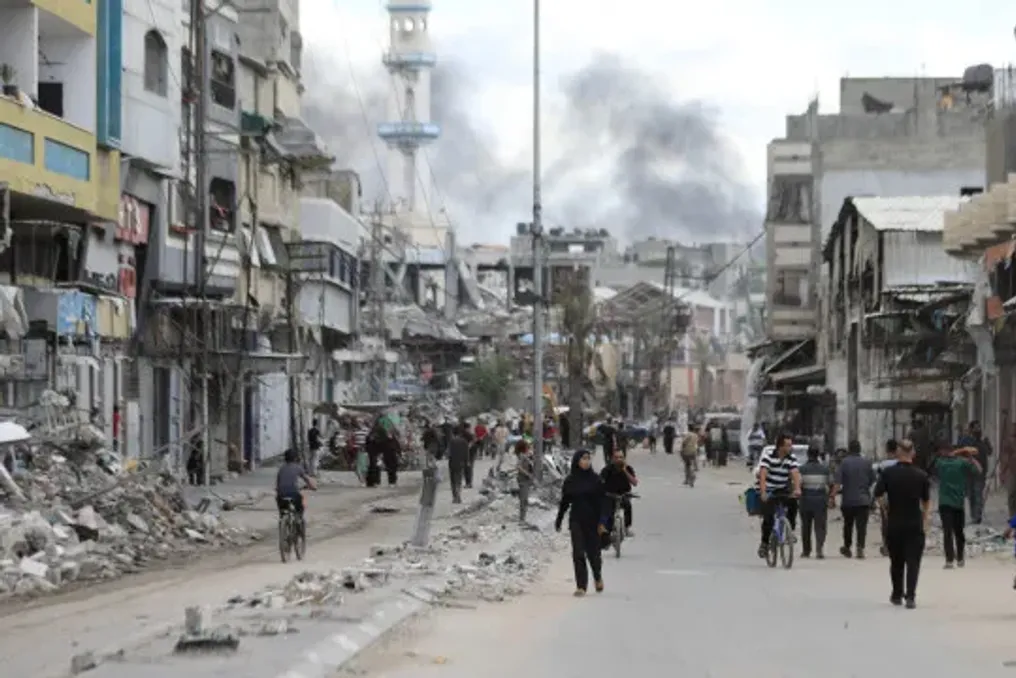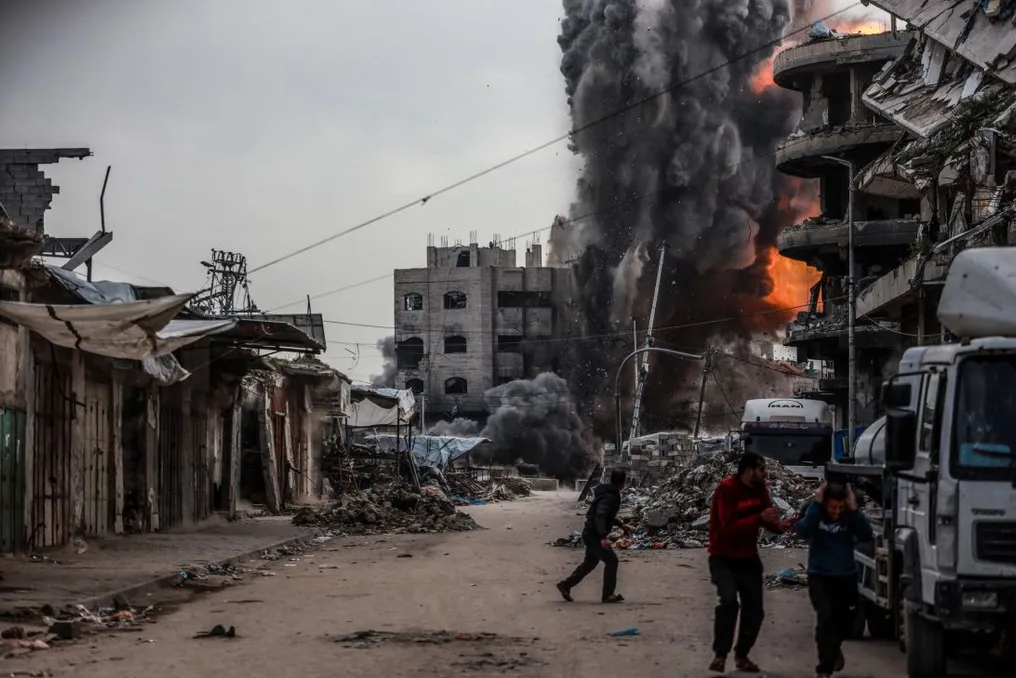
According to a report published by Oxfam and the Conflict and Environment Observatory (CEOBS), Israel's military operation in Gaza has led to severe environmental contamination, with signs of toxic pollution found throughout the territory.
The report, released on Monday, highlighted that the extensive use of explosive and incendiary munitions, airstrikes, and fires has made the air, soil, and water too dangerous for both current and future residents.
The study showed that the scale and intensity of Israeli bombings affected about 78 percent of Gaza's territory, with potential contamination recorded in over 99 percent of this area.
Oxfam International Executive Director, Amitab Behar, stated that 'the destruction and contamination of Gaza will fundamentally worsen the environmental conditions necessary for human safety and survival.' He added that this violates Israel's legal obligations under international humanitarian and human rights law.
The report's authors suggested that ecological destruction of this magnitude 'could constitute, contribute to, or serve as compelling evidence of war crimes, crimes against humanity, and genocide.'
Behar noted that Palestinians are exposed to toxins through air, food, water, and direct contact with contaminated soil and debris, and these risks will persist unless 'restorative actions' are prioritized.
The Israeli Ministry of Foreign Affairs called the report 'shameful and scandalous,' asserting that Oxfam 'traded its credibility for a campaign.' The Ministry stated in a declaration to CNN that 'the scale of destruction in Gaza reflects the scale of the Hamas terrorist network they built there, including a tunnel system over 500 kilometers long and weapons depots inside and under civilian areas.'
The Peace Council, established by the Trump administration and supported by a UN Security Council resolution, was supposed to monitor the implementation of the ceasefire signed between Israel and Hamas more than a year ago, as well as the reconstruction of the enclave. However, amid the frozen ceasefire plan, the council is widely viewed as having failed in these efforts and ineffective in pressuring Israel to meet its obligations.
Israel refuses to allow the entry of heavy equipment needed for large-scale cleanup and debris removal, citing the possibility of Hamas using this equipment for military purposes. The Israeli military office responsible for coordinating aid in Gaza reported that reconstruction will only begin 'after the complete demilitarization of Hamas.'
In December last year, Israel banned dozens of humanitarian organizations, including Oxfam, from operating in Gaza, citing non-compliance with new registration restrictions. For the study published on Monday, Oxfam and CEOBS analyzed satellite imagery, remote sensing, scientific analysis, and other open-source data, concluding that the contamination is widespread with serious consequences for civilian survival.
However, the report contains a warning that restrictions on importing testing equipment and technical expertise into Gaza 'continue to impede a full assessment of the scale and extent of the contamination.'
The United Nations Environment Programme (UNEP) estimated last year that Israel's military campaign resulted in the formation of over 61 million tons of debris—about the volume of the 15 Great Pyramids of Giza—which may contain potentially hazardous materials.
Palestinians in Gaza face increasing risks of respiratory diseases due to dust and pollution from destroyed buildings, as well as a high risk of consuming contaminated water, since water supply systems have been destroyed. According to the report, about 85 percent of Gaza's water infrastructure is damaged or destroyed, leaving people with only about 18 liters of water per person per day for all needs.
The report warns that because Gaza's healthcare and monitoring systems are destroyed, most of the harm caused by toxic waste will be 'undiscovered and unattributed for many years.'
Oxfam called on Israel to ensure unrestricted access for aid delivery and environmental assessment. The organization stated: 'The recovery and reconstruction of Gaza must belong to and be led by the Palestinians themselves. It must be rights-based, oriented towards reparations, and rooted in accountability. International funding does not replace Israel's obligation to pay reparations for damage caused by its illegal actions.'
Israel's military operation in Gaza has resulted in the deaths of over 74,000 Palestinians since the Hamas attack on Israel on October 7, 2023, with thousands of people still missing under the rubble. The independent UN Commission of Inquiry found that Israel committed genocide in Gaza and continues to do so after the US-agreed ceasefire. The Israeli government firmly rejects this assessment.