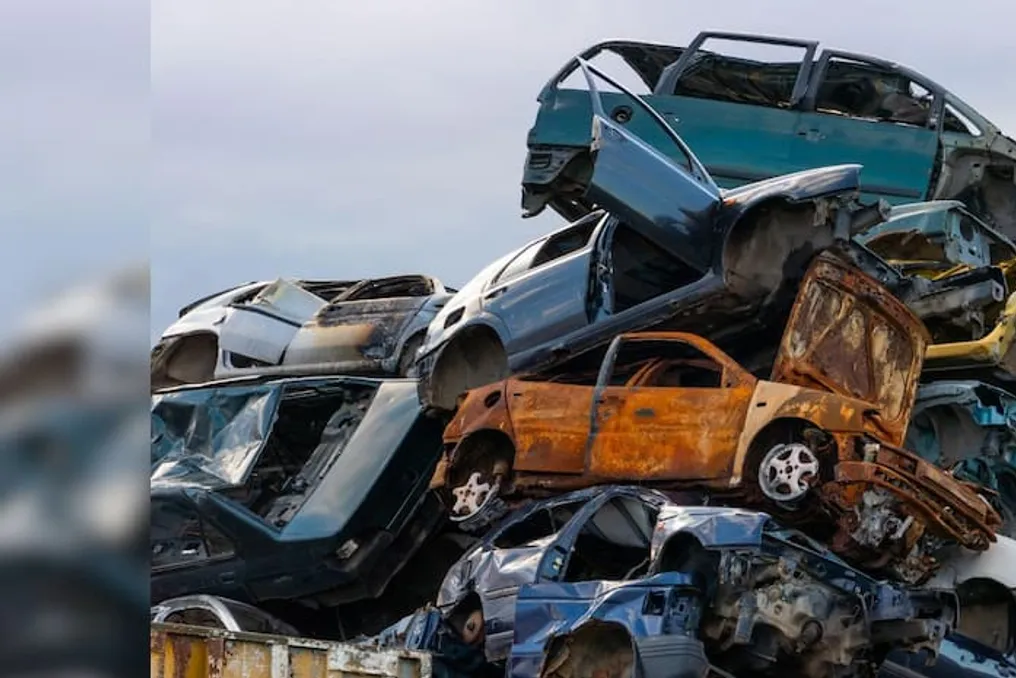
Ministry of Ecology Eases Vehicle Disposal Rules, Relieving Auto Manufacturers of a Financial Burden of 25,000 Crore Rupees
Read more
Business Standard
business-standard.com

Ministry of Ecology Eases Vehicle Disposal Rules, Relieving Auto Manufacturers of a Financial Burden of 25,000 Crore Rupees

The Ministry of Environment has amended the vehicle disposal rules so that auto manufacturers are not required to account for projected future costs of vehicle recycling in their financial reports. This decision was made several months after the Society of Indian Automobile Manufacturers (Siam) warned that existing rules could impose a financial burden of 25,000 crore rupees on the industry.

The amendment to the Environmental Protection Rules (End-of-Life Vehicles) 2025 was officially notified on November 20. It was clarified that Rule 4(6), concerning manufacturer obligations upon cessation of operations, will apply exclusively if the manufacturer completely ceases its business. This provision does not apply to auto manufacturers who continue to operate in India.

This change alleviates industry concerns regarding the financial implications of the 2025 disposal rules combined with the accounting standard Ind AS 37, which governs provisions, contingent liabilities, and contingent assets. Auto manufacturers feared that the combination of these norms would require them to recognize projected costs for recycling previously sold vehicles as liabilities.

The Environmental Protection (End-of-Life Vehicles) Rules came into effect on April 1, 2025, to ensure environmentally sound disposal of vehicles that have reached the end of their useful life. Under these rules, auto manufacturers must meet annual recycling targets determined based on the number of vehicles they sold 15–20 years ago.

Earlier this year, Siam sent a letter to the ministry warning that once the Central Pollution Control Board (CPCB) announced the environmental compensation rate for non-compliance, auto manufacturers might need to create substantial financial reserves under Ind AS 37.

The Siam letter stated: 'Once the Environmental Compensation (EC) cost is announced by the CPCB (Central Pollution Control Board), auto manufacturers may be required to create significant aggregate financial reserves in accordance with accounting standards (IND AS 37). Preliminary estimates indicate a potential one-time impact on the industry of approximately 25,000 crore rupees in gross terms and about 9,000 crore rupees in discounted terms in the financial year 2025–26.'

The amendment published on November 20 clearly established that this provision will only come into effect upon the complete closure of the auto manufacturer's operations. The November 20 notification stated: 'Provided that the amended provision (6) comes into force only after permanent cessation of operations by manufacturers and shall not apply to manufacturers who continue to operate.'

Furthermore, the notification outlines the actions manufacturers must take when closing operations. They are required to provide the CPCB with data on vehicles introduced to the market during a specified period, after which the CPCB will determine their outstanding Extended Producer Responsibility (EPR) obligations.

The notification clarifies: 'Additionally, at the time of permanent cessation of operations, the manufacturer must notify the Central Board of the vehicles introduced to the market over the preceding fifteen years for vehicles or twenty years for non-vehicles, depending on the case, in the format provided by the Central Board in this regard, and the Central Board shall subsequently determine and report the Extended Producer Responsibility obligations for this manufacturer as of the date of cessation of operations...'

This means that upon complete closure of an auto manufacturer, the CPCB will calculate its outstanding EPR obligations based on vehicles sold over the previous 15 years for vehicles and 20 years for other modes of transport. The auto manufacturer will then have to assess the cost of fulfilling these obligations, including the expense of purchasing EPR certificates, and reflect this estimated amount as a liability or provision in its balance sheet.

According to the rules, auto manufacturers can fulfill their recycling targets by purchasing EPR certificates from registered vehicle recycling facilities through a centralized online portal. These facilities issue certificates based on the weight of steel extracted from disposed vehicles. Auto manufacturers can purchase these certificates to meet their EPR obligations without engaging in the actual recycling process.
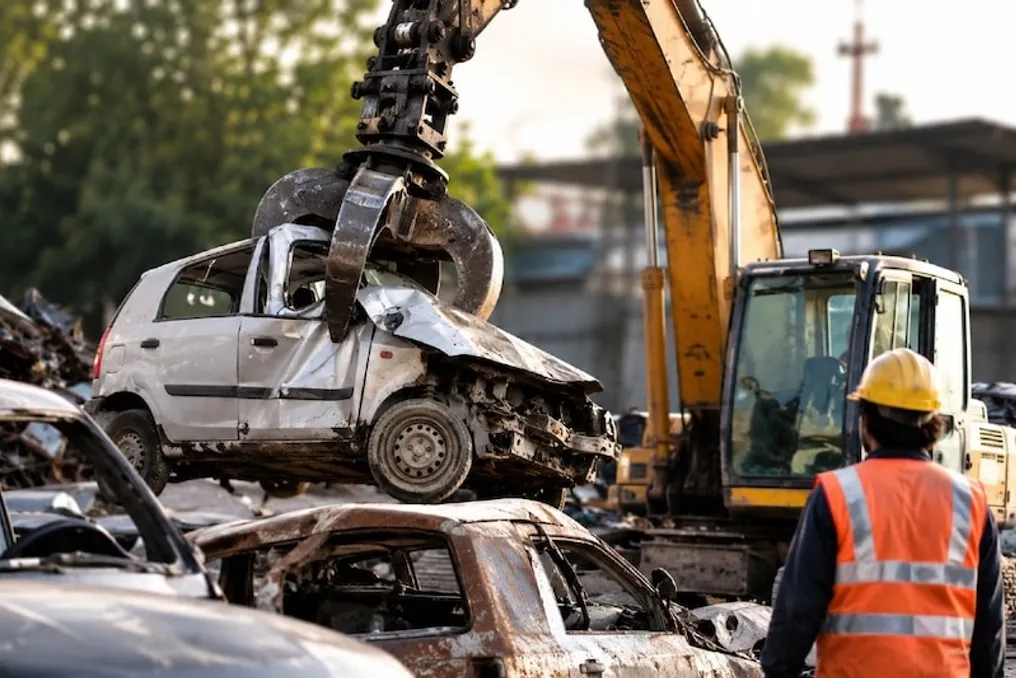

Similar stories

Government amends EPR rules, clarifying responsibility for disposing of old cars
Read more
www.aajtak.in

Government amends EPR rules, clarifying responsibility for disposing of old cars

The central government has decided to eliminate long-standing uncertainty regarding the disposal of old vehicles and Extended Producer Responsibility (EPR) in the automotive sector. Questions arose about who would be responsible for old cars if a company ceased production, and whether operating companies should also be subject to similar obligations.

The Ministry of Environmental Protection, Forestry, and Climate Change introduced amendments to the Environmental Protection Rules (End-of-Life Vehicles), 2025. These changes were officially published by the Ministry on November 20, 2026, under notification number S.O. 6326(E) and will come into force from the date of publication in the state gazette.

The main goal of this revision is to eliminate confusion among car manufacturers regarding regulatory requirements. In accordance with rule 4(6), a special provision related to EPR will apply exclusively to companies that completely cease operations. Thus, enterprises that continue to produce and sell cars on the market are exempted from taking on this special responsibility.

Under the new provisions, if a car manufacturer permanently closes its business, it is obliged to provide the Central Pollution Control Board (CPCB) with complete documentation on its old vehicles produced before the cessation of activity. For commercial and transport vehicles, reporting for the last 15 years is required, while for non-commercial and non-transport vehicles, data for 20 years is necessary.

After receiving information from the company, the CPCB will determine its EPR obligations and notify the relevant enterprise. When establishing obligations, the CPCB must take into account all applicable provisions of the rules. The key point of this change is the clear distinction between companies that continue operating and those that are ceasing operations.

In addition to clarifying EPR obligations, the amendments also modified rule 9(2) of the End-of-Life Vehicles Rules, 2025. Phrases such as 'or other steel material related to the automotive sector processed at a registered vehicle dismantling site' were excluded from this rule. This means that this wording, which previously included other types of automotive-related scrap steel, is now excluded from this provision.

The process of making these changes began in March 2026, when the Ministry of Environmental Protection published a draft amendment in the state gazette on March 27, 2026. Following this, public and stakeholder opinions were requested for 60 days. All received comments and suggestions were reviewed before the final notification of the amendments was issued.

Overall, the government's decision significantly clarifies the situation regarding the disposal of old cars and EPR responsibility. Companies will now find it easier to understand what volume of data on old cars they must provide in case of ceasing operations and how their obligations will be determined. The most important aspect is that companies continuing their operations are excluded from the special procedure intended for closing businesses, which should reduce the regulatory burden on automakers.

Advertised power in hybrid cars may be higher than effective power due to legal loophole
Read more
autopapo.com.br

Advertised power in hybrid cars may be higher than effective power due to legal loophole

Some manufacturers choose to advertise the higher power when announcing hybrid vehicles, utilizing a gap in legislation. According to Autoesporte, manufacturers exploit this loophole by presenting the total installed power of electrified vehicles, instead of the combined power, which is the actual force driving the car.

Total installed power corresponds to the simple addition of the horsepower of all present engines, both combustion and electric. In contrast, combined power represents the maximum force that actually reaches the wheels. The discrepancy in the numbers occurs because the combustion and electric engines reach their peak performance at different moments.

For example, in the BYD Song Plus Premium model, a plug-in hybrid, the sum of the three engines results in 497 hp. However, the combined power disclosed by BYD itself is 324 hp. Other companies adopt the strategy of highlighting only the sum; Jetour, for instance, advertises 597 hp of installed power in its T2 4x4 SUV, without mentioning the combined value.

GAC, on the other hand, displayed the sum of 500 hp on the GS9 SUV website as the combined power of the electric motors. The brand informed Autoesporte that it was an error and that it would correct the page, but did not provide the correct combined data.

During the approval process, manufacturers are required to register both values—installed and combined power—in the Traffic Legislation Compliance Certification System (Siscat), managed by the National Transit Secretariat (Senatran). However, no regulation requires that the combined power be displayed in advertising.

Henrique Sampaio, Jetour's marketing director in Brazil, told the magazine that the company omitted the combined information because there is no oversight on the data entered into Siscat, which makes it impossible to verify if competitors perform the same tests.

Currently, a working group from the Brazilian Automotive Engineering Association (AEA) is debating a standard from the Brazilian Association of Technical Standards (ABNT) with the aim of standardizing the measurement and disclosure of this data. The main obstacle is that no Brazilian laboratory has the capacity to measure the combined power of a plug-in hybrid, as pointed out by SAE Brazil. For this reason, brands use results obtained from tests conducted abroad, following the global GTR 21 standard.

Popular