According to Generation Z, five principles of basic human dignity that all people should observe
Read more
Aaj Tak
www.aajtak.in

According to Generation Z, five principles of basic human dignity that all people should observe

Generation Z pays close attention to the details in relationships and daily life. For them, being a good person is not just about saying nice things or making grand promises, but also about how a person behaves towards others. The concept of basic human dignity is actively discussed among Generation Z, which means treating those around you with respect as human beings. In their opinion, there are five aspects that should be considered a norm of behavior, not an act of kindness.

The first of these rules is to listen attentively to the speaker. When someone shares their joy or problems, it is crucial to listen thoughtfully. Constantly looking at your phone or interrupting someone is regarded as ignoring them. For Generation Z, giving someone full attention is a way of showing respect.

The second is the ability to apologize when a mistake is made. Everyone makes mistakes, but it is important to be able to admit it. Instead of making excuses for one's shortcomings, one must ask for forgiveness. Generation Z believes that apologizing is not a sign of weakness, but an indicator of maturity.

The third point concerns respecting personal boundaries. Every person has their own preferences and private life. It is wrong to constantly ask personal questions, look through someone's phone without permission, or interfere in decision-making. It is also important to accept another person's refusal.

The fourth is to treat everyone equally. One cannot change their behavior depending on a person's position, wealth, or job. For Generation Z, every person deserves respect, regardless of whether they are a high-ranking official or a store worker, so it is important to communicate with them politely.

The fifth is to value other people's time. Canceling plans without warning, making someone wait a long time, or not responding at the right moment can cause negative feelings. Generation Z views respect for time as an integral part of good behavior.

In conclusion, these principles are not some grandiose expectations, but small behavioral norms that need to be applied in daily life. According to the view of Generation Z, a sign of good humanity is respect for others and valuing their feelings.

Similar stories

Parking Problem in Tashkent: Situation Analysis and Proposals for Traffic Regulation
Read more
gazeta.uz

Parking Problem in Tashkent: Situation Analysis and Proposals for Traffic Regulation

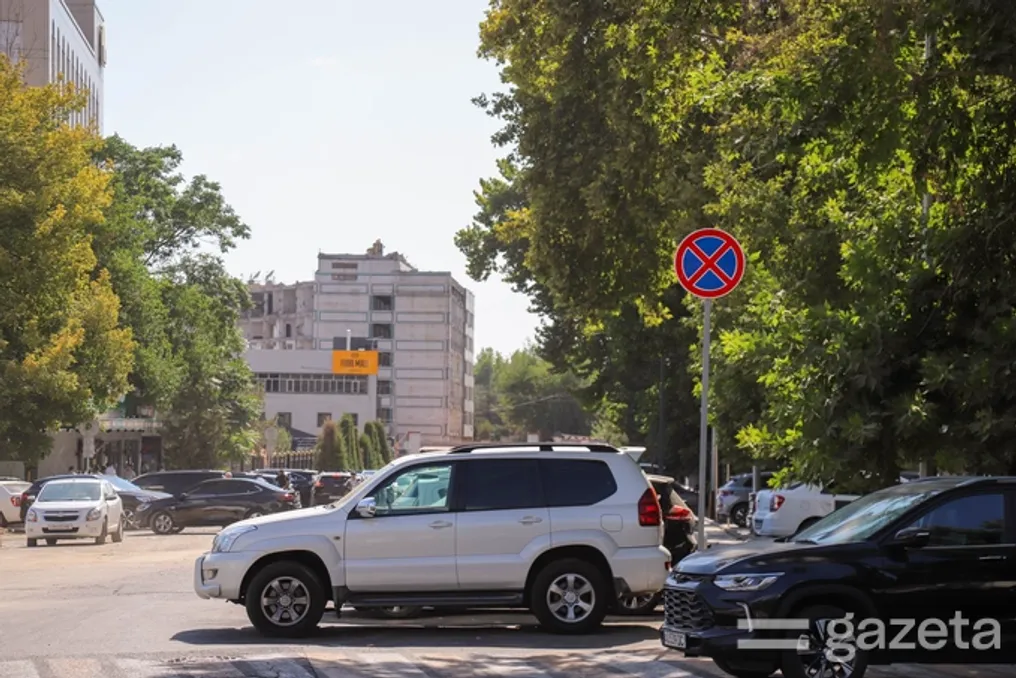
In Uzbek cities, including Tashkent, there is a long-standing problem where streets resemble vast parking lots. Vehicles occupy sidewalks, courtyards, and green areas, obstructing pedestrian crossings, courtyard entrances, the operation of bus stops, and access to important facilities such as schools and hospitals. Furthermore, cars often line up in second and third rows on the roadway, creating the impression that nothing can be changed.

This common problem has serious consequences that go beyond mere inconvenience and increased danger for pedestrians, especially children who hide behind cars. Chaotically parked cars also impede the movement of public and emergency transport, leading to economic losses for the city and the loss of critical minutes.

The Danger of Impunity

A more alarming aspect is that mass violation of traffic rules has become virtually an accepted practice in Uzbekistan. Services responsible for combating violations either ignore these incidents or lack proper control mechanisms. Over the past decades, neither proper patrolling nor automated violation recording has been implemented, despite previous promises; most control remains manual.

As a result, a 'blind spot' regarding such violations has formed in the country, which continues to grow. This situation is caused by both suboptimal street and road design, incorrect markings and signs, and a lack of fear among drivers of punishment. When minor violations go unnoticed and unpunished, and impunity becomes the norm, the probability increases that the system will fail to promptly detect more dangerous behavior threatening the life and health of citizens.

Last year, paid parking zones appeared in the capital, which led to some order: chaotic parking disappeared, and sidewalks and green areas were cleared. In these zones, drivers learned correct parking according to markings thanks to the presence of control, signs, and reminders in the form of paper notices. However, next to these paid zones, irregularly left cars can still be found, obstructing the movement of pedestrians and other vehicles.

In the very center of the capital, drivers actively try to bypass the system by covering license plates with rags, paper, face masks, and other items. This is a prime example of those 'blind spots' where supervision is absent and impunity reigns. These same cars often take up the second row, blocking the lane of traffic, which turns a two-lane street into a one-lane street. Moreover, they block those who parked legally, forcing them to find the driver to exit.

Starting December 24, a new car towing system and the functioning of fines parking lots are being introduced in Tashkent, which will add another tool for regulating driver behavior. Residents also expect the implementation of the promised parking control system in courtyards to prevent uncontrolled leaving of cars.

How Much Depends on Proper Design

The streets of the capital and other cities in Uzbekistan were originally designed with a large volume of vehicle accommodation in mind. Many streets were widened, including by eliminating tram tracks, based on the assumption that increasing the number of lanes would improve the situation. However, the experience of recent decades has proven that no street widening can accommodate the entire vehicle fleet.

Following international trends, the expansion of sidewalks, narrowing of streets, revision of markings, and allocation of lanes for public transport have begun in Tashkent. A good example of this urban planning approach is Shota Rustaveli Street, although its potential can still be improved.

Nevertheless, a significant part of the roadway on many streets is occupied unnecessarily. Where there are no clearly marked parking spaces, the markings are incorrectly applied, and physical barriers (such as curbs or posts) are absent, which gives drivers the illusion of abundant space and encourages them to park anywhere, especially if the risk of receiving a fine is minimal.

In large global megacities, space is aggressively redistributed from cars to pedestrians, personal mobility devices, greenery, and parking, which also serves as protection for pedestrians and other road users. Clear and understandable zoning, modern urban design methods, and constant control contribute to increasing the safety and comfort of streets. At the same time, design revisions must be accompanied by measures such as reducing speed and developing public transport to a level that motivates residents to use it regularly.

Spot Measures Do Not Work

The experience of cities that have experienced an automotive boom demonstrates that isolated actions, such as sudden raids or calls for increased awareness, popular in Uzbekistan, cannot fundamentally change the situation. A comprehensive approach is required, applying several measures simultaneously:

  1. Establishing rules and places for short stops, such as drop-off and loading zones near schools, medical institutions, shops, and pharmacies, so that parents, taxi drivers, couriers, and entrepreneurs have a legal place to stop.
  2. Ensuring free shoulders and places for long-term parking by creating organized parking lots along streets and large parking garages.
  3. Protecting sidewalks and pedestrian crossings with posts and barriers so that cars do not drive onto sidewalks, as well as widening sidewalks before crossings to form a triangle of visibility between the driver and the pedestrian.
  4. Implementing inevitable control, where rules are applied equally and constantly to everyone, not just during one-time checks—this applies to the second row, sidewalk parking, and covered license plates. The importance lies not in the size of the fine, but in the inevitability of accountability.
  5. Coordinating the actions of all services responsible for the condition of the streets.

When clear rules are in effect in a city and there are designated places for short stops, drivers do not have to occupy pedestrian space, hindering the movement of public transport, emergency services, and other vehicles.

CNDH of Mozambique strengthens partnerships with civil organizations to promote the inclusion of people with disabilities
Read more
noticiasaominuto.com

CNDH of Mozambique strengthens partnerships with civil organizations to promote the inclusion of people with disabilities

The National Commission for Human Rights (CNDH) of Mozambique has established new memorandums with three civil society organizations, aiming to intensify the protection of people with disabilities. These agreements seek to ensure that these individuals actively participate in the conception, execution, and evaluation of projects.

The documents were formalized in Maputo and involve People-to-People Development Aid (ADPP Mozambique), Girls' Child Rights, and Humanity & Inclusion. The main focus of these collaborations is to foster human rights, improve service accessibility, and increase the participation of vulnerable groups.

Albachir Macassar, president of the CNDH, emphasized that it is essential to involve people with disabilities from the recognition of their needs up to the project evaluation phase, including the definition of activities and their respective budgets. He stated that no project, whether development or emergency response, should be planned without the participation of those who are most frequently marginalized.

Macassar also pointed out that the Commission's monitoring revealed situations of exclusion caused by planning failures, such as holding meetings in inaccessible locations, providing information in a single format, and having complaint channels that are not usable by everyone. The official guaranteed that the CNDH will maintain its autonomy in monitoring human rights, including the actions of partners, affirming that cooperation does not compromise its independence.

These memorandums will be valid for five years. Furthermore, the Commission plans to define specific inclusion measures, establishing responsible parties and deadlines, and conducting annual evaluations to measure achieved results and removed barriers.

The collaboration with ADPP covers training and awareness campaigns on human rights and the protection of vulnerable groups, in addition to strengthening complaint and grievance management systems. Ana Margarida Lemos, president of the ADPP Steering Committee, highlighted the organization's vast experience in community work, operating in all 11 provinces of the country. She expressed a desire to transform the agreement into practical actions through joint plans, capacity building, and awareness initiatives that promote a culture of respect.

Humanity & Inclusion, meanwhile, commits to assisting in improving the accessibility of complaint and reporting mechanisms, as well as reinforcing access to justice. This will include training public servants, collecting data on disabilities, and involving these individuals in decision-making processes. Baltasar Ussaca, operations manager, stated that inclusion constitutes an imperative of social justice and human rights, not just an option.

The signing of these memorandums is part of the Boost Rights project, which is part of the Include program implemented by the Italian NGO AIFO and its partners, and is financed by the Italian Agency for Development Cooperation. Simona Casar, national representative of AIFO, mentioned that the initiative aims to strengthen both the capacities of the CNDH and the articulation with civil society organizations.

In February 2026, the CNDH received the mandate as a national mechanism to monitor the application of the Convention on the Rights of Persons with Disabilities. Macassar clarified that the institution will monitor compliance with accessibility standards and may suggest corrections for administrative irregularities, while criminal cases will be referred to the Public Prosecutor's Office.

Popular