Angola risks failing to meet its 2030 demining target, reports a study
Read more
Noticias ao Minuto
noticiasaominuto.com

Angola risks failing to meet its 2030 demining target, reports a study

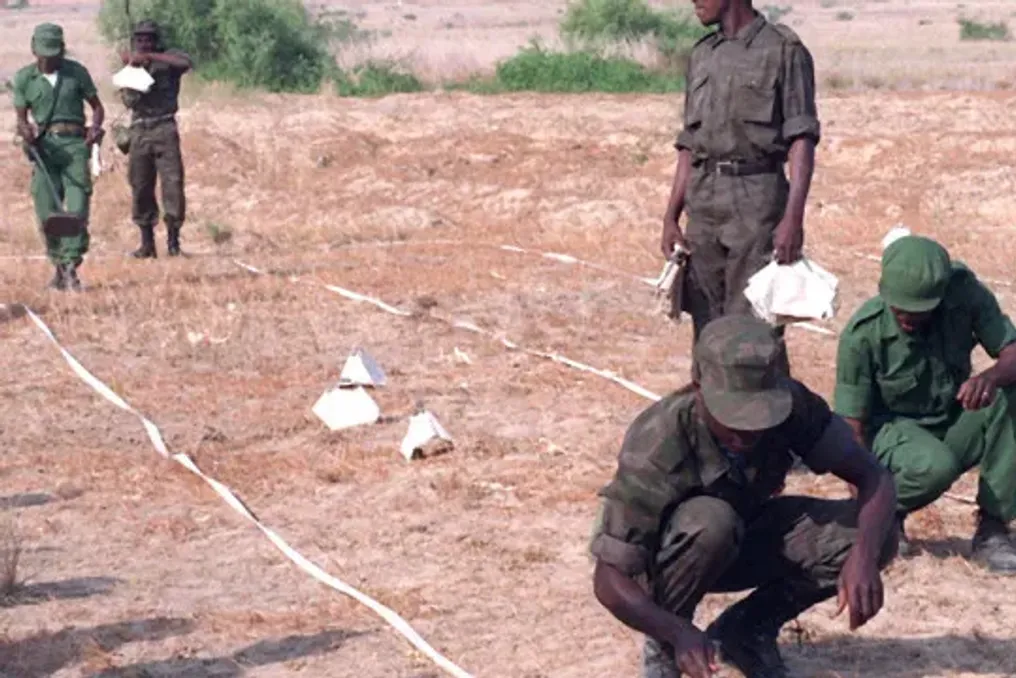
Angola remains among the four State Parties with high levels of contamination by anti-personnel mines and faces the risk of failing to meet the demining target by the end of 2030, according to the 2026 Landmine Monitoring report.

This annual document, titled 'Landmine Monitor 2026,' was released in Switzerland and is produced by the International Campaign to Ban Landmines (ICBL). It serves as a reference for the work carried out by the 162 signatory countries of the Convention on the Prohibition of the Use, Stockpiling, Production and Transfer of Anti-Personnel Mines and on their Destruction, known as the Ottawa Treaty.

According to the ICBL, Angola managed to recover 6.84 square kilometers and destroy 9,268 anti-personnel mines. This number represents an advance compared to the 5.55 square kilometers and 5,680 mines recorded in 2024.

Charles Bechara, ICBL communications officer, informed Lusa that most of this increase was due to surveying work, although actual clearance showed a decline. Furthermore, land release fell below Angola's annual target, and surveys continue to uncover new contaminated areas.

Considering that Angola's deadline for demining, after three extensions, is set for December 31, 2030, Bechara concluded that, at the current rate, the country is not on track to meet the commitment.

The report also highlights funding problems, mentioning that Angola received $8 million (equivalent to about 7.3 million euros) in international support in 2025, which constitutes a reduction of less than 20% compared to 2024. Additionally, the country was impacted by the suspension of subsidies by the United States, according to the document.

In Mozambique, another Portuguese-speaking country that declared mine removal in 2015, the report points to a new concern: the presence of residual contamination in Cabo Delgado, an area under constant threat from improvised explosive devices. In 2025, Mozambique registered victims of mines and war remnants, including children, but the ICBL questions whether these devices should be classified as improvised anti-personnel mines, given that it is not always clear if they are activated by the victims.

In Guinea-Bissau, there was no communication of land demining in 2025 due to the end of international funding at the end of 2024 and the suspension of mine action operations.

Burkina Faso, Chad, Mauritania, and Niger are cited as four other African State Parties that did not receive any international funding for anti-mine actions in 2025.

In diplomatic terms, Angola, Mozambique, and Brazil were among the 29 countries, along with the European Union, that expressed concern over the transfer of US anti-personnel mines to Ukraine, as reported by the International Campaign to Ban Landmines. The same entity indicated that Brazil also opposed Ukraine's attempt to suspend the treaty, and that Portugal reported no funding for mine-related actions in 2025.

Cape Verde, São Tomé and Príncipe, Timor-Leste, and Equatorial Guinea are not affected by mines, but none of these has submitted its annual transparency report for three years or more.

Globally, the report concluded this date states that in 2025, landmines and unexploded ordnance caused more deaths and injuries than in any year since 2020. At least 6,929 people died (a 10% increase compared to 2024), with 84% of victims being civilians, and children representing half of all affected civilians.

Similar stories

Angola lowers climate targets, betting on realism in new plan
Read more
noticiasaominuto.com

Angola lowers climate targets, betting on realism in new plan

Angola has lowered its emissions reduction targets in the latest climate plan presented to the United Nations. The country justified this revision by citing the concept of 'realism,' noting that only a 'very limited' number of projects were previously implemented.

The new Nationally Determined Contribution (NDC), submitted in September 2025, commits the country to reducing emissions by 5% by 2035 using its own resources, equivalent to approximately 37.5 million tonnes of carbon dioxide equivalent (CO2e). With international support, this figure increases by another 6 percentage points, reaching 11% compared to the 'business as usual' scenario (without new measures), using 2020 as the baseline, which amounts to up to 49.3 million tonnes.

The previous NDC document from 2021 stipulated a 24% reduction by 2025, of which 14% was supposed to be covered by domestic resources, relative to 2015. However, the most recent document acknowledges that the proposed reduction in NDC 3.0 is 'less ambitious,' explaining that the targets were set 'to reflect the most realistic and feasible conditions for Angola,' considering the country's capabilities.

NDCs are climate plans that every country that has signed the Paris Agreement must provide to the United Nations every five years, including emission reduction goals and climate change adaptation measures. These goals are not legally binding, and the current round of NDC 3.0 sets objectives until 2035.

Angola recognizes that each plan is expected to demonstrate 'progress' compared to the previous one and reflect the 'most maximally ambitious approach,' but adds that ambitions 'must also take into account national circumstances,' pointing to the low degree of implementation of the previous plan. This is because, despite having 'strong political will and political structures,' only a 'very limited' number of proposed projects were fully implemented.

The document links this result to insufficient technical competence, coordination mechanism failures, and the lack of financial and technological support. Therefore, the new NDC 'prioritizes realism and feasibility,' proposing a smaller portfolio of projects selected based on their viability and alignment with institutional capacities so that commitments are 'not only plausible but also achievable.'

The revision also changes the baseline year from 2015 to 2020, as this is the most recent year with officially reported emissions. The first biennial update report, completed in November 2024, showed that in this year, Angola emitted 211.5 million tonnes of CO2e. Of this, 84% is due to deforestation and land use, and 10% to energy.

The NDC acknowledges that projected emissions for 2020 significantly exceed the 2015 figures, especially in the area of deforestation and land use, but asserts that the increase is 'not solely related to increased pressure on natural resources,' but is 'closely linked' to methodological changes, such as new emission factors and more accurate satellite imagery.

Based on this revision, the Government states that the percentages 'may seem less ambitious,' but they correspond to a 'greater absolute reduction' in emissions. In total tonnes, the projected reduction increases from 26.5 million in 2025 (under NDC 2021) to 49.3 million in 2035.

For the Angolan executive branch, ambition lies not only in quantitative targets but also in the focus on feasibility and institutional strengthening, which is viewed as a 'more solid foundation' for increasing ambitions in future cycles. The NDC also mentions the economic context, noting that the Paris Agreement introduced a 'new level of ambition' that the country 'cannot meet with current financial resources.' The document mentions economic slowdown, reduced productivity in the oil sector, and budgetary constraints.

Furthermore, shortcomings in Angola's exit from the Least Developed Countries category are highlighted, which limits access to climate finance and development aid intended for such countries. Angola estimates a need of $412 billion for mitigation between 2025 and 2035: $48 billion from its own resources and $365 billion dependent on external support. The country plans to allocate $235 million for adaptation.

Angola rejects the dilemma between development and climate change mitigation
Read more
noticiasaominuto.com

Angola rejects the dilemma between development and climate change mitigation

The Minister of Environment of Angola stated that the most vulnerable countries should not be forced to choose between economic development and protecting their populations from the consequences of the climate crisis.

Ana Paula de Carvalho Pereira made this statement during the high-level meeting of the 31st United Nations Climate Change Conference (COP31), which was taking place in Antalya, Turkey. She emphasized that countries that contributed least to global emissions suffer the most from the effects of climate change.

Angola supported the positions of the African Group and the Least Developed Countries, insisting that the response to the climate crisis must respect the principle of common but differentiated responsibilities, as well as each country's right to sustainable development.

The Minister noted that the climate issue is closely linked to human security, including food, water, sanitation, and economic security. She stressed that it is about people and families facing drought in the southern part of the country, and communities whose livelihoods are threatened by extreme weather events.

Ana Paula de Carvalho Pereira assured that the country is gradually fulfilling its climate commitments, including the Nationally Determined Contribution (NDC3) goals, strengthening the monitoring, reporting, and verification system, and implementing the National Climate Change Adaptation Plan.

Regarding mitigation and energy transition, the minister reported that over 10 years, Angola increased its capacity from 2.5 gigawatts to 6.3 gigawatts, while also improving waste management and reducing methane emissions. In terms of adaptation, a plan was presented to combat the effects of drought in the southern part of the country, which includes the construction of dams and canals over 200 kilometers long.

Angola advocates for predictable, adequate, and accessible climate finance, with a special focus on adaptation needs, as well as loss and damage. In conclusion, Ana Paula de Carvalho Pereira called for international support, emphasizing that solidarity must be demonstrated through financial, technological, and human resources.

The 31st UN Climate Change Conference (COP31), which continues until Friday, focuses on fulfilling climate commitments. Among the conference priorities are increasing the share of electricity in global final energy consumption to 35%, tripling adaptation financing to $120 billion annually by 2035, and accelerating the transition away from fossil fuels.

Poor harvest threatens famine for nearly two million Angolans
Read more
noticiasaominuto.com

Poor harvest threatens famine for nearly two million Angolans

According to a report by the Fews Net Early Warning System for Hunger, nearly two million residents of Angola are at risk of famine due to poor harvests and insufficient rainfall in the southern and central parts of the country.

Fews Net estimates that between November 2026 and January 2027, which falls during the agricultural off-season, approximately 1.5–1.99 million people in Angola will require humanitarian food assistance.

The pastoral and agro-pastoral areas, such as Benguela, Namibe, Cunene, Uíla, and Cuando Cubango, are of greatest concern, according to the report published by ReliefWeb, a service managed by the UN Office for the Coordination of Humanitarian Affairs (OCHA).

The organization warns of an emerging acute food security situation, where families face food shortages due to low yields and lack the means to cover high market prices.

Fews Net notes that due to low purchasing power and lack of income, poor families are forced to reduce the amount of food consumed and the number of meals.

Although the organization forecasts an improvement in food availability from February to May 2027 with the start of new plantings, it also expects difficulties in meeting non-food needs due to limited income from crop and livestock sales.

The report, compiled based on information from October 19, 2026, predicts a poor year for agricultural production and livestock farming in 2026/2027 in southern and central Angola.

This forecast is based on the expected deficit in rainfall associated with the El Niño phenomenon, which is exacerbated by limited access to agricultural resources. It is specified that 'delayed and irregular rains, combined with insufficient fertilizer and high resource prices, are likely to limit production in planted and agricultural areas.'

Furthermore, the decline in pasture and water availability will negatively affect livestock farming, according to the report. The document also indicates that 'the full effects of the El Niño phenomenon are expected to manifest gradually, with the most serious consequences for food security likely occurring after May, peaking between the end of 2027 and the beginning of 2028.'

Popular