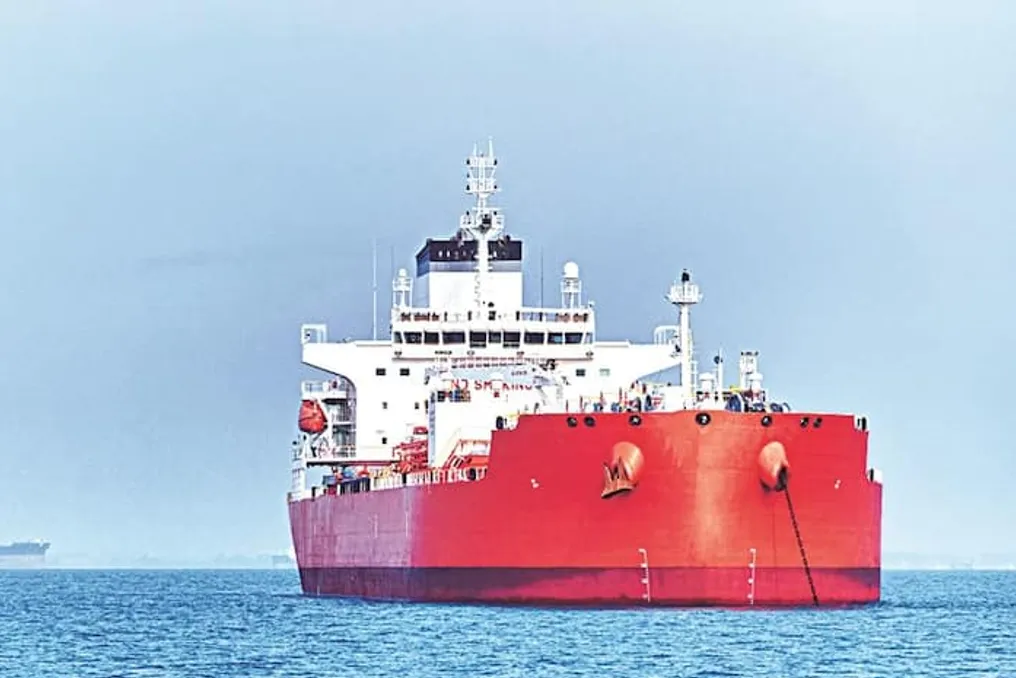
India and China plan record imports of Russian oil in 2026 amid war with Iran
Read more
Business Standard
business-standard.com

India and China plan record imports of Russian oil in 2026 amid war with Iran

According to tanker data and industry sources, India and China are on track to achieve record imports of Russian oil this year. This growth is driven by the need to compensate for supply shortages caused by the war with Iran, as well as easing of US sanctions and the disabling of Russian oil refining capacities due to Ukrainian drone attacks.

However, traders and analysts predict a decline in supplies to Russia from the two largest buyers in 2027, as supplies from the Middle East recover and regain their market share.

On average this year, up to mid-November, maritime supplies of Russian oil to the world's two most populous nations amounted to 3.4 million barrels per day, which exceeds last year's figure by approximately 530,000 barrels per day, according to Vortexa Analytics.

Despite multiple drone attacks from Kyiv damaging nearly half of Russia's refining capacity, which stimulated crude oil exports, increased volumes, including Kazakh oil transiting through Russian ports, supported Moscow's oil sales revenue. According to the Ministry of Economic Development forecast, Russian oil exports are expected to increase by 6 percent in 2026, reaching 244.7 million metric tons, or about 4.9 million barrels per day.

Temporary US sanctions easing on Russian oil, aimed at ensuring market supply amidst the Middle East crisis, expanded the pool of vessels and suppliers available to India and China, allowing them to increase purchases. Two industry sources familiar with Russian oil flows estimate that these two countries together acquired over 80 percent of Russia's crude oil exports.

Russia supplies a quarter of China's imports

Exports of Russian oil to China, which is the main buyer overall, grew by 17 percent, reaching 2.34 million barrels per day between January and October. Sales amounted to $59.6 billion and covered about a quarter of Beijing's oil imports, despite a 15 percent drop in its crude oil imports due to sharp reductions in supplies from the Middle East, according to Chinese customs data.

Muyu Xu, an analyst at Kpler, which tracks tankers, noted that 'the reduction in shipping risks and greater reliability of supplies have been the main reasons for the increase in China's imports of Russian crude oil since the start of the war.'

Nevertheless, Michal Meydan, head of the Chinese Energy Research Center at the Oxford Institute for Energy Studies, predicted that China's demand will weaken in 2027, as the growing share of Russian imports will exceed Beijing's comfort zone regarding dependence on a single supplier. Meydan added that 'moreover, they no longer receive discounts and trade at premiums above Brent prices compared to Gulf grades. Tea kettles can no longer afford them' concerning small independent Chinese refineries dependent on cheap raw materials. She also pointed out that 'as flows from the Persian Gulf stabilize, Chinese refineries will return to these grades and will already prefer Brazilian grades.'

Strong demand for Russian barrels, also stimulated by the reduction in Iranian oil supplies due to the US naval blockade, pushed spot premiums ESPO to almost $30 per barrel above ICE Brent for deliveries to East China.

India's record purchases of Russian oil

India, the largest buyer of maritime Russian crude oil, imported an average of 1.99 million barrels per day before November, which is 250,000 barrels per day more than the previous year, according to Kpler, even after the country reduced purchases earlier this year due to threats of US tariff increases.

From January to October, India's imports of Russian oil increased by approximately 10 percent, reaching 1.87 million barrels per day, accounting for about 38 percent of the total volume, according to trade sources. Sources in Indian refineries reported that India's average Russian oil imports in 2026 are likely to reach 1.9 million barrels per day.

Sources also speculated that in 2027, India's purchases might return to pre-Iran war levels if Middle Eastern supplies normalize, with sources believing that imports will be determined by prices.

Similar stories

Uzbekistan exported $420 million worth of gas to China from January to October 2026
Read more
uzdaily.uz

Uzbekistan exported $420 million worth of gas to China from January to October 2026

According to data provided by TASS citing the General Customs Administration of China, Uzbekistan exported pipeline gas to China worth $420.43 million during the period from January to October 2026. This volume allowed Uzbekistan to take fifth place among the country's largest gas suppliers by value.

Compared to other countries, Russia ranked first, exporting pipeline gas to China worth $8.34 billion. Turkmenistan came in second with a figure of $7.16 billion. Following them are Myanmar with an export value of $1.26 billion and Kazakhstan with an amount of $951.17 million.

The published data did not contain information on the physical volumes of pipeline gas imported by China from these countries. It is worth noting that in 2025, Uzbekistan exported pipeline gas to China for a total amount of $773 million.

China, Russia, and USA announce intention to increase supply of petroleum derivatives in joint statement
Read more
rtp.pt

China, Russia, and USA announce intention to increase supply of petroleum derivatives in joint statement

In a joint 'Declaration of Peace,' China, Russia, and the United States expressed plans to raise both the production and supply of refined petroleum products, aiming to benefit nations around the globe.

This initiative was communicated following an unprecedented trilateral summit among the three powers.

India's exports reach record $89.99 billion due to trade volume growth
Read more
www.aajtak.in

India's exports reach record $89.99 billion due to trade volume growth

October proved to be an outstanding month for India's foreign economic activity. Merchandise Exports increased by approximately 45%, reaching an unprecedented level of $49.47 billion. Meanwhile, total exports, including goods and services, reached a record high of $89.99 billion.

According to the Ministry of Commerce data, the export growth was driven by increased demand for petroleum products, electronic goods, precious stones and jewelry, and engineering products.

Despite the rise in exports, imports also increased: in October, the value of merchandise imports amounted to $89.35 billion. Nevertheless, the trade deficit decreased compared to the previous year.

Data published by the Ministry of Commerce indicates that in October 2026, merchandise exports grew by 45.06% year-on-year, reaching $49.47 billion. In October 2025, this figure was $34.11 billion. This signifies a significant increase in the sales of Indian goods abroad over the year. Secretary of the Ministry of Commerce Rajesh Agrawal noted that October saw the highest monthly export level, and the 45.06% growth is the highest on a monthly basis in the last five years.

Parallel to the increase in exports, India's imports also rose. In October 2026, the value of merchandise imports reached $89.35 billion, compared to $76.69 billion in October of the previous year. However, the trade deficit declined. In October 2026, the merchandise deficit was $39.88 billion, down from $42.58 billion in October 2025. The reduction in the deficit is attributed to the sharp increase in exports in October.

In the foreign trade statistics for October, the import of gold drew particular attention. During this month, gold imports fell to $5.51 billion, compared to $14.72 billion in October 2025. This change is important for understanding the overall import figures for October.

The Ministry of Commerce reported that India's exports in October were supported by several sectors, including petroleum products, electronic goods, precious stones and jewelry, as well as organic and inorganic chemicals and engineering products. Improvements in these areas contributed to the growth in India's total merchandise exports. It is worth noting that the increase in exports was not limited to a single industry sector.

For the period from April to October of the current fiscal year 2026-27, India's merchandise exports grew by 21.96% year-on-year. According to the Ministry of Commerce, during this seven-month period (April-October 2026), merchandise exports totaled $309.06 billion, compared to $253.40 billion in the same period of the previous fiscal year (April-October 2025-26). This indicates a steady trend in Indian exports throughout the fiscal year, alongside the record performance in October.

India's foreign trade includes not only the sale of goods but also a significant contribution from service exports. According to ministry estimates, service exports reached $40.51 billion in October 2026, up from $35.17 billion in the same month last year. Furthermore, it is projected that service imports will also increase, amounting to $20.72 billion, compared to $17.73 billion in October 2025. Thus, there is growth in both merchandise and service turnover.

India's main achievement in October was reaching a record level of total exports, combining goods and services. As stated by the Secretary of the Ministry of Commerce, Rajesh Agrawal, total exports in October amounted to $89.99 billion, the largest figure for any single month. He added that the monthly growth of total exports over the last five years has been 29.9%, which is the third-largest growth during this period. Moreover, the overall trade deficit in October decreased to $20.09 billion, which differs from the merchandise deficit because it includes service turnover.

Another feature of the export growth is that it received support in trade with numerous countries. Rajesh Agrawal specified that in 43 out of 50 major export markets of India, exports grew compared to the previous year in October 2026. This means that the demand for Indian products has increased not just in one region or country, but in many international markets.

For the period from April to October 2026-27, India's total exports (goods and services combined) amounted to $568.84 billion.

Popular