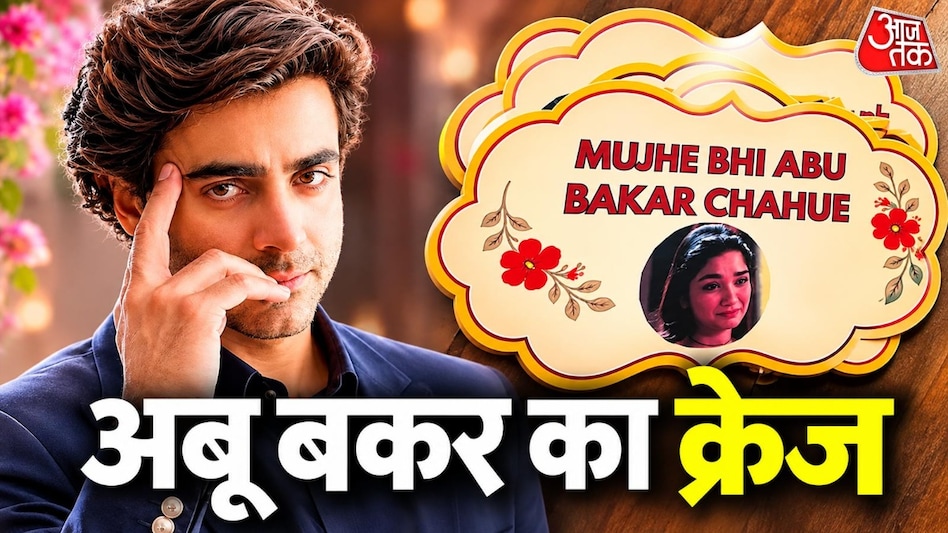
Popularity of Pakistani Actor Abu Bakar Causes Buzz Among Viewers in Delhi
Read more
Aaj Tak
www.aajtak.in

Popularity of Pakistani Actor Abu Bakar Causes Buzz Among Viewers in Delhi

A wave of popularity from the romantic drama from neighboring Pakistan, 'Dar-e-Nijaat', has captured the attention of the Indian audience. Viewers, including both girls and boys, are showing strong interest in the series' main character, Abu Bakar (Shahyar Munnuwar). This affection for the character and the show itself has grown so much that special screenings were organized in Delhi.

Recently, a watch party was held at a cafe in Delhi to view this Pakistani series. The event was organized by Tales of City in collaboration with Hamza Khan, Aishal, and Fadia. The publication India Today conducted a special interview with the founder of Tales of City, Sufian Khan, who discussed how the idea for such an event originated.

According to Sufian, he had been following the Pakistani show for about a month, and his community was also interested in the series. He received numerous requests to screen the show in Delhi, and his initiative received a very positive response. Sufian noted that Abu Bakar's popularity stems not from his heroic image, but from the fact that he looks like an ordinary person.

The organizers set a registration limit of 45 people for the watch party, yet hundreds of people expressed a desire to participate in the event. The entry fee was 899 rupees and included food, a welcome drink, and the screening itself. Guests were offered the option to come dressed as their favorite or least favorite character. Games and quizzes were also organized for entertainment.

Interestingly, there were more men than women at the party. Sufian reported that approximately 60 percent of the participants were men, and 40 percent were women. Episode 33 of the show was shown during the event. An interaction between the public and the show's director, Sakib Khan, was conducted over the phone, lasting 40 minutes, although it was initially planned for 10 minutes. Viewers asked questions about the characters, the plot, and the show's filming methods. Following such a successful reception, the organizers are receiving requests for new screenings, and a special party is planned for the finale.

Shahyar Munnuwar plays the role of Abu Bakar, who is a handsome character. His calm nature, selfless and unconditional love, and emotional maturity make him an ideal example of a 'green flag'. Unlike most Pakistani dramas, where the hero is often portrayed as aggressive or existing in a grey moral zone, Abu Bakar understands relationships and values the feelings of those around him. This is why this character appeals not only to women but also to the male audience.
Similar stories

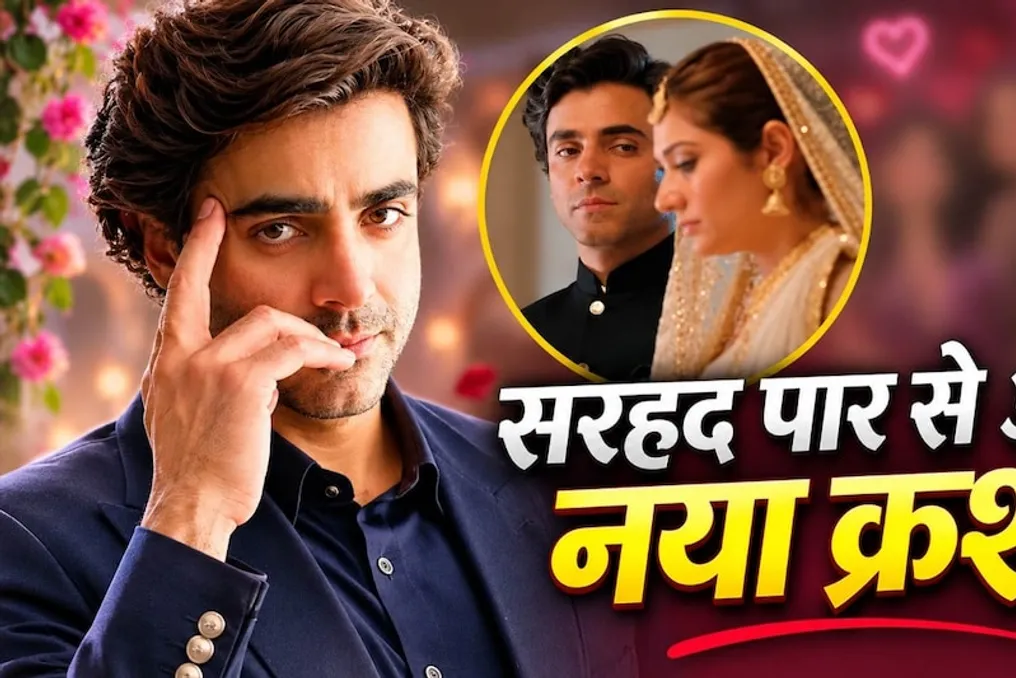
Popularity of Abu Bakar from Pakistani Series Among Indian Girls
Read more
www.aajtak.in

Popularity of Abu Bakar from Pakistani Series Among Indian Girls

The question of what kind of life partner girls desire often leads to descriptions of a partner who is willing to love, fully trust, listen attentively, and always support in difficult moments. Although such qualities seem ordinary, in the modern era, one fictional image has become the object of admiration for millions of girls. Notably, this character is portrayed by an actor from a neighboring country—Pakistan.

The Pakistani television series 'Dar-e-Nizaat' is currently gaining popularity not only in Pakistan but also in many other countries, including India. A significant part of this popularity is linked to the main character—Abu Bakar, played by actor Shahryar Munnuwar. Viewers have also seen him in the very famous Pakistani show 'Zindagi Gulzar Hai.'

However, the question arises: why is Abu Bakar so popular? Why do girls from India feel affection for him? Women from India, Pakistan, and Bangladesh, as well as from many other Asian countries, admire him. His videos and romantic scenes have gone viral on Instagram. Girls call him the 'green flag,' and some have even coined the term 'green forest' for him—meaning a person with whom relationships feel safe, comfortable, and filled with respect. This attachment is due not just to the actor's appearance, but to the character's behavior, which differs greatly from the behavior of many popular modern film heroes.

A natural question arises: what exactly attracts viewers to this show? What about Abu Bakar evokes such adoration among girls on both sides of the border? Is it simply a romantic drama, or does it raise deeper themes concerning relationships, religion, and women's freedom?

This series, which began on the Pakistani channel on August 1st, was written by Umra Ahmed, and directed by Sakib Khan. The plot is built on the contrast between two men for whom religion and faith play a key role. The story begins with Jaryab—a girl from a wealthy family who is ambitious and dreams of the future. She is given the opportunity to attend Harvard University, but she decides to forgo this great chance for the love of her childhood friend, Jamil. Their bond is so strong that it ignores his mistakes. However, their lives change when Jamil begins to turn to religion. He starts questioning the clothing, lifestyle, and past of the girl he loved. Eventually, he tries to change Jaryab and marries Hamna.

This is where Abu Bakar appears. He is also a man of religious views, but he differs radically from Jamil. For Jamil, religion becomes a reason to judge other people and question their decisions, whereas Abu Bakar's faith makes him more sensitive and modest. He never tries to make decisions for another person's life. The central question of the show is this: does religion make a person better, or does it become a tool for controlling others under the guise of faith? How is such a divergence in the behavior of two people sharing the same faith possible?

To understand Abu Bakar's popularity, one must pay attention to specific scenes from the series. In one scene, Jaryab feels guilty about her past and the decisions she made, questioning her character and life. Instead of judging her, Abu Bakar reminds her that the right to decide the relationship between her and God belongs only to her. This phrase may seem insignificant, but it gives his character uniqueness. He does not impose his religious beliefs on his wife; rather, he respects her faith and personal choices.

In another scene, Jaryab experiences a panic attack. Abu Bakar calms her down, takes her hand, and stays by her side instead of demanding explanations or criticizing her condition. He does not diminish her feelings as trivial or unfounded. This emotional support is actively discussed on social media. Abu Bakar's romance is shown not through grand promises or expensive gifts, but in the small things that allow a partner to feel heard.

Another interesting point is that Abu Bakar does not use Jaryab's past against her. He does not believe that a woman's past relationships or decisions determine her right to respect in the present. He does not view her as a project to be changed. He strives to accept her as she is, with all her weaknesses and mistakes. This is precisely why this character is rapidly gaining popularity among the Indian audience. On social media, he is contrasted with aggressive, domineering male figures, such as Ranbir Kapoor in the film 'Animal' or Shahid Kapoor in 'Kabir Singh.'

For a long time, a certain template for expressing love existed in popular cinema: the hero's anger, the display of power, the pursuit of the girl, and the struggle for her against the world were often presented as romance. But Abu Bakar's appeal lies in the fact that he demonstrates love differently.

Popular