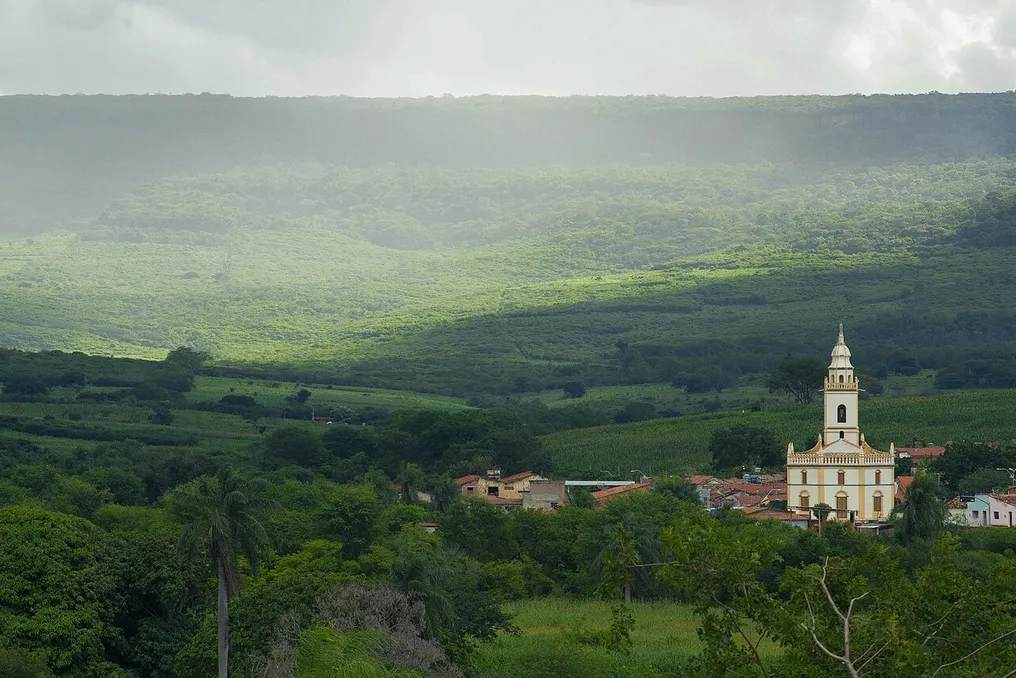
Researchers from the Federal University of Viçosa (UFV) discovered a new species of tree frog, named Ololygon cataguas, which measures about three centimeters. This small amphibian was located in the Zona da Mata region of Minas Gerais, specifically in Cataguases, within a stream in the district of Glória.
The research process to classify this finding as a new species spanned thirteen years. In 2013, scientists collected approximately ten individuals for study, which allowed them to determine that they belonged to a previously unknown group in Brazilian fauna. The findings were later published in the journal Herpetologica.
Biologist Clodoaldo Lopes de Assis, a resident of Cataguases, was the one who noticed the uniqueness of the animal's sound, realizing that its call differed from the sounds of other known tree frogs in the area. Based on this perception, he collected the amphibians and brought them to UFV, the institution where he was pursuing a master's degree in Animal Biology.
During detailed observations, researchers managed to identify a characteristic pattern in the species: a 'W'-shaped mark positioned between the two eyes. Additionally, a size distinction was established between males and females; females range from 2.7 cm to 3.4 cm, while males measure between 2.2 and 2.5 cm.
The confirmation of Ololygon cataguas as a new amphibian group was consolidated through a multifaceted analysis that included genetic material examination, song study, and evaluation of the animal's physical characteristics. The scientific name was chosen in honor of the city of Cataguases and the Cataguás people, an indigenous population that historically inhabited the region.
Currently, new investigations aim to deepen knowledge about the animal, focusing on aspects such as its diet and the environmental conditions essential for its survival. This detailed study is crucial to ensure the preservation of the species, given that it was found in a conservation area, suggesting very specific habitat needs.
This record represents the second discovery of new amphibians in Minas Gerais this year alone. In February, researchers from the University of Brasília identified Ololygon paracatu, another new species of tree frog in the Minas Gerais cerrado.