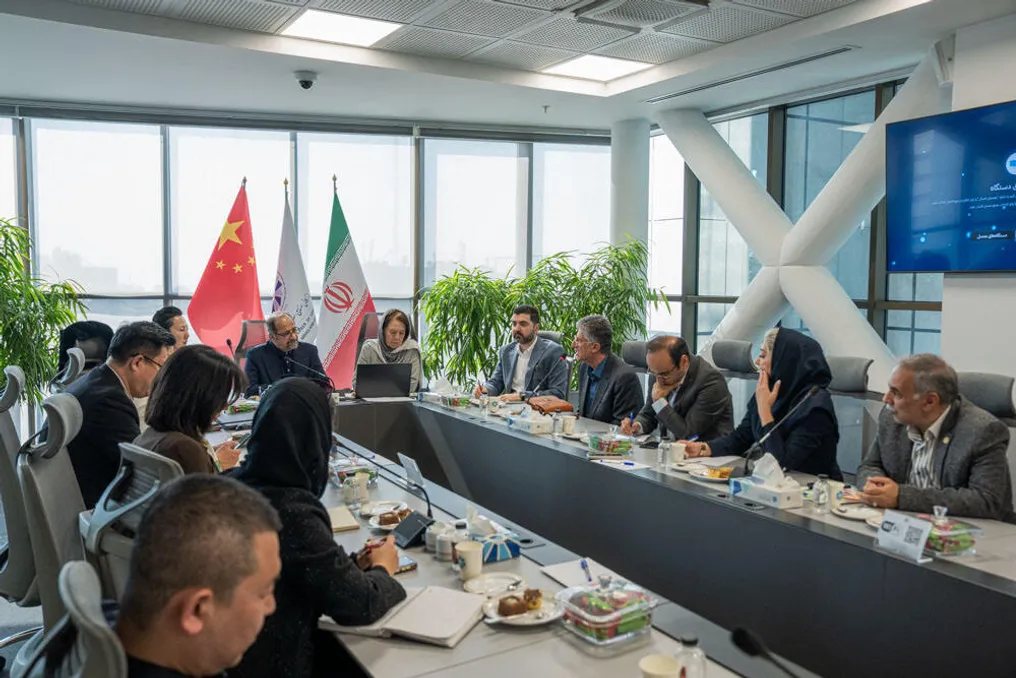
The Chinese trade delegation held a meeting with Feryal Mostofi, Vice President of the Tehran Chamber of Commerce, Industry, Mining and Agriculture (TCCIMA), and Fereydoun Vardinajad, the Chamber's Secretary General. The discussion focused on ways to strengthen trade cooperation and expand cultural exchanges between the two countries.
The Vice President of the Tehran Chamber emphasized the private sector's readiness to support the presence of Chinese investors in projects with quick returns on investment. During the visit of the Chinese delegation, which included leaders from various sectors—trade, culture, art, investment, and the country's joint-stock companies—opportunities were explored to enhance interaction between economic entities of both countries, develop qualified personnel, deepen cultural ties, and hold joint specialized conferences.
Other topics raised at the meeting included developing trade turnover through the use of modern money transfer methods and implementing joint economic projects. At the beginning of the meeting, Zhang Yi, who is responsible for cultural and trade exchange between Iran and China, noted the importance of the Tehran Chamber's role in promoting bilateral cooperation and the need to elevate these relations.
Furthermore, members of the trade delegation, some of whom represented chambers of commerce and industrial zones in the port city of Qingdao, Shandong Province, in eastern China, expressed interest in cooperating with Iranian industrialists and traders.
Structure and Role of the Tehran Chamber
Fereydoun Vardinajad, Secretary General of TCCIMA, continued the meeting by presenting the organization's structure and its contribution to the country's economic growth. He stated that the Tehran Chamber has over 47,000 active members, representing about 50 percent of the country's GDP. Vardinajad noted that establishing permanent links between Iranian and Chinese companies and institutions, such as the China Council for the Promotion of International Trade (CCPIT), opens prospects for improving trade relations.
The Secretary General also explained that the Tehran Chamber recently opened a representative office in Khorgos. The Chamber aims to improve the flow of trade information among traders of both countries and reflect the current economic situation in Iran and China through its communication channels. In connection with the Tehran Chamber's measures to develop economic cooperation with China, he announced the creation of a special secretariat to monitor events and new technologies in China and inform Iranian traders.
In addition, the official website of the Tehran Chamber was developed in three versions—Persian, English, and Chinese—so that Chinese business figures can better familiarize themselves with Iran's legislation, regulations, and business environment. The Secretary General mentioned the potential of the Belt and Road Initiative (BRI), the Shanghai Cooperation Organization, and BRICS to expand economic ties between Iran and China, stating that direct dialogue between traders and the utilization of these opportunities could contribute to the identification and implementation of joint projects.
Emphasizing the need for modern methods of trader interaction, he proposed using the Yuan or a barter mechanism for commodity exchange under current conditions.
Proposal for Direct Investment by Chinese Companies in Iranian Projects
Later, Feryal Mostofi, Vice President of the Tehran Chamber, discussed the importance of developing economic cooperation and joint investments between Iran and China, stating the private sector's readiness to facilitate the presence of Chinese investors in projects with quick returns. She described the activities of the Tehran Chamber's Center for Investment and Family Business, which was established to prepare the necessary infrastructure for attracting capital and providing a suitable platform for economic entities and Chinese companies in various national projects.
The Vice President also commented on differences in financing models, noting that project financing requires banking agreements between the Central Bank of Iran and China, as well as insurance institutions. Nevertheless, the main priority and preference are given to direct investment and partnership between Chinese and Iranian companies.
The head of the Strategy Council of the Tehran Chamber's Center for Investment and Family Business pointed to the potential of Iranian enterprises, stating that there are numerous projects in Iran with the possibility of quick and safe return on investment, which represents a golden opportunity for foreign investors, especially Chinese ones. He added that identifying such projects through Chinese company investments would help develop both countries and achieve common goals.
Hadi Haddadi, strategic advisor to the TCCIMA Secretary General and secretary of the Committee on Art and Economy, also spoke about the tasks of this committee. He explained that through the Tehran Chamber's Committee on Art and Economy, a bridge can be built between producers and suppliers of cinematic works, theater, music, and visual arts, as well as foreign buyers and suppliers. According to Haddadi, the Committee and Chinese cultural and artistic institutions, such as Confucius Institutes, have many opportunities for cooperation that can go beyond classical arts to include crafts, carpet weaving, household goods, and the tourism industry.
Focus on Expanding Trade Exchanges Between Iran and China
The Chinese trade delegation then outlined its future plans, announcing the imminent dispatch of trade, cultural, and tourist delegations to Iran, and welcoming proposals to promote trade exchanges and expand cultural interaction. The Secretary General of the Tehran Chamber reiterated the necessity of resuming the 'goods for goods barter' mechanism as a solution for continuing bilateral trade and proposed further expansion of ties between Iranian and Chinese cultural and economic institutions. He also assured that the Tehran Chamber is ready to play a role in facilitating the trade activities of Chinese delegations by providing necessary information on Iranian trade legislation and regulations, thereby strengthening economic relations between the private sectors of the two countries.