
300 pharmacists from eight Lusophone countries discuss sector challenges in Maputo
Read more
Noticias ao Minuto
noticiasaominuto.com

300 pharmacists from eight Lusophone countries discuss sector challenges in Maputo

Around 300 pharmaceutical professionals from eight Portuguese-speaking nations gathered in Maputo to discuss sector challenges and strengthen cooperation. This meeting marks the return of the main Lusophone pharmaceutical congress to the Mozambican capital after an 11-year hiatus.

The Association of Pharmacists of Portuguese-Speaking Countries (AFPLP), responsible for organizing the event, reported that the congress will take place from Wednesday to Friday. Participants come from Angola, Brazil, Cape Verde, Guinea-Bissau, Mozambique, Portugal, and São Tomé and Príncipe, under the theme 'Investing in pharmacists is investing in the health of populations.'

During the opening session, which will address current problems in the pharmaceutical sector, the keynote speaker will be Delese Mimi Darko, Deputy Director-General for Medicines of the African Union. The event will also feature representatives from the Mozambican Government, including the Minister of Health, Ussene Isse, Paul Sinclair, President of the International Pharmaceutical Federation (FIP), and Bélia Muchanga Cuteia, President of the AFPLP.

Over the three days, participants will dedicate themselves to debating crucial topics such as pharmaceutical education, pharmacovigilance, drug supply chain management, health technology assessment, emergency response, and methods of technical collaboration between Lusophone countries.

Bélia Muchanga Cuteia, President of the AFPLP, emphasized the importance of this congress at a time when Mozambique is advancing in establishing its Order of Pharmacists. She stressed that 'Investing in pharmacists is investing in the quality of healthcare and the safety of populations,' detailing that pharmacists are essential to ensuring access to medicines and local care.

The AFPLP president also highlighted the symbolic significance of the congress's return to Maputo, more than a decade after the previous edition. According to her, the event demonstrates the strength of ties among pharmacists and the determination to build joint solutions for the profession's challenges, being especially relevant to coincide with the founding of the Order of Pharmacists of Mozambique.

The AFPLP, founded 33 years ago, acts by representing over 400,000 pharmacists from Lusophone countries, promoting initiatives for professional development, training, and institutional cooperation within the Portuguese language sphere.

Similar stories

Lusa female correspondents in Portuguese-speaking African countries turned vulnerability into an advantage
Read more
noticiasaominuto.com

Lusa female correspondents in Portuguese-speaking African countries turned vulnerability into an advantage

According to a master's thesis, journalists from the Lusa agency who led delegations in Portuguese-speaking African countries faced harassment, poor infrastructure, and restrictions on press freedom. Nevertheless, many of them managed to use their female status as an advantage for obtaining information.

The dissertation, titled 'Lusa International Correspondents in Portuguese-Speaking African Countries: Challenges for Women's Journalism in Angola, Cape Verde, Guinea-Bissau, and Mozambique,' written by Lusa journalist Cecília Malheiro, is based on interviews with six female correspondents and reveals a 'gender dialectic' between vulnerability and strategic advantage.

The agency journalist, who was part of the Northern region delegation, explained to Lusa that 'there is great vulnerability in complex countries, especially in the context of conflicts and wars,' because women become more susceptible to sexual violence.

The author of the dissertation, who holds a master's degree in African Studies at the Faculty of Letters of the University of Porto, noted that in patriarchal systems where 'women are not highly valued intellectually,' sources tend to underestimate them, which gives them room to maneuver.

Luísa Ribeiro, the first correspondent in Angola between 1990 and 1993 during the civil war, told the author that she was not expelled because 'she was a girl.' Other former correspondents interviewed by Cecília Malheiro pointed to 'calmer discourse' and empathy as tools for continuing their work.

Furthermore, she emphasized that constant precautions are required to maintain trust in the collected information. For example, Raquel Rio, a correspondent in Luanda between 2019 and 2026, reported that she started dressing more formally to earn respect. Sandra Mutinho, a correspondent in Cape Verde between 2019 and 2020, shared that she encountered 'incidents of sexual harassment and boldness from information sources,' which forced her to employ self-defense strategies, such as meeting only in public places.

In Guinea-Bissau, former correspondent Mariza Serafim recounted that being unmarried made her subject to 'harassment or sexual advances.' However, after getting married, 'everything changed': the harassment decreased, and she became known as 'António's wife.' In the author's opinion, there is a perception that 'a married woman in Africa is more worthy, more respected, and therefore a more respected journalist.'

None of the interviewees received psychological support or official information before going into the field. According to Cecília Malheiro, her sources for academic research relied on the advice of previous correspondents. She added that 'there is no document that a correspondent could refer to,' expressing hope that her work will become 'the beginning of creating a guide' for future correspondents. The female correspondents demonstrated that 'it is possible to conduct good and distinctive women's journalism.'

60% of EU citizens consider drug trafficking and use a serious problem, according to a survey
Read more
noticiasaominuto.com

60% of EU citizens consider drug trafficking and use a serious problem, according to a survey

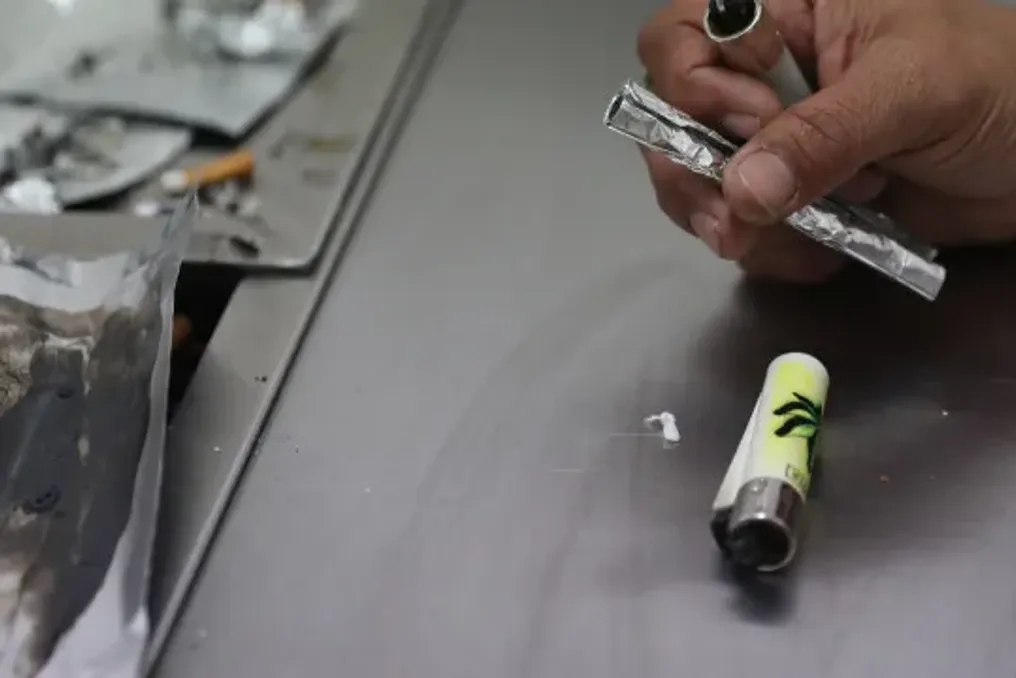
According to the first survey by the European Monitoring Centre for Drugs and Drug Addiction, six out of ten residents of the European Union (60%) believe that drug trafficking and consumption pose 'serious problems'. In Portugal, this figure is 56%.

Data published by the European Union Drugs Agency (EUDA), based in Lisbon, clearly illustrates how respondents perceive this phenomenon, its impact, and how society should respond.

Of the 3004 Portuguese participants in the study, 44% reported an increase in local-level trafficking over the past five years, while 38% cited mental health issues as the main public health problem related to use. Furthermore, 28% highlighted the involvement of children and adolescents in drug trafficking as one of the main public safety concerns.

Overall across the European Union, 60% of respondents confirmed that drug trafficking and use are serious problems in their area of residence, and 49% noted an increase in local-level trafficking over the last five years; only 14% felt the situation had improved.

The survey results show that 39% of EU respondents identify mental health issues as the primary public health concern related to drugs, while 30% emphasize the participation of children and adolescents in drug trafficking as one of the main public safety issues.

On the other hand, 48% stated that cannabis is easily available within 24 hours, and 45% supported providing support and assistance to consumers.

The survey was conducted among 95,883 citizens of 27 EU countries, as well as respondents from Norway, Turkey, Albania, Bosnia and Herzegovina, Montenegro, Moldova, North Macedonia, Bosnia and Herzegovina, and Serbia, as well as Kosovo.

Drug-related problems are considered serious, but the percentage of people claiming that substance use is a serious local problem varies from 44% in Denmark to 78% in Cyprus, reaching 85% in North Macedonia among non-EU countries participating in the survey.

Perceptions of increased trafficking also differ: 67% of Cypriots believe the situation has worsened locally over the past five years, compared to 38% in Denmark and Lithuania.

The involvement of children and adolescents in drug trafficking is the most frequently mentioned public safety issue related to drugs in the EU (30%), followed by violence (27%) and drunk driving (26%). This fact ranks first among public safety concerns in 17 out of 27 EU member states.

Drug-related violence is the top issue in Spain, France, Luxembourg, Malta, and Slovakia. Thirty percent of respondents are concerned about the damage caused by new synthetic drugs.

Only 10% of Europeans state that they have no safety concerns related to drug trafficking in their place of residence.

Nearly half of EU respondents (48%) stated that cannabis would be easily accessible within 24 hours, compared to about a third in the case of cocaine and MDMA. Among respondents aged 15 to 24, 55% claim that cannabis is easy to obtain, compared to 42% aged 55 and older.

Regarding anti-trafficking measures, EU respondents prioritize law enforcement: 39% advocate for stricter measures against traffickers, and 37% support the dismantling of criminal networks. Legalization and regulation of drugs receive the least support (13%).

When asked what should be done to reduce drug-related problems, 45% support more decisive police action against trafficking and distribution, while 43% support the reintegration of drug addicts into the labor market and daily life.

Younger respondents give equal weight to prevention, social measures, and law enforcement, whereas support for law enforcement increases with age. Support for stronger police measures rises from 33% among people aged 15 to 24 to 54% among those aged 55 and older.

When asked how to deal with people who use drugs and enter the judicial system, respondents prefer help over punishment: 45% favor support and assistance, compared to 31% who prefer criminal conviction or imprisonment, and 10% who prefer lesser penalties such as a fine.

However, this preference for help does not equate to greater social acceptance: only 31% would agree to accept a user as a neighbor, and 19% would agree to a drug addict marrying a family member.

Popular