
Doctors' opinions on the benefits of protein supplements after Tukaram Mundhe's statement
Read more
Aaj Tak
www.aajtak.in

Doctors' opinions on the benefits of protein supplements after Tukaram Mundhe's statement

The Commissioner for Food and Drug Control of Maharashtra, Tukaram Mundhe, warned youth against misleading labeling, marketing, and false claims regarding protein supplements and nutraceutical products. He emphasized that protein supplements alone are insufficient for muscle building; natural sources of protein and physical exercise must be consumed. Furthermore, Mundhe strongly recommended not using protein supplements without consulting a doctor.

In response to Tukaram Mundhe's advice, doctors shared their views. Dr. Rajiv Choudhary from the Medical Department of Yatharth Hospital in Faridabad told Aajtak.in that there are varying opinions on protein supplements. Some consider them vital for health, while others believe they offer no significant benefit.

According to Dr. Rajiv, protein is an essential nutrient for the body. It is important for building muscle tissue, repairing all body tissues, and the recovery process after illness. Protein supplements may be necessary for people who do not get enough protein from their daily diet, but this should only happen after consulting a doctor.

Professor Dr. Ajit Kumar from Rajiv Gandhi Hospital in Delhi warns that protein supplements are not a universal solution. They are intended for those who require increased protein intake, but their consumption must be limited. Excessive protein intake leads to increased caloric content, and some supplements contain a lot of sugar. Patients with kidney diseases must consult a doctor before starting protein supplements.

Dr. Kumar also insists that one should rely more on a natural diet than on supplements. Good sources of protein include milk, yogurt, cottage cheese, lentils, eggs, and soybeans. Therefore, protein supplements should be viewed not as a replacement for a complete meal, but as an additional source when needed, and one cannot depend on them entirely.

Similar stories

Singer claims kidney disease developed due to use of whitening cream cosmetics
Read more
www.aajtak.in

Singer claims kidney disease developed due to use of whitening cream cosmetics

Musician and singer Salim Kodatur stated on Sunday that about ten years ago he contracted a serious urinary tract infection after consulting a friend and starting to use a whitening cream. Within several months, he developed swollen eyelids and legs, along with a decline in immunity.

According to PTI, doctors explained this issue as a decrease in albumin levels, an important protein in the body. The medics warned that if this protein level continues to drop, it could lead to kidney failure.

After a kidney biopsy, he was diagnosed with membranous nephropathy, the treatment for which required several months in the hospital. Salim reported that he purchased the cream for 500 rupees and used it for over a year. Despite this, health problems continue to bother him, especially sleep disturbances. He noted: 'I only sleep two or three hours during the day. Sometimes I have to take medication to fall asleep.'

A similar illness allegedly developed in a 17-year-old girl who also used the whitening cream. According to doctors at Esther MIMS Hospital in Malppuram, the girl obtained the cream after seeing influencer promotional videos on Instagram. These videos claimed the cream helped eliminate pimples, dark spots, and pigmentation.

The girl recounted that after using the cream, she experienced a series of health problems. Her blood pressure dropped sharply, causing her to lose consciousness. Furthermore, her legs swelled so much that walking and climbing stairs became difficult, forcing her to seek hospital care.

Salim also mentioned experiencing similar symptoms, which led to a weakening of his physical and mental condition. This forced him to cancel performances, resulting in financial losses.

Meanwhile, on Sunday, the girl informed journalists that she had filed a police report and submitted a sample of the used cream to law enforcement. She stated that the police promised to take appropriate action. The girl emphasized: 'I want to pursue this case further. Now I will go to consumer court. The social media page where I saw this product no longer exists; it seems to have been deleted.'

She added that the police notified her that the cream sample would be sent for testing, and the laboratory report would strengthen her case. She also mentioned providing the name of the product to the police officers.

One day earlier, her doctor informed journalists that the girl's blood mercury level was dangerously high. Moreover, the cream analysis revealed 12,500 parts per million (ppm) of mercury, while the permissible standard limit is less than 1 ppm.

Differences between fatty liver dystrophy and liver inflammation: Doctor's consultation
Read more
www.aajtak.in

Differences between fatty liver dystrophy and liver inflammation: Doctor's consultation

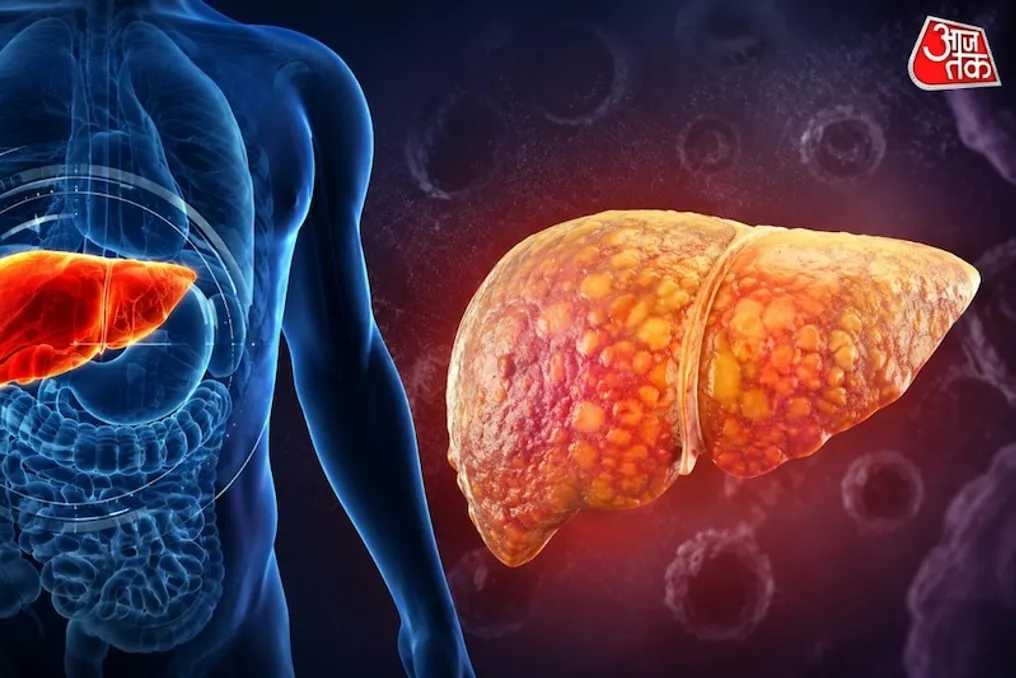
Nowadays, fatty liver dystrophy is a common disease in which an excess amount of fat accumulates in the liver. Additionally, inflammation can develop in the liver. This raises the question of whether fat accumulation and inflammation in the liver are the same condition, and whether the presence of fatty dystrophy signifies the beginning of liver damage.

According to doctors, these two conditions are different, although in some cases they may be interconnected.

Dr. Kuldip Kumar from the medicine department at GTB Hospital in Delhi explains that fatty liver dystrophy is the accumulation of excess fat in liver cells. Fatty dystrophy can be of different degrees, such as Grade I and Grade II; if it progresses, it can lead to cirrhosis and fibrosis of the liver, which is a dangerous condition. Symptoms of fatty dystrophy may include abdominal pain and digestive problems.

Liver inflammation indicates the onset of irritation and damage to its cells for some reason. In medical terminology, this condition is also called hepatitis. The causes can be diverse: infection with hepatitis viruses, alcohol consumption, exposure to certain medications, or autoimmune diseases. Some patients with fatty dystrophy may subsequently develop inflammation. Liver inflammation manifests with signs such as jaundice, fatigue, and changes in urine or stool color.

To determine whether fat has accumulated in the liver, a doctor may recommend an ultrasound examination. To diagnose liver inflammation, levels of ALT and AST, bilirubin, and protein are tested. Analysis of these liver enzymes can indicate liver cell damage. Furthermore, to detect fibrosis, the doctor performs a fibroscan.

Popular