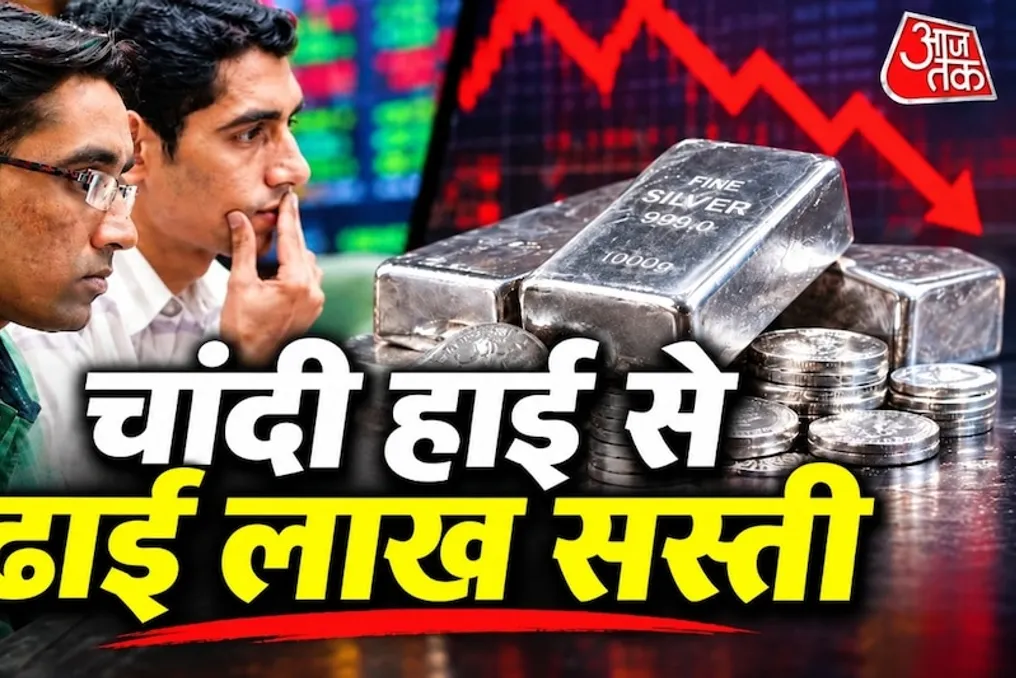
Prices for gold and silver experienced a sharp decline (Gold Rate Crash) in November. However, there was a 3% increase on the last working day. Despite this, since the beginning of November, the price of 10 grams of 24-carat gold has fallen by more than 14,000 rupees.
This recent rise has caused confusion among investors regarding whether to buy now or wait for further declines. Therefore, the next 15 days are considered extremely important for investors, as three key factors related to the US will be closely monitored during this period to determine whether the situation for gold will improve or if the decline will continue.
The price of gold, which previously attracted attention due to record growth at the beginning of the year, is now drawing focus because of its fall towards the end of the year. At the beginning of November, the price was 140,186 rupees for 10 grams, but by December 4th, it had dropped to 126,021 rupees on the MCX exchange. This decrease followed a rise of 4,243 rupees on Monday.
Compared to the high values, the current state looks like a significant crash. In late January, the price of a gold futures contract exceeded 1.93 lakh rupees, meaning that the precious metal is currently available about 67,000 rupees cheaper.
After a period of record growth followed by a significant drop, investors are unsure whether to buy at the current level or wait for an even greater decline. If you are in this situation, you should pay attention to three events scheduled between November 25th and December 9th.
The first important trigger is the US Consumer Price Expenditure (PCE Inflation Report), which will be released on November 25th. The Federal Reserve (FED) closely monitors this indicator when determining interest rates. Higher inflation than expected could strengthen expectations of tight monetary policy, which would support the dollar and put pressure on gold.
The second trigger is the US employment report, scheduled for December 4th. Strong job creation could reinforce arguments for raising interest rates, while weak employment data might lead to expectations of less aggressive policy from the Fed, which would also affect the price of gold.
The third factor that could have the greatest impact on the price of gold over these 15 days is the decision by the US Federal Reserve on the December interest rate, scheduled for December 9th. Generally, if interest rates are raised, the attractiveness of gold decreases because this yellow metal does not generate interest income. This will be reflected in the price of gold.
Anindya Banerjee, Head of Commodity and Currency Research at Kotak Neo, believes that gold could reach its bottom somewhere between now and January 2027, although he does not rule out further declines. He maintains a positive long-term view on gold. He notes that, according to old trends, gold often reaches its bottom immediately after the dollar reaches its peak.