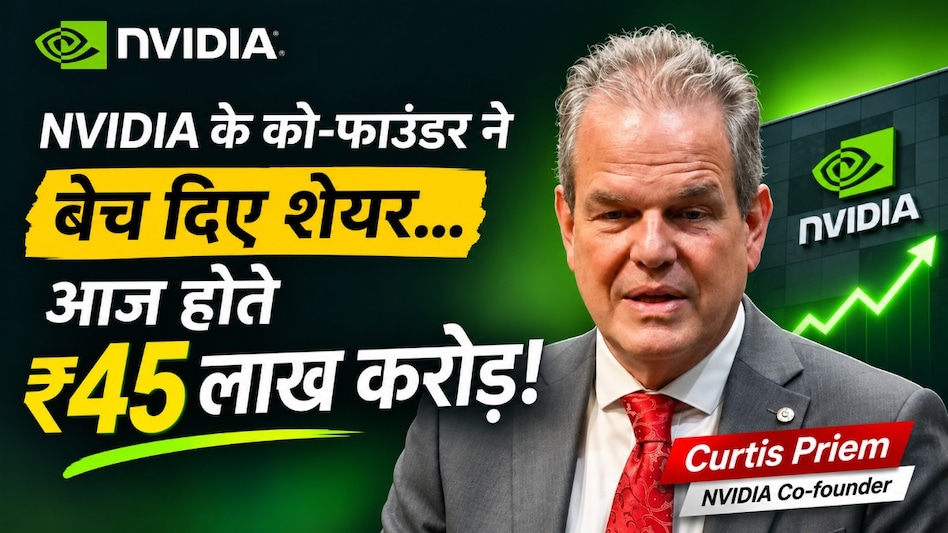
NVIDIA Co-founder Lost Stake Worth 45 Lakh Crore Rupees After Stock Sale
Read more
Aaj Tak
www.aajtak.in

NVIDIA Co-founder Lost Stake Worth 45 Lakh Crore Rupees After Stock Sale

The decision to sell shares early can lead to regret later, especially if the company becomes one of the most valuable in the world. This is what NVIDIA co-founder Curtis Priem faced. Estimates suggest that at the time of the company's IPO in 1999, he owned approximately 12.1% of the shares. If he had held this stake until today, its value would be around $484.9 billion, equivalent to approximately 44.94 lakh crore rupees.

However, Priem sold his shares long before that. He felt that such immense wealth exceeded his personal needs. It is worth noting that this amount is double the market capitalization of India's largest company, Reliance Industries.

Curtis Prem's story is similar to that of Ronald Venn, the third co-founder of Apple, who is often mentioned in the context of selling stakes in major technology companies. The difference, however, is that Priem not only sold a large portion of his shares but also donated a significant part of them.

Today, NVIDIA's valuation is in the trillions of dollars. If Priem, who was with the company in its early days, had retained his original stake, his wealth could have challenged the fortunes of some of the world's richest people. But then he made a different decision.

Curtis Priem founded NVIDIA in 1993 along with Jensen Huang and Chris Mellachaski. He held the position of Chief Technology Officer (CTO). After working in this role for about ten years, he retired in 2003.

When NVIDIA went public in 1999, reports indicated that Prem held between 12.1% and 12.8% of the company. This represented a significant portion of the company's early investments and efforts. Nevertheless, Priem decided not to hold these shares.

He transferred the majority of his stake to his charitable foundation. He also gradually sold the remaining shares, and by 2006, his personal stake in NVIDIA was completely liquidated.

During that period, Priem characterized his stake as an 'excessive amount of money.' For him, accumulating wealth was not the main priority; he chose the path of using his assets to support areas such as education and research.

Let's calculate the math of this decision. Forecasts suggest that NVIDIA's market capitalization will reach approximately $4.01 lakh crore by November 2026. If Priem's 12.1% stake remained with him today, it would be worth about $484.9 billion. At an exchange rate of 92.68 rupees to the dollar, this amount would be approximately 44.94 lakh crore rupees, or about 45 lakh crore rupees. It is important to understand that this is not his current wealth, but merely an indicator of what his old stake could have been worth if it had remained unchanged in share quantity.

To understand this sum, one can compare it to large Indian companies. For example, if we take Reliance Industries' market capitalization at 18.3 lakh crore rupees, Priem's hypothetical stake would be about two and a half times larger.

Furthermore, India's total budget for 2026-27 is about 53.47 lakh crore rupees. In that case, Priem's stake would account for about 84% of the country's annual budget. This comparison demonstrates how much the value of NVIDIA shares has grown over time.

Another interesting comparison is with Jensen Huang. Based on this market capitalization, his 3.5% stake is valued at approximately 13 lakh crore rupees. Thus, the hypothetical value of Priem's old 12.1% stake would be more than three times higher than Huang's current stake.

After retiring from NVIDIA, Curtis Priem withdrew from public life. He resides in California and dedicates most of his time to work related to education, research, and philanthropy.

He has long-standing ties with Rensselaer Polytechnic Institute (RPI). He serves as a vice chairman of the institution's board of trustees. His family, through the Priem Foundation, has donated over $27.5 billion to RPI, which is equivalent to approximately 2.548 lakh crore rupees in Indian currency.

These funds are used to promote education and research in new technologies. Priem also shows a particular interest in quantum computing. The Priem Foundation has contributed to the development of infrastructure and research related to quantum computing at RPI.

Thus, even while distancing himself from NVIDIA shares, Priem has not completely distanced himself from the technological world; he has simply changed his approach to activities. Instead of managing a large corporation, he now directs funds to support educational and scientific institutions.

From today's perspective, Priem's decision might surprise anyone. Who is willing to sell a stake that could later be worth around 45 lakh crore rupees? However, this calculation is based on current information. The decision was made in 1999 or 2003.
Similar stories

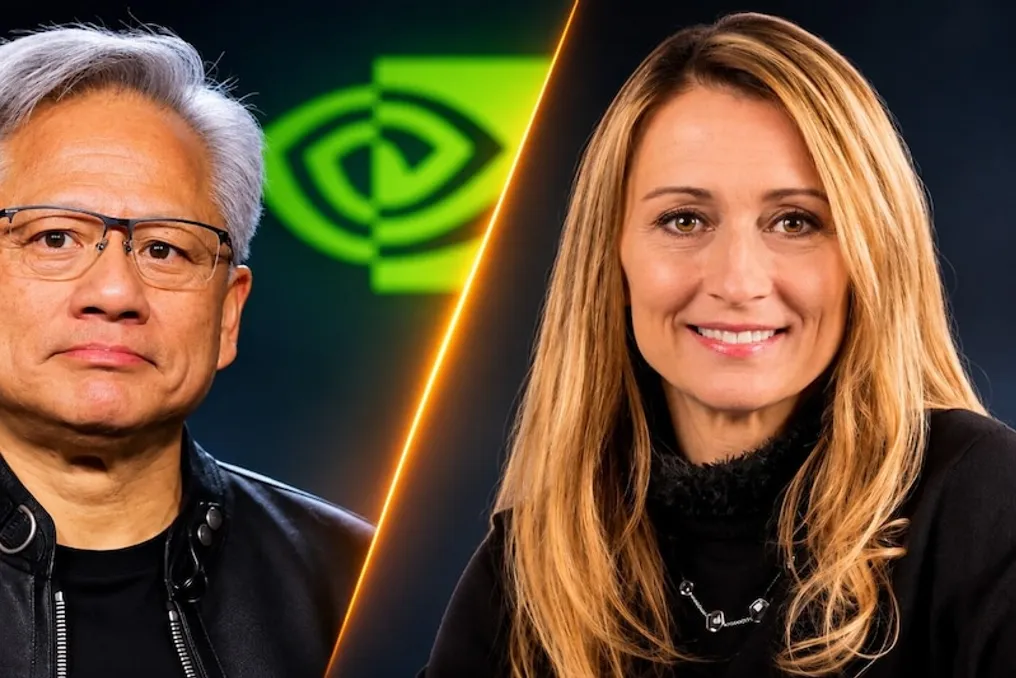
New Nvidia CEO Colette Kress: Her Salary and Comparison with Former CEO Jensen Huang
Read more
www.aajtak.in

New Nvidia CEO Colette Kress: Her Salary and Comparison with Former CEO Jensen Huang

Significant changes have occurred at Nvidia, a company specializing in AI and chip development. After 33 years, Jensen Huang resigned as CEO, and the company's leadership was passed to current CFO Colette Kress, who was appointed interim CEO.

The company began searching for a new CEO. Questions arose regarding the salary of the new interim CEO, as well as how much she earned as CFO and what the former CEO Jensen Huang received.

Information about Colette Kress's salary is presented in Nvidia's 2026 proxy statement. In 2026, Colette Kress's total package amounted to $14.34 million (equivalent to approximately 1290 million rupees). This amount includes not only salary but also stock, cash bonuses, and other benefits.

Her annual base salary was $898,577 (about 81 million rupees). Additionally, she received stock options worth $12.82 million and a cash bonus of $600,000. However, information on her salary after being appointed interim CEO is currently unavailable.

Jensen Huang's salary as CEO of Nvidia was significantly higher than Colette Kress's. According to Nvidia's 2026 proxy filing, Jensen Huang's total compensation in 2026 was $36.34 million, which is approximately equal to 3270 million rupees.

Colette Kress's total benefits were 1290 million rupees, whereas Huang received 3280 million rupees as CEO. Thus, there is a difference of about 1980 million rupees between their salaries.

Jensen Huang's departure became known when media reports surfaced about his extramarital affairs. Suspicion arose regarding his girlfriend that she might be a Chinese spy. The situation escalated, forcing him to leave the company.

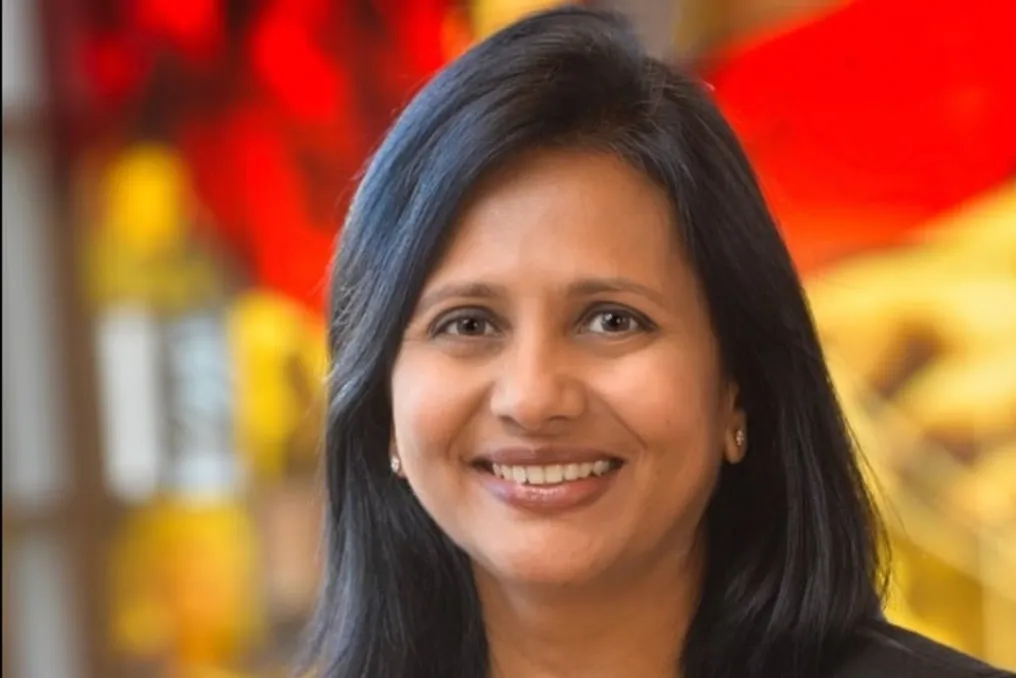
Indian Woman Arti Shah Joins Nvidia Board Amid Disputes Over Jensen Huang's CEO Future
Read more
www.aajtak.in

Indian Woman Arti Shah Joins Nvidia Board Amid Disputes Over Jensen Huang's CEO Future

Nvidia, one of the world's largest artificial intelligence (AI) companies, has found itself at the center of serious scandals involving its CEO, Jensen Huang. Rumors have surfaced regarding Huang's affair with an alleged Chinese spy, as well as his connections with a company employee. These circumstances have led to speculation about a possible dismissal of Huang.

The company's board of directors initiated an independent investigation into the emerging news. In this context, the name of an Indian woman, Dr. Arti Shah, has drawn public attention. She is a member of the Nvidia board of directors and participates in two key company committees.

Arti Shah, who initially studied at Gujarat University in India, previously worked for about 27 years at the major American pharmaceutical company Eli Lilly. In the AI sector, Nvidia holds a dominant position, and the company's success is largely attributed to Jensen Huang, who founded Nvidia in 1993 and has led it ever since.

However, in November 2026, the company faced difficulties due to Huang's personal matters and serious allegations related to China. According to reports, American intelligence agencies are conducting checks on a woman with alleged ties to China, and Huang's name appears in these cases. Huang admitted infidelity to his wife, although accusations of espionage or sharing confidential company information have not yet been proven.

Dr. Arti Shah previously held positions as Senior Vice President and Chief Information and Digital Officer at the American pharmaceutical company Eli Lilly. Her experience spans not only pharmaceuticals but also areas such as technology, cybersecurity, data science, digital health, and business management.

Shah's education began in India, where she earned bachelor's and master's degrees in mathematics and statistics from Gujarat University. She later moved to the USA and obtained a PhD in applied statistics from the University of California, Riverside. Her career path demonstrates how, after receiving education in India, she reached high positions in the American corporate sector.

Shah spent a significant part of her career at Eli Lilly, one of America's leading pharmaceutical companies. She started her work at the company as a statistics specialist, then became a research scientist, and took on several leadership roles. As Senior Vice President and Chief Information and Digital Officer, she was responsible for IT, digital health, cybersecurity, data analysis, and the company's digital strategy.

Eli Lilly announced her retirement in November 2020, and Shah left the company in 2021. Nevertheless, she continued to serve on the boards of various companies and non-profit organizations afterward.

Nvidia officially included Arti Shah in its board of directors on November 9, 2020. At that time, Jensen Huang noted that Shah's experience would be beneficial to the company in the intersection of computer science and healthcare. Shah has been on the Nvidia board since 2020 and serves on the company's Audit Committee and Compensation Committee.

The Audit Committee oversees the company's financial records, internal investigations, risks, and information security. Meanwhile, the Compensation Committee monitors decisions regarding the salaries and other benefits of senior executives. Thus, Arti Shah is not just a board member but also an important figure overseeing the company's financial and administrative activities.

This is a key issue in this situation. In a statement released by the Nvidia board on November 8, 2026, the company announced the launch of an independent investigation regarding news concerning Jensen Huang. Responsibility for this investigation has been assigned to the committee of independent directors, with external independent legal experts being involved. The company also stated that it currently has no grounds to believe that...

Popular