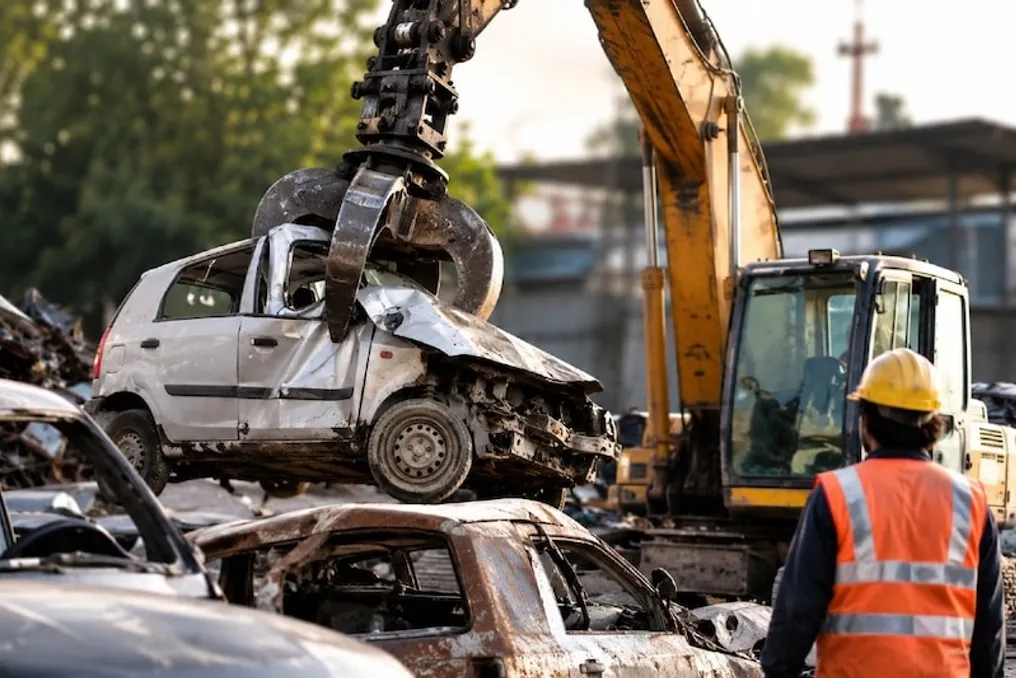
Government amends EPR rules, clarifying responsibility for disposing of old cars
Read more
Aaj Tak
www.aajtak.in

Government amends EPR rules, clarifying responsibility for disposing of old cars

The central government has decided to eliminate long-standing uncertainty regarding the disposal of old vehicles and Extended Producer Responsibility (EPR) in the automotive sector. Questions arose about who would be responsible for old cars if a company ceased production, and whether operating companies should also be subject to similar obligations.

The Ministry of Environmental Protection, Forestry, and Climate Change introduced amendments to the Environmental Protection Rules (End-of-Life Vehicles), 2025. These changes were officially published by the Ministry on November 20, 2026, under notification number S.O. 6326(E) and will come into force from the date of publication in the state gazette.

The main goal of this revision is to eliminate confusion among car manufacturers regarding regulatory requirements. In accordance with rule 4(6), a special provision related to EPR will apply exclusively to companies that completely cease operations. Thus, enterprises that continue to produce and sell cars on the market are exempted from taking on this special responsibility.

Under the new provisions, if a car manufacturer permanently closes its business, it is obliged to provide the Central Pollution Control Board (CPCB) with complete documentation on its old vehicles produced before the cessation of activity. For commercial and transport vehicles, reporting for the last 15 years is required, while for non-commercial and non-transport vehicles, data for 20 years is necessary.

After receiving information from the company, the CPCB will determine its EPR obligations and notify the relevant enterprise. When establishing obligations, the CPCB must take into account all applicable provisions of the rules. The key point of this change is the clear distinction between companies that continue operating and those that are ceasing operations.

In addition to clarifying EPR obligations, the amendments also modified rule 9(2) of the End-of-Life Vehicles Rules, 2025. Phrases such as 'or other steel material related to the automotive sector processed at a registered vehicle dismantling site' were excluded from this rule. This means that this wording, which previously included other types of automotive-related scrap steel, is now excluded from this provision.

The process of making these changes began in March 2026, when the Ministry of Environmental Protection published a draft amendment in the state gazette on March 27, 2026. Following this, public and stakeholder opinions were requested for 60 days. All received comments and suggestions were reviewed before the final notification of the amendments was issued.

Overall, the government's decision significantly clarifies the situation regarding the disposal of old cars and EPR responsibility. Companies will now find it easier to understand what volume of data on old cars they must provide in case of ceasing operations and how their obligations will be determined. The most important aspect is that companies continuing their operations are excluded from the special procedure intended for closing businesses, which should reduce the regulatory burden on automakers.

Similar stories

Government plans to fine up to eight times for concealing license plates to save on road tolls
Read more
www.aajtak.in

Government plans to fine up to eight times for concealing license plates to save on road tolls

The government is preparing to adopt strict measures to ensure the successful operation of the barrierless toll collection system on highways across the country. However, some drivers are attempting to avoid paying tolls by manipulating their vehicles' license plates.

It is planned that any attempt to tamper with the license plate, whether by attaching fabric or obscuring it with dirt, will result in a heavy fine. The government intends to levy an amount four to eight times greater than the standard toll fee. This means that an attempt to save a small amount could result in expenses amounting to thousands of rupees.

According to an ET report, authorities are preparing stringent rules for the successful implementation of the barrierless collection system, which allows vehicles to pass through toll sections without stopping thanks to the operation of cameras and electronic systems. If a driver attempts to hide or alter the license plate to avoid payment, they face a significant fine.

The barrierless collection system is being gradually introduced in the country, where tolls are collected automatically using cameras and electronic devices, eliminating the need to stop at toll booths. Nevertheless, a serious problem has arisen before this new system: vehicle owners are altering their license plates so that cameras cannot read the registration number.

To solve this problem, the Ministry of Transport has begun developing amendments to the Rules for collecting fees on national highways. These changes provide for the possibility of charging vehicles that conceal or interfere with the license plate to evade toll payments an amount exceeding the usual toll fee by four to eight times.

The government plans to use artificial intelligence (AI) to implement this system. According to information received from officials, a system will be created in the coming months that will analyze images received from toll booth cameras, as well as other data. This will allow for the identification of vehicles whose license plates have been altered or whose registration number has been intentionally concealed.

Responsibility in this matter is distributed between the State Transport Department and the National Highways Authority of India (NHAI). State departments will be responsible for enforcing measures and collecting fines in accordance with the Motor Vehicles Act, while NHAI and similar road authorities may be responsible for levying increased charges.

NHAI has previously expressed concern about toll payment fraud. After launching the barrierless collection system at the Mundka toll plaza in Delhi, NHAI sent a letter to the Delhi government demanding constant monitoring of this issue. As this system began to be implemented at other toll plazas, NHAI raised this issue with the governments of other states.

Even according to the existing Motor Vehicles Act, changing a license plate is a punishable offense. Upon the first detection of such a violation, a fine of 5000 rupees is prescribed, and a repeat offense may incur a fine of 10000 rupees. However, after the new scheme comes into effect, vehicle owners will have to pay not only this fine but also an amount increased four to eight times from the standard toll fee, making the attempt to save money on the license plate very costly.

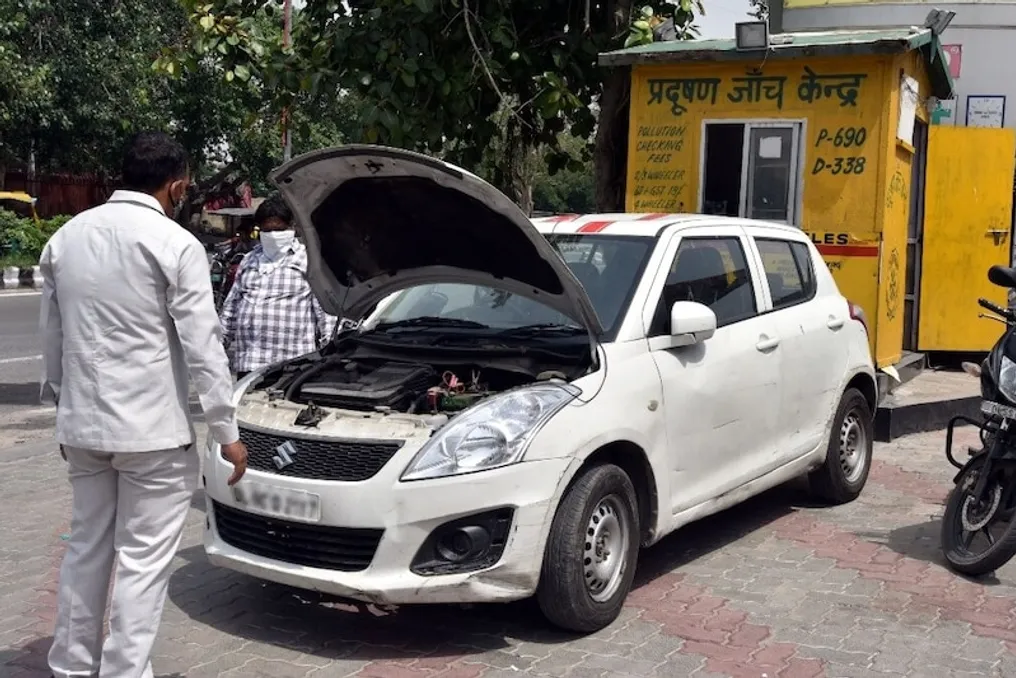
Government introduces new rules for emission control certificates (PUC): relief for BS-6 and stricter requirements for older vehicles
Read more
www.aajtak.in

Government introduces new rules for emission control certificates (PUC): relief for BS-6 and stricter requirements for older vehicles

The central government has issued new regulations regarding the validity period of air pollution control certificates (PUC) for vehicles. These changes bring significant relief to owners of BS-6 standard cars by providing them with more time to renew their certificate compared to previous conditions. Consequently, the PUC validity period for BS-6 vehicles will be extended.

At the same time, the inspection periods for pollution levels have been shortened for older vehicles. The Ministry of Transport and Road Affairs (MoRTH) officially announced these changes on November 13. The new rules establish the following requirements for private BS-6 vehicles:

Private BS-6 vehicles up to six years old must undergo certificate renewal every three years. For BS-6 vehicles aged six to ten years, annual renewal is required. And for vehicles older than ten years, pollution checks must be conducted every six months.

These new standards also apply to commercial transport. Older BS-6 commercial vehicles must receive a PUC certificate every two years during the first six years. For BS-6 commercial vehicles aged six to ten years, the renewal period is set at one year, and for the oldest vehicles, it is half a year.

Separate rules apply to vehicles manufactured before the BS-6 standards. The pollution control certificate for vehicles with BS-1, BS-2, and BS-3 standards will only be valid for three months, meaning it needs renewal every three months.

For BS-4 standard vehicles, the certificate validity is set at six months. These new PUC rules, introduced by the central government, will be effective nationwide and differ from the Winter Pollution Control Plan in Delhi. In Delhi, a winter measures plan is in effect from November 1 to February 28.

It is important to note that the maximum previous PUC validity was one year. These changes to the certificate validity periods were incorporated into the Central Vehicle Regulations (16th Amendment) of 2026 and were officially published in accordance with the Motor Vehicles Act of 1988. The new rules also clarify the certificate renewal dates. If renewal is done within 10 days before the current certificate expires, the new document will take effect after the old one expires. However, if renewal occurs after expiration, the new certificate becomes effective from that day.

Popular