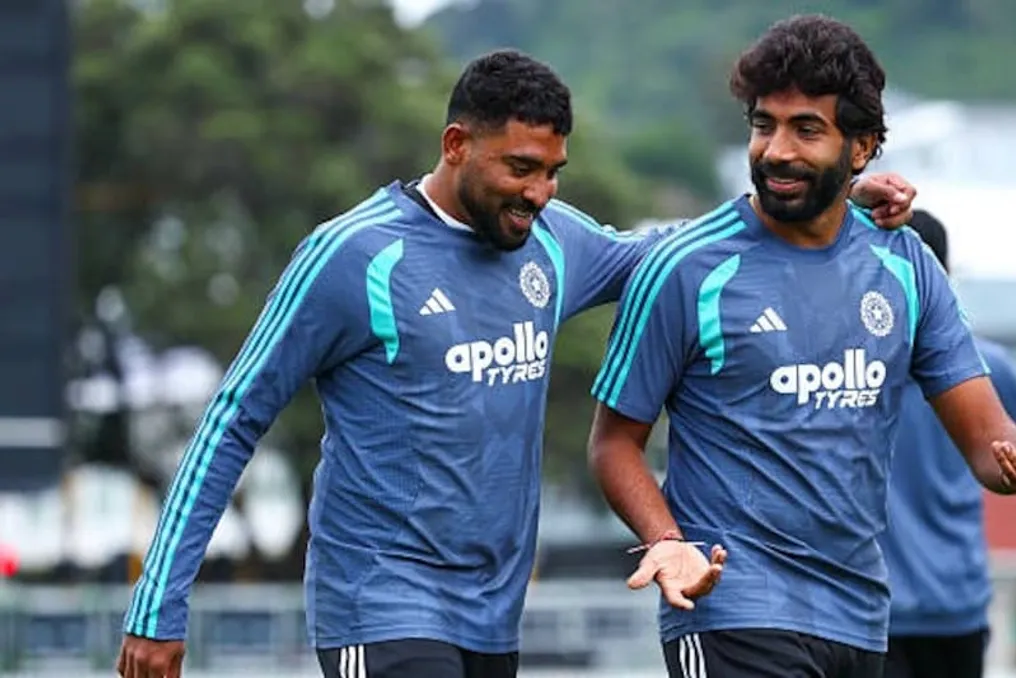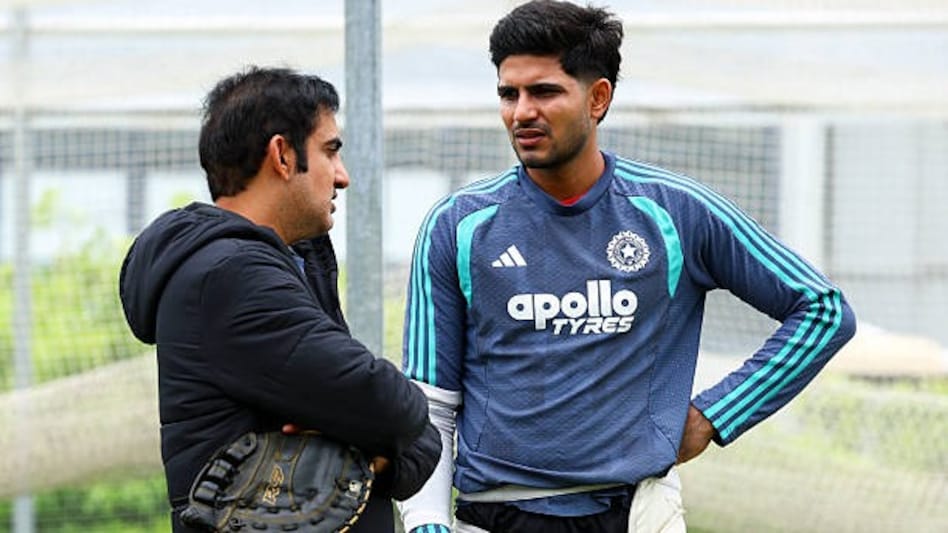
ICC rejects Shubman Gill's request to allow saliva use for ball polishing
Read more
Aaj Tak
www.aajtak.in

ICC rejects Shubman Gill's request to allow saliva use for ball polishing

The International Cricket Council (ICC) has denied the request from Indian captain Shubman Gill to permit the use of saliva for polishing the ball. The ICC is currently unwilling to review restrictions related to saliva use on the ball, as it believes this regulation is based on serious health and cricket-related reasons.

The situation arose after the first Test match played in Wellington against New Zealand ended in a draw. Indian bowlers were unable to take all wickets in New Zealand's second innings on a pitch that favored batsmen. During this match, Gill raised the issue of the Kookaburra ball, noting that it loses its shape too quickly. He suggested that if players were allowed to use saliva to give the ball shine, it could provide an advantage to bowlers.

According to reports, the ICC does not plan to change its stance on this matter yet.

Restriction introduced after COVID

The ban on using saliva on the ball was first introduced in 2020 during the COVID-19 pandemic. The goal of this decision was to protect players and match officials from the risk of infection. Initially, it was a temporary measure, but after several years, the ICC incorporated it into its Playing Conditions permanently.

This decision also aligns with the rules of the Marylebone Cricket Club (MCC). According to MCC rules, the use of saliva is prohibited because it is one way of unfairly altering the condition of the ball, similar to other methods.

The ICC believes that using saliva along with items such as sweets, chewing gum, or mints can lead to significant changes in the ball's condition, which complicates monitoring and preventing abuse of this rule.

ICC Health Concerns

In addition to playing rules, the ICC's position includes health concerns. The Council believes that the use of saliva may maintain the risk of transmitting infections among players and umpires. The European Centre for Disease Prevention and Control (ECDC) indicates that new emerging variants of SARS-CoV-2 still pose a global health threat.

Interestingly, the issue of the saliva ban was not raised at the ICC meetings held in Bali earlier this month. If any changes to the playing rules regarding this are required in the future, any member state must submit a corresponding proposal to the ICC committee. Only after the committee reviews it can it be sent to the ICC Board for a final decision.

Gill's Questions Regarding the Ban Removal

After the Test against New Zealand ended in a draw, Shubman Gill expressed dissatisfaction with this ban. He stated that despite the COVID-19 pandemic period having passed, players still cannot get permission to use saliva for polishing the ball.

Gill noted: "I don't understand why we still aren't allowed to use saliva to shine the ball. We have been out of the COVID period for a long time. How long will the rule banning saliva on the ball remain in effect? Seven or eight years have passed, and I still don't understand why I am not being given permission."

Exception in IPL

However, since this pertains to domestic tournaments, the Board of Control for Cricket in India (BCCI) previously lifted this ban in the Indian Premier League (IPL). Starting from the IPL 2025 season, players were allowed to use saliva for ball polishing. Thus, bowlers received this concession in the IPL, but the ICC is not yet ready to change this rule in international cricket.
Similar stories

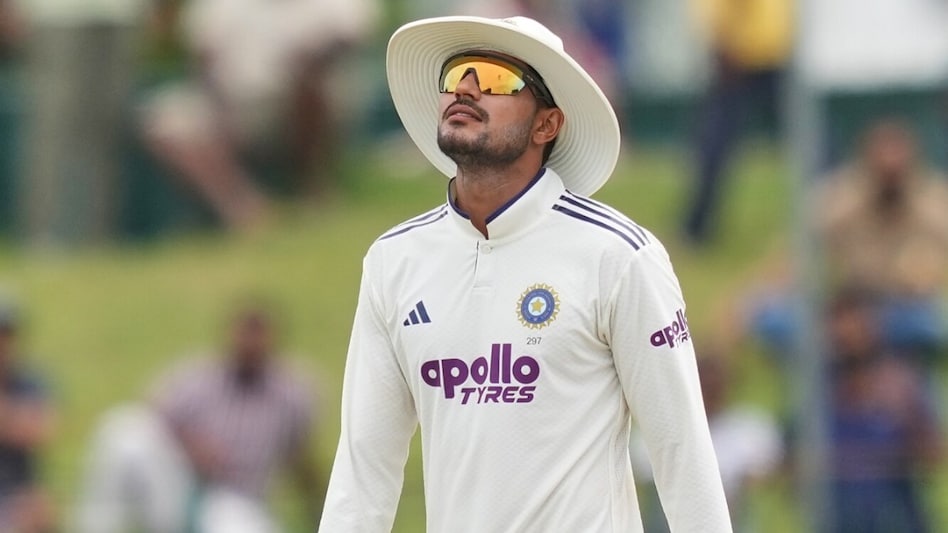
Captain Shubman Gill criticizes ICC over ongoing ban on using saliva to polish the ball
Read more
www.aajtak.in

Captain Shubman Gill criticizes ICC over ongoing ban on using saliva to polish the ball

Following a draw in the match against New Zealand in Wellington, India's captain Shubman Gill expressed dissatisfaction with the International Cricket Council's (ICC) rule regarding the use of saliva to polish the ball. He questioned the continuation of this restriction, given that many years have passed since the end of the COVID-19 pandemic.

During a post-match press conference, Shubman Gill stated: 'I don't know why it is allowed or not to use saliva to polish the ball. Many years have passed since the end of the COVID-19 pandemic. It is unclear why this ban still exists.'

Previously, during the coronavirus pandemic, the ICC introduced a temporary ban on applying saliva to the ball in May 2020 to reduce the risk of infection. This ban was made permanent in September 2022. Players were permitted to use sweat to polish the ball.

The use of saliva helped bowlers achieve swing effect in the air and also played an important role in generating backspin from an old ball. Since the ball is used for a long time in test matches, maintaining the ball's shine was a key part of the fast bowlers' strategy.

Shubman Gill also expressed disappointment with the result of the Wellington match, which did not meet expectations. India put pressure on the hosts by scoring 720 runs in the first innings, but the home team managed to save the match thanks to the tenacious play of Daryl Mitchell and Glenn Phillips on the final day.

Gill noted that the team failed to achieve the desired result, also expressing regret over the second consecutive drawn match. Previously, India had also drawn the match in Colombo against Sri Lanka.

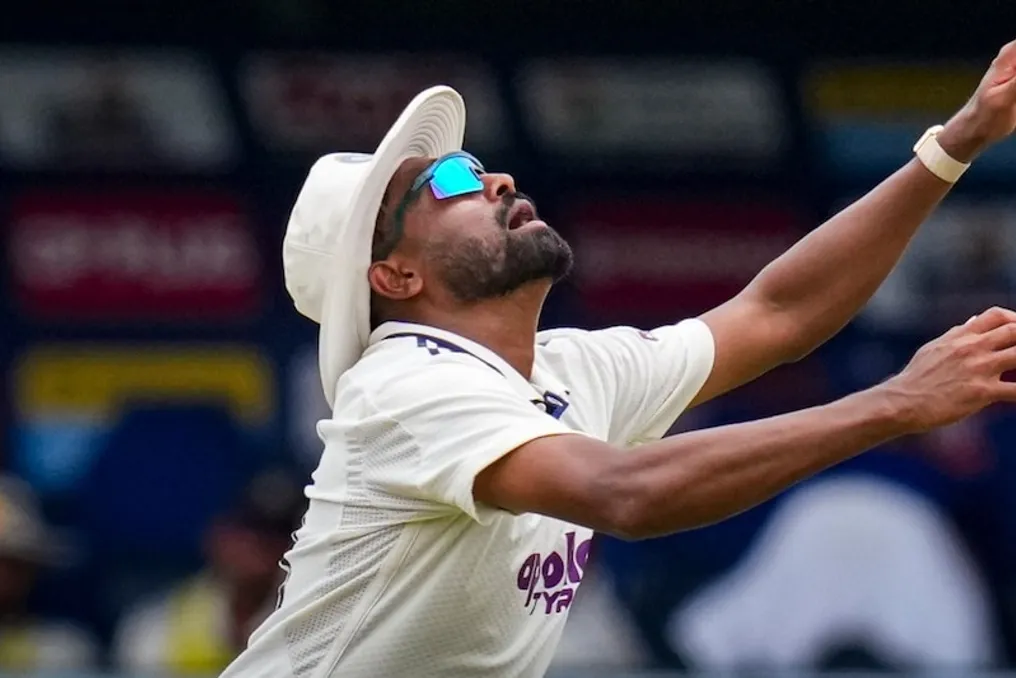
India team coach explains absence of Mohammed Siraj and inclusion of Cambodia, Sundar, and Krishna in the squad
Read more
www.aajtak.in

India team coach explains absence of Mohammed Siraj and inclusion of Cambodia, Sundar, and Krishna in the squad

During the first day of the match in Wellington between India and New Zealand, despite the difficulties faced by the Indian bowlers, batting coach Sitanshu Kotak defended the decision to exclude Mohammed Siraj from the starting lineup. He emphasized that the team selection was based on calculations for all five days of the match.

Kotak also defended the selection of Washington Sundar, Anshul Cambodia, and Prasidh Krishna. At the beginning of the first day of the match, the Indian balls started well, but later the team lost control of the game. New Zealand initially lost five wickets, scoring 70 runs in 28.2 overs, but then Henry Nicholls and Glenn Phillips built a partnership of 173 runs, taking the score to 243/5.

Indian batting coach Sitanshu Kotak told journalists on Thursday that excluding Siraj from the starting eleven was not a mistake. He clarified that the team was not formed based only on the results of the first day, but took into account the conditions of all five days of play. Kotak added that everything was fine with Siraj, and when forming the squad, they considered it to be the best option. He noted that this was only the first day, and the team is selected considering the second, third, and fourth days.

Sitanshu Kotak also explained why he preferred Washington Sundar in the squad. According to him, since four left-handed batsmen are playing at the top order of New Zealand, the team management decided to give Sundar a chance. He concluded that this is the best attacking lineup for this match.

India decided to field with four fast bowlers, led by Jasprit Bumrah. Anshul Cambodia, Prasidh Krishna, and Akash Dip joined this lineup. Kotak also responded to questions about Anshul Cambodia's bowling speed. He stated that Cambodia bowls at a speed of 126 to 130 kilometers per hour and does not feel the need to worry about his speed.

Defending Prasidh Krishna, Kotak noted that he is an aggressive bowler and therefore sometimes concedes runs. He stressed that evaluating Prasidh's performance solely by the number of runs conceded is incorrect. Kotak said that they like it when Prasidh takes wickets, but they do not like it when runs are scored off his deliveries. He believes this is not the right way to evaluate any bowler.

The coach also highly praised the New Zealand batsmen on the first day. He explained that due to the appearance of the sun, the humidity on the field dried faster than expected, which facilitated batting. Kotak noted the good weather and sunshine, which led to the quick drying of moisture on the field. He called for recognition of New Zealand's quality play, noting that they were not rushing against the spinner and that the new ball helped the ball more.

At the end of the first day of the match, Jasprit Bumrah took three wickets, conceding 52 runs. Anshul Cambodia and Akash Dip each took one wicket. Nicholls and Phillips remained on the field, scoring 113 and 94 runs respectively, after which a partnership of 173 runs was built.

Doubts surrounding Mohammad Siraj's participation in India vs New Zealand first match
Read more
www.aajtak.in

Doubts surrounding Mohammad Siraj's participation in India vs New Zealand first match

Uncertainty remains regarding Mohammad Siraj's place in the squad ahead of the first Test match against New Zealand. Although bowling coach Monty Morle called Siraj a world-class player, he did not give final clearance for his participation, leaving the decision to captain Shubman Gill.

Morle defended Siraj's preparation and advised Indian bowlers to focus on early removal of lower-order batsmen. When asked if there were questions about Siraj's spot in the team due to recent dip in performance, he declined to give a direct answer.

Morle stated: 'Siraj is a world-class player. Every time he wore the Indian jersey and took the field, he showed good play. I provided feedback to head coach Gautam Gambhir that our attack line is capable of 20 wickets. However, the final decision will be taken by Shubman Gill.'

The bowling coach also dispelled concerns about Siraj's preparation, reporting that he trained on the field for two consecutive days, bowling long spells at the batsmen. He noted that bowlers are usually given a day off before a match for psychological readiness.

He added: 'It seemed to me that Siraj bowled a lot in training. He prepared very diligently for this Test match. We also need to believe in the player's preparation.'

It should be noted that Siraj performed well in the series against England, but his performance in the series against Sri Lanka did not meet expectations, which intensified discussions about his inclusion in the first match against New Zealand.

Morle advised Indian bowlers to ignore external chatter and concentrate on their tactics. He emphasized that India cannot afford to lose points in the race for the World Test Championship (WTC) final, as the team currently ranks fourth in the race for next year.

He said: 'We must ignore the external noise and bowl at the right length. We cannot risk losing points. The team must take responsibility and quickly regain its rhythm. This responsibility lies with both the bowlers and the captain.'

With strong winds in Wellington, bowling may be difficult for Indian pacers. Morle explained that wind direction can affect bowlers' performance. Bowling into the wind can help the ball change trajectory, but this requires bowlers to alter their strategy and length.

He noted: 'When you bowl into the wind, the ball gets some movement. In that case, your approach becomes important. You can hold your bowling action slightly longer.'

According to Morle, the wind is not as strong as in recent weeks. Therefore, bowlers need to constantly assess conditions during the match and adjust their length accordingly. He also advised bowlers to avoid overthinking the pitch and weather.

Morle stressed that dominating the first session is important for winning a Test, but a match cannot be won solely based on the initial period. Bowlers need to continue bowling spells in the fourth and fifth days that change the course of the game.

Morle also emphasized the importance of contributions from the lower-order batsmen. He believes that players from the lower order must also score runs to win a Test match. The Indian team is constantly working on this aspect.

He concluded: 'To win a Test match, you need the contribution of the entire team. We always place great importance on the lower-order players and work extensively with them.'

Popular