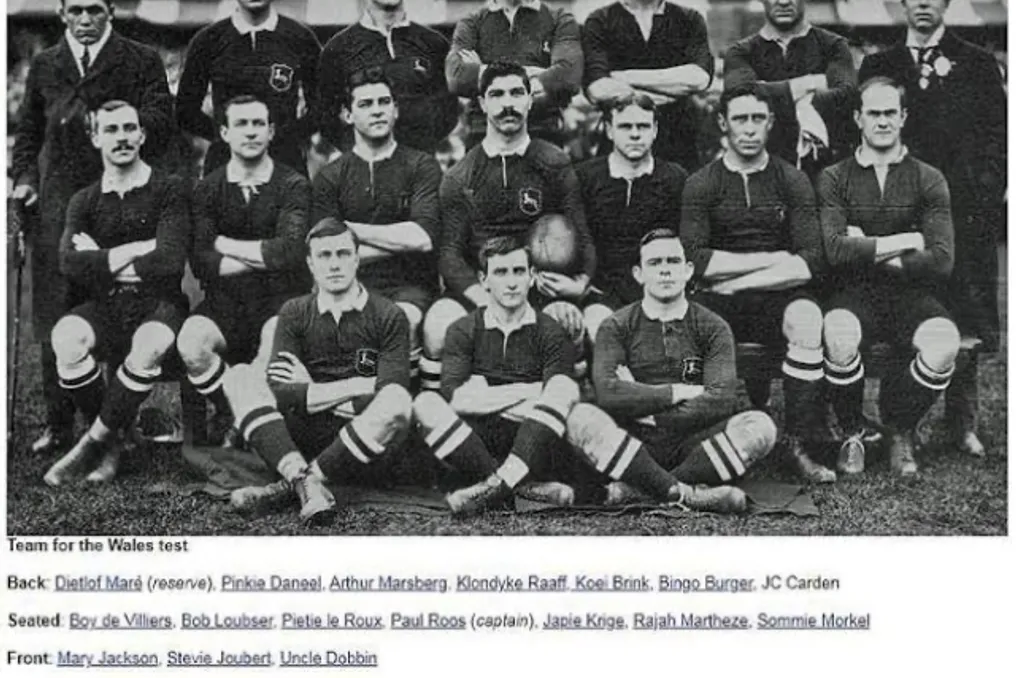
Paul Roos included in World Rugby Hall of Fame as one of the 'golden greats'
Read more
2OceanVibe
www.2oceansvibe.com

Paul Roos included in World Rugby Hall of Fame as one of the 'golden greats'

Paul Roos has been recognized and inducted into the World Rugby Hall of Fame, acknowledging the contribution of this pioneer and Springbok captain to the early history and enduring identity of the team.

World Rugby announced this award on November 21st, placing Roos in the list of 183 among seven 'golden greats'. His family will receive this honor at a private ceremony in the coming months.

The governing body describes Roos as a kind of 'father' of Springbok rugby, emphasizing that his leadership of South Africa's first touring team in the British Isles and France helped shape the identity that the national team maintains to this day.

The 'golden greats' program immortalizes outstanding achievements in rugby before the 1970s, integrating earlier generations into the Hall of Fame established in 2006. These historical recognitions will run parallel to the annual recognition of contemporary stars.

For Roos, the history of this award dates back to the 1906–1907 tour, when the South African team undertook its overseas rugby tour and returned with a name that transcended everyone who wore the jersey.

Historian Dean Allen, writing for the Cape Argus, traced the origin of the name Springboks back to this tour and described the team in the colors of the myrtle-green jersey, which was first used in 1896.

Allen's account recorded victories over Ireland and Wales, as well as a draw with England under difficult conditions at Crystal Palace. The tour also took the team to Paris, expanding its presence in European rugby beyond British and Irish grounds.

During the leg spent in the British Isles and Ireland, Allen notes 28 matches, of which 25 ended in victories, two defeats, and one draw, prior to the final match in France. These results contributed to establishing the tourists as a strong force in international rugby.

World Rugby Chairman Brett Robinson explained the purpose of recognizing earlier generations alongside recent stars, calling it 'linking past pioneers with those who have inspired players and fans globally in recent times.'

Roos's captaincy held significance beyond the scoreline. The tour took place against the backdrop of the Anglo-Boer War, and the team included individuals who had fought on opposing sides of this conflict just four years earlier. Allen particularly highlighted the team's 'unity' as the defining characteristic of this journey, and Roos himself deeply valued the unity he felt the tour fostered.

Roos's hope for his team was simple: 'Here we are united; may it always be so.' More than a century later, he would be pleased to know that the country still adheres to these words.

Similar stories

Rohit Sharma's Future in Doubt After New Zealand Tour; Decisive Word to Come from New Head Selector Prajans Ojha
Read more
www.aajtak.in

Rohit Sharma's Future in Doubt After New Zealand Tour; Decisive Word to Come from New Head Selector Prajans Ojha

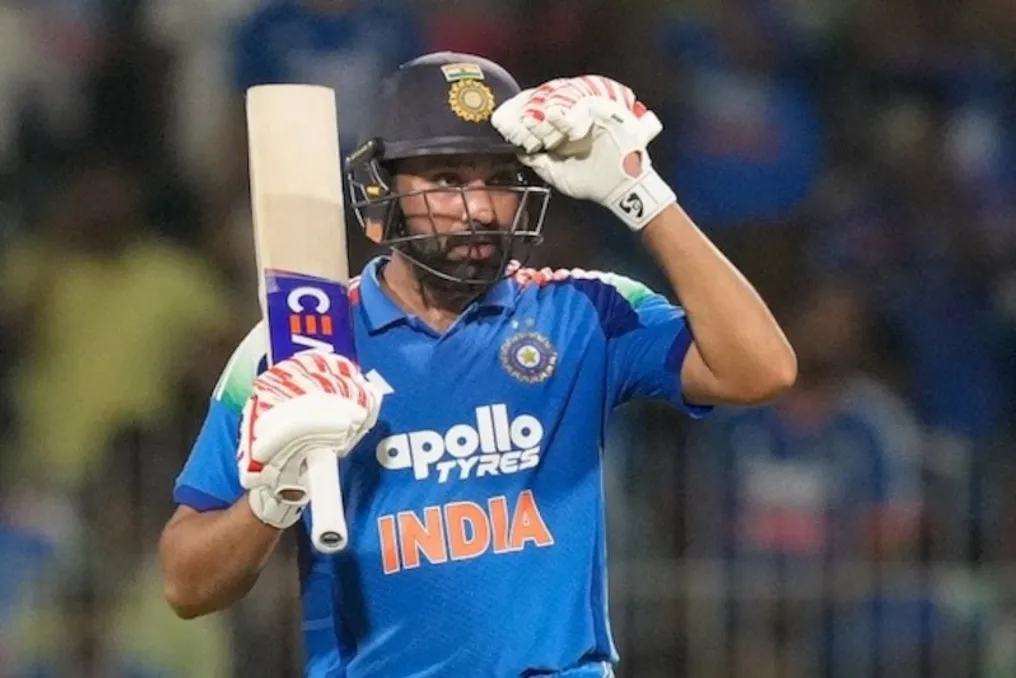
Questions regarding Rohit Sharma's future in Indian cricket have resurfaced. After managing to score only 30 runs across four matches in New Zealand under difficult conditions, he has become a serious concern for selectors. Interestingly, the decision about his future career now rests with someone who was once a close friend of his—Prajan Ojha, who has become the new head selector for the Indian team.

The friendship between Rohit and Ojha began during junior cricket and strengthened during training camps at the National Cricket Academy (NCA). However, circumstances have brought them to a point where the responsibility for the future of Indian cricket outweighs their friendship. Ojha must decide if Rohit's desire to play is sufficient to secure him a spot in the squad for the One Day International World Cup in South Africa next year.

Rohit remains determined to continue playing and dreams of participating in the 2027 World Cup. Nevertheless, the tour of New Zealand once again exposed his weaknesses. He appeared uncertain when facing bounce and movement off the seam. Thus, the question for the selectors is not just about the 30 runs, but whether Rohit can be useful to the team in conditions similar to those in South Africa a year later.

Discussions about Rohit's future had taken place previously among selectors. Before this year's ODI series against England, Pradjan Ojha met with Rohit on behalf of the then-head selector Ajit Agarkar. The purpose of this conversation was to ascertain whether Rohit was willing to give up ODI cricket already at Lord's.

However, Rohit was not satisfied with this proposal and expressed dissatisfaction with those managing Indian cricket. This led to tension between Agarkar and Rohit. Despite winning the Trophies Cup, Agarkar dropped Rohit from the ODI captaincy. This decision also affected their personal friendship.

Now, following Agarkar's departure, the leadership of the selection committee has passed to Ojha. That is, the responsibility for making such complex decisions, which he previously handled as a representative of Agarkar, now lies directly with him. He needs to decide how much weight to give to Rohit's experience and desire to play versus the needs of the next World Cup.

The weakness of the Indian batting lineup in the series against New Zealand was not limited to Rohit alone. The team repeatedly faced the problem of an early collapse of the top order. Head coach Gautam Gambhir also expressed concern about this, without naming any players. Although India managed to win the series 3-1 thanks to strong bowling, the batting deficiencies cannot be ignored.

Before the World Cup, India is scheduled to play six ODIs on home grounds. After these matches against Sri Lanka and Zimbabwe, the team will enter an international ODI break of approximately six months. Then, preparation for the World Cup will enter its decisive phase. In this regard, the home series is extremely important for Rohit.

At home grounds against Sri Lanka and Zimbabwe, big performances are expected from Rohit. However, the real test awaits him in South African conditions. The runs scored against West Indies held little significance after arriving in New Zealand, as the conditions there were completely different.

Rohit is concerned that in New Zealand, he was not just fighting for runs, but also lost naturalness in his game. Both the bounce and the movement off the seam worried him. His technique against bounce had also been questioned previously. If it were only the movement off the seam, he might find rhythm by playing cautiously in the powerplay. But in New Zealand, bowlers benefited from both the bounce and the movement.

It seemed that Rohit still wanted to play cricket, but his body and reflexes were not fully supporting him. This could be the biggest worry for the selectors. There is about a year until the World Cup. They will have to assess whether Rohit can regain his former form in this period.

Rohit has the option of playing domestic cricket to prove his form and physical fitness—he can participate in the Vijay Hazare Trophy. However, participation only in a domestic ODI tournament will not solve his problems. Even a century scored by him will not prove whether he can succeed on fast and bouncy pitches in South Africa.

The participation of a major international player in a national ODI championship is good, but selectors need to evaluate not only presence but also the quality of play and the ability to play according to the conditions.

Another issue concerns Rohit's practice. After the tour of New Zealand, he will have a break of about three months, after which...

3.
Rohit Sharma shows strong statistics at Maunganui stadium during India vs New Zealand match
Read more
www.aajtak.in

Rohit Sharma shows strong statistics at Maunganui stadium during India vs New Zealand match

For the senior batsman of the Indian team, Rohit Sharma, the Maunganui ground in New Zealand holds special significance. A series of five friendly matches between India and New Zealand has seen three games played. After the third match was cancelled due to rain, India leads the series 2-0. The next game is scheduled to be played at Maunganui ground, where Rohit Sharma consistently performs excellently.

Previously, Rohit Sharma played at the Oulu ground in two matches, both held during the visit to New Zealand in 2019. In these two innings, he scored 149 runs with an average of 74.50, while his strike rate was 86.12. Both his scores (87 and 62) indicate his outstanding form at this venue.

In the match that took place on January 26, 2019, at Maunganui, Rohit Sharma came out early and played a brilliant innings of 87 runs. Along with Shikhar Dhawan (66 runs), he built a large partnership for the first wicket of 154 runs. India scored 324 runs in this match and achieved a convincing victory over the Kiwi team by 90 runs. For this magnificent performance, Rohit was awarded the 'Player of the Match' award.

Approximately two days later, on January 28, 2019, at the same ground, Rohit once again took responsibility and played a calm and measured innings of 62 runs off 76 balls. Thanks to this innings, India easily reached its target and won the match by 7 runs.

Looking at the overall statistical record in New Zealand, Rohit has scored 437 runs in 13 innings with an average of 36.41. He has scored four half-centuries on Kiwi pitches but has not yet managed a century. His score of 87 runs at Maunganui is the highest individual score in any of his matches in New Zealand.

In the current series, Rohit has not shown significant results in the first two matches, scoring only 0 and 23 runs. Therefore, fans hope that when the Indian team plays at Maunganui ground again, the 'Hitman' will once again demonstrate his skill and play a big innings.

Popular