
Ant Group releases multi-model Ling-3.2-air with 5.5 billion active parameters
Read more
Pandaily
pandaily.com

Ant Group releases multi-model Ling-3.2-air with 5.5 billion active parameters

Ant Group has introduced the Ling-3.2-air model, which is an open-weights multimodal model. This model is designed to handle tasks related to coding, workflow processing, and professional document analysis. According to a report from IT Home dated November 24th and the official inclusionAI model card, the model has a total of 124 billion parameters, with 5.5 billion parameters activated per token.

Ling-3.2-air inherits the native multimodal architecture from Ling-3.0-flash-VL and can accept text, images, and video as input. It is important to note that this is a separate release, distinct from the larger Ling-3.2-flash model and the LingSante medical model branch.

The model's architecture combines linear attention and gated latent attention in a mixture-of-experts design. The model card specifies 512 routed experts, eight active experts, and one shared expert. A context window size of 256K is used in the demonstration deployment examples.

The official repository on Hugging Face was created on November 23rd and already contains 13 main Safetensors weight shards totaling about 129 GB. Thus, the weights were available even before the Chinese announcement on November 24th. The model card declares an MIT license, although no separate license document is present in the verified repository list.

In a published comparison with Ling-3.0-flash-VL, the team reported significant performance increases: SWE-bench Pro rose from 26.40 to 58.28, and AutomationBench-AA increased from 15.7% to 61%. These evaluation results were obtained under specific task and hardware configurations and do not guarantee success when working with software repositories or business processes.

For professional document handling, according to the card, the success rate for completing the entire GDP.pdf task increased from 8.4% to 16%. Legal assessment shows a persistent gap in reliability: the card lists a passing criterion of 87.7% and a completion rate for the entire task of 0.8% after checking for material hallucinations. These metrics describe different levels of achievement and should not be mixed.

The release includes maintenance guides for SGLang and vLLM, suggesting multi-GPU configurations rather than simple deployment on a standard laptop. The available weights allow developers to evaluate and adapt the model, but this does not negate the need to verify results, deployment dependencies, and suitability for confidential professional tasks.

Similar stories

Ant Group updates AQ app with video consultations and wearable device support
Read more
pandaily.com

Ant Group updates AQ app with video consultations and wearable device support

Ant Group introduced an update to its health application, AQ, at the healthcare ecosystem conference held in Guangzhou on November 23. The update includes real-time video interaction capabilities, expanded family health management, and two new wearable devices. Furthermore, the company announced plans to release an international version of the application in various markets.

According to reports from the event, users can point their phone camera at skin changes, areas of discomfort, medicine packaging, or medical reports while describing their concerns. The application is capable of asking follow-up questions and recording sounds, such as coughing, offering an option to connect with a doctor for further consultation.

The company asserts that the enhanced service integrates its LingSante healthcare models with audio-visual interaction, health prediction features, and safety measures. It is important to note that these are product descriptions, not independent proof of diagnostic accuracy or clinical outcomes. Video instructions and readings from wearable devices should not be mistaken for confirmed medical assessment replacements.

The family management update allows for the consolidation of records and current activity in one place, including weight monitoring, glucose levels, and childcare. Ant states that the application can use past data to identify changes, provide reminders, and turn agreed-upon goals into daily actions. This personalization depends on the information provided by users or permissions granted for data exchange with connected devices.

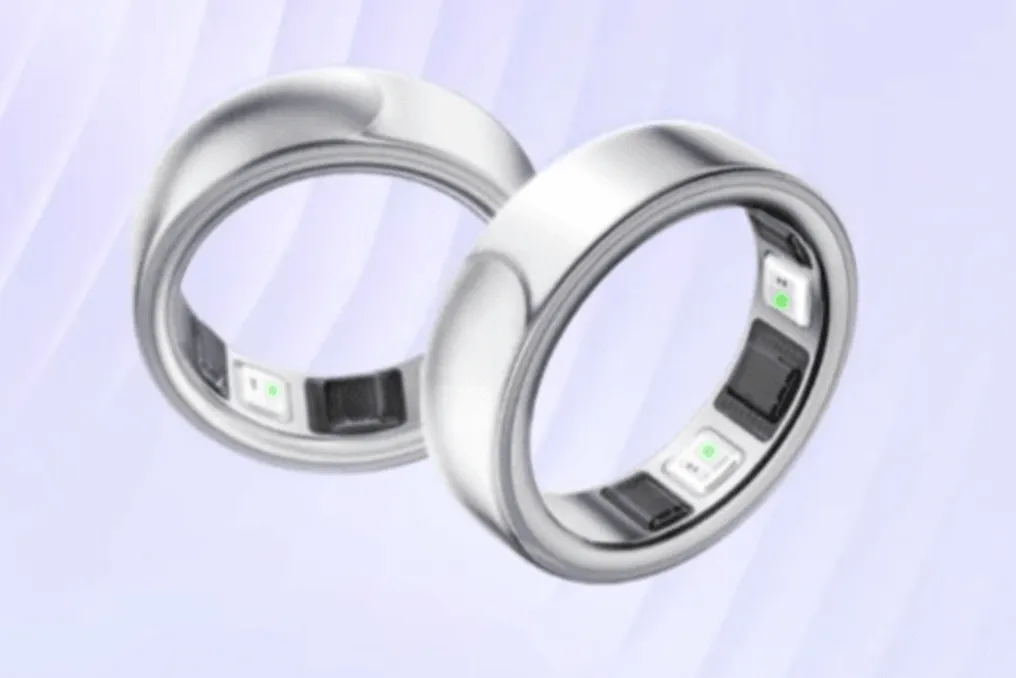
Ant also presented a fitness tracker bracelet and ring to monitor metrics such as sleep, heart rate, and respiration, generating reports and recommendations using artificial intelligence. The bracelet was demonstrated in both screen-equipped and screenless versions. The viewed reports did not contain retail prices, battery life data, or general sales availability, and the products were presented as open for partnership collaboration.

An international version of the application is planned, although its launch has not been confirmed. According to Sina Technology, this version will include health query functions, skin image interpretation, and health management. A Hong Kong version is also expected, which will support localized cross-border healthcare services and insurance payment.

Ant reiterated that the total number of users has reached 150 million, emphasizing that this figure does not represent monthly active users. The new consumer application features and hardware plans are separate from the release of the LingSante medical model weights and from earlier integration with UpToDate for physicians.

Ant Group introduces AI-powered smart ring and bracelet for health under the Afu brand
Read more
technode.com

Ant Group introduces AI-powered smart ring and bracelet for health under the Afu brand

Ant Group has launched its artificial intelligence-based healthcare service, Afu, by releasing a smart ring and a bracelet. These devices expand the company's range of services in health management, bringing it to the level of wearable hardware.

At the Afu healthcare ecosystem conference, it was announced that the gadgets are designed to monitor indicators such as sleep, heart rate, respiration, and blood oxygen levels. Based on the collected data, the AI will generate health status reports and provide relevant recommendations.

The bracelet, named Fuhuan in Chinese, is available in two versions—with and without a screen. The Fujie ring features a simple silver-white design. Ant emphasized the long battery life of both products, but the official announcement did not disclose detailed battery specifications, retail prices, or sales start dates.

Afu stated that it plans to open opportunities for cooperation with various partners. With these devices, the service gains the ability to collect continuous health data alongside information provided by users during conversations, thereby expanding its function from simply answering individual queries to constantly monitoring changes over time.

Ant Ling releases medical models LingSante with MIT licensed weights
Read more
pandaily.com

Ant Ling releases medical models LingSante with MIT licensed weights

The Ant Group team has introduced two open-weights, medically oriented models: LingSante-3.1-flash and LingSante-3.1-air-VL. The announcement of the flash model was made late on November 22nd, while the main repositories on Hugging Face for both models were created on November 19th. It is important to note that this was not an announcement about the weight release on November 23rd.

The timelines of these events differ in more detail. The flash model was uploaded on November 22nd, and air-VL on November 20th, followed by updates to the model cards. Both official repositories are publicly accessible without requiring access; their manifests contain actual parts of the weights, not just a demonstration or an invitation to use via API.

The LingSante-3.1-flash model is a medical adaptation of Ling-3.1-flash. It has a total of 560 billion parameters and approximately 25 billion active parameters per token. Its model card describes capabilities in medical argumentation, professional communication, evidence retrieval, and multi-step workflows, while retaining general functions. Weights are available in FP8 format, as well as a separate official MXFP4 version.

The smaller LingSante-3.1-air-VL model is not simply a scaled-down text model. It is built upon Ling-3.0-flash-VL, has 124 billion total parameters and 5.5 billion active parameters per token, and is capable of processing both text and images. Potential applications for this model include image report analysis, interpretation of medical documents, and searching for multimodal evidence.

Both official model cards indicate that their repositories are under the MIT license. This permissive license should be distinguished from the medical usage warnings in the cards: flash is intended solely for research and evaluation and is not a medical device, similar to air-VL, which should not replace professional medical advice, diagnosis, or treatment.

The team reported that the flash model achieved a score of 65.72 on HealthBench Professional. It should be emphasized that this is a score provided by the issuer, not an independent clinical verification or proof of improved patient outcomes. Benchmarking and workflow simulation results do not confirm that either model can independently diagnose, prescribe treatment, or determine therapy.

Applying these models in instrumental applications also requires an external environment, action verification, privacy protection measures, and qualified supervision. The actual release represents reusable weights of a medical model with documented limitations, distinguishing it from earlier general-purpose Ling-3.1 releases and the separate Ling-3.2 announcement.

Popular