CortexSpark Ventures запустила фонд глубоких технологий объемом 1000 крор рупий
Read more
YourStory [india, en]
yourstory.com

CortexSpark Ventures запустила фонд глубоких технологий объемом 1000 крор рупий

Venture capital firm CortexSpark Ventures, which concentrates on the deeptech and artificial intelligence sector, has initiated a fund amounting to Rs 1,000 crore, supplemented by an additional greenshoe option of Rs 400 crore.

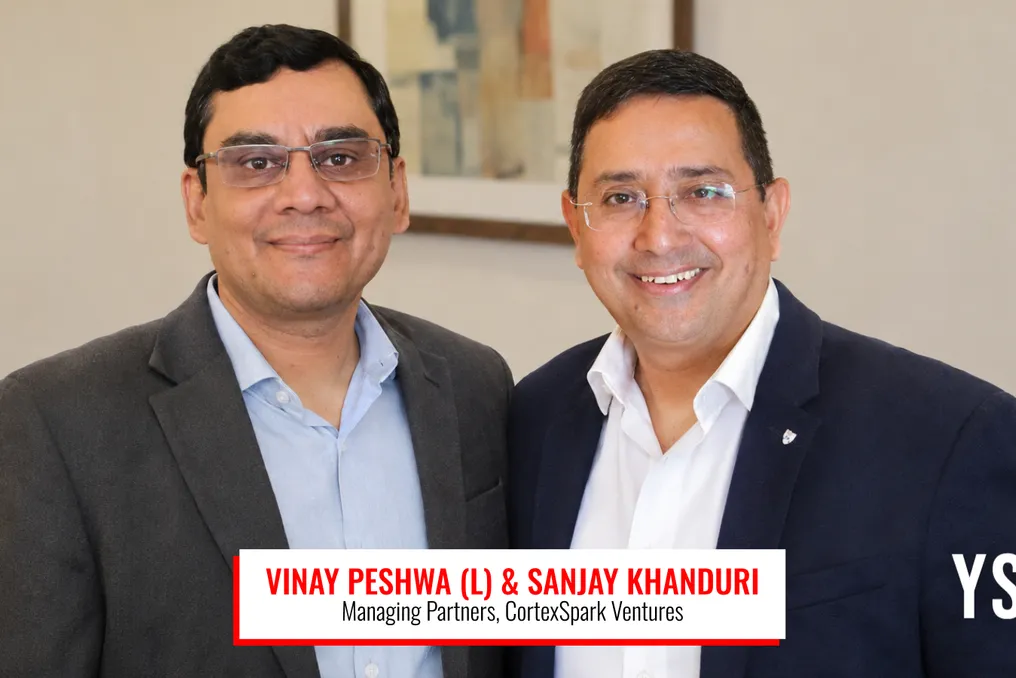
This firm, established by former executives from Infosys, namely Vinay Peshwa and Sanjay Khanduri, intends to invest in startups across several specialized areas, including spacetech, defence tech, embodied AI and robotics, enterprise AI, medtech & Bio-AI, as well as energy and advanced materials.

In a formal statement, CortexSpark Ventures declared its objective to provide backing to startups that are developing proprietary intellectual property and resolving intricate technological problems. The investment strategy of the company prioritizes startups possessing defensible intellectual property, robust technical bases, seasoned founders, and clearly defined routes to market commercialization. The firm seeks to connect scientific innovation with large-scale commercial viability by supplying capital, technical knowledge, and strategic assistance.

Vinay Peshwa, Managing Partner at CortexSpark Ventures, stated that while India has successfully developed world-class technology service companies, the subsequent major chance lies in establishing technology product companies that can compete globally, driven by original research and intellectual property.

The core philosophy guiding this VC firm is encapsulated in the phrase, “The venture fund for AI, by AI.” This approach aims to integrate AI-powered investment procedures with scientific proficiency, human judgment, and extensive global connections.

The Investment Committee for the fund is headed by Manoj Kohli, who previously served as the country head for SoftBank Group and held positions as ex-CEO & MD of Bharti Airtel. Additional advisors include N Vedachalam, a former Director of ISRO's Liquid Propulsion Systems Centre, and Ashutosh Sharma, who was formerly a Secretary in the Department of Science and Technology, Government of India.

Manoj Kohli, Chairman of the Investment Committee at CortexSpark Ventures, commented that India possesses the necessary scientific talent, engineering capacity, and entrepreneurial drive to construct deeply competitive deep-tech enterprises globally. He added that what is required is an investment environment capable of comprehending disruptive technologies and supporting their progression toward commercial scale.

According to the VC firm, deeptech startups frequently encounter extended development timelines, complicated technical risks, and greater capital demands. CortexSpark Ventures plans to tackle these issues through scientific assessment, commercial due diligence, and proactive support for the founders. Furthermore, the firm is currently developing CortexSpark OS, an AI-enabled platform for fund management designed to aid in sourcing deals, screening, conducting due diligence, and monitoring portfolios.
Similar stories

Oister Global launches deep technology fund with potential capital of 600 crore rupees
Read more
business-standard.com

Oister Global launches deep technology fund with potential capital of 600 crore rupees

Oister Global, an India-focused private market asset manager, has introduced the Oister Deep Tech Fund. The fund aims to raise 400 crore rupees, with a greenshoe option of 200 crore rupees increasing its potential capital to 600 crore rupees.

Registered as Oister Global Scheme II, an Alternative Investment Fund (AIF) Category II, this fund will build a concentrated portfolio of eight to ten mature companies within the advanced technology ecosystem. The fund will follow Oister's 'glass-box' investment approach and is designed for a six-year term, which can be extended by another two years with investor approval.

Rohit Bhayana, Co-founder and CEO of Oister Global, noted that while capital for deep technology grows annually, few funds support these companies after the early stage. He explained that early investors support the idea, but large institutions tend to wait until the company gets through the toughest years. It was in this intermediate phase, when the technology turns into a business, that there was a shortage of interested investors, which led to the launch of the Oister Deep Tech Fund.

The fund will focus on mature companies in critical sectors, including aerospace technology, defense, semiconductors, quantum technologies, advanced mobility, materials, and energy storage. It will target enterprises that have passed the 'valley of death,' possessing proven technologies and protected intellectual property (IP), patents both in India and abroad.

These companies must generate revenue, have multiple sources of income and customers both domestically and internationally. Furthermore, the fund will seek strong policy support and a clear path to liquidity. The fund's capital will be directed towards production expansion, order fulfillment, and commercial implementation.

Sandeep Sinha, Co-founder and CEO of Oister Global, emphasized that Oister's investment approach prioritizes commercialization. The fund seeks clear scenarios for commercial use and paying customers, not just scientific promises, aiming to help companies scale and enter new markets.

Oister has already compiled a preliminary list of companies in these sectors, and further investments will be evaluated as the fund deploys. While India's deep tech sector attracts record capital, Oister noted that startups in this sector attracted nearly $3 billion across 189 deals in 2025, marking the strongest year in history. According to the WIPO Global Innovation Index for 2026, India has 453 deep science startups and spin-offs, only 18 of which reached late-stage funding. For comparison, the US dataset includes 12,752 such companies, 1,980 of which are in late stages, and China has 3,466, of which 582 reached late stages.

Scaling these companies requires larger and more patient domestic capital. It is expected that over the next decade, Indian advanced technology companies will transition from initial orders to global supply chains. Oister views its fund as a tool to support enterprises that will shape the country's technological exports.

Kerala positions itself as a hub for deep technology startups
Read more
yourstory.com

Kerala positions itself as a hub for deep technology startups

The government of Kerala is positioning itself as a values-oriented platform for startups operating in the field of deep technologies. The state aims to develop its startup ecosystem and take leading positions, especially in the areas of deep technologies and artificial intelligence.

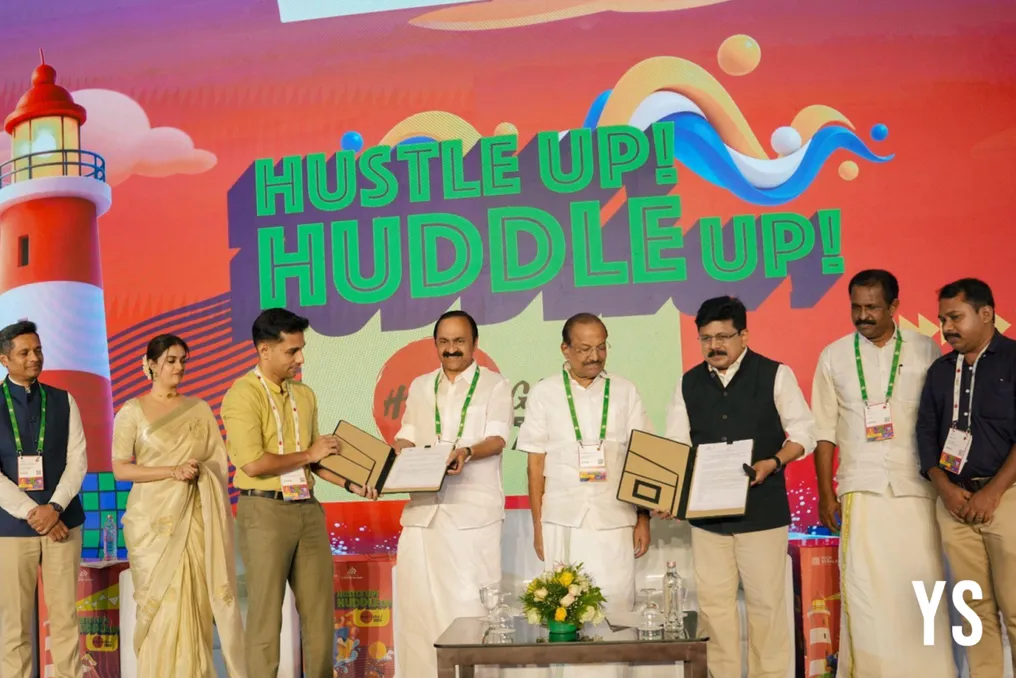
At the inaugural event of the startup festival on the seashore, Huddle Global 2026, Minister of Chief V D Satheesan stated that the state's next objective is to bring Kerala's companies onto the global stage. He emphasized that Kerala does not need the largest number of startups; it needs to become a place where existing startups become stronger.

The number of young companies in the state has increased from approximately 300 in 2016 to about 9,200, with a total valuation reaching $1.7 billion. Kerala's startup segment has attracted over ₹85,000 crore in funding.

The Kerala government presented Huddle Global as a showcase of its startup ecosystem, and the first meeting took place in 2018. The Chief Minister noted that the approach to the startup ecosystem will change: the first phase was dedicated to the mission, and the second to scaling that mission.

He also announced that the state government supports startups through a fund-of-funds program and plans to strengthen this initiative by increasing limits on innovation grants, supporting R&D, and providing seed funding. Satheesan stated: 'Our goal is simple. In Kerala, a good idea should never fail due to lack of capital.'

The Chief Minister highlighted the role of future technologies, and the state government intends to strengthen its incubator network through closer collaboration with academic circles.

P K Kunhalikutty, Minister for Industries, Information Technology, Future Technologies, and Startups of Kerala, stressed that the focus will also be directed towards new technologies, particularly artificial intelligence. He added that the government will introduce more initiatives in this segment to attract investment.

The Minister noted that Kerala is entering an important period of economic transformation, and the state is focused on attracting both domestic and international investments, promoting emerging industries, and creating new opportunities for sustainable growth.

S Suhas, Special Secretary of the Department of Electronics and Information Technology of the Kerala government, outlined the progress made by the state's startup ecosystem. Achievements include the creation of an Edge AI chip, the launch of a satellite in collaboration with SpaceX, and a mechanical machine for cleaning manholes that secured a contract in Singapore.

This official observed: 'In Kerala today, one no longer has to ask if startups can be created here. The question today is how big they can grow.'

He also mentioned that the government has taken many steps to support local startups, including taking on the role of first clients for these young companies. Furthermore, he highlighted the growth of innovation centers in Kerala: over 600 colleges have such facilities, 63 incubators, and over 1 million square feet of space for startups.

The goal of the Kerala government is to have around 100 deep technology startups with a valuation of ₹100 crore or more.

Uzbek Startups Presented Projects to Investors in Hong Kong
Read more
uzdaily.uz

Uzbek Startups Presented Projects to Investors in Hong Kong

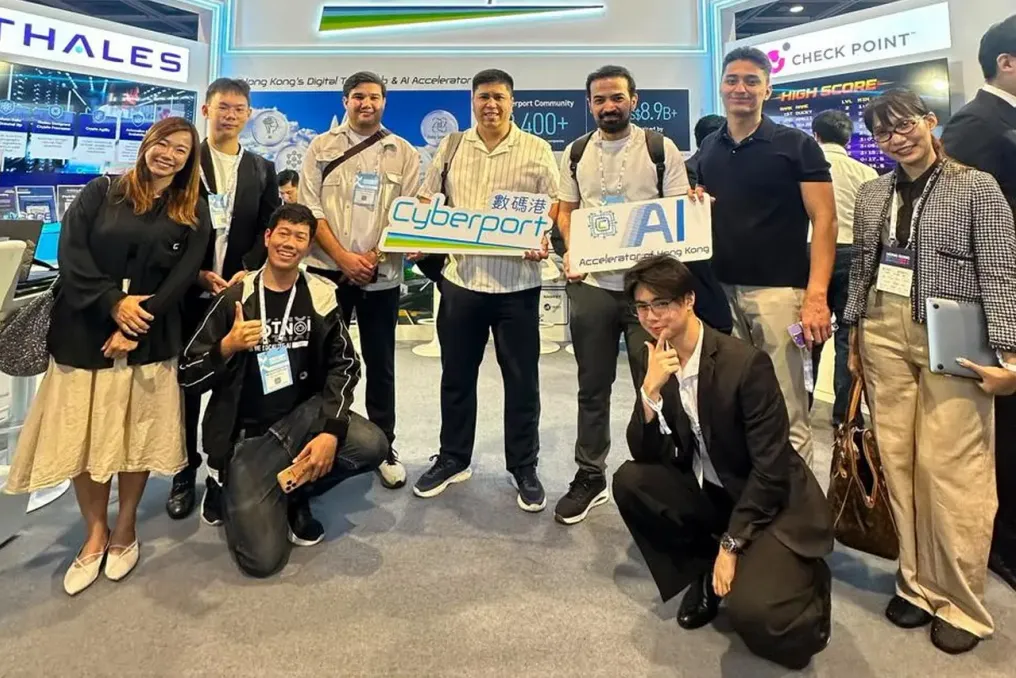
Five Uzbek startups participated in the Hong Kong FinTech Week and Cyberport Venture Capital Forum 2026 events held in Hong Kong in early November. The delegation from IT Park Uzbekistan visited the city from November 2 to 6 as part of the Global Landing Program 2026, organized by Cyberport.

The delegation included companies Tass Vision, OX System, Unitlab AI, Aziza AI, and Qwatt. During the visit, representatives of these companies met with international investors, venture capital funds, and technology organizations to discuss opportunities for entering foreign markets and attracting funding.

On November 2–3, within the framework of Hong Kong FinTech Week, the startups met with representatives from Cyberport, InvestHK, and other international bodies. Participants explored investment opportunities and ways to establish new business contacts.

The Cyberport Venture Capital Forum 2026, which took place on November 4–5, focused on topics such as venture financing, international expansion of technology companies, development of DeepTech projects, and startup support.

During the Global Track Pitching session, OX System and Tass Vision demonstrated their solutions to an international audience. Their participation allowed them to interact directly with potential partners and investors.

A representative from IT Park Uzbekistan also spoke at a panel discussion where issues such as early-stage startup financing, prospects for business expansion in Central Asian and ASEAN countries, and support for venture projects were discussed.

During the trip, the delegation held negotiations with representatives from Cyberport, Hong Kong Science and Technology Parks Corporation, Hong Kong Trade Development Council, InvestHK, FinTech HK, and Hang Seng Bank.

Potential cooperation with VOTEE AI and FCC Analytics in the fields of artificial intelligence, data analysis, and technological solutions was also discussed. Uzbek representatives established contacts with startups from Singapore, Malaysia, Taiwan, and other markets.

The delegation familiarized itself with Cyberport's incubation programs, international investor networks, AWS technologies, and mechanisms for supporting foreign firms in Hong Kong.

Popular