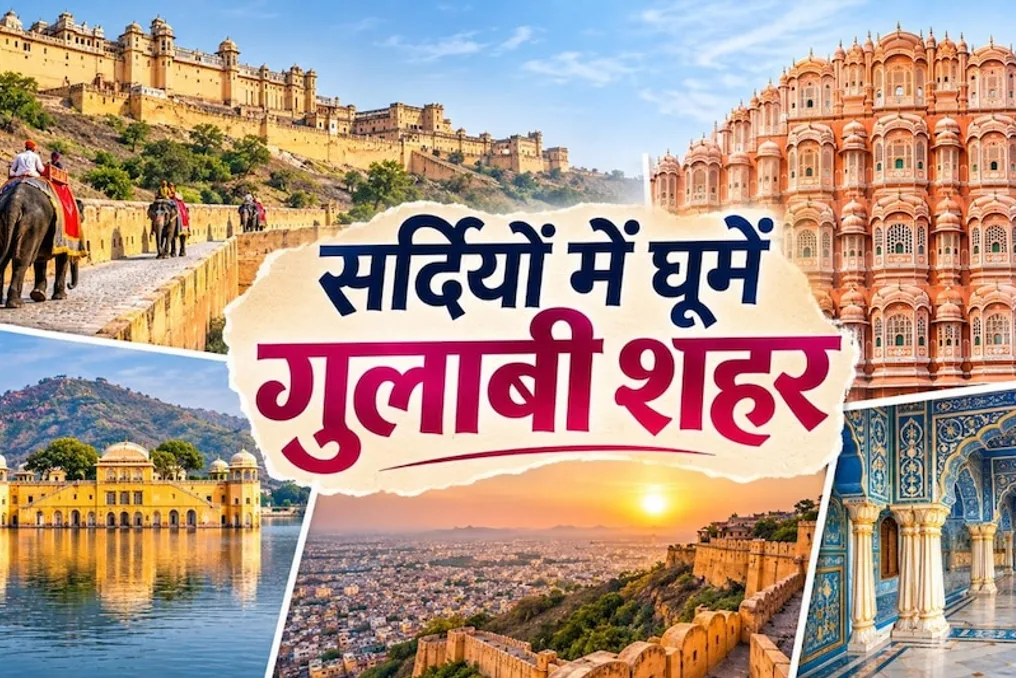
Top 10 Places to Visit in Jaipur: From Royal Forts to Lakeside Palaces
Read more
Aaj Tak
www.aajtak.in

Top 10 Places to Visit in Jaipur: From Royal Forts to Lakeside Palaces

The winter season is considered the ideal time for travel, as the summer heat is absent, and rain does not interfere with enjoying the trip. If you are planning a cold-weather vacation, you should consider the capital of Rajasthan—Jaipur. This city, known as the Pink City, attracts attention from all over the world due to its magnificent architecture, ancient forts, royal palaces, and rich historical heritage.

In Jaipur, visitors can see both the luxurious architecture of the era of kings and maharajas, and visit colorful markets, picturesque temples, and many interesting historical sites. The city offers something special for every type of tourist: history lovers can explore forts and museums, while those who prefer religious sites will find many famous temples here. Furthermore, the beautiful views of the city, lakes, and majestic palaces will make your trip unforgettable. Therefore, if you are going to Jaipur in the winter, be sure to include these ten attractions in your list.

Amber Fort

Amber Fort is one of the most famous tourist spots in Jaipur. Located on a hill, it is famous for its stunning design and exquisite carving. Here you can see large inner courtyards, old paths, and the Sheesh Mahal. The Sheesh Mahal is distinguished by the fact that tiny mirrors on the walls and ceiling sparkle when light hits them. From this fort, there is a beautiful view of Maota Lake.

Hawa Mahal

Hawa Mahal, considered the calling card of Jaipur, attracts a large number of tourists every year. This palace was built in 1799 from pink and red sandstone. Its five-story building has 953 small windows. In the past, women from the royal family could observe festivals and processions from outside through these windows while remaining unnoticed by outsiders.

City Palace

Located in the very center of the old city of Jaipur, the City Palace is famous for its regal architecture. Rajput, Muslim, and European architectural styles are harmoniously combined here. Inside the palace are numerous beautiful courtyards, colorful doors, and museums where you can view old royal clothing, weapons, and other historical artifacts. Mor Dwaar is also very popular among visitors.

Jantar Mantar

For those interested in science and history, Jantar Mantar is of great interest. It was built by Maharaja Sawai Jai Singh II in the 18th century. Numerous large stone instruments used to determine time and the position of planets are installed here. Among the exhibits is the world's largest stone sundial. Jantar Mantar is included in the UNESCO World Heritage List.

Nahargarh Fort

Nahargarh Fort, located on the Aravalli hills, is known for its picturesque views. Originally, this fort was built to protect the city. Today, it offers a magnificent panoramic view of the entire Pink City, especially impressive at sunset. Ancient royal quarters are also preserved inside the fort.

Jaigarh Fort

Visiting Jaigarh Fort is a must when traveling to Jaipur. This fort, built on a hill, served as protection for Amber Palace. Its distinguishing features are its strong walls and ancient weaponry. It houses the Jaivana cannon, considered one of the largest wheeled artillery pieces in the world. The fort offers beautiful views of the surrounding hills and Amber itself.

Jal Mahal

Jal Mahal, located in the middle of Man Sagar Lake, is one of the most beautiful locations in Jaipur. This palace, situated in the middle of the water, looks like it is floating. Its structure made of red sandstone and the surrounding hills give it a special charm. Four out of the five floors of the palace are underwater. By visiting it, you can admire the views of the lake and the palace.

Albert Hall Museum

If you enjoy looking at antiques and history, you should visit the Albert Hall Museum. Located in the Ram Niwas gardens, it is the oldest museum in Rajasthan. The museum building is known for its beautiful architecture and domes. Inside, there are antique weapons, paintings, carpets, sculptures, and many other historical items. In the evening, the building looks especially beautiful when lit up.

Birla Mandir

To find peace and tranquility in Jaipur, you can visit Birla Mandir. This temple, built of white marble, is dedicated to the god Vishnu and the goddess Lakshmi. The walls of the temple are decorated with beautiful carvings depicting various deities and mythological stories. In the evening, the temple, shining with lights, looks incredibly beautiful.

Govind Dev Ji Temple

Govind Dev Ji Temple, located within the City Palace complex, is dedicated to the god Krishna. This temple is associated with the patron of the royal family of Jaipur. A large number of pilgrims arrive here daily. The atmosphere of prayers and hymns during the aarti in the temple gives believers a special feeling.
Similar stories

How a Bengali Brahmin Helped Create Jaipur — India's First Planned City
Read more
www.aajtak.in

How a Bengali Brahmin Helped Create Jaipur — India's First Planned City

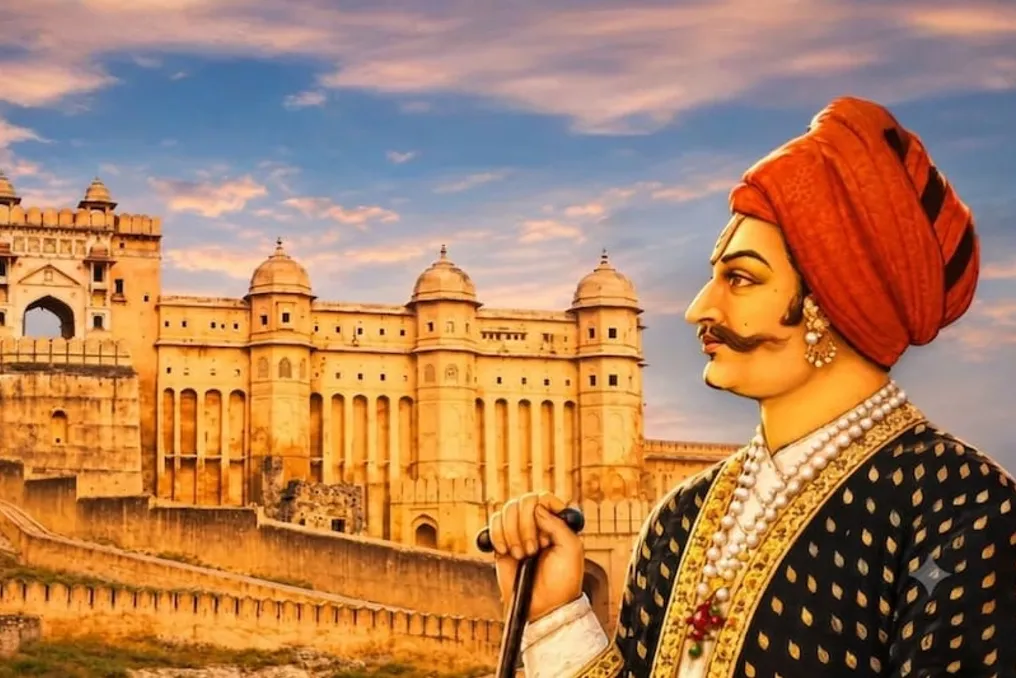
Today, the capital of Rajasthan, Jaipur, is known worldwide as the 'Pink City.' Its wide and straight streets, markets with uniform shop designs, and historical buildings distinguish it from other cities. However, few people know that a Bengali Brahmin played a key role in the creation of this city about 300 years ago.

His name was Vidyadhar Bhattacharya. He collaborated with Maharaja Sawai Jai Singh II in developing the city plan, where markets, roads, residential areas, and the water supply system were pre-designed.

A special point is that Jaipur was founded in an area where there was no perennial river. The Aravalli hills and sandy-rocky soil surrounded it. Despite this, an organized capital was built here. This raises the question: how did the idea of founding Jaipur arise, what role did the Bengali Brahmin play, and how was the water supply organized in the city without a river?

The founding of Jaipur took place in 1727 at the initiative of Maharaja Sawai Jai Singh II. Before that, the capital of the Kachwaha dynasty was Amer, located about eight kilometers north of Jaipur, on the Aravalli hills. For approximately six hundred years, Amer remained the center of power for this dynasty.

However, by the beginning of the 18th century, the boundaries of Amer began to shrink due to growing population and trade needs. Although the location on the hill provided good defense, expanding the city was difficult. The streets were narrow, and there was not enough space for new markets, houses, and administrative buildings.

Furthermore, the Mughal power was weakening at that time. After the death of Aurangzeb, a struggle for the throne began in the empire. Sawai Jai Singh supported Azam Shah in 1707 but was defeated by his brother Bahadur Shah. Bahadur then took action against Jai Singh, and Muslim troops captured Amer. Nevertheless, in 1708, Jai Singh regained his power with the support of the rulers of Jodhpur and Udaipur.

Against the backdrop of these political changes, Jai Singh wanted to create a capital that was not just a fortress and defense, but also a major center for trade, art, and administration. For this, he chose an open plain south of Amer.

This location was favorable for trade, as routes led from it to Amer, Sanganer, Agra, Ajmer, and Delhi. The surrounding hills provided protection, and access to the forts of Amer and Jaigarh was possible if necessary.

The preparation for the creation of Jaipur did not happen suddenly. According to historian Jadunath Sarkar, Sawai Jai Singh began planning the construction of the palace and garden named Jai Niwas in this area around 1725. In November 1727, the construction of the new city, its walls, and gates began, accompanied by religious ceremonies.

Mention of the founding of Jaipur is also contained in the poem 'Bhodhanasar,' written by the court poet Girdhari in 1739. According to this poem, the Maharaja instructed Vidyadhar Bhattacharya to found a new city, ordering the use of all necessary resources for this work.

Thus, Jaipur was conceived not merely as a collection of houses and palaces, but as a capital where not only members of the royal family but also traders, artisans, and common people could live.

Vidyadhar Bhattacharya hailed from a Brahmin family in Bengal. They were part of the circle of trusted officials of Sawai Jai Singh II. They possessed deep knowledge of ancient Sanskrit texts related to architecture and urban planning. Jadunath Sarkar called him the true designer of Jaipur in his book 'A History of Jaipur.'

Nevertheless, historians Vibhuti Sachdev and Giles Tilton express a different view on his role in their book 'Building Jaipur.' According to them, Vidyadhar played an important role in the construction and supervision of it, but it is difficult to claim that he designed the entire city alone. They believe that the names of the true architects and planners of the city may never have been recorded in history.

Despite this, old royal documents testify that Vidyadhar's instructions were of great importance in the construction work. An official decree stated that the work must be carried out according to Vidyadhar's directions, which allows us to assess his authority and influence on the city's construction.

The most outstanding feature of Jaipur is its organized streets and markets. The city was divided into large sectors using wide and straight streets called 'Chaukadi.' Within these sectors, residential and commercial zones were created.

In the very center of the city was the complex of the royal palace, around which markets and other buildings developed. Traditional Indian architectural principles and Vastu science were taken into account during the city planning. Shops on both sides of the main streets were built in a uniform style: their height, facade, and verandas were determined. The long verandas in front of the shops still provide people with protection from sun and rain.

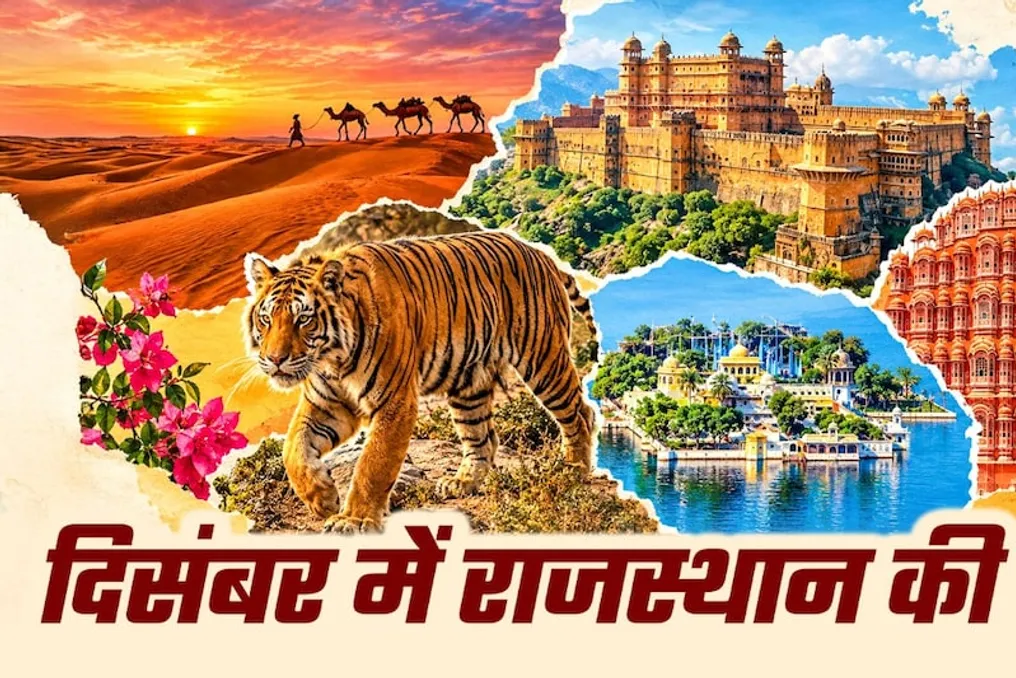
Ten Best Family Getaways in Rajasthan to Visit in December
Read more
www.aajtak.in

Ten Best Family Getaways in Rajasthan to Visit in December

As December arrives, the chill begins to set in in many regions of the country, prompting people to seek out winter destinations where the weather is comfortable for spending time with family or friends. If you are planning a trip in December, Rajasthan could be the perfect choice. Here, you can enjoy camel riding and camping in the golden sands of Jaisalmer, as well as being captivated by the picturesque lakes of Udaipur and the majestic palaces of Jaipur.

Furthermore, historical forts, ancient temples, colorful markets, and exquisite local cuisine can make your journey unforgettable. Below are ten magnificent places in Rajasthan that you can visit in December.

Jaisalmer, known as the Golden City of Rajasthan, is located in the middle of the Thar Desert and is famous for its golden forts, beautiful havelis, and ancient temples. Here, you can tour the Jaisalmer Fort, Patwon Ki Haveli, and the Jain Hindu Temple. In December, desert safaris, camel rides, and camping in the desert are also available here.

The capital of Rajasthan, Jaipur, has been nicknamed the Pink City. In December, the weather here is favorable for tourism. In Jaipur, you can see historical attractions such as Amber Fort, the Citadel, Hawa Mahal, and Jantar Mantar. Birla Temple is also a good place to visit. If you enjoy shopping, you can purchase Rajasthani clothing, footwear, and handicraft souvenirs at local markets.

Udaipur is called the City of Lakes. It is one of the most beautiful places in Rajasthan, where the lakes, palaces, and stunning views are very popular with tourists. Here, you can take a boat ride on Lake Pichola. Additionally, the Citadel, Jag Mandir, and Fateh Sagar Lake are attractions. Udaipur is also a good option for a couple's trip.

Jodhpur is known as the Blue City. Its uniqueness comes from the blue houses and historic buildings. December is a good time to visit because the weather is not too hot during this period. In Jodhpur, you can visit Mehrangarh Fort, Umaid Bhawan Palace, and Jaswant Thada. Moreover, you can go on camel safaris and activities like 'flying foxes' in the Thar Desert.

If you love observing wildlife and animals up close, you should head to Ranthambore in December. Ranthambore National Park, located in Sawai Madhopur, is very famous for its tigers. During jungle safaris, you can see not only tigers but also many other animals and birds. You can also visit Ranthambore Fort. It should be noted that a tiger sighting during a safari is not guaranteed.

If you want to enjoy the mountains and greenery in Rajasthan, you should visit Mount Abu. This is the state's famous hill station. Nakki Lake here is very popular among tourists; you can take a boat ride and enjoy the surrounding scenery. Other attractions include the Dilwara Hindu Temple, Guru Shikhar, and Achalgarh Fort.

Alwar is another picturesque place in Rajasthan, known for its historical forts, havelis, and natural landscapes. Here, you can go on a safari in the Tiger Sirsa sanctuary. Furthermore, it is worth visiting Bhangarh Fort, Bala Fort, and Pandupol Temple, as well as the Citadel. Alwar suits those interested in both history and nature.

A trip to Rajasthan is almost impossible without visiting Ajmer. This city holds both religious and historical significance. The world-famous Ajmer Sharif Temple is located here. You can also see Adhai Din Ka Jhonpra, the Nareli Hindu Temple, and Rangji Temple. Pushkar, located near Ajmer, is a great destination for a day trip.

Bikaner is considered a special tourist destination in Rajasthan. The city is famous for its delicious snack bhujia, snacks, and historic forts. Among the places to visit are Junagarh Fort, Lalgarh Palace, and Lakshmi Niwas Palace. The Karni Mata Temple in Deshnok is also very famous. The weather here is also comfortable for travel in December.

Pushkar is one of the most beautiful and religious places in Rajasthan. This town is famous for the Brahma Temple and Pushkar Lake. It houses over 400 small and large temples and 52 ghats. You can also visit the Savitri Temple. The calm atmosphere and beautiful views of Pushkar in December attract tourists. If you want to spend time in a tranquil place near religious sites, Pushkar is an excellent choice.

The main advantage of traveling through Rajasthan in December is the pleasant weather. During this period, the intense heat subsides, making it easier to move between forts, palaces, lakes, and deserts. You can plan your trip by choosing a safari in the Jaisalmer desert, boat trips on Udaipur's lakes, or safaris in the Ranthambore jungles. Before starting your journey, be sure to arrange hotel bookings, tickets, and safaris.

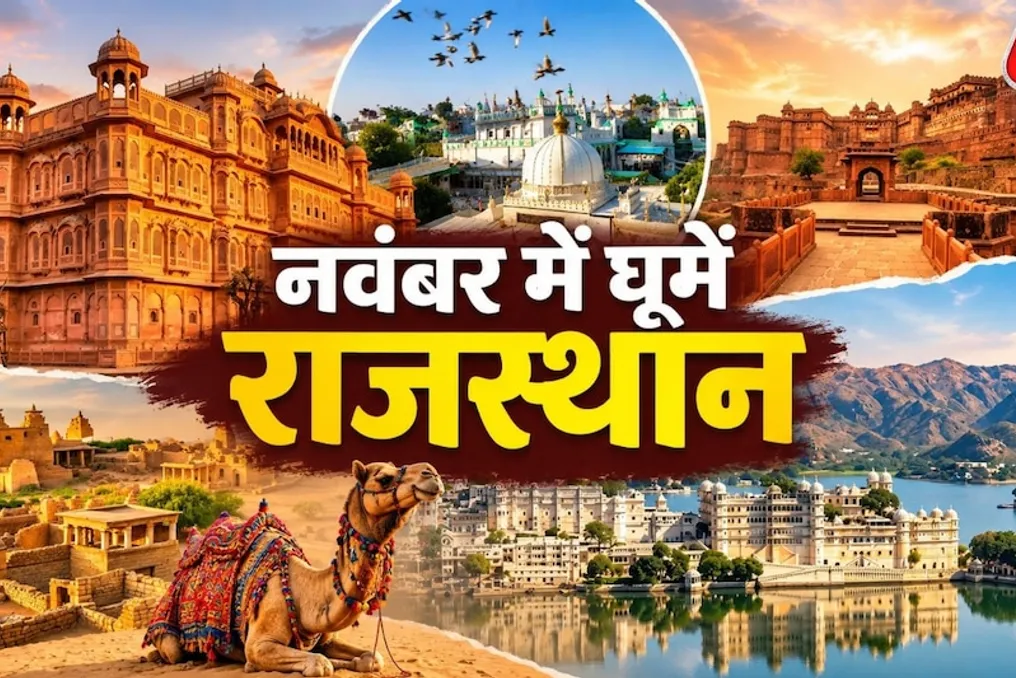
Ten Best Places to Visit in Rajasthan: Castles, Deserts, and Lakes for a November Trip
Read more
www.aajtak.in

Ten Best Places to Visit in Rajasthan: Castles, Deserts, and Lakes for a November Trip

Rajasthan, a state in India, offers numerous picturesque destinations for travel. Here you can see ancient forts, magnificent palaces amidst lakes, and colorful streets. A specialty of Rajasthan is the opportunity not only to enjoy the trip but also to gain a deep understanding of the country's history, royal lifestyle, traditions, and local culture.

From Hawa Mahal in Jaipur to the beautiful lakes of Udaipur and the golden desert of Jaisalmer—each place possesses a unique charm. If you are planning a trip in November, Rajasthan will be an excellent choice, as the weather during this time is very pleasant, which facilitates the viewing of forts, palaces, and historical monuments.

Below are ten wonderful places in Rajasthan that will help make your vacation unforgettable.

The City Palace in Jaipur is one of the most beautiful historical attractions in the city. Its construction was started by Maharaja Sawai Jai Singh II between 1729 and 1732. This palace features luxurious architecture combining Rajasthani and Muslim styles. It houses numerous beautiful courtyards, gardens, and buildings. Of particular interest are Chandra Mahal and Mubarak Mahal, where part of Chandra Mahal contains a museum with items related to the royal family.

Ajmer Sharif Dargah is one of the main religious shrines in Rajasthan. It is the tomb of Khwaja Moinuddin Chishti, also known as Khwaja Garib Nawaz. A large number of pilgrims visit here every year. In the dargah, you can see beautiful white marble buildings, large gates, and a mosque built by Shah Jahan. Visiting this historical and religious site is a must when traveling to Ajmer.

Located about 11 kilometers from Jaipur, Amer Fort is a perfect example of Rajasthan's royal heritage. Built from pink and yellow sandstone, this fort looks incredibly majestic from afar. It was erected by Raja Man Singh in 1592. Inside the fort, impressive large gates, beautiful inner courtyards, and Sheesh Mahal can be seen. The architectural styles of the Rajputs and Mughals are harmoniously combined here, making this place special for lovers of history and old palaces.

The Lake Palace, situated in the middle of Pichola Lake in Udaipur, is one of the city's most beautiful locations. This white marble palace looks like a dream amidst the water. It was built by Maharaja Jagat Singh II in the 18th century. Initially, it was a retreat for the royal family, but now it has been converted into a luxury hotel. The panoramic view of the mountains and the palace around the lake is very popular with tourists.

Nahargarh Fort, located on the hills of Jaipur, is famous for its stunning view of the city. It was built by Maharaja Sawai Jai Singh II in 1734. It was originally called Sudarshangarh but later received the name Nahargarh. Inside the fort, you can see palaces, temples, and beautiful gardens. Madhavendra Palace, located here, is also very popular among visitors. It is a great place to spend peaceful time away from the hustle and bustle of Jaipur.

Kuldhara village, located in Jaisalmer, Rajasthan, is known for its mysterious stories. It is said that about 300 years ago, a community of Paliwal Brahmins lived here, but one night the entire village suddenly became deserted. The tyranny of Diwan Salim Singh is often cited as the reason, although some believe that a lack of water or an earthquake could have been the cause. Today, ruins of old houses, temples, and streets can be seen here, attracting lovers of mysterious places.

Jairgarh Fort, located in the Aravalli range in Jaipur, is known for its magnificent structure and historical significance. It was built by Raja Sawai Jai Singh II in 1726 to protect Amer Fort. From this fort, a beautiful view of Amer Fort and the surrounding hills can be seen. Inside the fort is one of the world's largest artillery pieces—the Jaiwan cannon, as well as many ancient buildings.

Nimrana Fort, located between Delhi and Jaipur, is ideal for short weekend trips. This fort, built in the 15th century, has been converted into a luxurious historic hotel. Situated on a hill, it boasts multiple floors, beautiful gardens, and a swimming pool. Here, you can not only stay in an ancient royal palace but also engage in activities such as zip-lining. Nimrana is suitable for those who want to escape the daily hustle and bustle.

Jaisalmer Fort is world-famous for its golden walls and is also called Sonar Qila or Golden Fort. It was built by Raja Rawal Jaisal in 1156. This fort, constructed from yellow sandstone, is breathtaking.

Popular