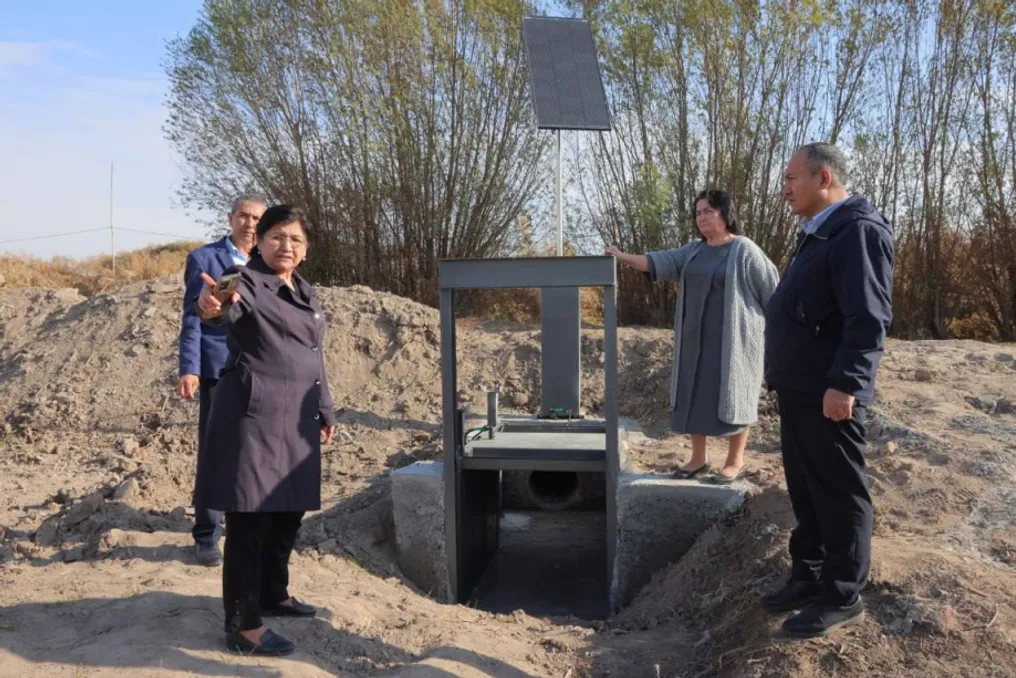
Smart solar-powered water meters implemented in Karakalpakstan to optimize irrigation
Read more
Podrobno.uz [uz]
podrobno.uz

Smart solar-powered water meters implemented in Karakalpakstan to optimize irrigation

Modern 'smart' water metering systems powered by solar panels have been introduced on agricultural lands in Karakalpakstan. These devices enable monitoring of water consumption in irrigation canals and accounting for the water needs of downstream farms.

According to information from the Aral Sea Wetlands project, this equipment was installed across thirteen farm plots in the Amudarya district. Specialized units are placed in small ditches and canals, where they function to measure and regulate the volume of flowing water. This is critically important for farmers whose fields are at the end of the entire irrigation system and depend on water usage by other enterprises.

Professor Malika Ikramova, who heads the laboratory at the Research Institute of Irrigation and Water Problems, explained that such instruments contribute to more accurate water consumption tracking and aid in making informed decisions about its distribution. Furthermore, the implemented equipment is being used to train local farmers on operating the latest technologies.

Concurrently, training sessions were held in Bukhara and Karakalpakstan from November 18th to 21st. These events focused on water user rights, principles of water allocation, and the role of women in decision-making processes. Representatives from Alatski, Karakulsky, Amudaryinsky, and Muynak districts participated; each gathered forty to fifty people, including farmers, water management staff, and representatives from the hokimiyats.

Focus on household irrigation issues

Significant attention was paid to the issues of irrigating private plots. Project consultant Ifoda Ahmedkhojav emphasized that in Bukhara and Karakalpakstan, women perform up to eighty-five to ninety percent of all labor on these plots. Moreover, water for small gardens is often allocated only after large fields have received their share.

The specialist noted that women frequently have to use saline groundwater, which negatively affects crop yields. In her view, involving women in water allocation councils allows for consideration not only of the interests of large agro-enterprises but also the needs of families growing vegetables and greens on their home plots.

Another important topic was the protection of farmers' rights. Participants were trained on procedures for concluding water supply contracts, were briefed on the responsibilities of water suppliers, and were shown how to use data from electronic meters when disputes arise.

These activities were conducted under the joint initiative of Uzbekistan's National Committee on Ecology and Climate Change, the United Nations Development Programme (UNDP), and the Global Environment Facility (GEF). It should be recalled that Uzbekistan previously stated that developing water-saving technologies is a more advantageous solution than diverting water from Siberian rivers.
Similar stories

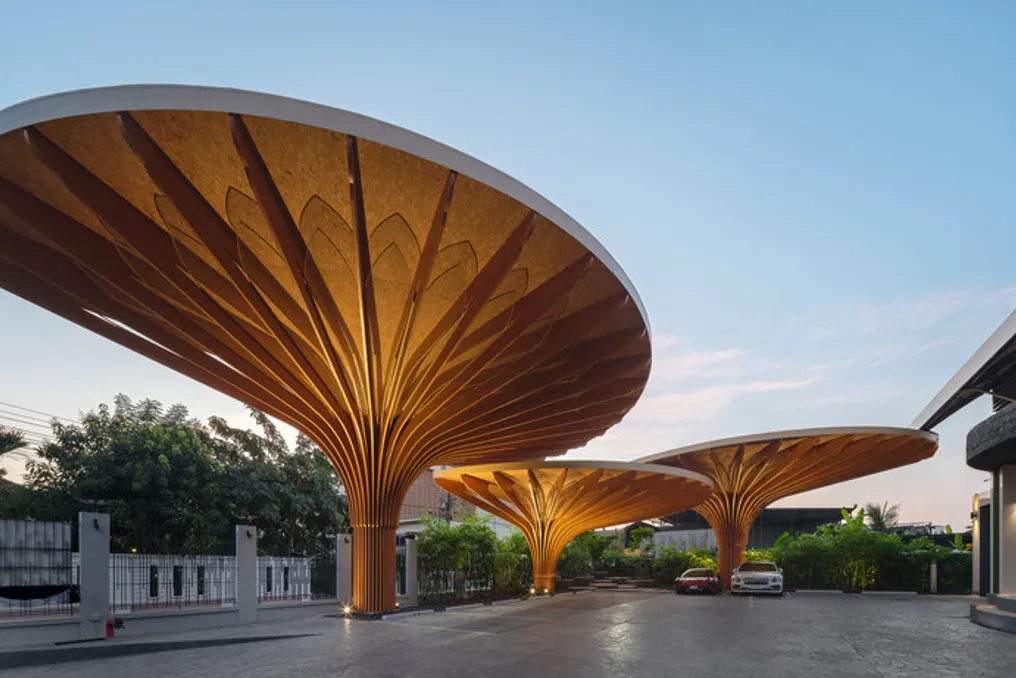
Openbox Architects designed a solar canopy inspired by the morning glory for Thepwatana's parking lot
Read more
archdaily.com.br

Openbox Architects designed a solar canopy inspired by the morning glory for Thepwatana's parking lot

The design team developed a solar canopy solution for the parking lot of an agricultural technology company, Thepwatana. This structure was conceived in the shape of a morning glory, imitating how the flower absorbs water to protect vehicles, capture rain, and generate energy.

Thepwatana had requested the canopy for the parking lot of its current headquarters because the space allocated for cars was limited. Although the project was functional, the client desired something that was aesthetically pleasing, carried meaning, and reflected the company's corporate identity.

Considering the scarcity of available area on the site, the project's focus was to maximize impact with a discreet intervention, yet one that could convey the essence of the organization. The conception process began with a visit to the factory, the agricultural fields, and the original landscape where the business established its roots.

Over more than fifty years, one fundamental principle has remained unchanged: a deep environmental commitment, which is considered an integral part of the company culture, and not merely a business strategy.

Chinese company Sinoma built a solar power plant for Navoiazot worth $220 million
Read more
podrobno.uz

Chinese company Sinoma built a solar power plant for Navoiazot worth $220 million

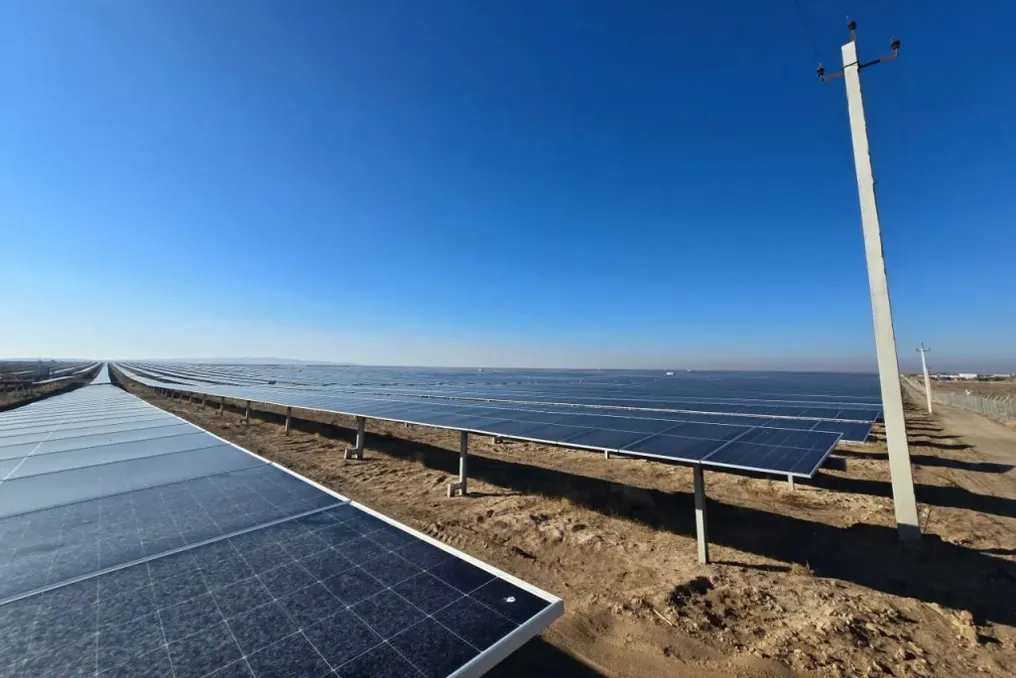
A solar power plant along with an energy storage system was constructed in the Navoi region for the Navoiazot enterprise. The total cost of this new facility amounted to $220 million.

This complex will supply one of the country's largest enterprises with energy from renewable sources, which will significantly reduce natural gas consumption. The project was carried out by the Chinese company Sinoma with the support of foreign direct investment.

As part of the project implementation, a 300 MW solar power plant and a 75 MW energy storage system with a capacity of 75 MWh were built. A key feature is that all generated energy will be supplied directly to Navoiazot, allowing the enterprise to increase the use of green energy in production processes and improve the stability of its energy supply.

According to calculations, the power plant is capable of producing approximately 657 million kilowatt-hours of electricity annually. This will lead to savings of about 175 million cubic meters of natural gas per year, as well as a reduction in carbon dioxide emissions by almost 378 thousand tons.

It is expected that this project will have a positive impact not only on reducing the enterprise's dependence on traditional energy resources but also on promoting regional economic growth and creating new jobs. Previously, the president had instructed the launch of ten small-scale chemical projects based on the cluster at Navoiazot with a total budget of $1 billion.

Popular