In Uzbekistan, during the first nine months of 2026, there has been a continued reduction in the extraction of major hydrocarbon resources, according to an analysis of data from the National Committee on Statistics, presented by the publication 'Gazeta.'
From January to September, natural gas production reached 27 billion cubic meters, which is 16.4% less than in the same period of 2025 (when 32.3 billion cubic meters were produced). Compared to January-September 2024, when the volume was 33.7 billion cubic meters, gas production has decreased by almost 20% over two years, or by 6.7 billion cubic meters.
In September, gas production was approximately 2.8 billion cubic meters, which is 17.6% lower than the September figure of last year (3.4 billion cubic meters), but this is 7.7% higher than the August result (2.6 billion). The average daily production increased from 83.9 million cubic meters in August to 93.3 million cubic meters in September, representing an increase of about 11.3%. Nevertheless, this figure still lags significantly behind the average level for September 2025, which was about 113.3 million cubic meters per day.
Overall, about 8.7 billion cubic meters of natural gas were produced in the third quarter, which is lower than the 10.5 billion cubic meters in the same period last year, demonstrating a decrease of approximately 17.3%. The rate of decline in annual terms accelerated again after slowing down in July: the decrease in July was 7.9%, in August—about 26.4%, and in September—17.6%.
Electricity Generation Dynamics
Electricity generation in Uzbekistan has shown an upward trend. Over nine months, 67.16 billion kWh were generated, which is 7.3% higher than the figure for the same period in 2025 (62.57 billion kWh). In September, generation reached 6.63 billion kWh, which is 7.8% more than in September last year (6.15 billion kWh). However, compared to August, when 8.02 billion kWh were produced, September generation decreased by 17.4%.
The structure of electricity generation is also changing. Large enterprises, mainly thermal power plants running on gas, generated 44.4 billion kWh over nine months, which is 1.5% less than the previous year (45.1 billion kWh). In September, their contribution was 4.05 billion kWh, which is 3.2% more than in September last year (3.92 billion kWh).
The main growth in generation is provided by small enterprises, including new wind and solar stations, as well as other producers. Over nine months, they generated 22.76 billion kWh, which is 30.3% more than the previous year (17.46 billion kWh). Thus, over the year, electricity production by small enterprises increased by more than 5.29 billion kWh, while the output of large enterprises decreased by approximately 698 million kWh. The share of small enterprises in the total generation volume increased from 27.9% to 33.9%.
In September, small enterprises accounted for about 2.59 billion kWh of electricity, which is 15.9% more than in September 2025 (2.23 billion kWh). In August, their output was 2.92 billion kWh. It should be noted that statistics do not account for energy consumed by households and small enterprises for whom generation is not the main activity. Nascomstat previously adjusted comparative figures for 2025 taking into account the annual balance, so data for last year may differ from what was published in previous monthly reports.
Gasoline and Diesel Fuel Production
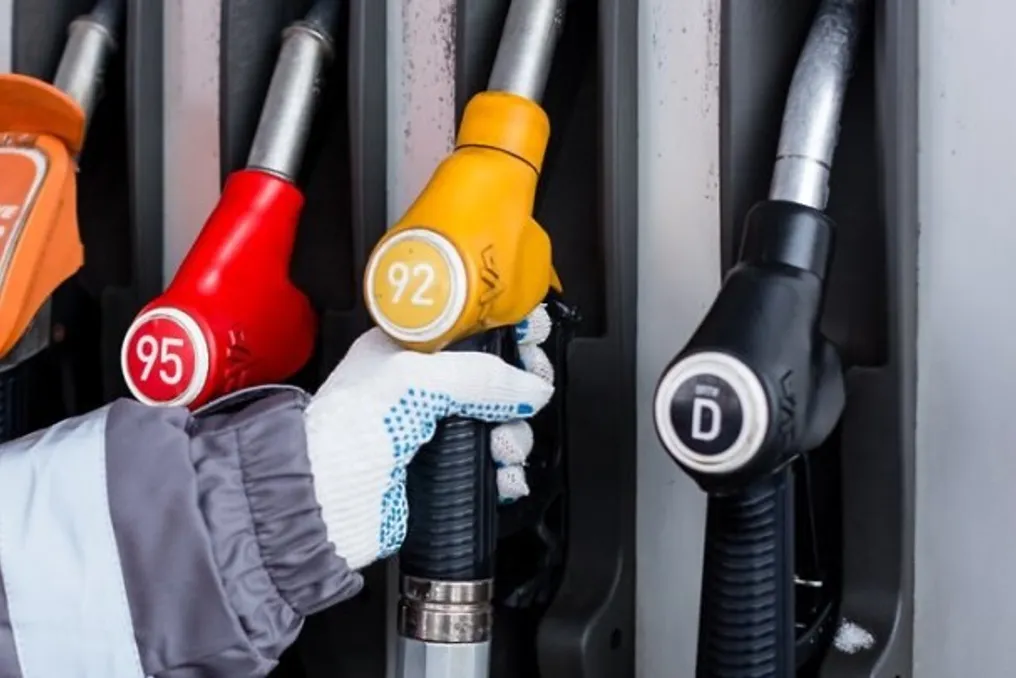
The volume of automotive gasoline production from January to September reached 913.2 thousand tons, which is 2.6% more than in the same period of 2025 (890.1 thousand tons). However, the growth rate slowed down: over seven months, output increased by 8.9%, and over eight months—by approximately 4.6%.
In September, oil refining enterprises produced about 101.9 thousand tons of gasoline, which is 28.3% higher than August (79.4 thousand tons). This surge followed a sharp drop in production in August, when gasoline output fell by 32.5% compared to July. For comparison, production in June was 112 thousand tons, in July—117.7 thousand tons, and in August—79.4 thousand tons. Despite the September recovery, output volumes have not yet reached the July level, and compared to September last year, gasoline production was also lower.
Diesel Fuel Production Growth
Diesel fuel production, conversely, has noticeably increased. Over nine months, 979 thousand tons of diesel were produced in the country, which is 11.7% more than the previous year (876.1 thousand tons). In September, production amounted to 144.7 thousand tons, compared to 150.9 thousand tons in August, meaning a decrease of 4.1%. However, compared to September last year, output increased by approximately 60%. The largest growth in diesel production was recorded in August-September: 91.6 thousand tons were produced in June, and 115.4 thousand tons in July. Thus, in the last two months, oil refining enterprises produced 295.6 thousand tons of diesel fuel, which accounts for about 30% of the total volume since the beginning of the year.
Coal, Oil, and Gas Condensate Extraction
Coal extraction from January to September amounted to 5.4 million tons, which is 6.9% less than in the same period of 2025 (5.8 million tons). The gap from last year's level narrowed compared to the results of seven months, when the decline reached 9.5%. In September, about 1 million tons of coal were extracted compared to 900 thousand tons in August, representing an increase of approximately 11%. The annual figure for September was about 9% below the level of September 2025 (1.1 million tons). From July to September, coal extraction amounted to about 2.9 million tons, which exceeds half of the total volume since the beginning of the year.
Oil extraction over nine months decreased by 1.6%, amounting to 482.2 thousand tons compared to 490.1 thousand tons the previous year. The gap is gradually decreasing: over seven months, it was 2.7%, and over eight months—2.2%. In September, 57.2 thousand tons of oil were extracted, which is 1.6% more than in August (56.3 thousand tons) and 2.9% more than in September 2025 (55.6 thousand tons). This is the second consecutive month that oil production exceeded the corresponding month's figure from last year.
Gas condensate production from January to September amounted to 729.2 thousand tons, which is 14.1% less than in the same period of 2025 (849.2 thousand tons). Despite the persistent lag, the rate of reduction slowed compared to the results of seven months, when the fall was about 15%. In September, about 80.9 thousand tons of gas condensate were produced, which is almost equal to the August figure (80.8 thousand tons), but significantly lower than the July figure (105.4 thousand tons).
Furthermore, the production of thermal energy by large enterprises decreased by 19.3% over nine months, falling from 14.42 million to 11.64 million Gcal. In September, thermal energy generation was about 737 thousand Gcal, which is lower than 924 thousand Gcal the previous year, meaning a decrease of approximately 20.2%.
Reasons for Gas Production Decline
Nodir Mukhiddinov, chief geologist of Uzbekneftegaz, explained at a press conference on October 27 that a major reason for the reduction in natural gas production is the significant depletion of large fields. According to him, reserves in several facilities have been depleted by more than 80%, and current geological exploration work and new wells are not yet capable of fully compensating for the drop in production at existing fields.
Mukhiddinov explained: 'One of the main reasons is that the reserves in large fields are already largely depleted—more than 80%. At the same time, the production volumes obtained through new geological exploration and wells in new fields are not yet sufficient to fully compensate for this decline.'
Since the beginning of the year, the decline in basic production at the company's fields has reached 12.6 million cubic meters per day. Although repairs and commissioning of new wells have partially compensated for losses, about 5 million cubic meters of daily production remain uncompensated.
By the end of January-September, Uzbekneftegaz and its structural enterprises produced about 17 billion cubic meters of gas. The company forecasts the completion of 2026 with production of 22.8 billion cubic meters, which is lower than the figure of 25.2 billion cubic meters the previous year, suggesting a reduction of 9.5%. This forecast is lower than the January directive from the president to achieve a production of no less than 25.4 billion cubic meters of gas per year. Previously, according to the updated 'Uzbekistan - 2030' Strategy, it was planned to increase natural gas production in the country from 40.2 billion cubic meters in 2026 to 42.9 billion in 2027 and up to 48.5 billion by 2030.