Oister Global, an India-focused private market asset manager, has introduced the Oister Deep Tech Fund. The fund aims to raise 400 crore rupees, with a greenshoe option of 200 crore rupees increasing its potential capital to 600 crore rupees.
Registered as Oister Global Scheme II, an Alternative Investment Fund (AIF) Category II, this fund will build a concentrated portfolio of eight to ten mature companies within the advanced technology ecosystem. The fund will follow Oister's 'glass-box' investment approach and is designed for a six-year term, which can be extended by another two years with investor approval.
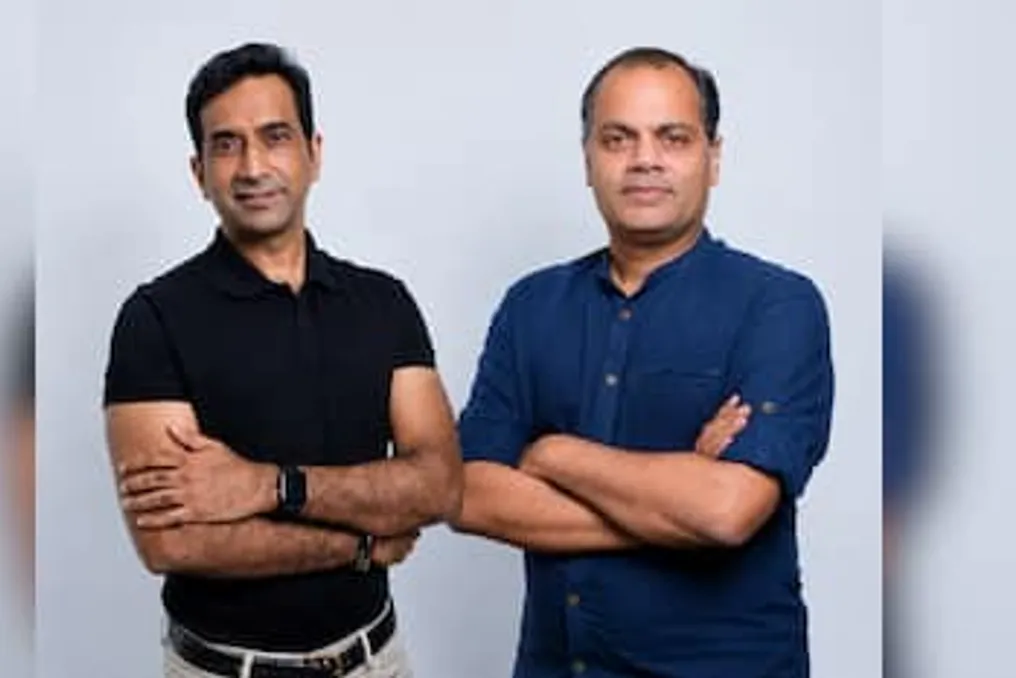
Rohit Bhayana, Co-founder and CEO of Oister Global, noted that while capital for deep technology grows annually, few funds support these companies after the early stage. He explained that early investors support the idea, but large institutions tend to wait until the company gets through the toughest years. It was in this intermediate phase, when the technology turns into a business, that there was a shortage of interested investors, which led to the launch of the Oister Deep Tech Fund.
The fund will focus on mature companies in critical sectors, including aerospace technology, defense, semiconductors, quantum technologies, advanced mobility, materials, and energy storage. It will target enterprises that have passed the 'valley of death,' possessing proven technologies and protected intellectual property (IP), patents both in India and abroad.
These companies must generate revenue, have multiple sources of income and customers both domestically and internationally. Furthermore, the fund will seek strong policy support and a clear path to liquidity. The fund's capital will be directed towards production expansion, order fulfillment, and commercial implementation.
Sandeep Sinha, Co-founder and CEO of Oister Global, emphasized that Oister's investment approach prioritizes commercialization. The fund seeks clear scenarios for commercial use and paying customers, not just scientific promises, aiming to help companies scale and enter new markets.
Oister has already compiled a preliminary list of companies in these sectors, and further investments will be evaluated as the fund deploys. While India's deep tech sector attracts record capital, Oister noted that startups in this sector attracted nearly $3 billion across 189 deals in 2025, marking the strongest year in history. According to the WIPO Global Innovation Index for 2026, India has 453 deep science startups and spin-offs, only 18 of which reached late-stage funding. For comparison, the US dataset includes 12,752 such companies, 1,980 of which are in late stages, and China has 3,466, of which 582 reached late stages.
Scaling these companies requires larger and more patient domestic capital. It is expected that over the next decade, Indian advanced technology companies will transition from initial orders to global supply chains. Oister views its fund as a tool to support enterprises that will shape the country's technological exports.