Lenovo Lecoo introduces exoskeleton for walking assistance starting at 6,999 yuan
Read more
TechNode
technode.com

Lenovo Lecoo introduces exoskeleton for walking assistance starting at 6,999 yuan

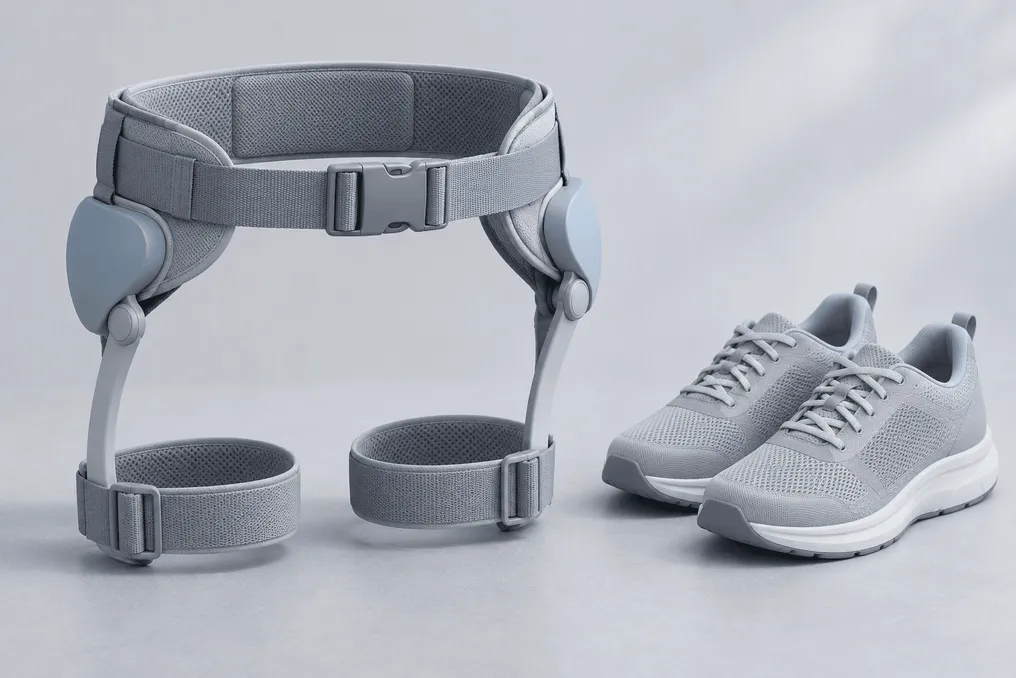
The brand Lenovo Lecoo has launched the wearable exoskeleton Xingzhe ONE in the Chinese market. The preliminary price of the device is set at 6,999 yuan, with sales scheduled to begin on November 28th.

This gadget weighs 1.8 kilograms and is equipped with actuated hip joints designed to provide support during walking and various outdoor activities.

The exoskeleton is capable of providing a peak hip torque of up to 38 Nm, and users can independently adjust the level of assistance provided. The gait recognition system is designed to detect different types of activities and terrain, including ascents, stairs, hiking, running, cycling, and gravel surfaces; supported modes will be implemented in phases.

Lecoo claims that thanks to its mounting system and three-point support, it takes the user about 15 seconds to put on or take off the device. The device has an IP54 rating and is equipped with two removable batteries with a capacity of 3,000 mAh. At the third level of assistance, the stated battery life is approximately three hours. The standard retail price of the product is 7,999 yuan, positioning it in the growing consumer market for walking assistance equipment.

Similar stories

Lecoo Company Lists Consumer Exoskeleton for Walking Assistance Ahead of China Sale
Read more
pandaily.com

Lecoo Company Lists Consumer Exoskeleton for Walking Assistance Ahead of China Sale

According to an IT Home report from November 23, the company Lecoo has listed a consumer exoskeleton designed to assist with walking on the JD.com online store in anticipation of a planned sale on November 28 in China. The initial product price is set at 6,999 yuan, which is lower than the usual retail price of 7,999 yuan.

The device's technical specifications indicate the hardware model YHIP-A. The main unit weighs 1.8 kilograms, excluding batteries and attached components, which differs from the total weight the user will carry. The specification also mentions an aluminum alloy construction and an IP54 dust and splash protection rating.

The device uses support points around the waist and legs, featuring a three-point support system and a single-buckle fastening system. According to promotional materials, it can be put on or taken off in about 15 seconds, although this is a supplier description and not the result of an independent usability assessment.

The advertisement promotes a peak torque of up to 38 Newton-meters and a peak power of 900 watts, offering adjustable assistance and movement modes both unassisted and intelligent. These maximum parameters should not be interpreted as continuous performance or confirmed improvement in user endurance.

The AI-based gait recognition system is claimed for various conditions, including ascents, running, stairs, hiking, cycling, and sandy or rocky terrain. However, the specification sheet explicitly states that recognition categories will be rolled out gradually, so the full list of scenarios is not confirmed before the start of sales.

The standard package includes two removable battery packs with a capacity of 3000 milliampere-hours. The specification indicates a theoretical operating time of about three hours at level three assistance on one battery, but the actual duration depends on operating conditions and is not an independently measured all-day runtime.

Other declared safety features include motor overload protection, battery overheating protection, abnormal joint tension, and fault notifications. Such features are not grounds for medical approval or suitability for rehabilitation, and the report does not contain clinical data. This news concerns the upcoming sale of a consumer product, not demonstrated treatment of mobility impairments.

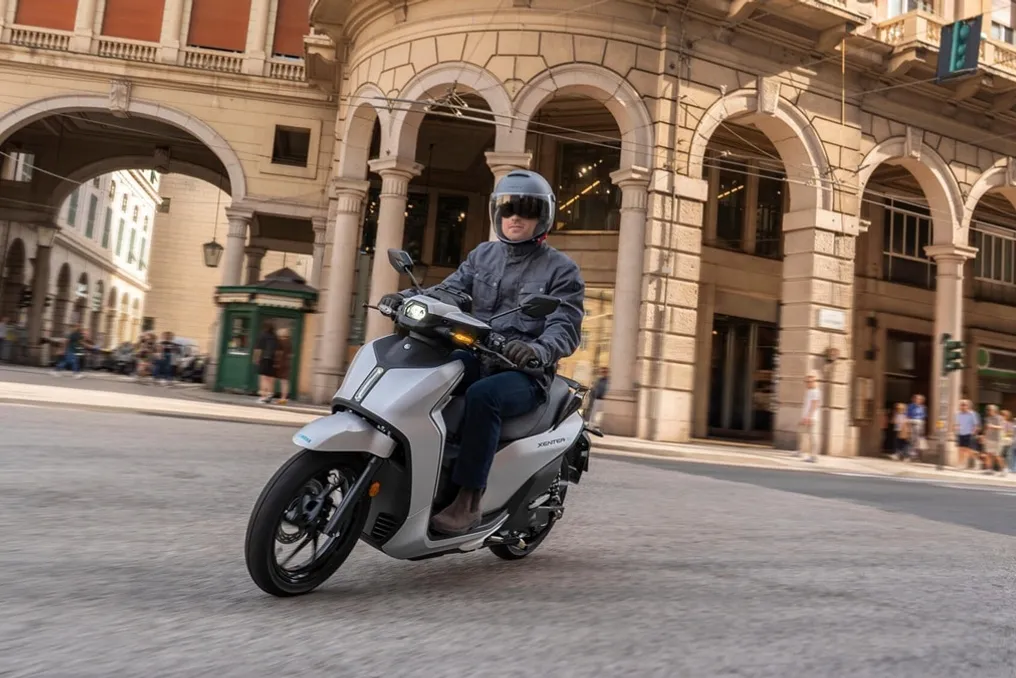
Yamaha unveils new electric scooter Xenter E with large wheels and 108 km range
Read more
www.aajtak.in

Yamaha unveils new electric scooter Xenter E with large wheels and 108 km range

Yamaha has released a new electric scooter called the Yamaha Xenter E. This scooter is distinguished by its large wheels. The company plans to introduce this model in Europe early next year. Furthermore, the brand also demonstrated a gasoline version of this scooter, although information on the technical specifications and release dates for the gasoline version has not yet been disclosed.

Both versions of the scooter will be manufactured in Vietnam. Yamaha usually gives its models a premium look, but the Xenter E is presented in a more restrained design, emphasizing its orientation towards daily use.

The scooter's design includes a streamlined appearance, a unique front shield, compact hexagonal headlights, and a vertical daytime running light element. It is equipped with 16-inch aluminum alloy rims. In Europe, consumers prefer scooters with large wheels, unlike models with smaller wheels commonly found in India. Yamaha compares this scooter to a 125cc scooter.

The electric version is equipped with a 3.5 kWh lithium-ion battery, which provides the stated range of about 108 kilometers. The scooter develops a power of 10 hp and a torque of 33.35 Nm. Power is transmitted to the rear wheel via a belt drive. The battery has an L-shaped form.

The seat height of the Xenter E is 790 mm. It is equipped with telescopic front suspension with a travel of 100 mm, and dual rear shock absorbers with a travel of 97 mm. Disc brakes with ABS are provided for braking on both the front and rear.

The scooter offers three riding modes: S, T, and E. Mode S is intended for sporty riding, mode T for daily commutes, and mode E for achieving maximum range. It also features regenerative braking. A 5-inch TFT display is installed on board, supporting navigation functions, parking location display, and other connectivity options.

Four-meter tall Chinese robot capable of lifting loads up to 500 kilograms
Read more
olhardigital.com.br

Four-meter tall Chinese robot capable of lifting loads up to 500 kilograms

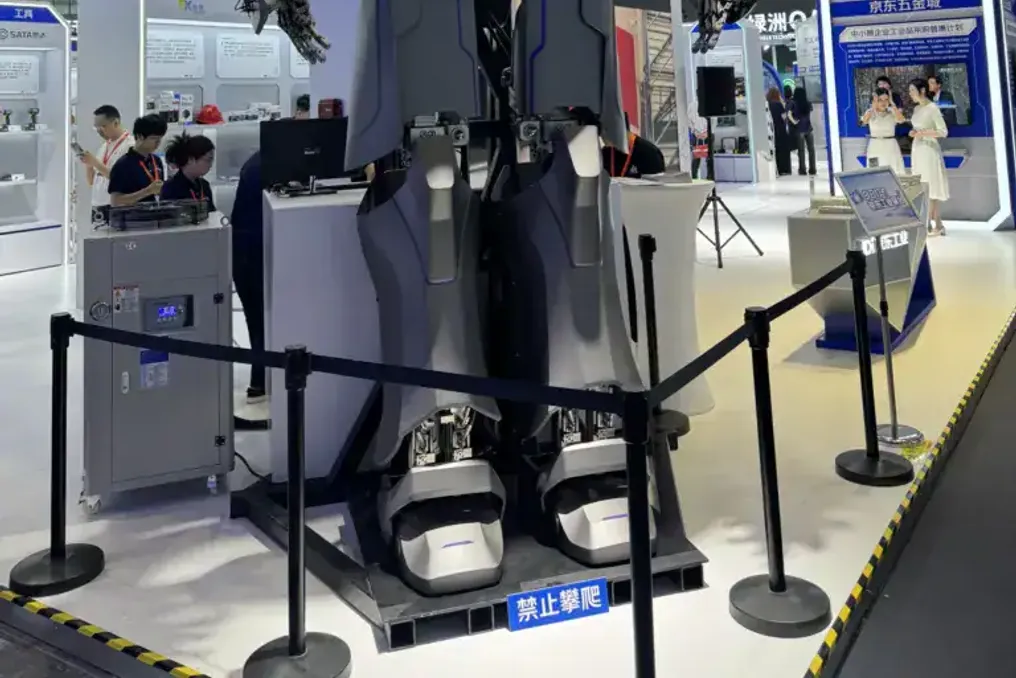
The Chinese company NeodraDynamics has unveiled the Neo1 robot, which stands 4 meters tall and weighs 1.2 tons. This apparatus is designed for performing heavy and hazardous tasks, with its stated capability being the lifting of up to 500 kilograms using two manipulators.

Despite its high load capacity, the project is still in the development stage. The machine requires an external power source via a cable and computer control, and it is not yet capable of moving or operating autonomously.

Neo1 was demonstrated at the World Robotics Conference in Beijing and at the China International Industry Fair in Shanghai. The robot utilizes a hybrid system combining hydraulic and electric mechanisms.

The structure is equipped with 41 active degrees of freedom, meaning it can independently control numerous movements. Of this total, 39 elements operate hydraulically, where oil pressure drives pistons. The remaining two elements are controlled electrically and manage the rotation of the forearms.

According to information published on the CyberRobo profile, each manipulator can withstand a load of up to 300 kg, with a combined total capacity reaching 500 kg. This publication also indicates that the equipment's reach is 1.7 meters, gripping force is 500 kgf, and fingertip accuracy is 0.01 mm.

Among the robot's declared characteristics are resistance to temperatures from -50°C to 250°C, the ability to operate at depths up to 10,000 meters, and tolerance to radiation, dust, and vibration. It is important to note that this data represents project specifications, not results from independent testing presented in the material.

In an interview with New Atlas, Kui Dalon from NeodraDynamics explained that Neo1 functions as a remotely controlled demonstration unit. Although the power remains external and connected by a cable, the company plans to integrate a battery in the future.

The manufacturer is still working on creating the artificial intelligence system necessary for autonomous operation, as well as completing the leg movement control. NeodraDynamics intends to test the equipment's performance in real industrial conditions. According to CyberRobo, the company is sending Neo1 to supply chains and JD Industrial sites.

Potential application areas include material handling in ports and mines, assembly of heavy components, servicing nuclear facilities, and working on oil and gas platforms and power lines. Kui Dalon told New Atlas that a full humanoid format might be excessive for these tasks, as 'walking on legs is not a priority for industrial applications.'

As an alternative, the company is considering mounting the manipulators on a wheeled base. This configuration would allow for cargo transport capabilities without waiting for the walking system to be completed. The next step is transforming the prototype into a tool that meets the requirements of real industrial operations. Initially, the post about the Chinese-made robot appeared on Olhar Digital.

Popular