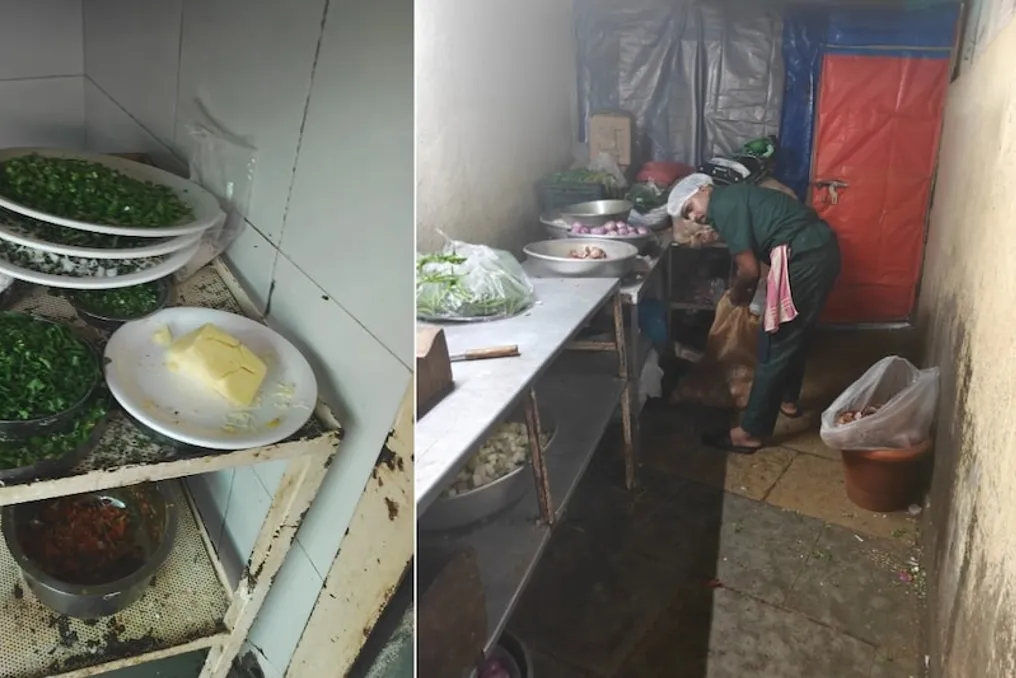
FDA Suspends License of National Sports Club in Mumbai Due to Poor Sanitation
Read more
Aaj Tak
www.aajtak.in

FDA Suspends License of National Sports Club in Mumbai Due to Poor Sanitation

The Maharashtra Food and Drug Administration (FDA) immediately suspended the food license of the 'National Sports Club of India' in Mumbai. During an inspection, flies and cockroaches were found near the sink in the club's kitchen.

In a statement released on Monday, the FDA reported that it conducted an inspection of 'M/s The National Sports Club of India, Worli, Mumbai'. Serious violations of sanitary norms and regulations were identified in accordance with Appendix 4 of the Food Safety Standards Regulations (Licensing and Registration of Food Business) 2011.

The inspection revealed that there were no cockroach traps in the drains. Food waste was accumulating in the corners of storage areas and premises, and trash bins near food preparation areas were left open. Raw materials and products were not stored in a clean environment at the specified temperature.

Furthermore, the floor was observed to be dirty, and dust had accumulated on the exhaust fan. The refrigerator lacked proper organization, and the storage boxes were unlabeled. Plaster was falling from the ceiling and walls, and part of the floor was contaminated. The club failed to provide a cleaning schedule, equipment cleaning records, or raw material purchase invoices during the inspection.

Food handling staff were not vaccinated, and some employees were working without gloves. The club also lacked a proper system for resolving consumer complaints.

The FDA also fined the University of Mumbai canteen in the Fort area ₹100,000 for violating food safety standards. The inspection found that food was stored haphazardly inside the refrigerator, posing a risk of contamination. Open trash bins filled with garbage were located near the storage area, and cleaning agents were present in the food preparation area.

Staff were not wearing the prescribed uniform, and separate storage for vegetarian and non-vegetarian dishes was not ensured. Previously, on November 21, the license of M/s British Brewing Company Private Limited (restaurant and bar) was also suspended. Additionally, the FDA suspended licenses of 6 establishments, including hotels, bakeries, and food businesses in Mumbai, as well as 21 food businesses in the Pune division due to serious negligence regarding hygiene.

Similar stories

FDA Suspends Licenses of Four Major Hotels in Lonavala Due to Sanitary Violations
Read more
www.aajtak.in

FDA Suspends Licenses of Four Major Hotels in Lonavala Due to Sanitary Violations

During an inspection conducted by the Food and Drug Administration (FDA) in Maharashtra state, alarming violations were discovered in the kitchens of four major hotels in Lonavala. The inspection revealed issues such as the presence of expired milk and cheese, as well as cockroaches near refrigerators.

Furthermore, one establishment showed dripping blood from raw meat, and expired food colorings were used for baking. These facts were uncovered not through customer complaints, but during a surprise inspection by the FDA. Consequently, the agency immediately suspended the licenses of these four hotels.

As part of the 'Safe Food Safe Maharashtra' campaign, the FDA Punshgi district team conducted raids on major hotels and restaurants in Lonavala on November 18, 2026. Staff inspected kitchens, refrigerators, cold storage rooms, bakeries, and food storage conditions. Numerous violations regarding food safety and hygiene rules were recorded. The raids targeted four hotels: The Orchid Hotel, Rhythm Hotel, The Fern Hotel, and Basilica Hotel.

Details of Kitchen Violations at the Hotels

During the inspection of The Orchid Hotel, the team found three packs of expired milk in the kitchen and another eight packs in the cold storage, totaling 11 packs. Food storage rules were also not being followed. According to FIFO and FEFO principles, products must be used in order of purchase and expiry date so that older items are consumed first, and expired items are not left in the kitchen. However, here raw and cooked dishes were stored together. The kitchen was dirty around the refrigerator, cutting boards, and stove; there was water on the floor, and trash bins lacked lids. Personnel also lacked necessary protective clothing: gloves, aprons, and head coverings were not used. Additionally, the hotel lacked a logbook for registering customer complaints.

At Rhythm Hotel, FDA staff found cockroaches in both the main kitchen and the bakery area. Cockroaches were spotted near the refrigerator, and the hotel management could not provide records of disinfection. There was no proper system for separating vegetarian and non-vegetarian dishes, and raw and cooked products were stored together. Products in the refrigerator and sauces in plastic bottles lacked labels. It was unclear whether deep cleaning of baking equipment and refrigerators was performed, and water was leaking onto the floor from the cooler. Furthermore, certificates of food quality for packaging materials and FoSTaC staff training certificates were not provided.

In Basilica Hotel, the FDA discovered several types of expired cheeses and bread in the cold storage, which were destroyed on the spot. However, another serious problem was identified there: blood was dripping from raw meat. Principles of safe thawing of unprocessed meat were also violated. There was no system for separate storage of refrigerators, dishes, and storage areas for vegetarian and non-vegetarian dishes. During the inspection, the use of food colorings and monosodium glutamate (MSG), information about which was not listed on the menu, was also found. Moreover, employees lacked medical certificates, disinfection reports, and RUCO records related to the oil used. The hotel was also conducting activities not specified in its license.

At The Fern Hotel, the FDA found numerous expired food colorings intended for confectionery making. These included Tomato Red, Green, Royal Blue, Super Red, Liqua, and Lemon Yellow Gel Colours. These colorings were stored next to fresh produce and did not have a 'Do Not Use' label. All these colorings were destroyed by the FDA team on site. A dead cockroach was found near the refrigerator in the kitchen, and live cockroaches were found near the fryer in the continental hall. Next to pizza dough in the bakery, there was a dirty cloth. Deep cleaning of mixers and baking equipment was not performed. Spices and cut fruits were stored open, and sauce bottles lacked labels, and the trash bin was open.

Warnings from the FDA

After identifying all the aforementioned deficiencies in these four hotels, the FDA immediately suspended their licenses. Shrikant Karkale, Joint Commissioner of FDA Maharashtra, warned that no establishments that play with consumer health and violate food safety laws would be spared. He demanded that hotel and food service owners strictly adhere to license conditions, cleanliness rules, and food storage standards. He added that failure to comply could result in stricter measures, including license revocation.

Indian Legislation Regulates Mislabeling of Food Products: What Do the Laws Say About Claims Like '100% Pure'?
Read more
timesofindia.indiatimes.com

Indian Legislation Regulates Mislabeling of Food Products: What Do the Laws Say About Claims Like '100% Pure'?

Claims such as '100% pure' are frequently found on food product packaging in India for fruit juice, authentic honey, or whole-grain cookies, yet consumers tend to view such assertions as exaggerated. Furthermore, discrepancies between declared ingredients and what is actually delivered to the buyer are observed when purchasing through online platforms. Given the rise of the online shopping trend, these inconsistencies have become a serious issue for protecting consumer rights and ensuring food safety.

Manufacturers, sellers, and e-commerce platforms are bound by requirements set forth in the Food Safety and Standards Act, 2006, the Consumer Protection Act, 2019, and the Legal Metrology Act, 2009. However, effective protection of rights requires understanding what constitutes misleading information, which authority to approach, and how to preserve necessary evidence.

Inspections Alone Do Not Guarantee Food Safety

According to the latest data from FSSAI, 1133 licenses have been suspended, 52 revoked, and 314 premises sealed. Ashwin Bhadri, a national expert at FSSAI, notes that the real challenge begins after the inspection team leaves. Inspections and punitive measures are necessary because they remind businesses of governmental oversight, but temporary solutions do not address the root causes of repeated violations.

Bhadri emphasizes: 'The fight is an event. Food safety is a habit.' He questions what has changed within the establishment during the lull: was the pest control contract corrected, or was the kitchen merely tidied up for the visit? Was the cause of the failure found, or only the symptom?

He points out that obvious violations often indicate deeper issues related to raw material sourcing, supplier verification, purification methods, and quality control during production. Parliamentary data for 2025–26 shows a similar gap. The government informed Parliament that out of 223,808 analyzed food samples in 2025–26, 40,023 were deemed non-compliant, accounting for nearly one in five. Bhadri notes that these figures are preliminary, and the term 'non-compliant' covers a wide range of issues, from incorrect labeling to outright adulteration. Meanwhile, the number of convictions for the same period stood at 1918. He warns that these two numbers should not be viewed as a ratio, but together they show that the system is finding problems much better than it is resolving them definitively.

What Does Indian Law Stipulate Regarding Misleading Food Labeling?

These obligations are governed by three acts: the Food Safety and Standards Act, 2006, the Consumer Protection Act, 2019, and the Legal Metrology Act, 2009.

Ingredient composition must be listed in the correct order

The primary requirements for labels are established by the Food Labeling and Display Regulations, 2020, developed under Section 23 of the FSSAI Act. Ankita, Senior Partner at Chambers of Jain and Kumar, explains that disclosing ingredient information remains a fundamental obligation. Under Regulation 5 of these rules, manufacturers are required to list ingredients on packaged products, generally in descending order of weight or volume. The law also mandates the disclosure of allergens, nutritional value, and food additives, where applicable. Although the 2026 amendments introduce additional requirements, they do not negate the core duty of ingredient disclosure.

When is a food product considered mislabeled?

Section 3(f) of the Food Safety and Standards Act, 2006, defines a mislabeled product as one sold under a deceptive name, presented as a substitute for another product, or containing a statement, design, or representation about its composition or ingredients that is false or misleading. For instance, a product advertised as '100% pure' but containing undeclared ingredients contradicting this claim could come under scrutiny under these provisions.

Penalties depend on the nature of the violation: producing, storing, selling, distributing, or importing a mislabeled product for human consumption incurs a fine of up to 3 lakh rupees (Section 52). Publishing or participating in misleading food advertising is punishable by a fine of up to 10 lakh rupees (Section 53). Food products that do not meet prescribed compositional standards but are not necessarily unsafe may incur a fine of up to 5 lakh rupees (Section 51). Within licensing, including Regulation 2.1.8 of the Food Industry Licensing and Registration Regulations, 2011, authorities can also suspend or revoke a food business license for non-compliance.

Can an e-commerce platform be held liable?

A manufacturer might claim the product was correctly labeled, while the platform might assert the description was uploaded by the seller. However, India's legal framework also covers online food businesses and e-commerce entities. Requirements of the Amendments to the Food Industry Licensing and Registration Regulations, 2018, which introduced provisions for food business operators in e-commerce, oblige platforms to provide consumers with appropriate product information before purchase. Additionally, they establish a requirement for a minimum remaining shelf life of 30% or 45 days until expiry, whichever comes first, at the time of delivery.

Misleading descriptions are prohibited. The Consumer Protection in E-commerce Rules, 2020, impose obligations on marketplaces and inventory-based platforms. Descriptions and advertisements must correspond to the actual characteristics of the goods, which is particularly crucial when an advertisement claims 'pure,' 'natural,' 'sugar-free,' or 'whole grain.' Consumers have a legal right to accurate information. Section 2(9) of the Consumer Protection Act, 2019, recognizes the right to be informed about the quality, quantity, potency, purity, standard, and price of goods. Section 2(11) defines a defect in service, and Section 2(47) regulates unfair trade practices. If the delivered goods substantially differ from the description at the time of purchase, the consumer may invoke these provisions, depending on the circumstances. The Central Consumer Protection Authority (CCPA) can investigate misleading advertisements and issue directions under Section 21. It can mandate the cessation or modification of such advertising and impose fines of up to 10 lakh rupees for the first offense and up to 50 lakh rupees for subsequent offenses.

Fine Print Is Not a Shield

Regulation 4 of the Labeling and Display Regulations, 2020, requires that mandatory declarations be clear, conspicuous, indelible, and easily readable under normal conditions of purchase and use, and prescribes a minimum font size based on the area of the main display panel. A manufacturer cannot rely on inconspicuous disclaimers to evade their labeling obligations. Ankita notes: 'Fine print is sometimes used to conceal material information and hinder consumers from discovering important details. However, legislative labeling requirements cannot be circumvented through disclaimers or subtle disclosures.' She adds: 'Mandatory declarations must comply with prescribed visibility and readability standards. Consumers can challenge misleading or inadequate disclosures before the relevant regulatory bodies and Consumer Protection Commissions.'

What Should Consumers Do?

For orders valued at 150 or 600 rupees, involving a regulator or consumer protection court might seem excessive. However, consumers do not necessarily have to start with litigation. India offers several administrative and pre-litigation avenues.

Step 1: Keep the packaging and document the discrepancy. Ankita advises against discarding the packet or can. The packaging, invoice, batch details, and photographs can serve as key evidence. The consumer can report the violation to FSSAI or the relevant State Food Safety Department. They can also contact the National Consumer Helpline (1915) or file a complaint with the appropriate Consumer Commission. It is vital to retain the product packaging, proof of purchase, batch number, and photos of the label as evidence.

Five categories of evidence must be preserved: the container itself, the box, bottle, or can (if still sealed, leave it unopened); screenshots of the entire screen showing the product name, ingredient claims, nutritional information, and photos displayed in the order application; the invoice and order details uploaded from the platform; photographs of the batch or serial number, manufacturing date, expiry date, or 'Use by' date, and the 14-digit FSSAI license number on the packaging; emails, in-app chats, and other messages with the platform or manufacturer.


Licenses of two popular Pune restaurants suspended due to sanitary violations
Read more
www.aajtak.in

Licenses of two popular Pune restaurants suspended due to sanitary violations

The Food and Drug Administration (FDA) in Pune has suspended the licenses of two well-known local restaurants—Vaishali and Rupali. During inspections conducted by food safety officers, numerous violations of food safety standards were identified.

On Friday, an FDA team inspected the Vaishali restaurant. During the inspection, the restaurant received 58 out of 98 points, which served as the basis for suspending its license. The FDA expressed serious concern regarding deficiencies in the establishment's cleanliness maintenance system.

During the inspection, it was discovered that the pan used for preparing dosa and uttapam was located near the men's restroom. Furthermore, a refrigerator filled with raw food was situated next to the women's restroom, and raw food was stored in an open corridor. These hygiene issues led to the suspension of the restaurant's license.

The FDA also inspected the Rupali restaurant. This inspection revealed shortcomings related to cleanliness. It was noted that the kitchen at Rupali was open, creating a risk of food spoilage. Following the discovery of these sanitation problems, the restaurant's license was suspended.

It is worth noting that both Vaishali and Rupali are very famous establishments in Pune, known for their South Indian dishes such as dosa and filter coffee. However, due to the identified cleanliness deficiencies, the FDA decided to suspend their permits.

Popular