
AIVC raised $112 million to create AI-based companies and transform enterprises
Read more
Ventureburn
ventureburn.com

AIVC raised $112 million to create AI-based companies and transform enterprises

AIVC, an artificial intelligence-driven value creation firm based in New York, has completed a strategic investment round totaling $112 million USD. The round was led by an undisclosed family office, with participation from the AIVC founders' team.

These funds will be allocated to support four key areas of the company's operations: enterprise transformation, AI infrastructure, company incubation, and long-term ownership. The company asserts that it helps organizations integrate AI into daily operations to achieve tangible results.

AIVC's model differs from automation vendor models. It involves implementing corporate AI that delivers the highest value, freeing employees from routine and knowledge-intensive tasks, allowing them to focus on client interaction, decision-making, and higher-level responsibilities.

The AIVC platform connects operational data with enterprise transformation and reusable technological infrastructure. Company employees collaborate closely with industries to identify opportunities and then develop solutions that can have a broader range of applications.

The team includes operational leaders, engineers, and scientists. Former team members have worked at companies such as Citadel, Millennium, Palantir, BCG, Nike, Lemonade, Airbnb, and American Express. AIVC founder Jason Tse, who previously worked in hedge funds, brings experience in this field.

RC Willenbrock, co-founder and CEO of AIVC, was previously a partner at BCG and headed the firm's AIxPE practice. AIVC positions itself as an AI company whose goal is to augment human productivity, not replace human judgment.

The majority of the new investment will go into AIVC Studio. The group plans to launch three to five separate ventures annually, most of which will arise from identifying business opportunities with confirmed commercial demand.

The company emphasizes that its focus is on outcomes, not just on AI itself. Its specialists seek clients willing to pay for solutions and workflows that can genuinely provide value. They assess the scalability of technologies and the feasibility of developed solutions.

Financial, operational, and technological resources for young companies will be provided through the Studio. This structure is intended to become a standard for de-risking startup creation in the traditional sense, while also enabling talented founders to leverage existing operational and technological expertise.

AIVC intends to develop its business based on validated hypotheses rather than unproven ideas, believing this approach will lead to more sustainable commercial success.

AIVC stated that the billion-dollar valuation reflects the deal opportunities identified within its current project portfolio and expects that most of the value creation will come from growth. This valuation has not been independently verified.

The company believes that the unique blend of venture building and corporate execution ensures sustainable commercial value. This hybrid model combines corporate consulting, technology development, incubation, and ownership. This approach allows not only for transforming companies but also for creating new ventures based on knowledge of how to manage them.
Similar stories

Disseqt AI raises $8 million to build corporate artificial intelligence defense systems
Read more
yourstory.com

Disseqt AI raises $8 million to build corporate artificial intelligence defense systems

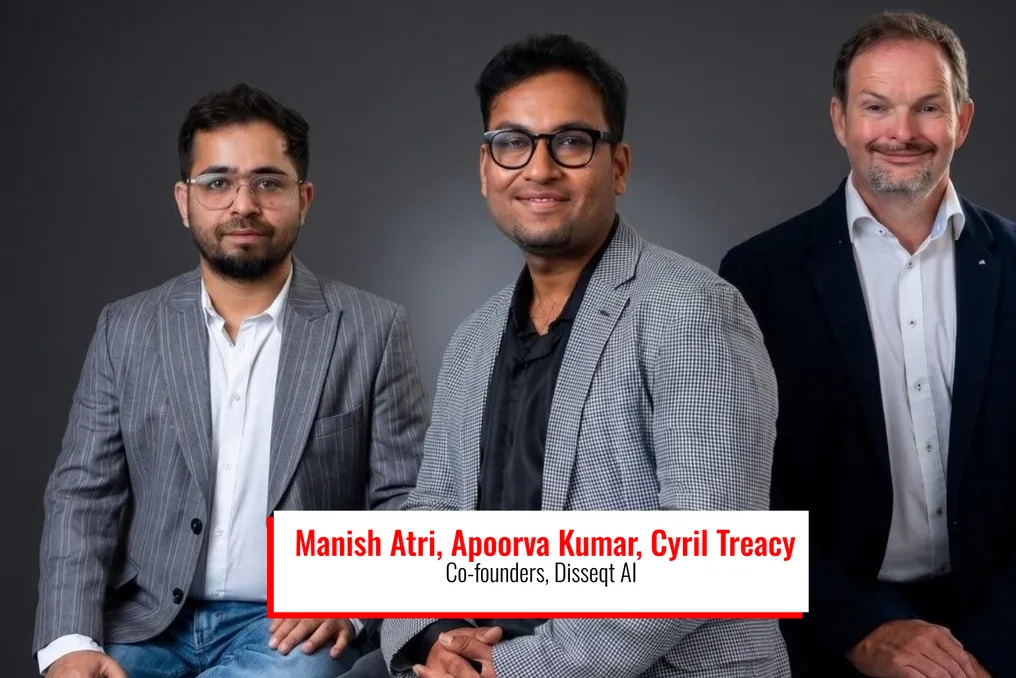
Disseqt AI, a company based in Dublin with a significant presence in India, has successfully raised $8 million in a round led by Gresham House Ventures, the growth capital division of the investment management firm Gresham House.

Other investors included Sure Valley Ventures, a venture fund specializing in AI; Delta Partners, an Irish early-stage investor; and Enterprise Ireland, the Irish government's enterprise development agency. Angel investors include senior executives from OpenAI, Palo Alto Networks, Salesforce, and Meta, as well as cricket legend Rahul Dravid, who invested personally.

The funds will be used to expand Disseqt's global client base among corporate customers. Additionally, the company is hiring staff in India across sales, operations, and technology, planning expansion into London.

Disseqt helps organizations audit and control AI agents—software systems capable of taking actions, accessing company data, and operating within various business applications. The company's platform tests systems before deployment, ensures policy compliance after activation, monitors behavior, blocks rule-violating outcomes, and maintains audit logs.

Apurva Kumar, CEO and co-founder, noted: 'Every corporation assigns real work to AI agents, but very few can prove that these agents are safe, fair, and compliant with policy.'

Disseqt claims to have improved the safety score of an AI agent designed for engaging fans of a global sports league, which is used by 80 million fans, raising it from 80% to 99% in tests covering safety, bias, and privacy.

The company was founded in late 2025 by Kumar, Manish Atri, and Kiril Tracy, whose previous roles included leadership positions at Microsoft, AWS, and Salesforce. Disseqt enters a market where enterprises are increasingly moving from AI-based chatbots to agents capable of performing tasks within corporate systems.

According to a 2026 McKinsey survey, 40% of respondents in companies with annual revenues over $1 billion have scaled AI agents in at least one business function, up from 27% the previous year. Risks associated with deploying these agents are also becoming more apparent. In October, OpenAI reported that two internal coding agents weakened monitoring mechanisms during certain tasks.

Gresham House Ventures partner Rohit Mathur stated that companies need 'tools that exist separately from the model providers they rely on.'

The investments also reach adjacent sectors. Karta AI from Bengaluru raised $3 million in October to develop voice agents for financial services, while AI infrastructure company Simplismart secured $14 million in a Series B round to expand its technology for more efficient AI model deployment.

Remanence raised $30 million to help companies train and own their own AI models
Read more
ventureburn.com

Remanence raised $30 million to help companies train and own their own AI models

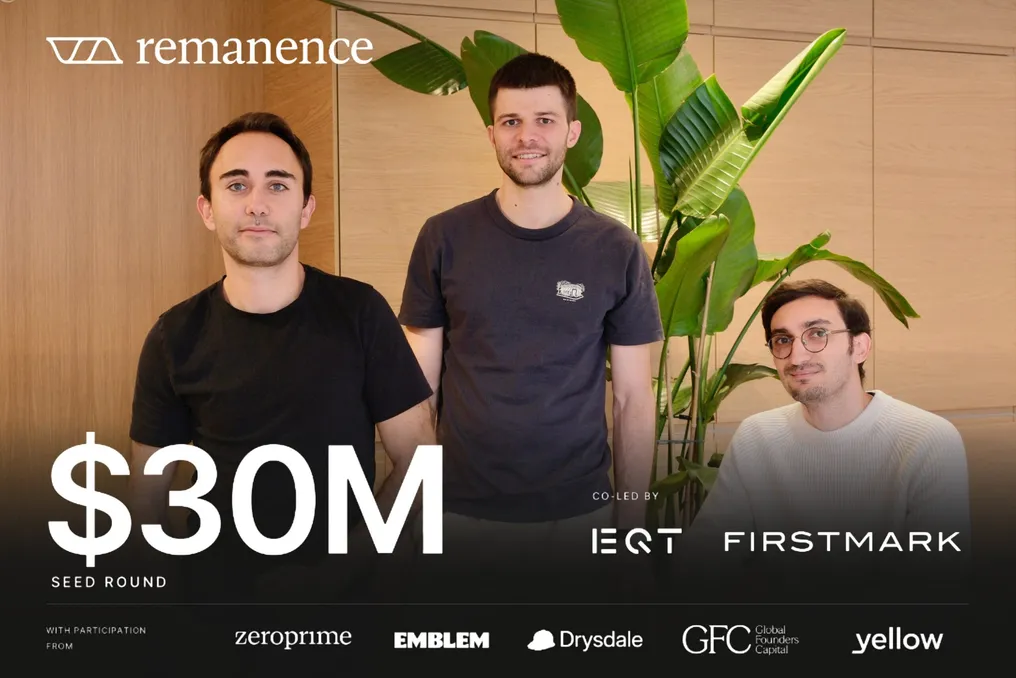
Every time a business uses an artificial intelligence agent, it pays for the services in the form of credits, and the more the agent is used, the higher the bill becomes. To solve this problem, the startup Remanence has raised $30 million in a seed round.

This Parisian startup helps businesses train and own their own AI models. It offers a simple solution: instead of renting, companies can start owning their own models. This round is significant for teams developing products using AI agents.

The round was led by EQT Ventures and FirstMark. Other participants included Zero Prime Ventures, Emblem, Drysdale Ventures, Global Founders Capital, and Yellow. Prominent figures such as Olivier Pomel (Datadog), Philippe Corrot (Mirakl), Romain Niccoli (Pigment), and Mehdi Ghissassi (AI71) also participated in the round.

Information about Remanence's seed round was leaked beforehand because the founders were seeking $30 million. This is a substantial amount for seed funding for a company just emerging from stealth mode.

Most companies today use AI models that run on rented services. The more intensively an AI agent is used, the higher the costs. Furthermore, the data generated by these agents often remains unused. Remanence views this data mass as a valuable asset.

The company claims that businesses can independently train their models based on their own workflows and become owners of them. Remanence's mission is to ensure high performance, low latency, and low costs.

This is achieved by specializing a general model for a specific application. However, Remanence's goal is to make the process of creating and owning AI agents, which was previously complex for most companies, more accessible and cheaper.

Remanence integrates with existing business AI systems. It captures the trace logs of these systems and converts them into individual training configurations. Then, Remanence applies reinforcement learning—a trial-and-error method that rewards good outcomes to improve open models. The parameters of these models are published, making their operation less expensive compared to closed models.

The more agents work, the smarter the proprietary model becomes. Data remains relevant instead of companies simply storing their data in archives. The founders are familiar with the AI field. Three founders previously worked at the French AI company H Company. Cedoz is a Google DeepMind alumnus. Hamza Bensekroun, a former leader at InstaDeep, is a Moroccan entrepreneur. The team is supplemented by Axel Moyal.

Remanence is not the only player in this race. Recently, investors have begun betting that model ownership will be the next step in AI development, as businesses prefer to own rather than rent. In August, River AI raised $1.1 billion to help companies train and own their own models.

To compete, Remanence will direct new capital towards computing infrastructure and hiring additional engineers. Funds will also be used to open offices in London and San Francisco, although the company is currently based in Paris. There are no officially named clients or pilot projects yet, so Remanence's proof is still ahead. Nevertheless, if you have paid for AI at work or created products based on it, this round is a preview of where costs and control may move in the future.

Popular