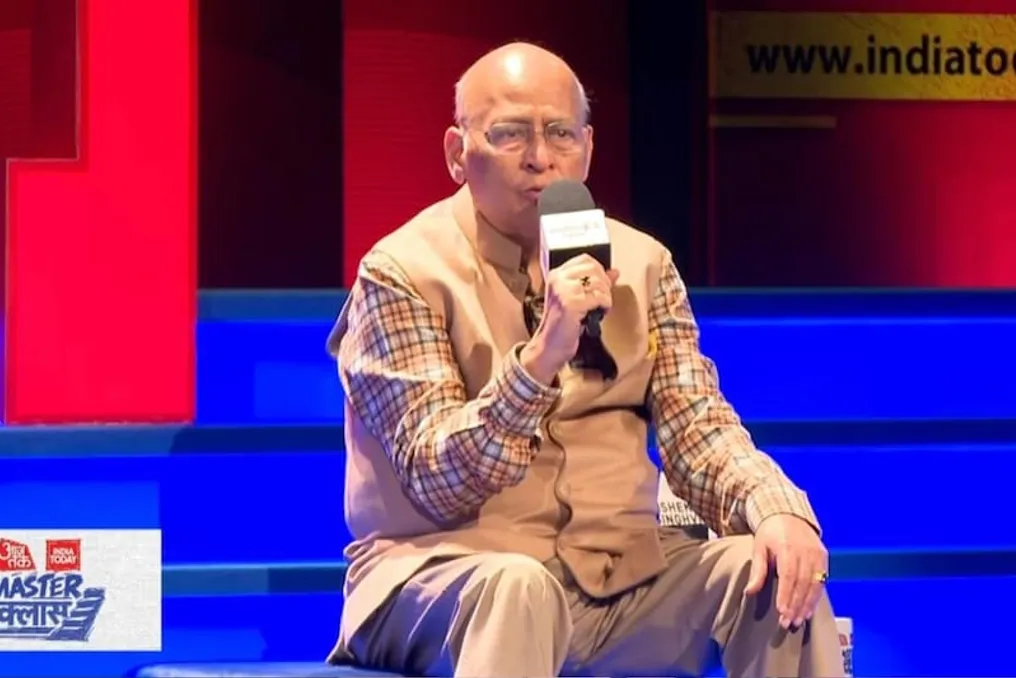
Abhishek Manu Singhvi advised young lawyers not to use AI for drafting documents in the first five years of their career
Read more
Aaj Tak
www.aajtak.in

Abhishek Manu Singhvi advised young lawyers not to use AI for drafting documents in the first five years of their career

Amid the growing influence of artificial intelligence (AI) in the legal field and the advantages gained from 'nepotism' in legal families, senior Supreme Court advocate and five-time Rajya Sabha MP Rajya Sabha Singhvi shared his perspective on building a successful career in this profession with young students and lawyers. He emphasized that he was not there to lecture but to share his experience, noting that youth often dislikes moralizing.

Despite this, he highly praised the technical awareness of the current generation, observing that they have access to resources that previous generations could only imagine.

Speaking about the main principle of success in the legal field, Dr. Singhvi stated that constant hard work and patience are indispensable. He believes that success in advocacy depends 99 percent on diligent effort and only 1 percent on motivation, stressing that hard work is the most crucial aspect in this field.

Dr. Singhvi gave balanced and practical advice regarding the increasing use of AI in legal practice. He expressed full support for the technology but warned against allowing it to become the master. Specifically cautioning young lawyers, he stated that he does not support the use of AI for drafting legal documents because it prevents them from learning anything. He strongly recommended that lawyers draft documents independently during their first five years of career.

Singhvi also noted that society's attitude towards the legal profession has changed over time: if previously it was considered a last resort, today it has become the first choice for students. He highlighted the increase in women's participation in advocacy, noting that while there were very few before, they are now demonstrating outstanding results.

He openly discussed the initial advantages that lawyers from legal families can gain. While acknowledging that family background can provide a starting platform, he clarified that true recognition is achieved only through work and experience. According to him, after one or two cases, all lawyers end up on the same level, and ultimately, experience speaks. Furthermore, he added that this advantage of family origin is gradually weakening.

Discussing ethics and the role of an advocate, Dr. Singhvi stressed that lawyers should have no prejudices against their clients, as life and law are rarely black and white. He stated that an advocate should neither choose nor judge their client, because life is 'grey' (composed of mixed circumstances), not black and white, and that is precisely why advocates exist. Nevertheless, he also mentioned that he declined some cases if he felt he could not substantiate his position in court.

When asked about sources of inspiration, Dr. Singhvi recalled his father, who was himself an advocate and a Sanskrit scholar. He said that every era has its icons, and the standards of Mahatma Gandhi's time differed from today's. He saw his father as a source of inspiration, noting his multifaceted nature, and admitted that he himself is not equal to even half of his father's abilities. He also advised the youth to read biographies of great people, as they provide direction and inspiration for life.

Speaking about his busy schedule, he reported constantly finding a balance between advocacy, politics, media engagement, and studies. He starts the day with a walk and reading newspapers, and then around one o'clock, participates in parliamentary sessions and debates. He also shared that he always wanted to be a professor and still attends university lectures when he has time.
Similar stories

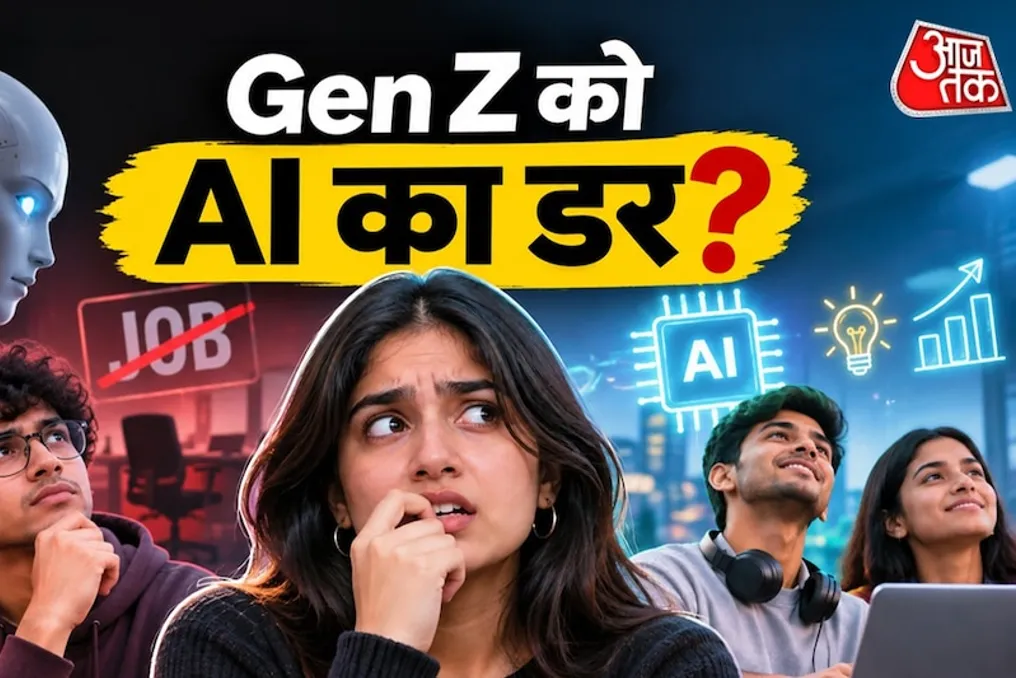
Concerns Among Generation Z Regarding the Impact of Artificial Intelligence on Careers
Read more
www.aajtak.in

Concerns Among Generation Z Regarding the Impact of Artificial Intelligence on Careers

Artificial intelligence (AI) is increasingly integrating into all aspects of life, from education to work. Young people use AI for content creation, information retrieval, and simplifying daily tasks. However, a parallel question arises as to whether AI might eventually take away people's jobs. There are various opinions on this issue among members of Generation Z.

According to the Next Gen Z Survey 2026, which involved 11,800 participants, young people shared their views on the impact of AI on their careers. The report showed that 22% of youth aged 18 to 20 viewed AI as a serious threat to their careers.

This percentage increased with age: among people aged 21 to 25, this figure was 24%, and among those aged 26 to 30, it was 29%. Thus, there was an increase in anxiety about threats related to AI as they approached the start of their working lives.

The study also revealed that working young people experience more anxiety about AI compared to students. 27% of working young people named AI a serious threat to their careers, whereas this figure was 22% among students. This is likely due to the fact that working young people encounter the use of AI in their jobs daily and observe its changing influence.

Nevertheless, not all young people perceive AI solely as a threat. According to the report, 34% of youth aged 18 to 20 saw significant career opportunities in AI. However, among people older than 26 to 30, this percentage decreased to 26%. This indicates that while young people understand the advantages of AI, they still have questions regarding future employment.

Although AI can accelerate and simplify many processes, this does not mean the automatic disappearance of all professions. Work methods may change in the future. Therefore, it is crucial for young people to master AI tools, as well as strengthen their skills in communication, creativity, and problem-solving.

The task of Generation Z is not only to understand AI but also to be able to adapt to rapidly changing technologies.

UPSC Trainer Avad Ojha Shares Thoughts on the Need for Practical Skills Over Academic Knowledge
Read more
www.aajtak.in

UPSC Trainer Avad Ojha Shares Thoughts on the Need for Practical Skills Over Academic Knowledge

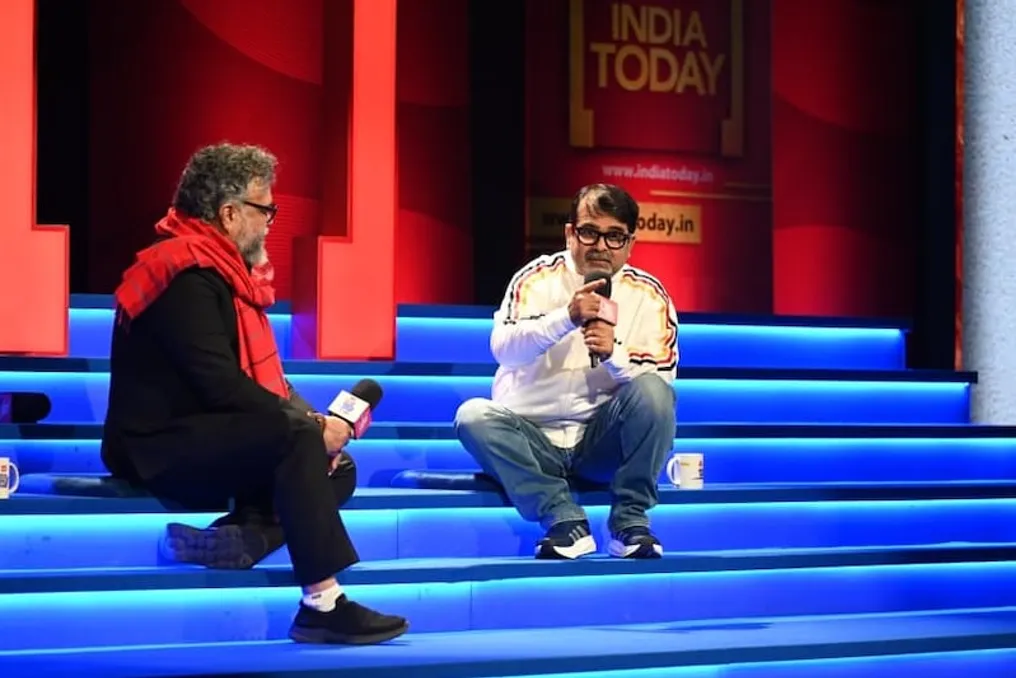
During his participation in the 2026 Masterclass, where he spoke with TVTN Editor-in-Chief Paanili Anand, UPSC trainer Avad Ojha openly addressed several important issues concerning life success. He emphasized that academic education alone is insufficient for achieving success; young people must acquire practical skills and adapt to changing conditions.

Sharing his experience as an educator and former UPSC participant, Ojha urged a critical look at traditional notions, focusing on understanding the subject rather than rote memorization, and developing the ability to cope with life's difficulties. He also advised young people to look beyond the traditional attachment to civil service and utilize opportunities available through skill development.

Commenting on concerns about employment and increasing competition, Avad Ojha noted that the problem in India is not a lack of jobs, but a shortage of people possessing the necessary skills. He stated that one of the main problems facing modern youth is the skills deficit, and education should facilitate problem-solving, not complicate students.

He cited the example of a young man who, after obtaining an MSc, underwent professional training and works as a hairdresser. According to Ojha, this person earns around 50,000 rupees per month. In Ojha's view, this case proves that practical skills can create significant employment opportunities regardless of traditional job status.

Avad Ojha firmly stated: 'Not everyone can become an IAS officer. Some must become entrepreneurs, some businessmen, and some must take the first step in another direction.' He also called on students to discard the 'feudal mentality' that leads people to look down upon certain professions. He himself gave an example, mentioning that he worked in a restaurant for seven months, and stressed that there is no shame in honest labor.

When asked whether UPSC preparation is more related to acquiring knowledge or forming the right mindset, Ojha focused on conceptual understanding and the interconnectedness of various topics. He believes that UPSC preparation is primarily a game of understanding, not just reading material.

Explaining his viewpoint, he described how geography, economics, politics, and history are linked. In his opinion, understanding these interconnections helps candidates develop a broad perspective, which is crucial for future politicians. He specified that geographical conditions influence economic development, which in turn shapes the political structure and historical events.

Ojha also insisted on strengthening fundamental knowledge. Referring to his 25 years of teaching experience, he noted that students with a clear grasp of core concepts perform better in competitive exams. He advised candidates to solve past exam papers and strengthen their foundations, adding that 'the competition is not just the result of hard work; it is the result of practice.'

The discussion also covered issues of relationships, love, and career aspirations, especially in the context of youth. Responding to the question about balancing relationships, love, and personal ambitions, Ojha said that the influence of relationships on human development must be positive. He noted that a good friendship is one that helps both parties move forward, and a good romance is one that elevates both.

Furthermore, he explained that young people do not need to avoid relationships while pursuing ambitions. Instead, they should assess whether their relationships help them advance or hold them back. Through historical examples and stories, Ojha illustrated the difference between relationships that inspire great deeds and those that distract from goals. He also warned against the idea that professional aspirations and personal relationships are antagonists, asserting that with clear goals, they can go hand in hand.

Highlighting the link between economic self-sufficiency and personal freedom, Avad Ojha stated that financial stability plays a decisive role in determining what decisions a person can make in life. He said: 'Economic freedom leads to social freedom.' He explained that financial independence gives a person greater control over their personal and professional life. In this context, he cited actress Nina Gupta as an example, noting that economic self-sufficiency allows people to make decisions on their own terms, despite social expectations. In Ojha's opinion, young people should...

Senior Lawyer Abhishek Manu Singhvi Shares Success Tips for Young Professionals
Read more
www.aajtak.in

Senior Lawyer Abhishek Manu Singhvi Shares Success Tips for Young Professionals

During the second day of the 'Aaj Tak Masterclass' event, Congressman and senior lawyer Abhishek Manu Singhvi participated in a session dedicated to the topic 'How to become a leading lawyer?'

In this session, he elaborated on his extensive experience in the legal field. Furthermore, Abhishek Manu Singhvi provided young people with several important tips on how to become a good advocate.

Popular