Numerous Pilgrims Gather in Prayagraj and Haridwar During Kartik Purnima
Read more
Aaj Tak
www.aajtak.in

Numerous Pilgrims Gather in Prayagraj and Haridwar During Kartik Purnima

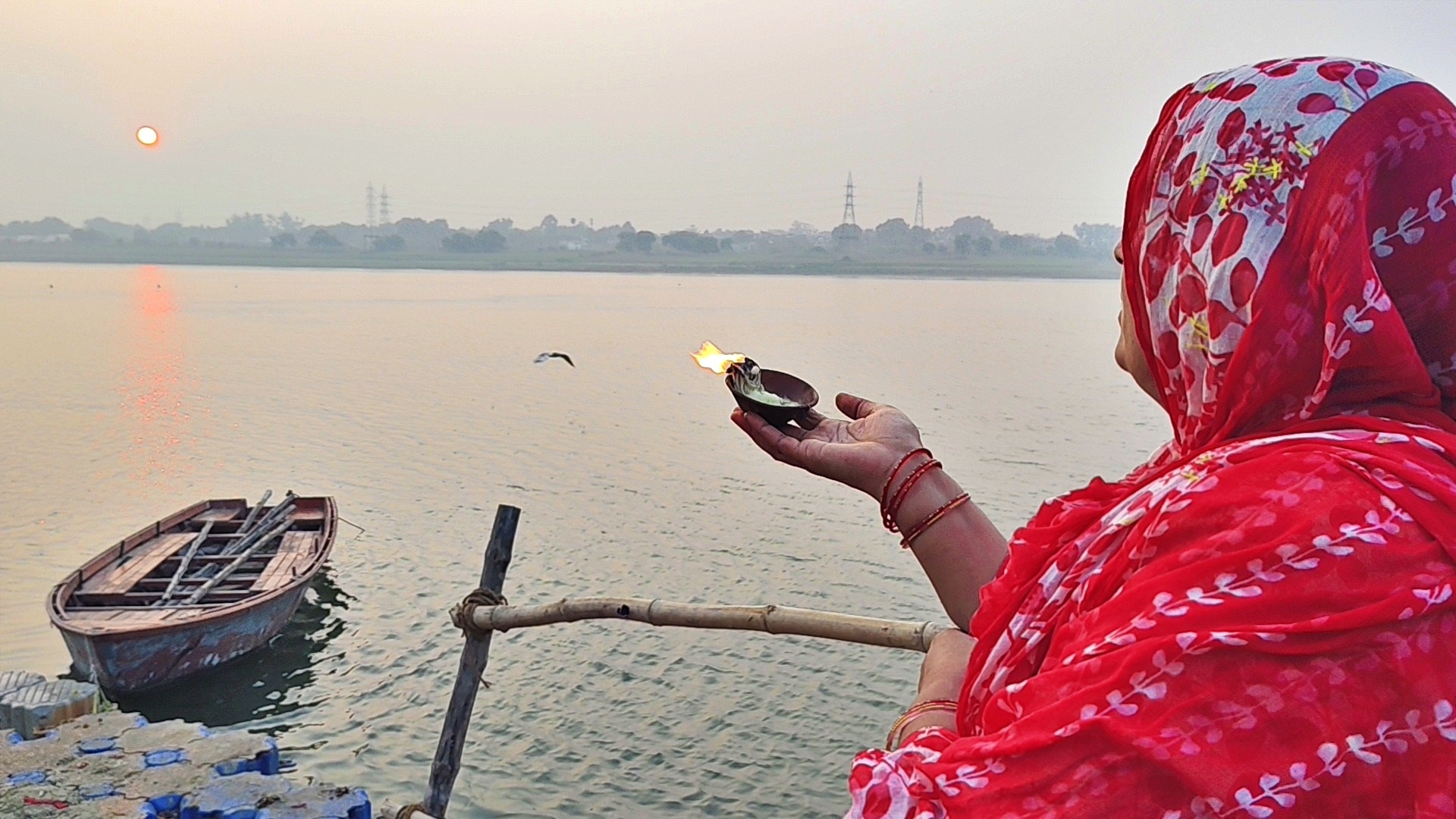
An amazing spectacle of piety was observed in the confluence city of Prayagraj during Kartik Purnima. A huge number of pilgrims gathered early in the morning on various banks of the Ganges and Yamuna, including Balua Ghat. They concluded the monthly Kartik Snan by taking a sacred dip, offering worship, making sacrifices, and presenting offerings to the Sun. On this day, Devi Deepawali and Guru Nanak's Birthday are also celebrated.

Despite the severe cold, pilgrims began arriving at the banks of the Ganges and Yamuna from the early morning. People were immersing themselves in the water at different ghats, worshipping Lord Vishnu and Lord Shiva, praying for the well-being and prosperity of their families. Pilgrims offered tributes to the Sun god and made donations according to their beliefs.

According to religious beliefs, Kartik Purnima holds special significance. It is believed that on this day, Lord Shiva destroyed Tripurasura, and Lord Vishnu protected the Vedas by taking the form of Matsya Avatar. This is why bathing, sacrificing, and worshipping on this day brings special merit. The ritual of bathing and fasting, which lasted for a whole month in Kartik Maas, concluded today with Purnima.

This day became a confluence of several sacred festivals: Kartik Purnima, Devi Deepawali, and Guru Nanak's Birthday, which generated immense enthusiasm among pilgrims on the banks. A large number of women and families arrived at the ghats early in the morning, observing religious traditions. After bathing in the Yamuna, pilgrims also prayed to God for peace and happiness for their families.

Meanwhile, in Haridwar, millions of pilgrims gathered on the banks of the Ganges on the day of the Kartik Purnima and Devi Deepawali dip, including Har Ki Pauri. Despite the cold, pilgrims had been taking dips in the Ganges since midnight, hoping to earn virtue and liberation. There is a belief that bathing in the holy rivers and offering lights on this day destroys sins and brings the grace of Lord Vishnu and Shiva.

According to astrologer Pandit Manoj Tripathi, on this day, associated with Lord Shiva's destruction of Tripurasura and the joy of the gods, troubles are removed by offering 360 candles, and a path is opened for ancestors. Pilgrims also consider this day a special festival of Lord Vishnu's favorite month and gain spiritual benefits. A police unit was deployed to ensure safety and manage the crowd in the fair area, dividing the zone into 2 superzones, 11 zones, and 30 sectors.
Similar stories

The Significance of Kartik Purnima as Deva Diwali: The Meaning of the 84 Ghats of Kashi and the Mythological Story
Read more
www.aajtak.in

The Significance of Kartik Purnima as Deva Diwali: The Meaning of the 84 Ghats of Kashi and the Mythological Story

This year, the festival of Deva Diwali will be celebrated on November 24th. The Deva Diwali festival in Kashi is not just a celebration of lighting lamps and illuminating ghats; it is closely connected to Lord Shiva, Mother Ganga, the deities, and Vedic traditions. According to beliefs, the 84 ghats of Kashi symbolize the 84 lakh yonis.

These ghats, located along the Ganges River within a radius of about 7 kilometers, are an integral part of the religious and cultural identity of Kashi. Kartik Purnima is called Deva Diwali. It is believed that on this day, the deities descend from the heavens to Kashi and witness the act of offering light on the banks of the Ganges. This is why Deva Diwali is celebrated in Kashi with great reverence and enthusiasm.

The Diya (lamp) is considered a symbol of knowledge, light, and prosperity, and Deva Diwali is rightly called the Diwali of the deities. There is a belief that on this day, the deities come down from the heavens to Kashi to observe the ceremony of offering light on the banks of the Ganges. During this period, special reverence is paid to Lord Vishnu and Mother Ganga. On this day, people take a holy dip in the sacred rivers and then perform ritual worship of Lord Vishnu and Shiva, after which they offer lamps.

The ghats of Kashi have a special connection with Deva Diwali. It is believed that the 84 ghats of Kashi represent the symbol of 84 lakh yonis. These ghats, stretching along the Ganges within approximately 7 kilometers, form the religious and cultural identity of Kashi. Previously, Kashi was known as Anandvan, later its name became Kashi, and then Varanasi. Varanasi is located in the region between the rivers Varuna and Asi, where the Ganges flows in a northward direction (Uttaravahini).

In Kashi, situated on the bank of the Ganges flowing north, the Deva Diwali festival symbolizes the arrival and welcoming of the deities. Therefore, the tradition of offering light at the ghats is observed here with the utmost devotion.

There is an ancient legend explaining the origin of Deva Diwali, related to the destruction of Tripurasura by Lord Shiva. According to this story, Tarakasura had three sons: Tarakaksha, Kamakha, and Vidyunamali. All three underwent a severe ascetic trial and received blessings from Brahma. After this, they built three huge palaces of gold, silver, and iron, which came to be known as the three puras or Tripuras. Influenced by their power and the blessings they received, these three asuras began to inflict suffering on the deities and sages.

The deities, who suffered under the tyranny, appealed to Lord Vishnu, and then all the deities asked Lord Shiva to destroy these asuras. Accepting the deities' request, Lord Shiva destroyed the three cities with a single arrow, killing Tarakaksha, Kamakha, and Vidyunamali. Because of this, Lord Shiva earned the name Tripurantaka. After defeating Tripurasura, the deities performed special worship of Lord Shiva. This event is associated with the festival of Deva Diwali, which symbolizes the victory of Lord Shiva, the joy of the deities, and the establishment of Dharma.

Direndra Shastri performs consecration ritual at Haudeshwar Nath Temple in Kunda
Read more
www.aajtak.in

Direndra Shastri performs consecration ritual at Haudeshwar Nath Temple in Kunda

Before the start of the second day of Shri Ram Katha, held in Benti, Pratapgarh district, Uttar Pradesh, Baba Bageshwar Direndra Krishna Shastri took a dip in the sacred Ganges River to strengthen his faith.

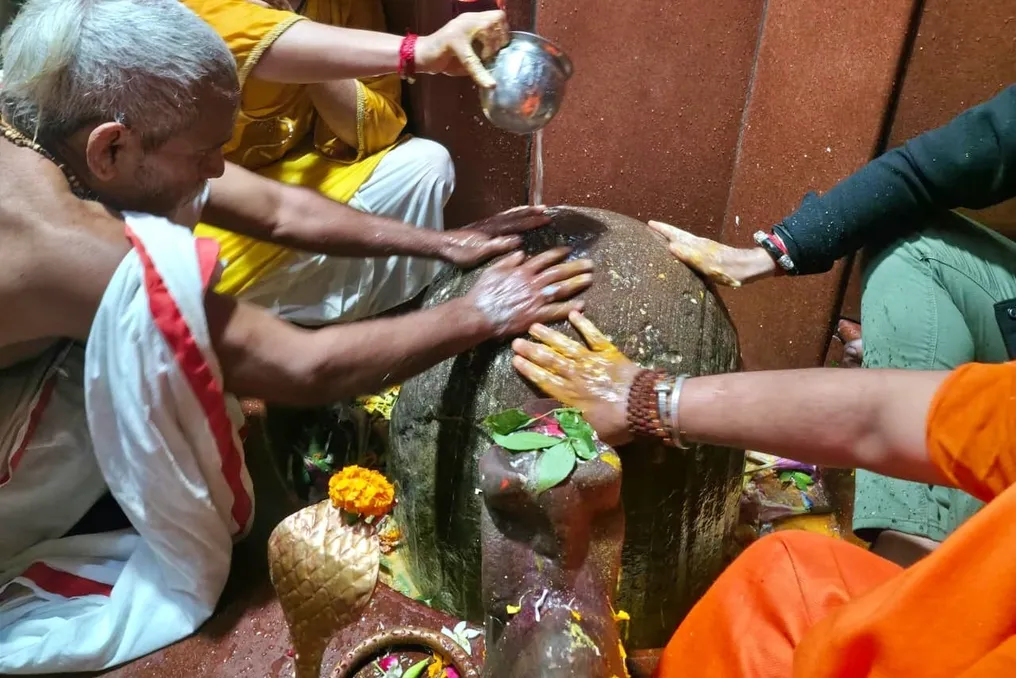
After bathing in the Ganges, he proceeded to the ancient Avadheshwar Nath Dham temple (also known as Haudeshwar Nath Dham) in Benti, where he performed ritual ablutions, worship, and Aarti to the deity Shiva. This ritual, conducted before religious ceremonies and preaching, was carried out amidst strict security measures, after which he headed to the venue for the sermon.

After bathing in the Ganges, Baba Direndra Krishna Shastri went directly to the ancient Avadheshwar Nath Dham temple in Benti. There, he performed the bathing of the deity Shiva according to Vedic mantras and all necessary rituals, and also offered Aarti. During this event, the entire temple resonated with chants of 'Har Har Mahadev' and 'Jai Shri Ram'. Upon learning of Direndra Krishna Shastri's arrival, a large number of local devotees gathered at the temple to see him. The visitors considered this special worship by the Baba before the sermon to be a very auspicious sign.

The Avadheshwar Nath Dham temple, located in Benti, Kunda, and known locally as Haudeshwar Nath Dham, is a major center of faith in the region. This ancient temple holds historical and religious significance and is widely known over long distances. Local MLA Raja Bhaiya and his ancestors are associated with this temple. Raja Bhaiya regularly visits the temple for prayers and visits, and during Sawan and other religious events, he holds meetings with the trust and officials regarding organization and preparation.

During this religious event and the worship of Baba Bageshwar, the administration ensured extremely strict security measures. After bathing in the Ganges and bathing Mahadev, Baba Bageshwar continued his journey to Benti to participate in the Shri Ram sermon.

Because the Avadheshwar Nath Dham temple is situated near the sacred banks of Mother Ganga, its natural and spiritual atmosphere remains very peaceful and charming. According to mythological beliefs, the lingam installed in this temple is self-manifested. During sacred periods such as the month of Sawan, Mahashivaratri, and Kartik Purnima, grand fairs are held here. On these special days, thousands of Shiva devotees arrive here to bathe in the Ganges and worship the deity Shiva.

Kartik Purnima Date 2026: Information on the Date and Auspicious Time for Bathing and Offering
Read more
www.aajtak.in

Kartik Purnima Date 2026: Information on the Date and Auspicious Time for Bathing and Offering

Kartik Purnima is considered a very significant festival in the Hindu Panchang. This festival, which follows Diwali and Chhath, is the main festival of the Kartik month. According to tradition, it is customary on this day to take baths in sacred rivers, including the Ganges, and perform charity for the needy. There is a religious belief that lighting lamps on this day brings merit. Lighting fires in temples and on riverbanks holds special significance.

Deva Diwali is celebrated on this day. It is believed that deities descend to earth on this day to celebrate Diwali. This festival is particularly picturesque on the banks of the Ganga in Varanasi, where thousands and millions of lamps are lit in the evening, illuminating the entire bank. Pilgrims arrive from afar to witness this spectacle. Lamp lighting ceremonies are also held in other holy shrines across the country.

Date and Auspicious Time of Kartik Purnima 2026

According to the Panchang, Kartik Purnima will be celebrated on November 24, 2026, on a Tuesday. The start of the Purnima date is on November 23 at 23:42, and its end is on November 24 at 20:23.

Kartik Purnima Date: November 24, 2026, Tuesday.
Start of Purnima Date: November 23, 23:42.
End of Purnima Date: November 24, 20:23.
Auspicious Time for Offering Lamps: from 17:08 to 19:47.

Auspicious Time for Bathing and Offering on Kartik Purnima

This time, the auspicious time for bathing and making offerings on Kartik Purnima will be Brahma Muhurta from 5:03 to 5:57 AM. After this, you can engage in worship from the beginning of Brahma Muhurta until 7:47 AM. The moonrise time on this day is indicated as 17:01.

Religious Significance of Kartik Purnima

According to mythological history, on the day of Kartik Purnima, Lord Shiva destroyed the demon named Tripurasura. The gods who suffered under the tyranny of Tripurasura found liberation after his defeat. In celebration of this victory, the gods illuminated the celestial world with lamps. Since then, the tradition of celebrating Deva Diwali on Kartik Purnima has been established. Therefore, this date is also called Tripurari Purnima. On this day, worshipping Lord Shiva, bathing in sacred rivers, and lighting lamps are considered auspicious. According to religious beliefs, performing these actions brings happiness and prosperity to a person's life, as well as reward.

Popular