Thousand-year iguana of endangered species released in Jamaica after captive breeding program
Read more
N+1
nplus1.ru

Thousand-year iguana of endangered species released in Jamaica after captive breeding program

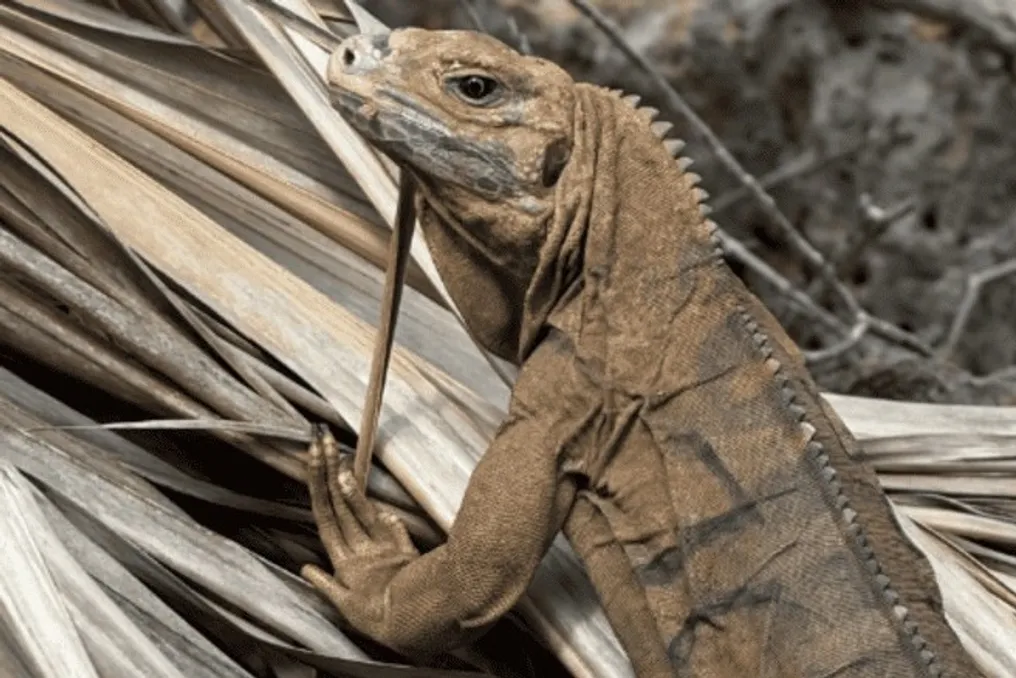
In mid-November, nature conservation specialists released the thousand-year Jamaican ciclour into its natural habitat. These animals previously participated in a program to raise young individuals in captivity.

This lizard species, belonging to the iguana family and found exclusively on the island of Jamaica, was on the brink of extinction due to human-introduced predators, primarily small mongooses. Until 1990, the ciclour was even considered extinct.

To preserve these rare ciclours, conservation staff catch recently hatched young and raise them in captivity for three to four years. Once the juveniles reach a size where the threat from predators is reduced, they are returned to their native forests.

More detailed information about Jamaican ciclours and measures to protect them is available in a press release from the Association of Zoos and Aquariums (AZA).

Similar stories

Isolated Awá-Guajá Indigenous Group Makes Contact with Neighboring Community in Maranhão
Read more
super.abril.com.br

Isolated Awá-Guajá Indigenous Group Makes Contact with Neighboring Community in Maranhão

A group of approximately 15 isolated Awá-Guajá indigenous people living in the Amazon established contact with the neighboring Guajajara community in the Arariboia Indigenous Land, located in Maranhão, this Monday, the 16th. This encounter was captured on video, and there is no official confirmation yet regarding the exact reason for this approach.

The international organization Survival International released the footage and reported that, in addition to the contact with the Guajajara, the Awá-Guajá group was also seen near a post of the National Foundation of Indigenous Peoples (Funai) in the region, an event considered unprecedented recently.

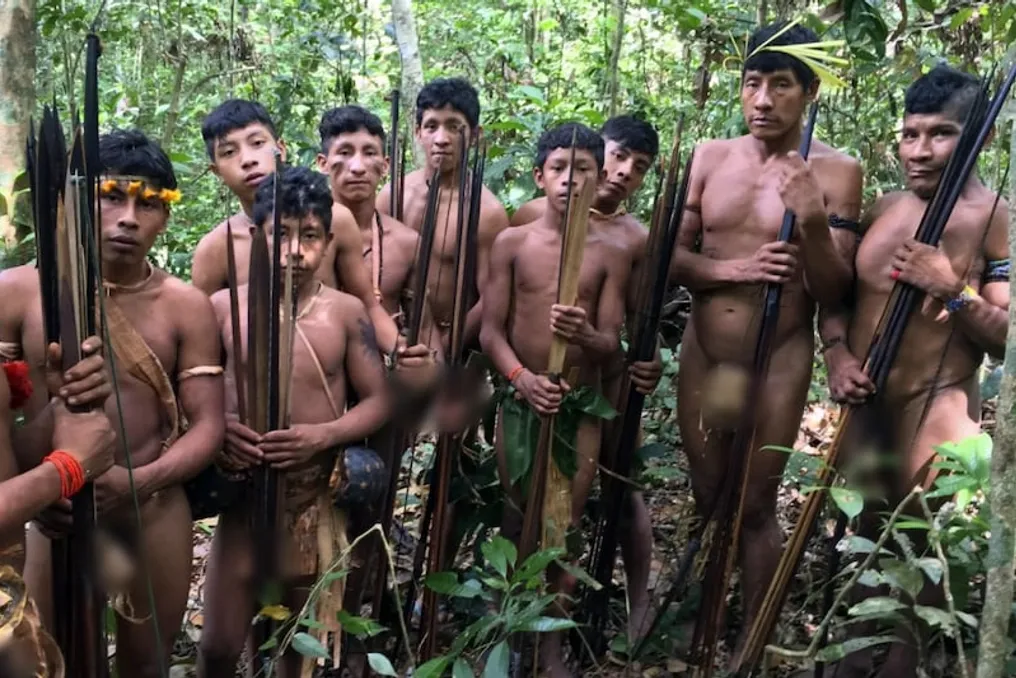
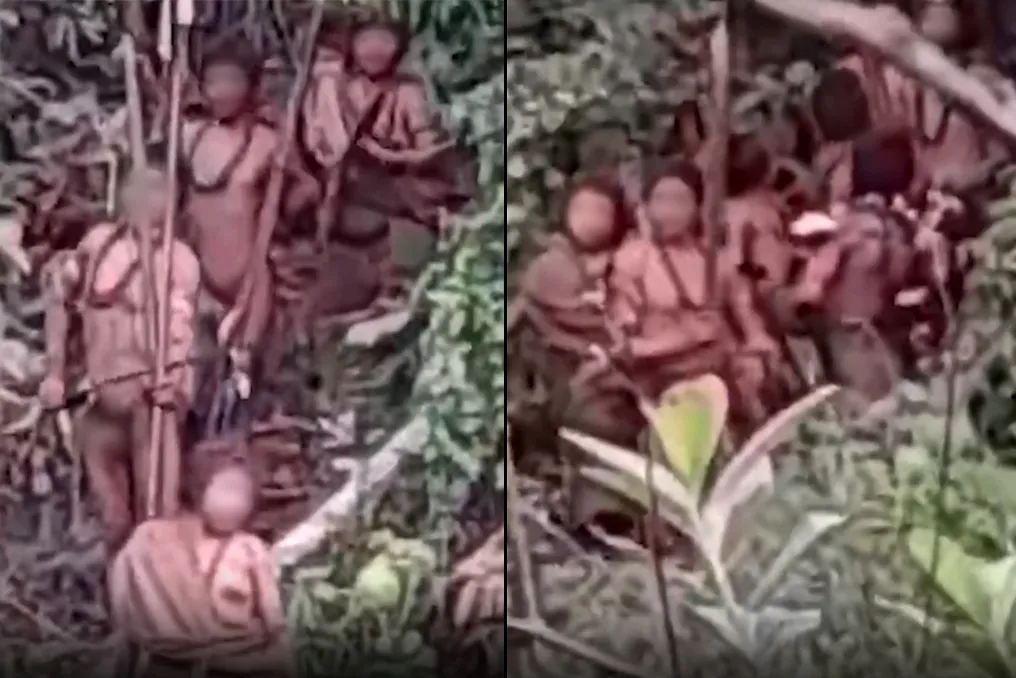
Images recorded by residents of the Tawari village show Awá-Guajá adults and children standing still, while a member of the Guajajara community offered yams, and the group members approached to receive the food. The videos also show that some of the indigenous people were carrying bows and arrows and using ornaments made of feathers and necklaces.

Olímpio Santos Guajajara, president of the Association of Guardians of the Arariboia Land, informed that the indigenous people tried to communicate, but linguistic barriers between the two peoples prevented any understanding. After this first contact, the Awá-Guajá returned to the forest. However, on Tuesday morning, the 17th, they were sighted again in the vicinity of other indigenous communities. The Coordination of Organizations and Articulations of Indigenous Peoples of Maranhão (Coapima) added that the group had already been observed in the area on Sunday, the 15th.

Indigenous leaders express the belief that the progression of invaders in the forest, notably loggers and illegal hunters, may be impacting the areas used by the Awá-Guajá to obtain sustenance. According to Coapima, members of the Guajajara community reported that children and the elderly showed visible signs of severe thinness. Despite this, there is no confirmation of a malnutrition diagnosis or that the lack of natural resources was the direct cause of the search for food; these hypotheses require investigation by specialized teams, respecting the autonomy of the group.

Hunting plays a fundamental role in the structure of Awá-Guajá life. Due to their dependence on animal availability, they do not stay in one place, moving through the forest in search of resources and food. Funai defines as 'isolated' those indigenous groups that do not maintain constant contact with the national population. In Brazil, there are 114 records of isolated peoples, all located in the Amazon. Many of these peoples have knowledge of ways of life outside the forest but choose isolation due to the inherent risks of contact with other people.

The Awá are listed in the official registry of isolated indigenous peoples of Funai and are continuously monitored by the Awá Ethnoenvironmental Protection Front. The presence of these indigenous people is documented in several indigenous lands in Maranhão, including Arariboia, Caru, Awá, and Alto Turiaçu. Currently, Brazilian policy for the protection of isolated peoples is guided by the principle of non-contact, whose purpose is not to foster relationships, but rather to ensure the conditions for them to remain isolated, if that is their choice, without external interference and with full territorial protection.

It is crucial to note that the approach does not necessarily imply that the Awá have decided to abandon their state of isolation. The federal government has communicated that it is implementing protective measures for the Awá-Guajá, with indigenous health professionals already present in the region. Authorities have also activated a Situation Room to coordinate actions and assess potential contact and health risks for the indigenous people, as reported by the government in a note.

Health authorities express particular concern because, being isolated, the Awá likely have little or no immunity against common viruses and bacteria outside the forest, such as flu or Covid-19, which could trigger serious and even fatal outbreaks. For this reason, the current priority is to ensure the protection, health, and autonomy of the isolated Awá. The Commission of Chiefs and Leaders of the Arariboia Indigenous Land also expressed apprehension about the presence of a large number of police officers and members of protection teams in the reserve, warning that the movement of external people could frighten the isolated indigenous people and harm the communities.

After many years, the Ava tribe from the Amazon has appeared on the surface; they live in isolation
Read more
www.aajtak.in

After many years, the Ava tribe from the Amazon has appeared on the surface; they live in isolation

Approximately 20 members of the Ava community, which lives almost isolated from the outside world in the tropical forests of Brazil, suddenly emerged from the jungle on November 16. They headed to a government post and requested food. Photographs and videos of this Ava group, appearing after decades, caused a wide resonance.

These shots, taken in the Amazonian forests of Brazil, attracted worldwide attention. The photographs and videos show men, women, and children from the Ava community who have come out of the forest. Some men were seen with bows and long arrows. It is reported that the group of about 20 people reached the observation post and the village of Tavari within the Arariboia indigenous territory in the state of Maranhão, Brazil.

Some groups of the Ava community, who have appeared in public for the first time after decades, remain cut off from external society, meaning they have no regular contact with the outside world. They sustain their lives through hunting, fishing, and products gathered in the forest.

According to Survival International, this time the Ava group approached the government team and requested food. After receiving food, they returned to the forest. The organization called this contact an extremely rare event for the Ava people in recent decades.

One of the most interesting social features of Ava society is their marriage system. According to anthropological records, men and women in Ava/Guaja society can marry more than once in their lives. There is no mandatory or preferred system where one marriage must last a lifetime.

Furthermore, some anthropological studies have recorded cases where one woman had multiple husbands. This is called polyandry. This system does not apply to every member of the Ava community or every family. This is why the marriage customs of the Ava are considered very different and curious compared to other societies.

Another unique cultural belief documented regarding Ava society is related to the concept of multiple male contribution to child development. According to some studies, their traditional beliefs include the idea of multiple fatherhood. It is important to note that this does not mean the child has multiple biological fathers scientifically, but rather reflects their traditional cultural perception and social structure.

The Ava community also demonstrates an unusual connection with the forest animals. If a female monkey dies during a hunt, and her infant survives, the Ava family sometimes takes this infant in. Such a monkey infant is raised as a family member. Anthropological descriptions mention that Ava women care for monkey infants and even feed them breast milk. Thus, an orphaned animal infant found in the forest can become part of the family.

Ava people are also skilled at navigating the forest environment and recognizing animals by sound. Their traditional knowledge of hunting includes imitating animal calls. Hunters use various sounds to determine which animals are nearby. This knowledge is passed down from generation to generation. For them, the forest is not just a habitat; it is their food, path, home, and culture.

The main question of this situation is why they left the forest. Usually, the Ava avoid contact with outsiders. However, in recent years, there has been growing concern about the invasion of illegal loggers, hunters, and cattle ranchers into their forests. Human rights organizations believe that external pressure has affected their traditional territory, and perhaps this is why this group was forced to come out in search of food.

Nevertheless, authorities currently lack sufficient information to definitively establish the true reason for their departure. Some local residents have also expressed concern about the health condition of children and the elderly in the group.

Contact with the outside world is dangerous for isolated communities like the Ava. The risk of disease is very serious. The population of such communities previously had low contact with common infectious diseases from the outside world, so infection could lead to severe consequences.
Popular