African Union launches five-year plan to prevent maternal and infant mortality
Read more
CGTN
cgtn.com

African Union launches five-year plan to prevent maternal and infant mortality

The African Union (AU) is preparing to present a continental roadmap spanning five years. The goal of this plan is to eradicate preventable deaths of mothers and newborns, as well as improve the health status of children across the African continent.

The continental strategic framework for improving maternal and child health in Africa for the period 2026–2030 sets three main objectives for the 55 member states of the AU: achieving zero home births, zero maternal and newborn mortality, and no unvaccinated children.

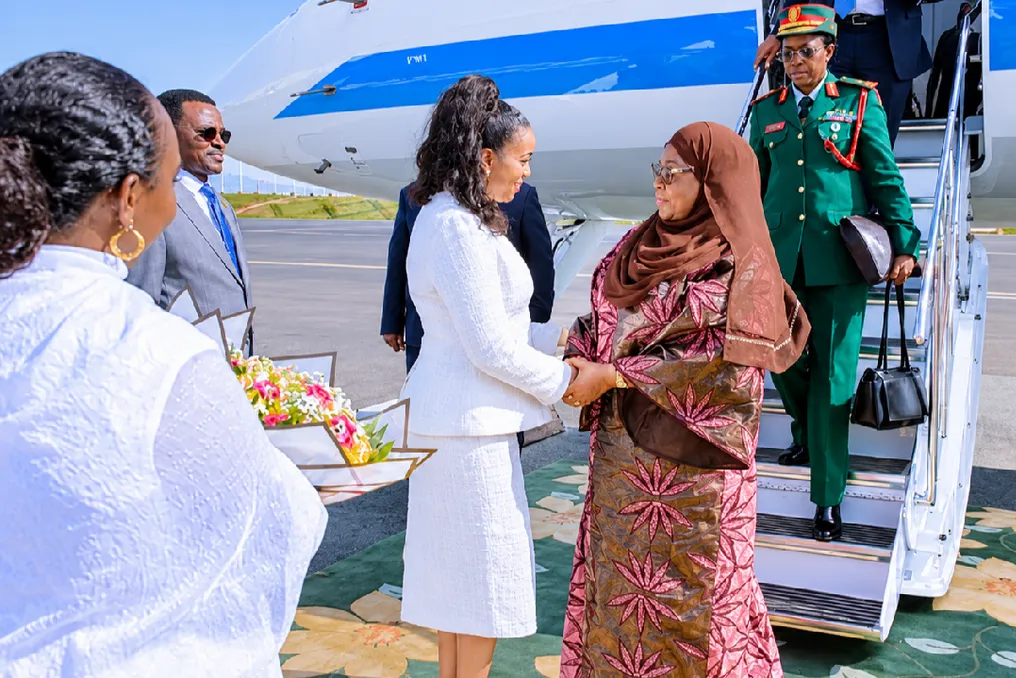
Tanzania's President Samia Suluhu Hassan, serving as the AU Champion for reproductive, maternal, newborn, and child health, arrived in Addis Ababa, Ethiopia, on Sunday ahead of the roadmap launch on Monday, November 23, during the Fifth International Conference on Public Health in Africa (CPHIA 2026).

This framework program calls on African countries to ensure that all births take place in well-equipped medical facilities under the supervision of qualified medical personnel, with the capacity to provide emergency care and transfer services to manage complications. Furthermore, it prioritizes expanding access to essential medical services and vaccination to protect mothers and children across the continent.

Similar stories

African leaders defend health sovereignty and domestic financing of health systems on the continent
Read more
noticiasaominuto.com

African leaders defend health sovereignty and domestic financing of health systems on the continent

Leaders from various African countries and organizations, gathered in Ethiopia, expressed Africa's commitment to managing its own health systems. The main objective is to find creative methods to increase funding and consequently ensure the continent's health sovereignty.

Jean Kaseya, Director-General of the Africa Centres for Disease Control and Prevention (Africa CDC), opened the 5th International Public Health Conference in Africa (CPHIA 2026) in Addis Ababa, stating that in Africa, sovereignty is intrinsically linked to responsibility, which in turn depends on good governance, trust, and accountability.

This meeting, also organized by the African Union's public health agency (AU) and the Ethiopian Government, will bring together African leaders, specialists, and sector representatives until November 27. The conference takes place amid significant cuts in international aid, notably from the United States and other nations since last year.

Under the theme 'Health Security and Sovereignty in Africa: Transforming Health Dependence and Vulnerability into Autonomy and Resilience,' Kaseya reported that over 46,000 delegates from more than 100 countries were registered. He emphasized the need for Africa to produce its own goods, finance the sector, lead outbreak responses, and implement digital transformation to ensure the continent is respected, concluding that they will never again accept partners who try to dictate their actions.

During the event, the head of the Africa CDC addressed the second deadliest Ebola epidemic in global history, affecting the Democratic Republic of Congo (DRCongo). He highlighted the rapid action of the pan-African organization and cooperation with the governments of Uganda, Kenya, and Nigeria, which recorded cases related to the outbreak. Kaseya criticized the use of African suffering for commercial purposes, mentioning that despite international donors allocating about $962 million (€879.94 million) for the Ebola response in DRCongo, there was no clarification on how more than $700 million (€640.57 million) was spent.

Mahmoud Ali Youssouf, President of the AU Commission, reinforced that epidemics do not respect borders and that isolated responses are insufficient, requiring 'permanent cooperation' between states. Although he thanked international support, Youssouf requested that partners adjust their plans to African priorities, as the health of Africans cannot depend, in the long term, on external budgetary priorities. He stressed that assuming greater self-responsibility is crucial, given that health is a pillar for the continent's economic development, stability, and security.

For his part, Évariste Ndayishimiye, Head of State of Burundi and interim President of the AU, encouraged Health and Finance ministers to explore innovative mechanisms, such as public-private partnerships, new forms of health taxation, and mobilization of African savings. Ndayishimiye underlined that priority research must be defined in Africa and that the generated data must primarily serve local populations.

Brazil, ITU, and UNESCO create center to train countries in AI and climate
Read more
olhardigital.com.br

Brazil, ITU, and UNESCO create center to train countries in AI and climate

Brazil officially announced the creation of the Artificial Intelligence Institute for Climate Change (AICI) during the 31st United Nations Climate Change Conference (COP31) held in Antalya. This initiative brings together Anatel, the International Telecommunication Union (ITU), and UNESCO with diplomatic support from the Ministry of Foreign Affairs (MRE) to expand the use of artificial intelligence in combating climate change.

The institute's concept was developed at COP30, which took place in Belém in 2025. It aims to address two main issues: inequality in access to technical training and the environmental impact associated with the energy and water consumption of AI systems. It is proposed that developing countries can independently develop, adapt, and implement their own solutions, thereby increasing their technological autonomy.

Anatel will be responsible for overall coordination and regulatory aspects. For the first two years, it will also chair the Steering Committee and coordinate the Executive Secretariat, whose daily activities will take place at the ITU Green Digital Activities Center. The ITU will provide technical norms and global standards, while UNESCO will focus on ethical, educational aspects, and training. The MRE will handle international diplomatic coordination.

The institute's work will be structured around three main areas. After the official launch, the institute will transition from the structuring phase to operational implementation. The initial plan includes two key activities for 2027.

In the first half of the year, there will be a Foundational Workshop on AI & Climate Policy, which will train policymakers, regulators, and managers on the basics of climate data, ethical AI governance, and regulatory models. In the second half, an Advanced Technical Implementation Lab will be organized, offering practical training for specialists and developers to create and implement less resource-intensive and climate-resilient AI solutions. Regional trainings, multiplier training programs, and the consolidation of a digital repository are also planned.

Anatel's involvement in international climate change forums gained momentum after COP28, held in Dubai in 2023, during the tenure of the agency's then-president, Alexandre Freire. This initiative seeks to link the telecommunications agenda with sustainable development policy, considering the importance of connectivity for environmental monitoring and risk management, as well as the environmental impact of the sector itself.

During the panel discussion on the launch of AICI, Freire emphasized the potential of technologies but highlighted the uneven access to artificial intelligence. He stated: 'AI is a powerful catalyst for climate action, but access remains deeply unequal. The mandate of AICI is to promote inclusive, ethical, and effective AI, ensuring that developing countries cease to be mere consumers and can achieve genuine technological autonomy.'

On November 16, Brazil also joined the Antalya Artificial Intelligence Pledge, promoted by the COP31 Presidency in collaboration with the ITU and UNESCO. This document aims to align AI development with environmental sustainability and worker protection amid automation. Topics discussed include the energy and water efficiency of data centers and the impact of technological transformations on employment.

At the High-Level Panel on Green Digital Activities, Freire noted that technological innovation and socio-environmental responsibility must develop in parallel to ensure sustainable development.
Popular