Lecoo Company Lists Consumer Exoskeleton for Walking Assistance Ahead of China Sale
Read more
Pandaily
pandaily.com

Lecoo Company Lists Consumer Exoskeleton for Walking Assistance Ahead of China Sale

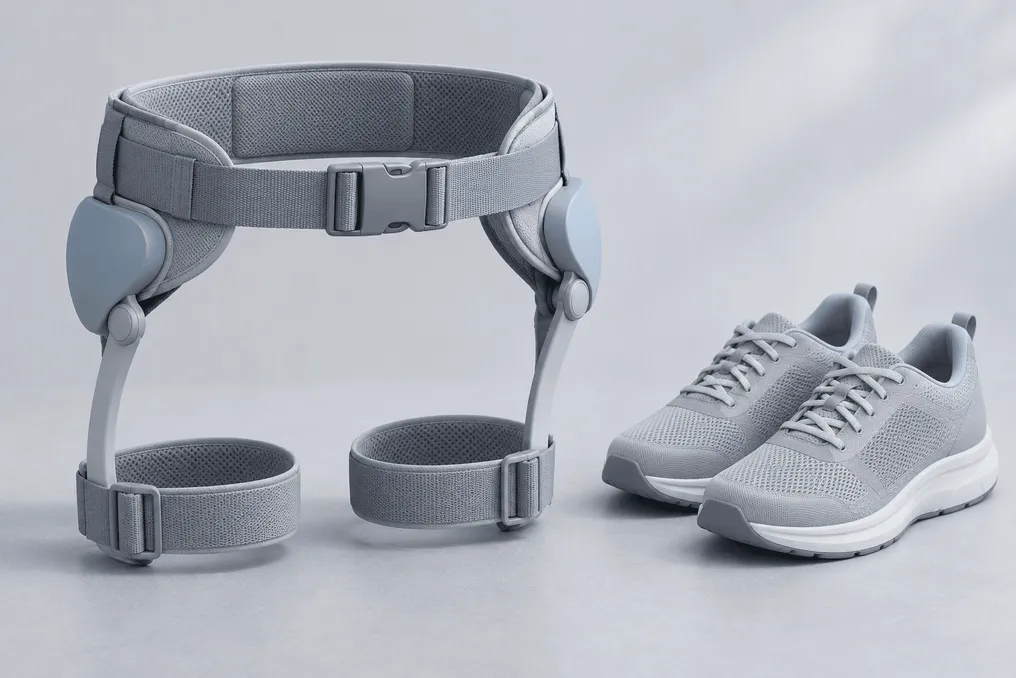
According to an IT Home report from November 23, the company Lecoo has listed a consumer exoskeleton designed to assist with walking on the JD.com online store in anticipation of a planned sale on November 28 in China. The initial product price is set at 6,999 yuan, which is lower than the usual retail price of 7,999 yuan.

The device's technical specifications indicate the hardware model YHIP-A. The main unit weighs 1.8 kilograms, excluding batteries and attached components, which differs from the total weight the user will carry. The specification also mentions an aluminum alloy construction and an IP54 dust and splash protection rating.

The device uses support points around the waist and legs, featuring a three-point support system and a single-buckle fastening system. According to promotional materials, it can be put on or taken off in about 15 seconds, although this is a supplier description and not the result of an independent usability assessment.

The advertisement promotes a peak torque of up to 38 Newton-meters and a peak power of 900 watts, offering adjustable assistance and movement modes both unassisted and intelligent. These maximum parameters should not be interpreted as continuous performance or confirmed improvement in user endurance.

The AI-based gait recognition system is claimed for various conditions, including ascents, running, stairs, hiking, cycling, and sandy or rocky terrain. However, the specification sheet explicitly states that recognition categories will be rolled out gradually, so the full list of scenarios is not confirmed before the start of sales.

The standard package includes two removable battery packs with a capacity of 3000 milliampere-hours. The specification indicates a theoretical operating time of about three hours at level three assistance on one battery, but the actual duration depends on operating conditions and is not an independently measured all-day runtime.

Other declared safety features include motor overload protection, battery overheating protection, abnormal joint tension, and fault notifications. Such features are not grounds for medical approval or suitability for rehabilitation, and the report does not contain clinical data. This news concerns the upcoming sale of a consumer product, not demonstrated treatment of mobility impairments.
Similar stories

Lenovo Lecoo introduces exoskeleton for walking assistance starting at 6,999 yuan
Read more
technode.com

Lenovo Lecoo introduces exoskeleton for walking assistance starting at 6,999 yuan

The brand Lenovo Lecoo has launched the wearable exoskeleton Xingzhe ONE in the Chinese market. The preliminary price of the device is set at 6,999 yuan, with sales scheduled to begin on November 28th.

This gadget weighs 1.8 kilograms and is equipped with actuated hip joints designed to provide support during walking and various outdoor activities.

The exoskeleton is capable of providing a peak hip torque of up to 38 Nm, and users can independently adjust the level of assistance provided. The gait recognition system is designed to detect different types of activities and terrain, including ascents, stairs, hiking, running, cycling, and gravel surfaces; supported modes will be implemented in phases.

Lecoo claims that thanks to its mounting system and three-point support, it takes the user about 15 seconds to put on or take off the device. The device has an IP54 rating and is equipped with two removable batteries with a capacity of 3,000 mAh. At the third level of assistance, the stated battery life is approximately three hours. The standard retail price of the product is 7,999 yuan, positioning it in the growing consumer market for walking assistance equipment.

Hero Motors supplied over 15 thousand flexible fuel motorcycles in two months
Read more
www.aajtak.in

Hero Motors supplied over 15 thousand flexible fuel motorcycles in two months

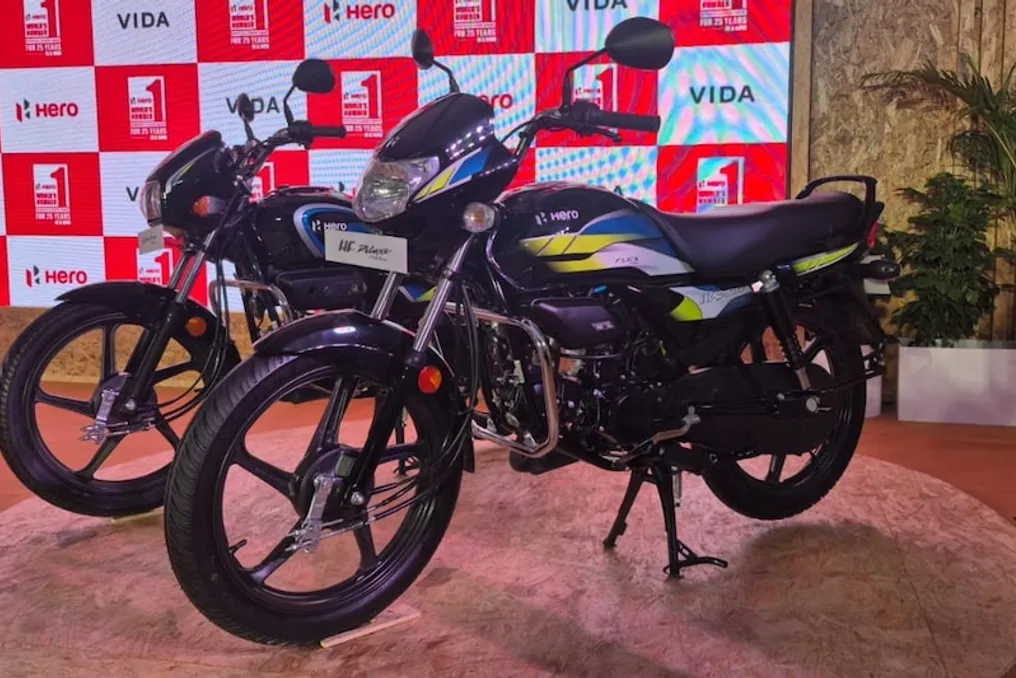
Automobile companies in the Indian market have begun including vehicles running on flexible fuel in their range, and some of them have already released corresponding models. Hero MotoCorp has also added two flexible fuel motorcycle models to its portfolio. The question arose as to how well these vehicles are being received by the market, but Hero provided an answer.

The company managed to receive a positive response to its flexible fuel motorcycles. Over a period of just over two months, more than 15 thousand such motorcycles were delivered. Demand for flexible fuel motorcycles is observed even in regions where this type of fuel is not yet available.

This information was shared by the company's management during the second-quarter financial year 2027 earnings call, which took place on October 29, 2026. The company's CEO, Harshvardhan Chitale, stated that approximately 15 thousand units were shipped in just over two months after the start of deliveries, meaning these motorcycles were sold to dealer centers on behalf of the company.

It is important to note that currently, flexible fuel motorcycles are only available at specific dealerships. The main reason for this is the limited availability of E85 gasoline, which is currently only at some gas stations in selected cities. Furthermore, Hero MotoCorp did not disclose what proportion each model accounts for among these 15 thousand units.

Hero's portfolio includes two flexible fuel models: the Hero HF Deluxe Flex Fuel and the Hero Splendor Plus Flex Fuel. Their launch prices are ₹72,792 and ₹82,710 respectively, including taxes. Both motorcycles are equipped with a 97.2 cc single-cylinder air-cooled engine.

This engine is capable of producing up to 8.4 hp and 8.3 Nm of torque. These motorcycles can use any gasoline with ethanol additive, from E20 to E85. In New Delhi, the price of E85 gasoline is ₹82.12 per liter. Hero motorcycles are a good choice for those who wish to avoid the hassle of mixing fuels with ethanol.

Exoskeleton created in Espírito Santo state to help patients recover from stroke
Read more
olhardigital.com.br

Exoskeleton created in Espírito Santo state to help patients recover from stroke

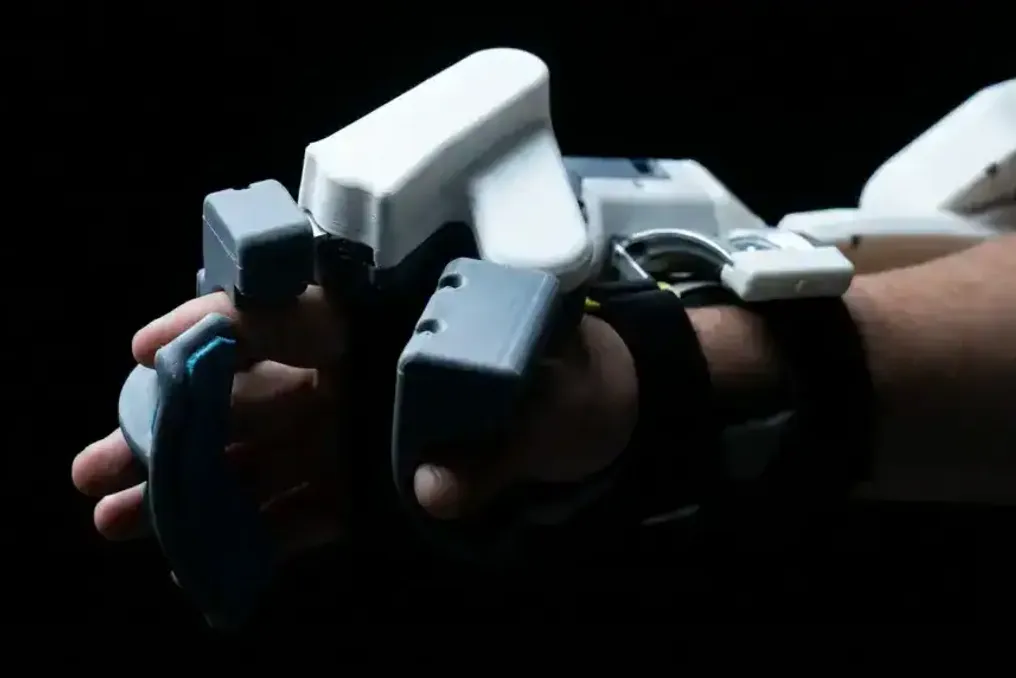
Researchers from the state of Espírito Santo have developed a portable robotic exoskeleton called m-FLEX. This device is designed to assist people with neurological damage caused by, for example, a stroke (CVA) in recovering arm, forearm, and hand movements.

The technology was created at the Federal University of Espírito Santo (Ufes) by the startup Symbios. Thanks to this achievement, the company gained international recognition, being included in MEDICA's list of the top 15 healthcare companies. Furthermore, in 2026, the company is among the top three in medical robotics and is participating in a competition in Germany for first place in this category.

The project began in 2019 when Eduardo Antonio Fragoso Dias, co-founder and CEO of Symbios, met Rudi Ivanovich. Rudi lost mobility on his left side after an ischemic stroke. At that time, Eduardo, who was a mechanical engineering student, decided to consult a professor from Ufes to develop a robotic solution.

The work started in 2021 under the guidance of Professor Rafael Andrade. The team focused on reducing the weight and cost of the equipment. To achieve this, they moved the electric motors and electronic systems from the wearable structure into a bag that is placed on a table. Movements are transmitted via steel cables to the exoskeleton itself, which is positioned next to the patient's body.

According to Pedro Henrique Fabriz Ulhoa, co-founder and CTO of the startup, this configuration made the device lighter and cheaper to manufacture, as well as simplifying its transportation between clinic departments and for home care.

The software also includes games and functional tasks to stimulate patient participation. The technology allows for a large number of repetitions during sessions, combining guided movement with active human involvement in treatment.

Symbios is currently studying the rehabilitation results in various clinical profiles. One of the first users of the equipment was Rudi himself. After about a year of treatment, he reported progress even 12 years after the stroke, noting that he began to recover some movements that had been 'asleep' for 12 years, including more complex ones to recover.

The technology was developed in the Robotics and Biomechanics Laboratory of the Ufes Mechanical Engineering Department. In 2024, the patent was transferred to Symbios under the first contract for licensing the technology developed in the university's academic environment. The university received notification of royalties from the net profit of the commercialization.

In 2026, the startup from the state of Capixaba became the only Brazilian company selected by MEDICA among the top 15 in healthcare. The company also entered the top three in medical robotics and is competing for first place in this category in Germany.

Professor Rafael Andrade noted: 'It is very pleasant and rewarding to see how technology originating in our laboratory develops from scratch to a market product, and to see how Symbios and Ufes students receive international awards.'

>

Popular