
Brazil plans to start therapeutic cancer vaccine trials in 2027 in partnership with Oxford
Read more
Olhar Digital
olhardigital.com.br

Brazil plans to start therapeutic cancer vaccine trials in 2027 in partnership with Oxford

Brazil intends to begin clinical trials for a therapeutic vaccine aimed at combating cancer in the first half of 2027. This project was developed in collaboration with the University of Oxford, located in the United Kingdom. The announcement was made last Monday, the 23rd, by Health Minister Alexandre Padilha during an official agenda held in London, United Kingdom.

The investigation involves participation from Brazilian institutions such as the Oswaldo Cruz Foundation (Fiocruz) and the A.C. Camargo Cancer Center, in addition to other members of the Brazilian Alliance for Cancer Research. The Ministry of Health informed that Fiocruz is already involved in part of the development of this technology.

The main objective is to test the application of the vaccine in Brazilian patients and adjust the technology to the specific conditions of the country. However, certain crucial details of the study have not yet been revealed, such as the specific type of cancer to be investigated, the number of expected participants, and the technological platform to be used in the formulation.

Padilha stated that the expectation is to conduct the clinical study in the first half of 2027, involving Oxford, Fiocruz, A.C. Camargo, and various SUS institutions that work with oncological care, aiming to evaluate the technology in national patients and adapt it to the local reality.

Although this forecast signals progress in scientific cooperation between Brazil and the United Kingdom, it is important to note that this does not imply that the vaccine already has proven efficacy or that it is about to be distributed in hospitals.

Artificial intelligence (AI) can also contribute to this process. In an interview given to g1 in March, oncologist and researcher Lennard Lee from the University of Oxford detailed that computational models were being trained using data from dozens of tumor types to anticipate which targets would be suitable for vaccines.

It was not specified whether the technology resulting from the partnership between Brazil and Oxford will be personalized or if it will use any of the mentioned platforms.

According to the U.S. National Cancer Institute (NCI), therapeutic vaccines have the ability to boost the immune system so that it can identify and eliminate cells that display specific tumor antigens.

Despite the advances achieved, currently there is no generalized therapeutic vaccine capable of fighting all forms of cancer. Before being offered as treatment, any experimental vaccine must undergo rigorous clinical studies to verify its safety, potential adverse effects, and actual efficacy.

These research occur in distinct phases. Initially, scientists primarily focus on the safety of the technology and the body's response. In subsequent stages, the studies involve a larger number of participants and assess whether the treatment provides tangible benefits to patients.

A central challenge lies in managing to provoke a sufficiently robust immune response to confront tumors. It is equally fundamental to prove that this immune reaction effectively improves treatment outcomes.

In March, researcher Carol Leung, a specialist in therapeutic cancer vaccines at Oxford, told g1 that some recent university projects had evolved from the conceptual stage to preparation for clinical trials in about three years.

Even with this evolution, researchers emphasized that significant scientific obstacles remain. In the context of the Brazilian partnership, the Ministry of Health has not yet disclosed the protocol for the study scheduled for 2027, nor has it established a predicted date for the possible availability of the vaccine, which will depend on the results of the research and the necessary phases to confirm its safety and efficacy.

The scientific collaboration between the two countries was formally initiated in December 2025, when the Ministry of Health and the University of Oxford's Centre for Immuno-oncology signed a letter of intent.

In March 2026, British scientists visited Brazil to discuss the projects with national institutions. During this visit, Oxford specialists informed g1 that an experimental vaccine targeting Epstein-Barr virus (EBV)-related tumors had completed preclinical tests and was being prepared for human studies.

This virus is present in more than 90% of the world's population and is associated with certain types of cancer, including some lymphomas. According to Carol Leung, the goal was to expand testing in regions where these tumors are most common, including Brazil, which has cases of Burkitt lymphoma in the North Region.

The university also develops other experimental vaccines, covering projects focused on preventing lung cancer and tumors in individuals with a high genetic risk of developing the disease.

However, the Ministry of Health did not specify whether the study planned for 2027 will involve the Epstein-Barr vaccine or another candidate developed by the researchers.

In addition to the partnership with Oxford, Padilha met that Monday with representatives from the pharmaceutical company AstraZeneca to discuss topics such as oncology innovation, clinical research, and technology transfer.

As reported by the Ministry of Health, the company signed an agreement with a Brazilian group in the biological sector to create and produce in the country a national platform of monoclonal antibodies intended for the treatment of cancer and rare diseases. These medicines are manufactured in the laboratory to recognize specific body targets. In the field of oncology, they can act directly on tumor cells or assist the immune system in fighting them.

The minister's agenda in the United Kingdom also included a meeting with the Coalition for Epidemic Preparedness Innovations (CEPI), focused on cooperation for the development and production of vaccines in case of future health emergencies.

On Tuesday, the 24th, Padilha is scheduled to visit the Clatterbridge Cancer Centre, located in Liverpool, United Kingdom, a hospital specialized in oncology, as well as facilities dedicated to the research and production of anti-cancer drugs and radiopharmaceuticals.

The Brazilian mission also includes meetings with British authorities to discuss new collaborations between the Unified Health System (SUS) and the UK's public health system (NHS).

Similar stories

US faces popular resistance against data centers; Brazil presents differentiated regulatory model
Read more
olhardigital.com.br

US faces popular resistance against data centers; Brazil presents differentiated regulatory model

The United States is experiencing a growing wave of opposition to the implementation of large data centers. As a reflection of this dissatisfaction, the American public rejected projects in 40 out of 41 municipal plebiscites held during the 2026 midterm elections.

Many citizens in the US express discontent with these facilities, which are essential for sustaining current artificial intelligence (AI). The main concerns raised by Americans include high energy consumption, which can increase electricity bills and overload the grid, as well as excessive water consumption and noise generated by data centers.

Arthur Igreja, a Technology and Innovation specialist, commented that in several situations, the arrival of these centers has caused an increase in energy costs and, consequently, in the local cost of living. He observed that when inflation and living costs pressure family budgets, people look for explanations, and a possible correlation pointed out by the specialist is the link to the difficulties imposed by artificial intelligence.

In this context, Brazil is also related to the topic, as attracting foreign companies to build data centers in the country was a proposal included in the government plan of Luiz Inácio Lula da Silva (PT). This government plan covers three central axes: AI, data centers, and digital sovereignty.

After winning the presidential elections in the second round with 51.79% of the votes, Luiz Inácio Lula da Silva will begin his fourth term on January 5, 2027, with Flávio Bolsonaro (PL) obtaining 48.21% of the votes.

In a conversation with Uallace Moreira Lima, Secretary of Industrial Development, Innovation, Commerce, and Services, the newspaper Olhar Digital detailed the government plans. Lima, who works at the Ministry of Development, Industry, Commerce, and Services (MDIC), explained the measures taken by Brazil to prevent scenarios of revolt against data centers.

According to the secretary, the Redata program established counterpart criteria focused on sustainability, including water efficiency levels, the use of renewable energy sources, and Research and Development (R&D) investment requirements.

Moreira Lima highlighted that each nation defines its own standards. He suggested that the United States may be facing problems due to the implementation of data centers without rigorous water efficiency criteria, leading to the installation of cooling systems that consume a lot of water. In contrast, he stated that Redata, by requiring closed-loop use and establishing efficiency criteria, results in a notable environmental reduction.

Álvaro Machado Dias, a professor at Unifesp, neuroscientist, and futurist, assessed that the Brazilian approach to public policy offers a superior basis to the American one. He argued that the discussion in the US focuses heavily on the detriment to local populations because the installation does not consider environmental impacts, such as water consumption. The professor emphasized that Redata requires the data center to generate or contract enough energy for its own demand and limit water use, meeting requirements that Americans are currently demanding.

When asked about tangible benefits for the average citizen in Brazil, Moreira Lima reiterated the importance of Redata as a program that attracts investments and generates a structural impact on the economy, demanding equipment, machinery, and renewable energy, resulting in job creation and income for the Brazilian people.

However, Arthur Igreja warned that the nature of a data center differs significantly from that of a shopping mall. Although both occupy a large area, a mall generates jobs in a higher proportion, whereas a data center, on the other hand, generates few job opportunities on the same scale.

Brazil joins international agreement to mitigate space debris and ensure satellite protection
Read more
olhardigital.com.br

Brazil joins international agreement to mitigate space debris and ensure satellite protection

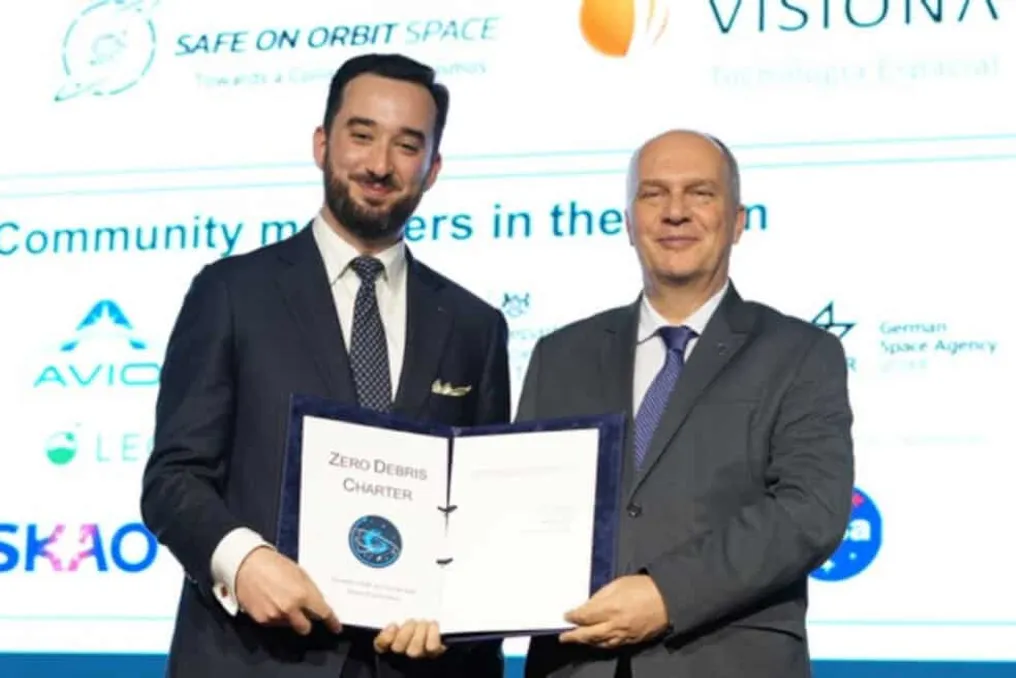
Brazil formalized its adherence to an international pact aimed at reducing the amount of space debris and enhancing the safety of satellites in orbit. This acceptance of the so-called Zero Debris Charter occurred on November 4th during the 8th Space Sustainability Summit, officially ratified by the Brazilian Space Agency (AEB). Brazilian companies Visiona Espacial and Safe on Orbit also signed this document.

This initiative, led by the European Space Agency (ESA), brings together governments, companies, higher education institutions, and other entities in the space sector. The central purpose is to define procedures to reduce debris creation and maintain operational conditions in space until the year 2030.

The agreement stipulates several actions, such as preventing orbital collisions and explosions, improving the monitoring of space objects, and planning appropriately for the disposal of satellites and other equipment after the completion of their functions.

The AEB, an agency linked to the Ministry of Science, Technology, and Innovation (MCTI), announced Brazil's entry into this commitment. According to the Agency's president, Marco Antonio Chamon, sustainability must be a factor considered from the initial phase of space project development.

The Zero Debris Charter constitutes a global agreement designed to encourage more sustainable methods in space activities. Its development began in 2023 through a collaborative process coordinated by the ESA, involving various representatives from industry, academia, and space agencies.

The document establishes collective goals and principles valid until 2030. One objective is to increase the availability of data on space objects measuring up to five centimeters in low Earth orbit and 20 centimeters in geostationary orbit. This would facilitate better risk assessment and maneuver planning to avoid impacts.

Additionally, the Charter mandates that the probability of generating debris from fragmentation or collisions should be less than one event in a thousand objects during their time in orbit.

Space debris comprises artificial artifacts that remain in orbit without performing any operational function. This category includes deactivated satellites, rocket parts, equipment remnants, and waste generated by explosions or collisions.

Even small particles can pose a danger to active satellites, as these fragments move at extremely high speeds, making potential impacts with small objects quite risky. The scenario could worsen, as a collision can generate new fragments, which then pose extra threats to other missions.

The concern extends beyond scientific activities, as satellites are vital for navigation, communication, environmental monitoring, and weather forecasting services. Damage to these devices can impact terrestrial services and infrastructure.

One of the pillars of the Zero Debris Charter is considering the fate of equipment even before its launch. When a satellite completes its useful life, it should not remain indefinitely in an orbital area used by other equipment. Depending on the altitude and mission characteristics, tactics can be implemented to remove it from the operational zone or induce its reentry into the Earth's atmosphere.

The initiative also sets goals for removing objects from low and geostationary orbits, aiming for a minimum success rate of 99% in vacating these regions after missions conclude.

Another aspect addressed is the reduction of risks to people on the surface. Certain components of space equipment may survive atmospheric passage and reach the ground.

It is important to note that the Zero Debris Charter does not have mandatory legal force. According to the ESA itself, it constitutes a collaborative commitment, dependent on the contribution of participants according to their capabilities and restrictions.

In the Brazilian context, the adherence did not come with new regulatory rules for those operating satellites, nor were specific national deadlines defined for the application of the measures. Thus, the country's participation signals an engagement with international space sustainability practices, during a period of growth in orbital activities and increasing attention to operational safety.

Popular