Sierra announced it has raised $1.75 billion in a Series F funding round, setting the company's post-money valuation at $30 billion. The financing was secured from investors such as Greenoaks and Lightspeed Venture Partners. Previous investors, including Benchmark, Sequoia Capital, GV, and Tiger Global, also participated in the round.
This round allowed Sierra to more than double its valuation in less than a year. Previously, the company had raised $950 million in May 2026 at a valuation of $15.8 billion. The growing investor interest in corporate artificial intelligence that delivers tangible business results prompted this new round.
Sierra, a conversational AI platform for the enterprise sector, was founded in 2023 with the goal of creating and implementing conversational AI agents for various companies. The platform enables businesses to automate customer interactions across multiple communication channels.
The company develops autonomous AI agents that handle customer inquiries via voice, chat, email, SMS, and WhatsApp. Unlike standard chatbots, Sierra's agents are capable of finding the root cause of an issue and resolving it within a few steps. According to Sierra, its platform is used by nearly half of the companies on the Fortune 50 list.
The software integrates into core enterprise systems, such as CRM systems, payment systems, and order management systems. Support representatives can handle product returns, subscription management, customer account changes, and product troubleshooting.
Furthermore, companies can customize agents to support pre-purchase recommendation support and other customer interaction tasks. Sierra includes an integrated set of AI models, as well as custom guardrails developed for each company. Some firms redirect employees to other tasks.
The Sierra platform is suitable for various industries. Among its clients are Sonos, Wayfair, SiriusXM, JPMorgan Chase, Wells Fargo, HSBC, and Santander. With the new funds, Sierra plans to focus on technology scaling and increasing corporate growth.
The company has significantly accelerated revenue growth thanks to a results-based pricing model. Customers pay for achieved interaction outcomes, not for the AI used or tokens consumed. Outcomes include resolved customer issues and completed service requests.
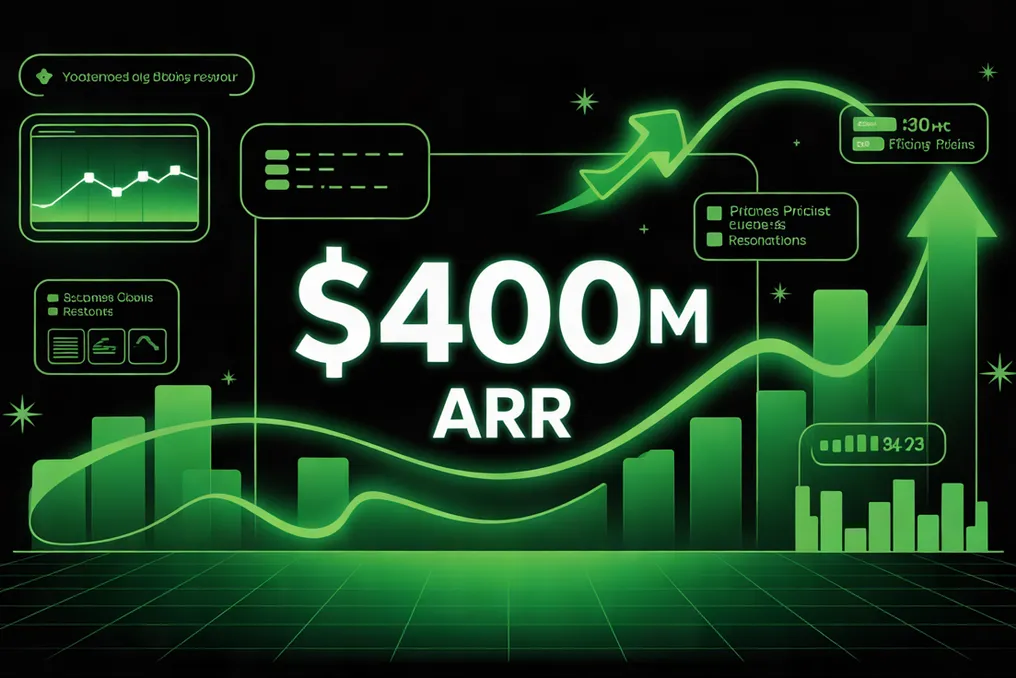
October appears to have been the month the firm exceeded its annual revenue target of $400 million. Its recurring revenue increased from $100 million to $400 million over 11 months. Sierra also stated that it generated over $150 million in annualized revenue in the quarter.
This model links customer costs to operational results, which incentivizes Sierra to improve the accuracy and problem resolution rate of its agents. However, as the company grows, maintaining these results becomes even more critical.
Sierra faces a growing landscape of customer service in enterprise AI. Companies like Decagon, Wonderful, Eleven Labs, and Parloa are also actively attracting significant funding and hold high valuations. Their products compete for enterprise automation deals.
Sierra is also expanding its international presence. Its Munich office serves clients in Germany, Austria, and Switzerland. The company is building out its regional team to help more banks, insurance companies, and manufacturers create AI agents.
For instance, the founders believe that implementing AI does not necessitate immediate job losses in customer service. Sierra's success will depend on demonstrating that its agents can both enhance the customer experience and ensure stable business results.