
US adds company linked to Nvidia scandal to trade restrictions list
Read more
Olhar Digital
olhardigital.com.br

US adds company linked to Nvidia scandal to trade restrictions list

The U.S. government determined on Monday, the 23rd, to include the Singaporean company Megaspeed in its trade restrictions list. This action prohibits American corporations from supplying advanced chips, software, and other technologies to the organization without proper government permission. This measure arises in the context of an investigation into the alleged illegal shipment of Nvidia semiconductors to China.

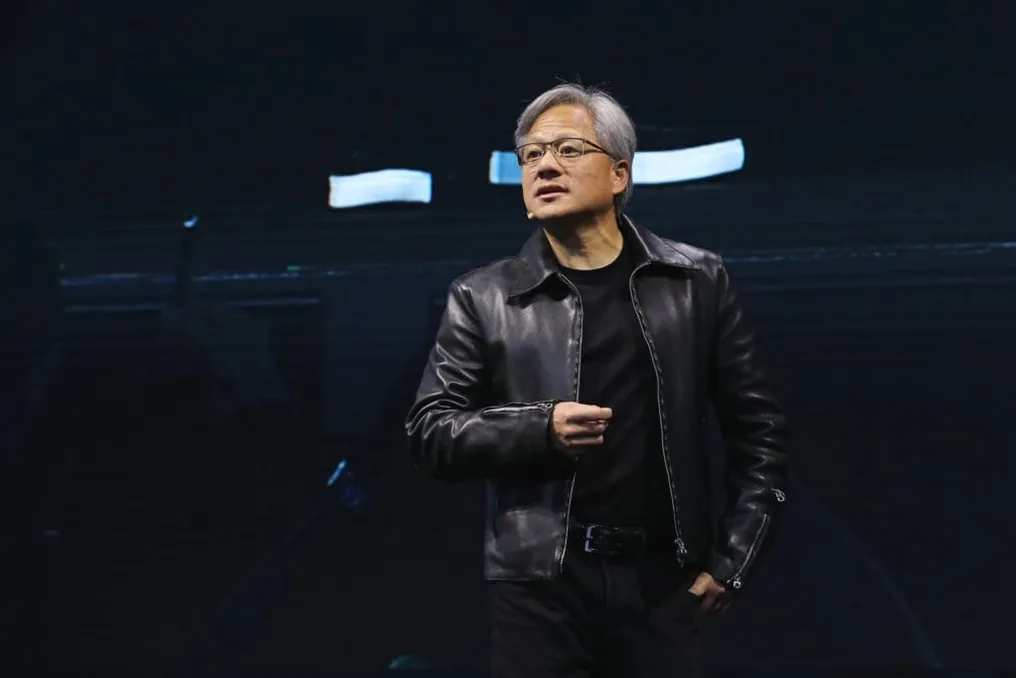
Megaspeed is at the center of a scandal involving Jensen Huang, CEO of Nvidia, and Alice Huang, a Chinese businesswoman who held control over the company. U.S. authorities suspect links between Alice Huang and Chinese intelligence and are investigating whether the company helped Chinese clients acquire artificial intelligence (AI) chips subject to export controls.

Inclusion in the so-called Entity List, managed by the U.S. Department of Commerce, severely restricts Megaspeed's access to products and technologies originating from the United States. Companies listed in this registry require government authorization to receive such materials, and these licenses are frequently denied.

The addition of Megaspeed to the restrictions list occurred after weeks of internal disagreements within the U.S. government about how to proceed with the case. As reported by the Times, Treasury Secretary Scott Bessent advocated for a swifter response against the company and for the implementation of stricter norms to monitor the export of AI chips. In contrast, Commerce Secretary Howard Lutnick defended more cautious and detailed approaches. His department is responsible for managing technological export regulations.

Bessent, in an interview conducted this month, criticized the slowness in applying restrictions and assured that the Department of Commerce had the prerogative to conduct the process. The Treasury, Defense, and State Departments, along with the U.S. commercial representative, had supported including Megaspeed on the list for several months, according to the secretary.

On the other hand, Lutnick faced questioning from members of his own government and parliamentarians, who raised doubts about his department's apparent excessive closeness to Nvidia and Jensen Huang. The previous week, the Department of Commerce released new guidelines to limit China's access to AI data centers in various global regions. On that occasion, the agency adopted the unusual practice of stating that it acted under the guidance of the Treasury Department.

The decision taken against Megaspeed was communicated on the same day that Jensen Huang resumed his role as CEO of Nvidia. The executive had temporarily stepped down after the disclosure of information related to extramarital relationships, including his involvement with Alice Huang. The businesswoman was also pointed out by U.S. authorities as a potential agent of Chinese intelligence. Nvidia confirmed its CEO's return after receiving assurances from U.S. authorities that he did not pose a national security risk.

The inclusion of Megaspeed in the trade list also signals a shift in recent Washington policy. According to Reuters, the Department of Commerce had suspended the addition of new companies to the registry since October 2025. This halt occurred during the Trump administration's efforts to avoid escalating trade tensions with Beijing.

Similar stories

Nvidia's Accounting Practices Under Investigation by the U.S. Securities and Exchange Commission
Read more
olhardigital.com.br

Nvidia's Accounting Practices Under Investigation by the U.S. Securities and Exchange Commission

The U.S. Securities and Exchange Commission (SEC) is conducting an investigation into the accounting methods used by Nvidia, according to reports from sources familiar with the matter heard by Reuters. This scrutiny adds complexity to the semiconductor giant's legal and institutional situation, which is already facing several recent scandals.

Previously, The Wall Street Journal reported on the existence of an SEC investigation into the chip manufacturer but did not detail the focus of the inquiry. Anonymous Reuters sources confirmed that the regulator's oversight team is analyzing potential inconsistencies in the company's financial statements.

A SEC spokesperson declined to comment on the case when reached, and Nvidia representatives did not issue an immediate response to requests for clarification.

The market reacted immediately to the news: Nvidia's shares fell by approximately 13% on Friday, according to LSEG data, immediately after Reuters disclosed the details; before this report, the stocks had already fallen by more than 6%.

As of yet, it has not been possible to define when the SEC began the investigation or what specific aspects of accounting are being examined. It is important to note that regulatory investigations do not constitute proof of irregularity, and many are concluded without sanction or formal proceedings.

However, the revelation of the accounting focus intensifies pressure on Nvidia during a period when investors are still processing information about the extramarital affairs of the dismissed CEO, Jensen Huang. One of these cases involved Alice Huang, whom American authorities suspect is a Chinese spy, an allegation denied by Beijing.

Alice Huang was the head of Megaspeed, a Singapore-based company and traditionally a major customer of Nvidia chips. The U.S. Department of Justice and Commerce informed this week that Megaspeed has been under investigation since 2024 for possible violations of export controls related to alleged shipments of Nvidia artificial intelligence (AI) chips to China.

This crisis caused Nvidia's stock, central to AI growth, to plummet by more than a third and heightened calls in Washington for stricter measures against technological threats from Beijing. In a statement dated November 8, Jensen Huang acknowledged having an extramarital relationship after articles about his connection with Alice, although he did not name her explicitly. Megaspeed communicated that Alice left the company in August 2025 and stated that it conducts legitimate business.

The SEC investigation is added to other lawsuits against the company. The Department of Justice is also reviewing Nvidia's $12.9 billion agreement to acquire the open-source platform Hugging Face, alongside a broader antitrust investigation into the company's business practices and acquisitions.

The corporate crisis also revived questions about a modification implemented by Nvidia last year in how it accounts for its geographic revenues. By choosing to record sales at the client's headquarters location instead of the billing address, the company removed Singapore from its balance sheets, coinciding with the fact that the country represents almost half of its global revenue. This move is particularly sensitive given the scandal involving Alice Huang and the role of Southeast Asia as a smuggling route for chips to China following U.S. embargoes.

Additionally, analysts and investors are cautiously observing so-called 'circular financing' agreements, in which Nvidia invests and provides guarantees for its own customers to purchase its chips and build data centers, a practice that complicates the measurement of the manufacturer's true revenue quality. Faced with criticism and regulatory scrutiny over the transparency of artificial intelligence companies, interim CEO Colette Kress promised that the company will be 'much more selective' in this type of operation, while the SEC, under Donald Trump's administration, strengthened its structure with a new unit dedicated exclusively to investigating accounting and auditing fraud.

Nvidia under investigation in the US following Jensen Huang's departure
Read more
olhardigital.com.br

Nvidia under investigation in the US following Jensen Huang's departure

The U.S. Securities and Exchange Commission (SEC) has launched a civil investigation into Nvidia to determine if the semiconductor manufacturer violated data disclosure rules to shareholders. This inquiry comes amid a crisis triggered by the departure of former CEO Jensen Huang, after revelations surfaced regarding his involvement in extramarital relationships, including one with a woman suspected of ties to Chinese intelligence.

Sources informed The Wall Street Journal that the investigation also aims to ascertain whether the information provided by the company could have led investors to make erroneous decisions. Although the exact focus of the audit has not yet been defined, it intensifies pressure on Nvidia, whose stock has fallen by over 10% since Huang left leadership.

Recently, the company was considered one of the major forces in the financial market, driven by the advancement of artificial intelligence (AI), and held the title of the world's most valuable company. Currently, in addition to consequences related to its former executive director, Nvidia is facing investor scrutiny regarding the clarity of its information and its chip sales in Asia.

An additional aspect that caught investors' attention relates to how Nvidia reports its international sales. Last year, the company modified its disclosure policies, removing specific details about chip commercialization for Singapore, where Megaspeed was established.

Since Jensen Huang's relationship with Alice came to light, Nvidia's activities in Asia have come under closer observation. The U.S. Congress has requested the opening of inquiries, and U.S. Treasury Secretary Scott Bessent publicly questioned whether Nvidia intentionally sold advanced chips to China with the intent of boosting its revenue and profits.

Bessent questioned: 'What was Nvidia's culture? Were they pushing these seemingly illicit sales to inflate their revenues and profits?' The Secretary also expressed the expectation of receiving responses from the board of directors and the company's legal advisors within ten days.

In a statement made on Tuesday (17), Jensen Huang admitted not having met the standards expected by Nvidia. He stated: 'I did not meet the standards expected of everyone at Nvidia. I created problems for the board of directors, which I deeply regret. I take full responsibility for my mistakes.'

The SEC investigation adds a new chapter to the crisis facing the chip manufacturer, which in just a few weeks transitioned from a symbol of AI growth to an object of scrutiny regarding its corporate governance, business practices, and the transparency of information provided to investors.

Popular