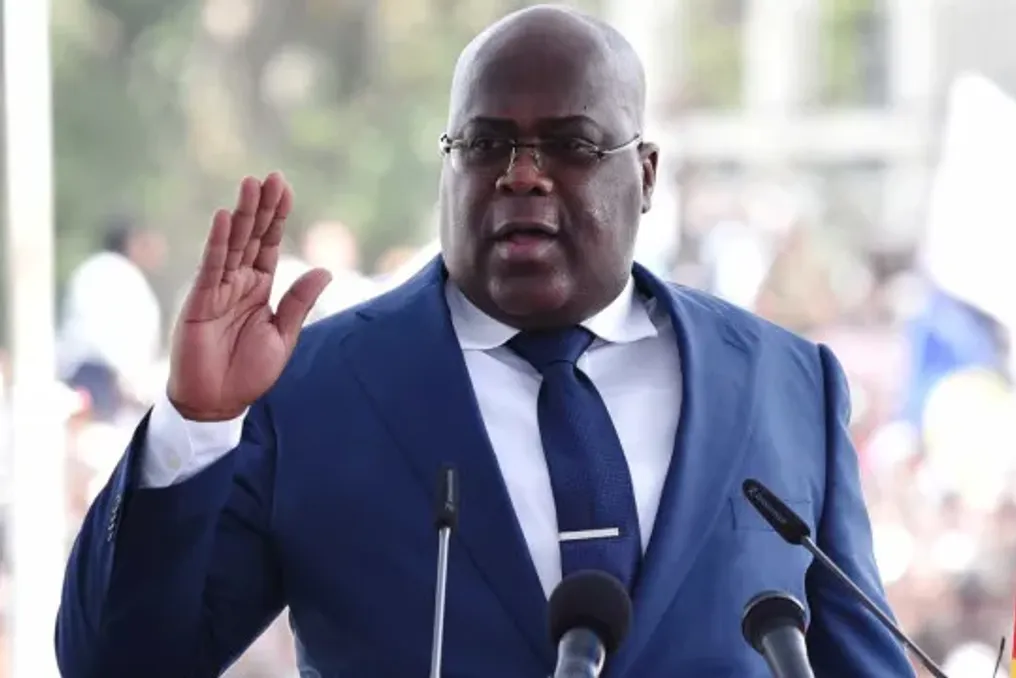
DRC President seeks minerals to promote the country's economic transformation
Read more
Noticias ao Minuto
noticiasaominuto.com

DRC President seeks minerals to promote the country's economic transformation

The President of the Democratic Republic of Congo declared in Kinshasa that he intends to use the exploitation of essential minerals as a tool to achieve the nation's economic transformation, one of the least industrialized countries in Central Africa.

Félix Tshisekedi emphasized that the country should not limit itself to being merely a large producer of minerals, but rather transform into an economy capable of controlling its own process of value addition and transformation increasingly.

This declaration was made during the opening of the business forum named 'Makutano mining,' an event focused on mining industrialization in Africa. The president stressed that for a long time, the country has provided wealth to world industries without managing to retain an adequate share of the generated value to sustain its own economic evolution.

He appealed to potential economic partners, requesting them to present 'concrete proposals' and 'credible investments,' lamenting that the abundance of natural resources contrasts with the little advantage the population gains from them.

The Democratic Republic of Congo holds crucial importance for global economic interests, especially in the context of the energy transition, due to its vast unexplored subsurface, rich in critical minerals such as copper, cobalt, coltan, and lithium, which are highly desired by world industry.

In December 2025, the United States signed a strategic partnership with the DRC, aiming to secure the supply of these minerals for Washington and reduce dependence on China. On the other hand, Beijing has invested heavily in the DRC since the 2000s, holding control over 70% to 80% of the Congolese copper and cobalt market.

In exchange for this opening of its mineral reserves, Kinshasa received diplomatic support from Washington regarding security in eastern Congo, a region facing conflicts for thirty years. The American strategic partnership stipulated that Kinshasa map a portfolio of developing mineral assets and ungranted exploration areas, giving North American investors preferential rights in the offering.

Several American companies have expressed interest in acquiring or participating in mineral explorations since then, but the American ventures are still only in the announcement phase. In a meeting held in Paris in early November, Kinshasa asked Washington to advance from diplomatic agreements to economic implementation.

The DRC specifically expects the realization of investments that allow for the establishment of local refining and treatment units, or even the development of a battery component manufacturing industry. Negotiations between the two countries are expected to continue in the coming months with the goal of implementing the strategic partnership. Washington, for its part, demands guarantees to protect American investments in a business environment characterized by fiscal instability and fragile legal protection mechanisms.
Similar stories

Mozambique President calls for reduction of bureaucracy to improve business climate
Read more
noticiasaominuto.com

Mozambique President calls for reduction of bureaucracy to improve business climate

The President of Mozambique called for the reduction of bureaucratic obstacles in the country and the improvement of business conditions with the aim of implementing projects that promote job creation and income.

Daniel Chapo delivered his speech at the closing of the Second International Investment Conference in Gaza, a province in southern Mozambique, which was held under the slogan 'Turning potential into investment, investment into prosperity.'

Chapo stated that investing in Mozambique, and especially in Gaza, needs to be simpler, more transparent, and more competitive. He advocated for simplifying and digitizing administrative procedures, combating corruption, and strengthening legal certainty to attract productive investments to the province.

During this address, the head of state also appealed for the mobilization of both domestic and external, responsible, and long-term investments.

According to Daniel Chapo, who emphasized the potential of this southern province, the true success of the conference should be measured not by signed memoranda or declarations of intent, but by actually implemented investments and benefits received by the population.

The President asked the Provincial Executive Council of Gaza, considered the breadbasket of the Mozambican nation, to work together with state representative services and central government institutions to ensure systematic monitoring of commitments made during the conference.

He explained that this process must be based on concrete action plans with clearly defined responsibilities, deadlines, and monitoring and evaluation mechanisms to support the implementation of announced projects.

In his speech, Daniel Chapo also insisted that foreign investments should contribute to strengthening national entrepreneurship, promoting knowledge and technology transfer, and integrating Mozambican companies into supply chains.

He stressed: 'We do not want large investments isolated from the national economy, but investments that create opportunities for small and medium local enterprises, especially for youth and women.'

The government highlighted Gaza as a province with the potential to become a platform for production and trade for domestic markets and South African markets, pointing to opportunities in agriculture, agro-processing, tourism, logistics, energy, mineral resources, fishing, and aquaculture.

According to Daniel Chapo, the economic transformation of the province requires investments in roads, energy, water, communication, and logistics to reduce production costs, bring producers closer to markets, and increase the region's competitiveness.

He concluded his speech by stating: 'We want to send a clear signal to state institutions: the investor should find a partner in the State who facilitates, directs, and helps solve problems, not the biggest obstacle to overcome.'

Mozambique's First Minister: Natural Gas Extraction Must Bring Wealth to the People
Read more
noticiasaominuto.com

Mozambique's First Minister: Natural Gas Extraction Must Bring Wealth to the People

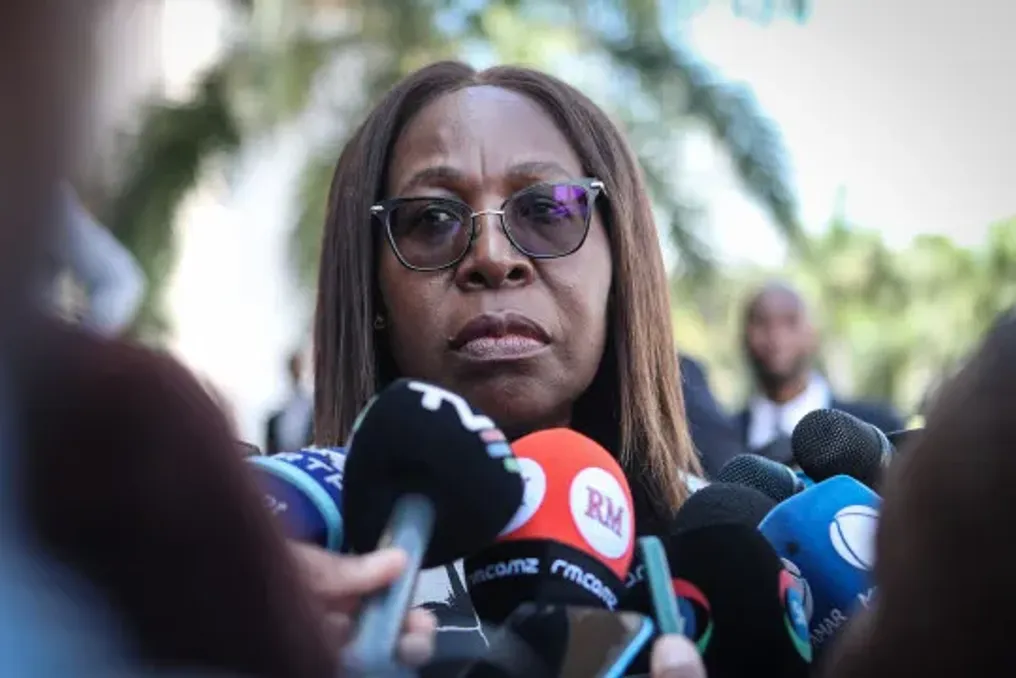
The First Minister of Mozambique stated that natural gas development must transform into prosperity for the population. She emphasized that new legislation is designed to strengthen local content, attract investment, and promote sustainable economic development.

Maria Benvinda Levi made this statement during the opening of the first Africa Gas & LNG Summit 2026 in Maputo. She said: 'We want the wealth of our natural resources to turn into wealth for the people.'

Mozambique currently has three large approved projects for monetizing vast natural gas reserves in the Rovuma and Cabo Delgado basins, which are considered among the largest in the world. In addition to the Coral Sul project, operational since 2022, and the Coral Norte project, which is under development, enterprises led by TotalEnergies and ExxonMobil are advancing on the Afungi peninsula, with the latter awaiting a final investment decision.

In her speech, Levi noted that Mozambique is creating conditions to convert this natural resource potential into tangible benefits for citizens. She recalled the recent approval of new legislation, which is in the implementation phase, concerning mining, oil, and local content, aimed at strengthening national participation in natural resource development.

This legal framework primarily reflects the 'Government's determination to ensure that the growth of the energy sector is accompanied by the strengthening of national production capacity, the activation of Mozambican entrepreneurship, and the creation of decent and sustainable jobs.' Secondly, the First Minister continued, the goal is to ensure 'significant progress in consolidating a more structured institutional environment focused on concrete results.' And thirdly, she aims to promote 'the strengthening of the business environment and increasing transparency to ensure greater predictability of decisions and create increasingly favorable conditions for productive investments.'

Maria Benvinda Levi added that through these and other actionable measures, she wants to guarantee that investors find regulatory stability, effective institutions, and a competitive business environment. She also stressed that energy projects must contribute to strengthening the Mozambican business structure and enhancing the value of national human resources.

'We also intend for the projects to promote the strengthening of national entrepreneurship, the upskilling and value of Mozambican specialists, especially youth and women, as well as the development of local communities,' she stated. Levi insisted that natural gas should be viewed not only from an export perspective but also as a lever for economic transformation.

'For Mozambique, natural gas represents not only an export opportunity but also a strategic asset for expanding electricity generation, promoting industrial development, stimulating new economic activity, and deepening the integration of regional energy markets,' she said. She argued that the success of the sector would depend on the ability to generate national and regional economic chains, as well as strengthening cooperation between African countries in the logic of joint development and energy market integration.

Addressing investors and industry representatives present at the conference, the First Minister reiterated the country's openness to private investment and technological innovation. 'Mozambique is open to investment. It is open to new partnerships, new technologies, innovations, and business initiatives that contribute to value creation, stimulate economic development based on shared responsibility and mutual benefit,' she concluded.

Popular