Gaganyaan Mission Astronaut Candidate Calls on Indian Industrialists to Form Consortium for Space Technology Development
Read more
The times of India
timesofindia.indiatimes.com

Gaganyaan Mission Astronaut Candidate Calls on Indian Industrialists to Form Consortium for Space Technology Development

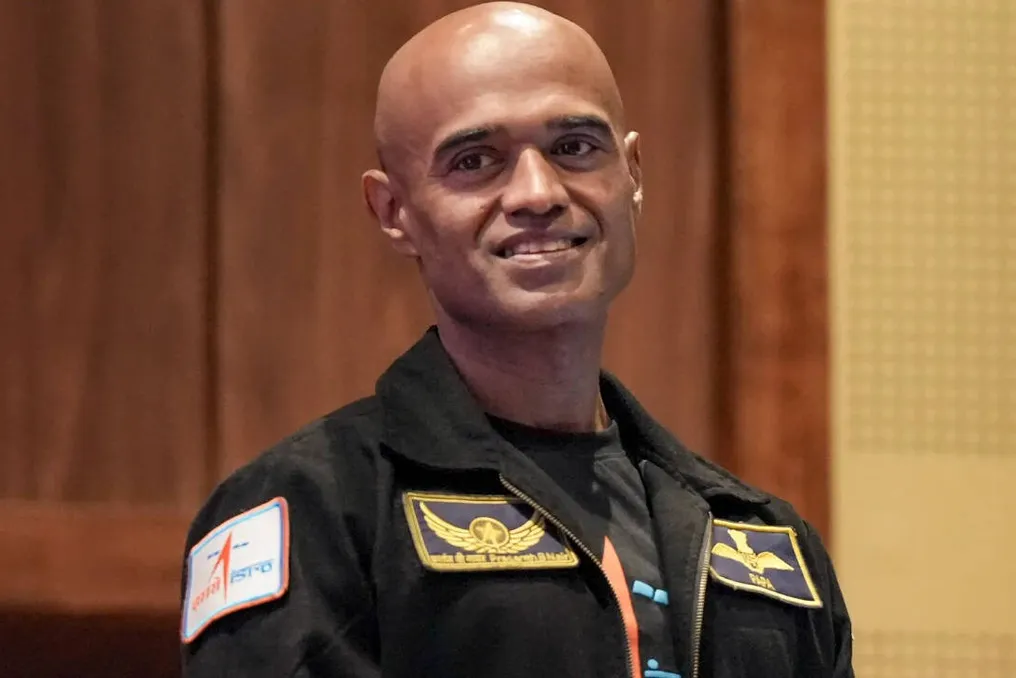
Prashant Nair, an astronaut designated for the Gaganyaan mission and an Indian Air Force flag officer, stated on Monday that leading Indian industrialists, such as representatives from the Ambani, Adani, and Mahindra groups, should unite to create a space consortium for the joint development of advanced space technologies.

Nair noted that the creation of a private space enterprise by Indian industry would be highly significant. He compared this to the successes of companies like Starship and Crew Dragon, emphasizing that India's large private sector must invest in this field so that India can eventually possess technologies such as reusable launch vehicles, similar to SpaceX.

Speaking at the 5th International Space Summit in New Delhi on Monday, Flag Officer Nair stated that India needs a mission regime, and one of the things expected under such a regime is space sovereignty. He added that the concept of space sovereignty also includes AI sovereignty, as India requires strategic autonomy and trust.

He called for the unification of India, India Inc., all startups, and all organizations in the space sector, including IN-SPACe, ISpA, ISRO, the Air Force, and the government.

Prashant Nair, who has been awarded the Kirti Chakra, is an experienced test pilot and a backup pilot for Group Captain Shubhanshu Shukla in the Axiom mission to the International Space Station.

During preparations with three other Gaganyaan mission astronaut candidates, Flag Officer Nair, whose call sign is 'Papa', reported that since there is no ready manned space flight program yet, they are creating one. Consequently, their training is a continuous and evolving process where technology development and preparation are perfected simultaneously.

The astronaut candidate also spoke about the necessity of building an ecosystem for manned flights. He specified that sending a person into space requires certain procedures, such as crew communication, emergency response systems, the ability to evacuate from the launch site in case of an emergency, as well as the procedure for emergency descent in orbit and rescue after parachute deployment into the ocean. He stressed that such preparation requires a completely different level.

Regarding the first unmanned Gaganyaan flight, he noted that they will use the results of tests on the humanoid Vyommitra to make necessary adjustments to the manned mission. Since Vyommitra is not human, the entire life support system will not be used to its full extent; however, after demonstrating the concept, a person can be sent into space.

Similar stories

Innovators Participating in Bengaluru Tech Summit 2026 Featured
Read more
yourstory.com

Innovators Participating in Bengaluru Tech Summit 2026 Featured

PhotoSparks, a weekly column from YourStory that has been publishing photographs celebrating the spirit of creativity and innovation since 2014, presented a report on the Bengaluru Tech Summit (BTS) 2026. Previously, 1030 publications covered various events, including art festivals, comic book galleries, global music festivals, telecommunication exhibitions, millet fairs, climate change expositions, wildlife conferences, startup festivals, Diwali rangolis, and jazz festivals.

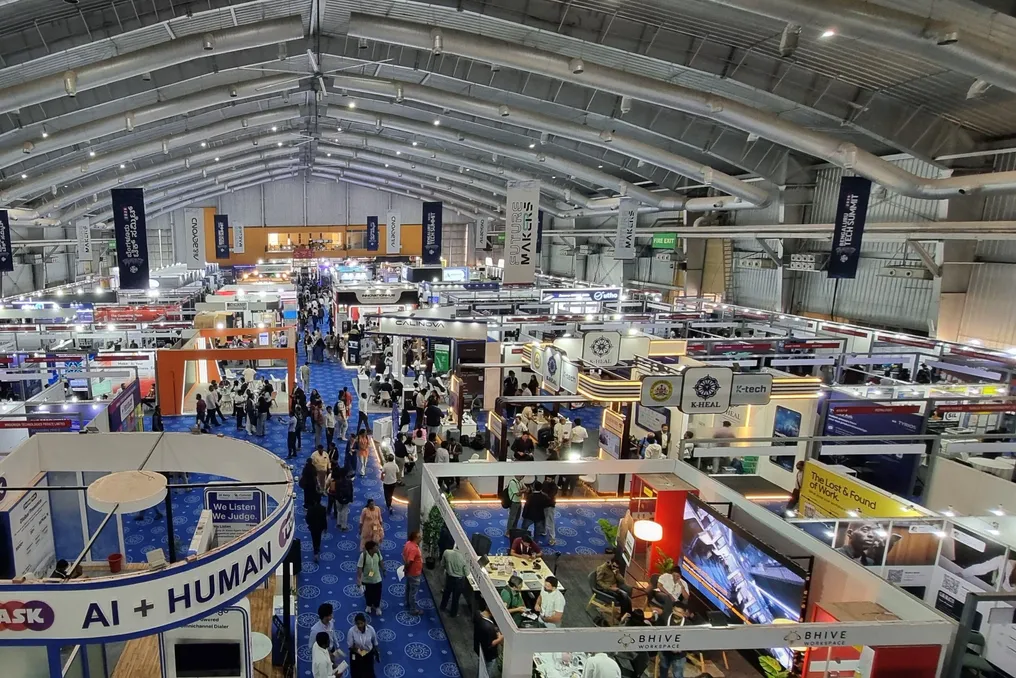
The 29th annual edition of BTS, held this week at the Bangalore International Exhibition Centre (BIEC) under the theme 'AI & Beyond,' gathered startups, technology companies, business incubators, research laboratories, and government agencies. The event included conference tracks, exhibitions, and workshops.

This photo essay featured startups such as Nife, Gnani, Data Caffe, Valamm.AI, Faveo, Trip Gain, and others. Incubators and accelerators were also highlighted, including C-CAMP, Art Park, Foundation for Quantum Computing, Manipal BioIncubator, and Ramaiah Technology Business Incubator.

Pavilions also represented other Indian states, such as Bihar, as well as international participants from countries like South Korea. Reviews of past BTS years, as well as TechSparks exhibitions from YourStory for 2026 and 2025, are available.

Nife is a deep technology company specializing in cloud infrastructure management, multi-cloud environment orchestration, and edge computing. Its offerings include application deployment automation, infrastructure management, cloud cost management (FinOps), and AI-based website reliability development.

Gnani AI provides solutions in conversational AI, voice technologies, and intelligent corporate agents. These solutions enable enterprises to automate customer interactions via voice calls, messaging platforms, and other communication channels, supporting multiple Indian languages and regional accents.

DataCaffe is an AI product development company based in Bangalore. It integrates AI into enterprise workflows, helping organizations increase productivity, automate processes, and utilize their data more effectively. At BTS 2026, the company demonstrated its CommandIQ control-plane solution, designed to ensure governance and oversight of AI agents, applications, and models.

Valamm.AI functions as a platform for strategic market entry and business acceleration, assisting global companies in AI, SaaS, and technology sectors to expand their presence in India. It offers an 'Incubate–Accelerate–Transfer' model that supports market validation, client acquisition, business development, and subsequent scaling.

Faveo Helpdesk is a customer support and service management software product that uses a ticket-based support system to log, track, assign, and resolve customer requests. Its product suite includes Faveo Helpdesk Community and Enterprise versions, as well as Faveo Service Desk Enterprise.

TripGain offers a comprehensive platform for managing corporate travel and expenses. It helps companies manage employee travel bookings, hotel reservations, expense reimbursements, approvals, and adherence to travel policies through a single digital platform.

C-CAMP (Centre for Cellular and Molecular Platforms) is a leading incubator in biotechnology and life sciences innovation located in Bangalore. Established with the support of the Department of Biotechnology, Government of India, it promotes the transformation of scientific research into commercially viable products and technologies, particularly in healthcare, agriculture, and environmental sustainability.

ART PARK (AI & Robotics Technology Park) is an innovation and entrepreneurship initiative conducted at the Indian Institute of Science (IISc) in Bangalore. It supports the development and commercialization of solutions in areas such as healthcare, agriculture, mobility, smart manufacturing, logistics, and infrastructure.

The Foundation for Quantum Computing Innovation at IISc was created under the National Quantum Mission of the Government of India and is supported by the Department of Science and Technology. Its goal is to develop quantum computing infrastructure, provide cloud access to quantum resources, and encourage collaboration between academia, industry, and startups.

Manipal–Government of Karnataka BioIncubator is an initiative to incubate technology businesses from Manipal Academy of Higher Education (MAHE) in collaboration with the Government of Karnataka. It provides researchers, students, faculty, and entrepreneurs with access to specialized bio-incubation infrastructure, technical expertise, mentorship, and industry connections.

Ramaiah Technology Business Incubator (Ramaiah-TBI) is located at Ramaiah University of Applied Sciences (RUAS). Its incubation support includes assistance with product development and prototyping, business mentoring, intellectual property guidance, and business networking.

Thanks to pavilions in five large exhibition halls at BIEC, innovators at BTS gained a broader understanding of how technologies like AI are evolving and transforming the world around us. Numerous opportunities for cross-border innovation, market entry, and expansion were explored.

Karnataka is home to 1088 Global Competence Centers (GCCs), which constitute over half of the total number in India. These trends were highlighted in the report 'GCCs in Karnataka: Shaping the Future of Enterprise AI,' presented at BTS by Zinnov and the Karnataka Digital Economy Mission (KDEM).

Under the Government First initiative, the state government selected eight startups to implement their technologies in government departments to solve public sector problems. This initiative, launched by the Department of Electronics, Information Technology, and Biotechnology (IT & BT), aims to make government agencies potential clients for startups.

Bangalore accounts for 36.3% of domestic AI startup funding in India. Furthermore, according to several reports published at BTS, it hosts 71% of Indian AI and deep tech unicorns founded since 2023.

The Bengaluru Innovation Report 2026, prepared by KDEM in collaboration with 3one4 Capital using Tracxn data, describes the growth and scale of the Bangalore startup ecosystem. It covers capital, talent, unicorns, policy, and six advanced technology sectors.

Reports indicate that Bangalore ranks eighth among global startup ecosystems and second in Asia for AI-focused startups. Through its ELEVATE initiative, the state has supported nearly 1500 startups with non-dilutive grants totaling $41 million over the last decade.

At BTS, 24 venture capital firms announced investments totaling approximately 1050 crore rupees in deep technology startups at the Future Founders Conclave. These startups operate in aerospace, AI, robotics, semiconductors, biotechnology, and other fields.

The exhibition also introduced Innoverse, a deep technology accelerator that will support 35 growing enterprises over the next five years. It helps startups move beyond product development and scale up to industrial operations.
PwC Chairman Stresses That Global Cooperation is Key to Developing the Artificial Intelligence Ecosystem
Read more
cgtn.com

PwC Chairman Stresses That Global Cooperation is Key to Developing the Artificial Intelligence Ecosystem

Mohamed Kande, Chairman of PwC, noted that over 40% of companies implementing artificial intelligence (AI) are not receiving the expected benefits from it. He explained that successful AI implementation must be based on real business needs.

Furthermore, Kande emphasized that global cooperation, including China's contribution, is critically important for creating a complete AI ecosystem.

Indian Founders Share Experience of Scaling Business Internationally: Global by Default, Local by Design
Read more
yourstory.com

Indian Founders Share Experience of Scaling Business Internationally: Global by Default, Local by Design

For many Indian companies, entering the global market does not begin with a large-scale strategy. It might start with registering a buyer in Texas, an inbound lead from Dubai at two in the morning, or a client in London wishing to pay in British pounds. The first order serves as a kind of confirmation. The more complex question is whether the next market will follow the same path or require starting from scratch.

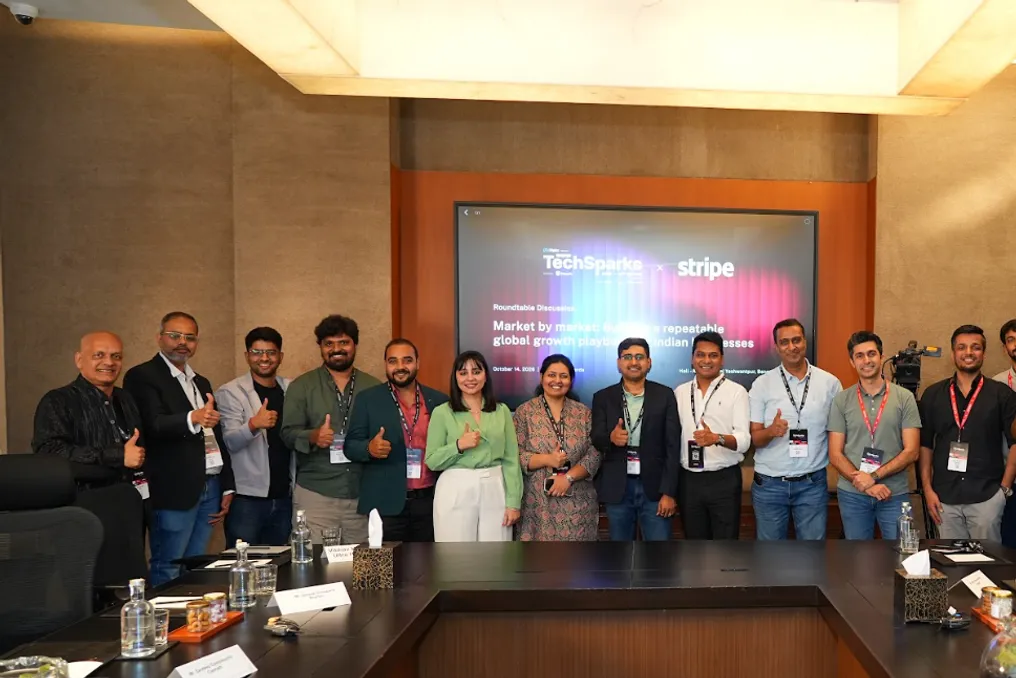
This question became the central theme of a roundtable organized by Stripe at the TechSparks 2026 event by YourStory, dedicated to creating a reproducible plan for global growth. Leaders from organizations such as Xoxoday, upGrad, Dodo Payments, Bhanzu, Borderless Access, Cuemath, FreshtoHome, Codingal, Codeyoung, and Ultrahuman participated in the discussion.

The host, representing Stripe, was Manish Maheshwari, Managing Director for India. The moderator was Madanmohan Rao, Director of Research at YourStory. The discussion began with a general consensus: one should start small and listen closely to customers. Companies assess customer acquisition cost, lifetime value, and operational scalability, as well as the availability of reliable payment systems and local staff.

One approach involved collecting contacts and calling customers even before product creation, as online research rarely provides micro-level understanding. A market that constantly requests the same thing gets included in the roadmap, whereas one large client in a specific location is better viewed as a custom configuration. The first paying customer proves little; the true picture is painted by repeat purchases and a low dispute rate.

Any element interacting with the end-user—such as catalogs, curricula, and preferred payment methods like ACH in the United States or direct debit in the UK—can be adapted to the market. However, everything related to money movement, including core anti-fraud rules, remains standardized. Legal and regulatory requirements are paramount, followed by client-specific requests, whether it's a bright red palette in China or tax-inclusive pricing in India. Pricing requires equal attention, as one team took considerable time to correct Indian price benchmarks when migrating them to the US.

Partnerships also contribute to success. In the UAE, government collaboration ensured credential acceptance, and local payment partners increased accessibility and attracted new customers. Maheshwari warned that 'a failure in your payment system or checkout process can be mistakenly perceived as a failure in demand.'

Payment in local currency is a significant part of solving the problem, as Stripe data shows that 76% of customers prefer to pay in their own currency. Local payment methods and installment plans for large purchases help, alongside a system that is standardized at its core but adaptable by country. Fraud control is a balancing act, as overly strict rules deter honest buyers. Tracking chargebacks, returns, and failure rates by country also helps teams find leaks, such as when foreign clients' one-time passwords do not arrive according to Indian authentication rules.

Revenue brings obligations. The US has its own tax thresholds, Europe and India have data processing rules, and even text messages are regulated differently in each country. Notifications and fines often arrive concurrently with growth, and one founder recalled how a business focused only on India suddenly shrank after a regulatory shock. According to Stripe, using a global infrastructure from the beginning is cheaper because 'reversing and fixing it is much more expensive.'

Tools like Stripe Atlas help companies establish a US entity, set up local banking, accept payments, and raise funds in the early stages, before international growth makes these decisions difficult to revise. Artificial intelligence is already reducing timelines. Content localization has accelerated almost fourfold, while maintaining levels of human review and assessment, and engineers are increasingly acting as reviewers of AI-written code. Sales chatbots handle lead qualification and reminders across different time zones, increasing funnel efficiency by about 20–25%. Nevertheless, speed raises questions of stability, security, and cybersecurity, which were noted as the most absent topics in the discussion.

Being global by default does not mean opening offices everywhere. One team that localized its curriculum and hired teachers and sales staff in Japan saw momentum fade within three months because those efforts turned into a separate business. The conclusion was to scale where strengths already exist, deepen, and then expand.

Audiences outside the Indian diaspora require a completely different approach, involving local hiring, community events, and even offline centers in the US so the brand feels local.

In summary, the reproducible action plan is clear: test recurring demand, keep the core of the money flow standard, localize what customers see, build financial base and compliance early, and enter markets where demand already exists.

Some gaps remain. Paying individuals abroad, such as instructors, from an Indian structure remains expensive, and the infrastructure for this is weak.

As the evening concluded, the general consensus was that the best experience comes from peers working in the field. For Indian enterprises, entering the global market incrementally is more of a discipline than a leap, one that must be built through every repeatable decision.

Popular