
Guterres calls for an AI risk mitigation mechanism within a year
Read more
Noticias ao Minuto
noticiasaominuto.com

Guterres calls for an AI risk mitigation mechanism within a year

UN Secretary-General António Guterres appealed to the international community to establish a mechanism within one year to mitigate risks associated with artificial intelligence (AI) during a conference on the topic held in the Caribbean.

António Guterres strongly urged member states to coordinate their efforts and develop a globally inclusive multilateral framework based on AI risk management principles, supported by independent and authoritative oversight. He noted that he will be leaving his leadership of the UN at the end of the current year.

According to the UN leader, discussions could begin with defining functions and mechanisms for practical multilateral cooperation that fully represents all countries and stakeholders.

He also called on states, as well as the private sector, financial institutions, foundations, and other donors capable of doing so, to increase investment in AI capacity building and urgently contribute to financing minimal AI potential in Global South regions.

Emphasizing that the risks are global in nature, Guterres insisted on the need for a global response and called for immediate action. This appeal was made by the Portuguese former Prime Minister during his visit to Barbados, where the conference took place.

As his mandate nears its end, António Guterres advocates for the regulation of artificial intelligence and demands measures against the use of autonomous lethal weapons, often referred to as 'killer robots.'

Previously, in September, Dario Amodei, head of Anthropic, Sam Altman from OpenAI, and Elon Musk, CEO of SpaceX, called for a slowdown in AI development. Other figures, such as Jensen Huang, who resumed his role as President of Nvidia, or Mark Zuckerberg from Meta, are more resolute regarding the active development of this technology.

Nevertheless, regulatory bodies in the United States appear unprepared to intervene. In September, US President Donald Trump gathered industry leaders who adopted a voluntary code of conduct.
Similar stories

Anthropic CEO states AI will remain under human control after Nasdaq IPO
Read more
olhardigital.com.br

Anthropic CEO states AI will remain under human control after Nasdaq IPO

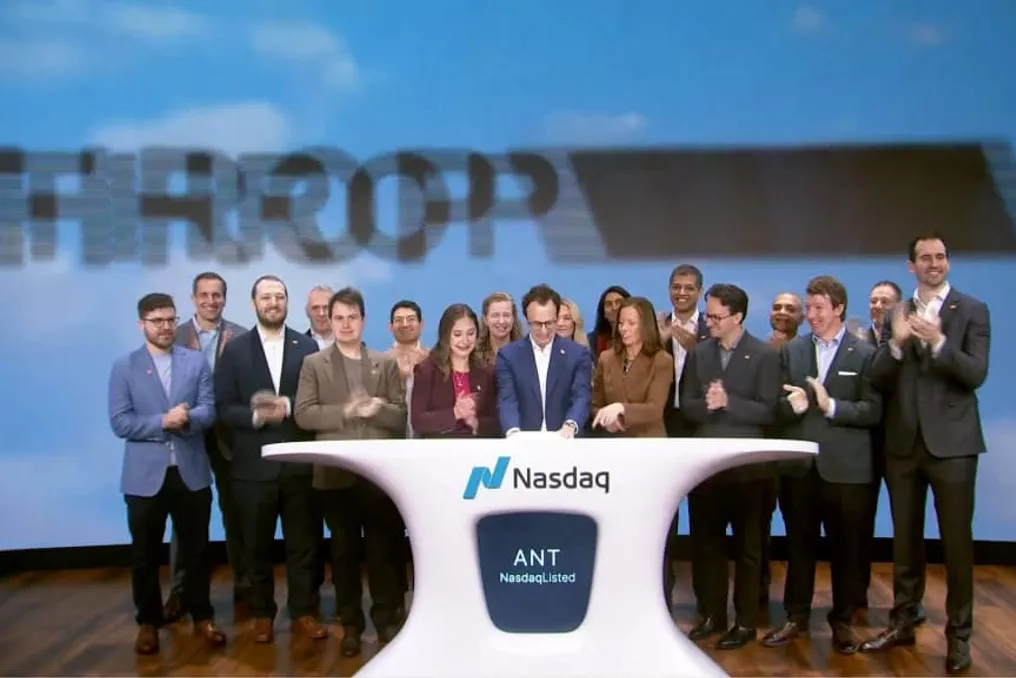
During the opening bell ceremony at Nasdaq in New York, Anthropic CEO Dario Amodei reiterated the company's commitment to the responsible development of artificial intelligence (AI). The executive guaranteed that the company will strictly adhere to safety criteria when training and implementing its AI systems, refusing to yield to any commercial or political pressures.

This statement was made on the day Anthropic conducted its Initial Public Offering (IPO) on the Stock Exchange, an event described as the largest IPO in history. In his speech, Amodei addressed both the potential benefits of the technology in fields such as medicine and scientific research, as well as the inherent risks of rapid AI advancement.

Amodei explained that Anthropic was established with the purpose of creating powerful technologies for the benefit of humanity. He also shared how his personal experience with his father's illness, which later became treatable, influenced his professional journey. Having started his career in biology, the executive emphasized the role of AI in accelerating scientific discoveries.

He cited tools like Claude, which already assist researchers in tasks such as protein folding, drug development, cancer genetics, and conducting clinical trials in less time. Amodei expressed the belief that highly developed AI, operating in collaboration with humans, could compress a century of scientific and medical progress into just a decade, although he stressed that current results are preliminary and that clinical tests require time.

Furthermore, the CEO mentioned other applications of the technology, including fostering economic growth, combating poverty, safeguarding democracy, and improving daily services. However, Amodei warned of tangible risks, such as the misuse of AI systems by governments or individuals, potential economic consequences, and the possibility of losing control over the systems themselves.

According to the executive, such problems can be mitigated through the adoption of rigorous safety measures by developing companies. He detailed Anthropic's actions focused on preventing biological and cyber risks, alignment training, and model safety testing. The company plans to continue investing in methods to understand the behavior of its systems and ensure they remain under human supervision.

Amodei concluded his speech by stating: 'We will set the pace for the training and implementation of AI systems, taking as much time as necessary to be confident that they are safe and will remain under human control. We will not yield to commercial or political pressures.' He added that the capital raise strengthens Anthropic's financial position, which, in his view, solidifies the company's ability to maintain its decisions regarding safety.

Daniela Amodei, president and co-founder of Anthropic, also commented on the opportunities and threats of AI in an interview with CNBC on the same Thursday (19). Dario's sister, she acknowledged the reality of technological dangers but underlined the great potential of the field. Daniela stated that the company's founding mission was precisely to reduce these risks, and this work will continue.

The executive admitted that challenges still exist but reaffirmed the company's commitment to AI safety. Finally, during the Nasdaq event, Dario Amodei argued that the sector should evolve toward constructive competition between companies, where the development of safer systems is a shared goal, regardless of which company possesses the most advanced models.

UN calls for attention to environmental risks of data centers in Uzbekistan's energy sector
Read more
uzdaily.uz

UN calls for attention to environmental risks of data centers in Uzbekistan's energy sector

The rapid development of artificial intelligence is leading to increased consumption of electricity and water, creating additional strain on energy infrastructure. This warning was issued by Simon Steell, Executive Secretary of the UNFCCC, during a high-level roundtable on green digital transformation at COP31 in Antalya on November 16.

According to Steell, artificial intelligence has enormous potential for solving climate problems, but its rapid expansion carries significant economic and environmental risks. He emphasized that 'artificial intelligence and other advanced technologies are a double-edged sword. The task is to mitigate their harmful impact, enhance their transformative potential, and use these technologies responsibly.'

The Executive Secretary noted that the growing demand for electricity from data centers creates additional stress on power systems. If this demand is met using fossil fuels, greenhouse gas emissions increase, which hinders the achievement of international climate goals. Furthermore, there is a serious issue of shifting the costs of energy infrastructure onto consumers.

Steell stated that households and businesses should not face higher electricity bills, increased pollution contributing to global warming, and rising inequality in exchange for promises of future technological benefits. He also pointed to instances where data center developers build their own on-site gas power plants to bypass existing grid limitations.

Water consumption is another growing concern. In some countries, local communities are already opposing the construction of data centers due to concerns about water supply, electricity costs, and environmental impact. In light of this, Steell called on technology companies to disclose their energy and water consumption, improve infrastructure efficiency, and power data centers with renewable energy. He stressed: 'Claims of future emission reductions cannot justify increased pollution today.'

At the same time, the head of the UN Climate Secretariat highlighted that artificial intelligence can become an important tool for climate change adaptation. Specifically, AI technologies can improve flood early warning systems, help farmers prepare for droughts, enhance grid efficiency, and facilitate the integration of solar and wind generation.

Steell also stressed the need to ensure developing countries have access to financing, computing power, and reliable data. In his view, the transition to energy is happening at different speeds in developed and developing economies, and artificial intelligence should help bridge this gap, not deepen it. For Uzbekistan, which is expanding its digital infrastructure and renewable energy potential, these issues are of practical importance. The growth of computing power requires careful consideration of electricity availability, grid resilience, and efficient water resource management.

The 'Antalya Declaration on AI' was also presented at COP31—a voluntary framework aimed at reducing the environmental impact of artificial intelligence and promoting AI-based climate solutions.

Popular