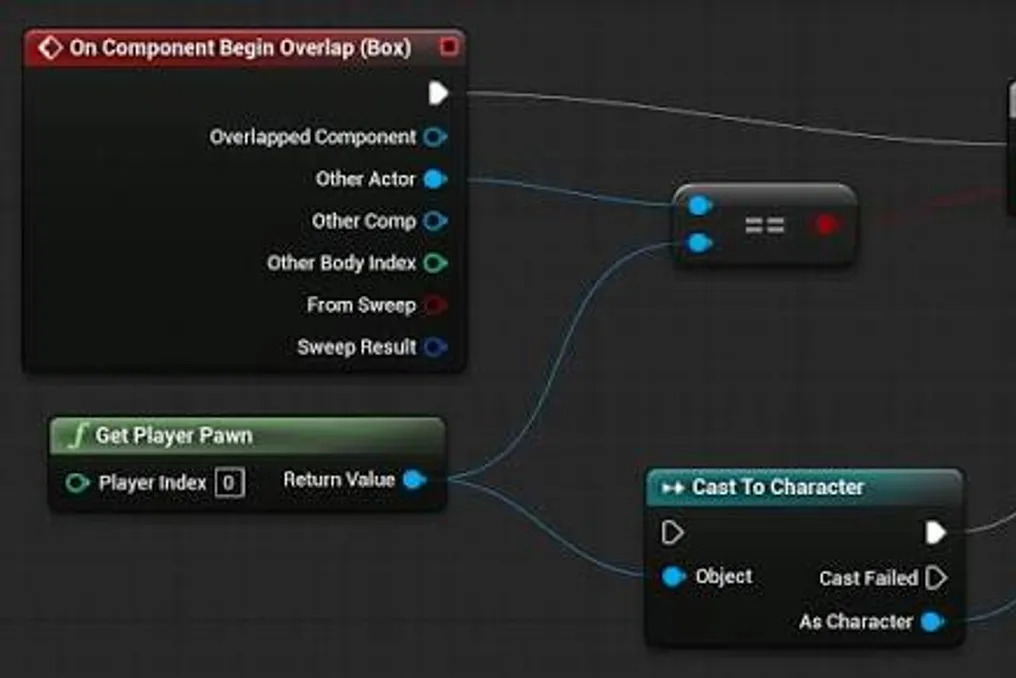
Epic Games has announced a significant change for Unreal Engine 6: the next version of the graphics engine will no longer include the visual programming system known as Blueprints, even during the early access period.
This decision alters the company's initial plans, which had intended to keep the tool in the first iterations of Unreal Engine 6 to assist in transitioning projects created in Unreal Engine 5. Currently, Epic is investing in advancements in artificial intelligence (AI) to streamline this migration, directing game development toward the Verse programming language and the new Scene Graph structure.
Blueprints are widely recognized in Unreal Engine for allowing the creation of interactions, behaviors, and mechanics through a visual interface, eliminating the need for complete coding. This methodology benefits designers, artists, and other specialists who do not have deep knowledge of programming.
Marcus Wassmer, Executive Vice President of Development at Epic Games, detailed in a post on the official Unreal Engine website that the company chose to accelerate this change due to recent AI progress. According to the executive, AI tools are expected to considerably simplify the conversion of Unreal Engine 5 projects to Unreal Engine 6, possibly automating part of this process.
Epic already employs AI tools to transform the Fortnite Blueprint library to Verse. Furthermore, the company believes this modification will allow it to meet the established timeline for the release of Unreal Engine 6, or even exceed it, while maintaining a focus on a more modular architecture capable of integrating with AI.
It is important to note that Blueprints will remain accessible in Unreal Engine 5; the exclusion specifically refers to the next generation of the graphics engine. With the removal of Blueprints, Unreal Engine 6 will adopt Verse as the primary language for building gameplay systems, using the Scene Graph as the basis for structuring elements and behaviors in projects.
In practice, developers accustomed to visual programming will have to adjust their workflows. The change also raises questions about the tool's accessibility, particularly for professionals who relied on Blueprints as a substitute for traditional programming.
Chet Faliszek, a former developer at Valve, criticized the decision, arguing that visual tools constitute a crucial link between the artistic and technical aspects. For him, Blueprints enable artists and designers to create complex functionalities within the parameters defined by programmers, without solely depending on writing code.
Without this option, these professionals may be forced to learn Verse or integrate generative AI tools into their routines. The change has already generated divergent opinions among independent developers. In conversation with PC Gamer, Eric Berger, developer of the RPG Queen’s Domain, mentioned the vital role of Blueprints in the game's production. Berger also indicated that Epic's new direction is leading his studio, Freshly Baked Games, to consider using another graphics engine for its next title.
The debate touches upon a central issue for the gaming industry: what is the limit at which artificial intelligence can replace visual tools that offer direct control over the functioning of mechanics? While Epic views AI as a way to simplify migration between versions, many professionals fear losing features that facilitate collaboration and experimentation across various production areas. For now, the company maintains its strategy of positioning Unreal Engine 6 as a platform centered on Verse and ready to support AI tools. The impact of this decision on studios and independent developers will depend on the effectiveness of the conversion tools and the capabilities offered by the new architecture.