WhatsApp tests single-view text messages on iPhone, expanding privacy features
Read more
Olhar Digital
olhardigital.com.br

WhatsApp tests single-view text messages on iPhone, expanding privacy features

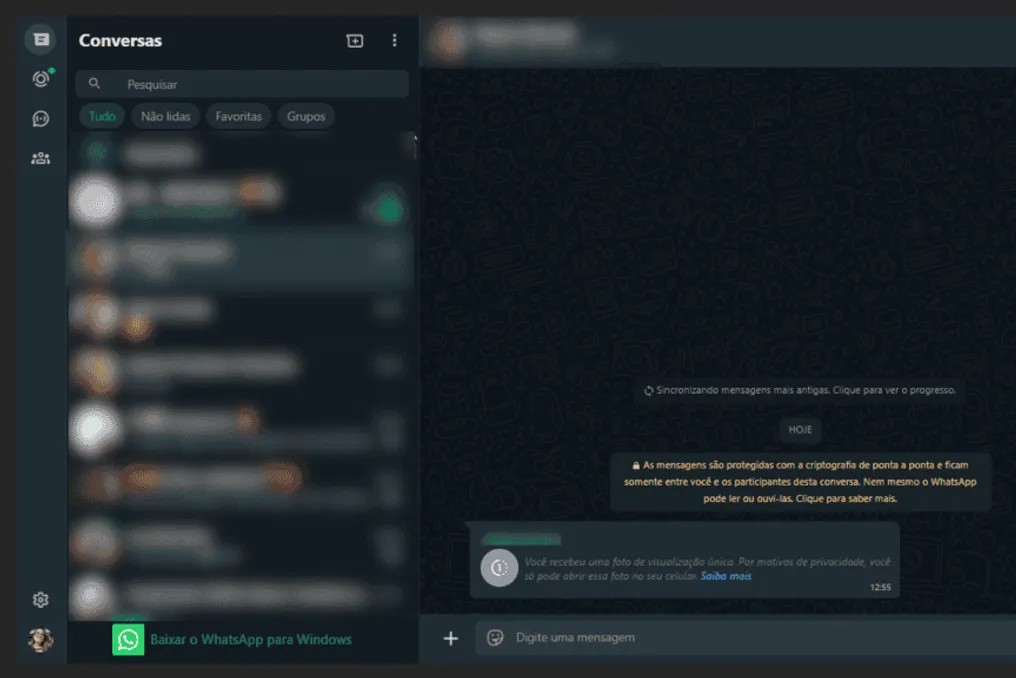
WhatsApp has started making single-view text message sending available to iPhone (iOS) users, as reported by the specialized portal WABetaInfo. This feature extends functionality that already existed for media and audio messages.

To use this tool, the user must type the text in the chat bar and hold down the send button until the single-view option menu appears. Upon receiving the message, the recipient views it on a dedicated screen where the application restricts any action that could record or share the content.

After closing the reading window, the content is permanently deleted and replaced by a notification that the message was opened, preventing any participant from accessing it again. This single-view function was already used for photos, videos, and voice messages, having been initially introduced to prevent file accumulation in the device's gallery.

An important distinction lies in the timing of deletion: while temporary messages disappear after a predetermined time, such as seven days or twenty-four hours, single-view deletes the content immediately after closing the reading screen. Furthermore, this new feature includes protections against copying, screenshots, recordings, and forwarding during viewing.

In another update being tested in the app, WhatsApp is increasing the maximum number of participants in groups. The capacity will increase from 1,024 to 1,500 people, and this modification is being gradually implemented for both Android and iPhone users, including Community-linked groups. Each group can now accommodate up to 476 extra participants, and this expansion will be automatically applied to existing conversations upon receiving the update.

In structured groups within Communities, the new member cap will also be 1,500. However, the main announcement channel of these structures will maintain its current limit of up to 2,000 members. The rollout of the single-view text feature is currently for testers on the WhatsApp beta version for iOS via TestFlight, and it should reach more accounts in the coming weeks. The increase in group limits is still in the gradual release phase for both operating systems.


Similar stories

WhatsApp begins rolling out message scheduling feature to users in Brazil
Read more
olhardigital.com.br

WhatsApp begins rolling out message scheduling feature to users in Brazil

WhatsApp has started making available the functionality that allows users to schedule message sending for specific dates and times on some accounts in Brazil. Although the new feature is already present in some accounts, a date for the full release to all users has not yet been set.

Meta has not yet provided details on how the feature will be distributed nor communicated when its release will be expanded. According to WABetaInfo, a portal that predicts app updates, global-scale tests began in October, using the beta version of WhatsApp for iPhone, a mode intended to test features before the general release.

In the Brazilian context, this option started being seen by certain users at the beginning of November. The accessibility of this functionality depends both on the platform and the account being used; in some situations, the option only appears on WhatsApp Web, while other users can already use it directly through the iPhone application.

On WhatsApp Web, the procedure requires the user to write the message in the input field and subsequently click the clock icon. Then, it is necessary to select the desired date and time for sending. The system allows multiple messages to be scheduled.

After confirming the scheduling, a notification with the phrase 'You have scheduled a message' is displayed in the conversation, visible only to the person who scheduled it. By interacting with this notice, the user can check the content that was scheduled. To cancel the sends, simply select the messages on this same screen and proceed to delete them.

During practical tests, three restrictions were identified in the tool, although Meta has not yet clarified whether these limitations will be maintained in the final version of the application.

How WhatsApp chat information can be exposed despite end-to-end encryption
Read more
www.aajtak.in

How WhatsApp chat information can be exposed despite end-to-end encryption

Despite the presence of end-to-end encryption, which allows users to send personal and confidential messages, discuss family matters, or share work information on WhatsApp, there are several ways data can be compromised. Although the company claims it cannot read private chats and calls due to encryption, this does not guarantee absolute communication security.

The security of a conversation depends not only on whether WhatsApp or Meta can read the message but also on who has access to your phone and account. There are five main ways information can leak.

If you have used WhatsApp on a computer, tablet, or other device for work and forgot to log out after finishing, your account may remain linked to that device. WhatsApp allows one account to be linked to four additional devices, such as computers and tablets, which can operate even without the primary phone connected.

Although chats on these devices remain encrypted, any unauthorized person who has access to such a linked device can view your correspondence. Therefore, it is recommended to regularly check the list of linked devices. In Android, this is done through the three-dot menu in the upper right corner, and on iPhone—in the app settings.

End-to-end encryption will not protect your chats from a person who has gained access to your unlocked phone. If someone uses your phone even briefly, they can read messages, take screenshots, or forward information. To minimize this risk, you should use the WhatsApp application lock feature on your phone, as well as apply built-in protections such as fingerprint on Android or Face ID on iPhone. For particularly sensitive conversations, you can activate the Chat Lock feature.

The threat often comes from phishing links or fake applications. Cybercriminals send links that appear harmless, but clicking them or installing an associated file on the phone can introduce malware. Such software can gain access to messages, photos, calls, and other data on the device.

A more serious threat is spyware, which is used for covert monitoring of the phone without the owner's knowledge. Some modern spyware exploits vulnerabilities unknown to ordinary users and can attack the phone without the need to click any link—this is called a zero-click attack. In January 2025, WhatsApp reported blocking a campaign related to the spyware company Paragon, which targeted approximately 90 people, including journalists and activists. Following this, the University of Toronto's Centre for Civil Liberties conducted a forensic examination of the use of Paragon's Graphite spyware in some cases. This incident demonstrates that even with encryption in place, the phone itself can become a target of an attack, although such high-tech attacks are usually aimed at specific individuals.

WhatsApp chats can be backed up to Google Drive or iCloud. However, the security setting of the backup is critical. WhatsApp provides an option for end-to-end encryption for backups; when this feature is activated, the backup is protected by a password or a 64-digit encryption key, and it is also linked to available devices.

Popular