Railway passenger traffic will reach pre-pandemic levels and exceed 820 billion in the current fiscal year
Read more
The times of India
timesofindia.indiatimes.com

Railway passenger traffic will reach pre-pandemic levels and exceed 820 billion in the current fiscal year

According to a high-ranking ministry official, railway passenger traffic is expected to reach pre-pandemic levels, around 800 billion by March 2027. Furthermore, freight transport is projected to reach an all-time high.

In 2019-20, railways transported 808.6 billion passengers, and according to forecasts, this figure is likely to be around 820 billion in the current year. The official noted that significant attention is being paid to increasing the number of trains and improving passenger conditions. Over the past five years, about 2,500 new passenger trains have been introduced to meet growing demand and expand transport accessibility.

The Ministry of Railways emphasized service expansion during the festive season, reporting that approximately 18,000 additional trains were launched this year during Durga Puja, Diwali, and Chhath. These extra services carried nearly 20 billion passengers, which is 8% more than in the corresponding festive period last year.

Additionally, officials highlighted the railways' efforts to increase their share in the country's freight transport market. This is being achieved through diversifying the cargo basket and implementing measures to attract more goods into the rail network. As one official stated, the share of goods transported by rail has increased from approximately 27% to almost 30%, with an emphasis on expanding the range of goods transported by the national carrier and improving logistical efficiency.

Similar stories

Railway services are considering abolishing the RAC ticketing system due to discrepancies between payment and seat allocation
Read more
www.aajtak.in

Railway services are considering abolishing the RAC ticketing system due to discrepancies between payment and seat allocation

The RAC (Reservation Against Cancellation) ticketing system on Indian Railways may be changed for passengers traveling on trains. Indian Railways is considering the possibility of abolishing this long-standing service. The main reason is that passengers who purchase RAC tickets pay the full fare but are not provided with a proper sleeping berth.

Under the RAC system, one side lower berth is shared by two passengers, forcing them to share sleeping space. RAC, which stands for Reservation Against Cancellation, is part of the old railway system. According to this system, passengers are allowed to travel on the train, but they are not allocated an entire seat. Nevertheless, they are obliged to pay the same amount as for a confirmed ticket. Questions arise about the feasibility of charging the full price if the passenger does not receive a proper sleeping place.

According to sources, the Ministry of Railways is studying this system. The railway considers it unfair to charge the full fare from a passenger who is not provided with enough sleeping space. With an RAC ticket, two passengers occupy one side lower berth: during the day it is used as a seat, and at night both passengers are forced to sleep on the same surface. In such conditions, it is difficult for passengers to find a comfortable spot. Furthermore, it becomes difficult for the Ticket Examiner (TTE) to arrange an alternative seat if there are no vacant seats on the train.

The issue of charging the full fare to RAC passengers was also raised before a parliamentary committee. The committee questioned the existing railway practice and recommended a review of it. The committee asserts that the rules regarding charging the full fare to passengers who are not allocated separate full berths must be re-examined. That is, the railway should assess how justified it is to charge the full fare to passengers traveling in a shared space. Following this recommendation, discussions about maintaining or changing the long-standing RAC system have intensified.

RAC stands for Reservation Against Cancellation. It is a railway ticket status where the passenger may not be allocated an entire seat but is allowed to travel in a reserved coach. It can be seen as an intermediate state between a confirmed ticket and a waiting list. Passengers with waiting list tickets usually wait for their ticket confirmation to board the reserved coach. Meanwhile, passengers with RAC tickets can travel in their assigned spot. If a passenger's confirmed ticket is cancelled, the vacated seat may go to the RAC passenger. Thus, an RAC ticket can be upgraded to a full seat upon cancellation and availability of a seat. However, this depends solely on the ticket cancellation and seat availability.

The RAC system was introduced when railway reservations were mainly done manually. At that time, it was difficult to quickly find out about cancelled tickets or available seats. Therefore, the railway introduced the RAC system to utilize last-minute cancellations and provide the opportunity to travel to the maximum number of passengers. This system allowed those who could not get a confirmed seat to travel on the train. Later, the railway ticketing system became computerized. This simplified the process of detecting cancelled tickets, vacant seats, and providing full seats to RAC passengers. Despite this, the RAC service continued to operate.

This is not the case currently. The Ministry of Railways is considering abolishing the RAC system, but no final decision has been announced yet. Consequently, passengers with RAC tickets can travel in reserved coaches just as before, according to current rules. If the railway decides to abolish or change this system in the future, it may affect ticket booking rules and seat allocation. For now, passengers need to await an official announcement from the railway.

Large crowds observed in trains before Chhath festival; updated information on bus and flight operations
Read more
www.aajtak.in

Large crowds observed in trains before Chhath festival; updated information on bus and flight operations

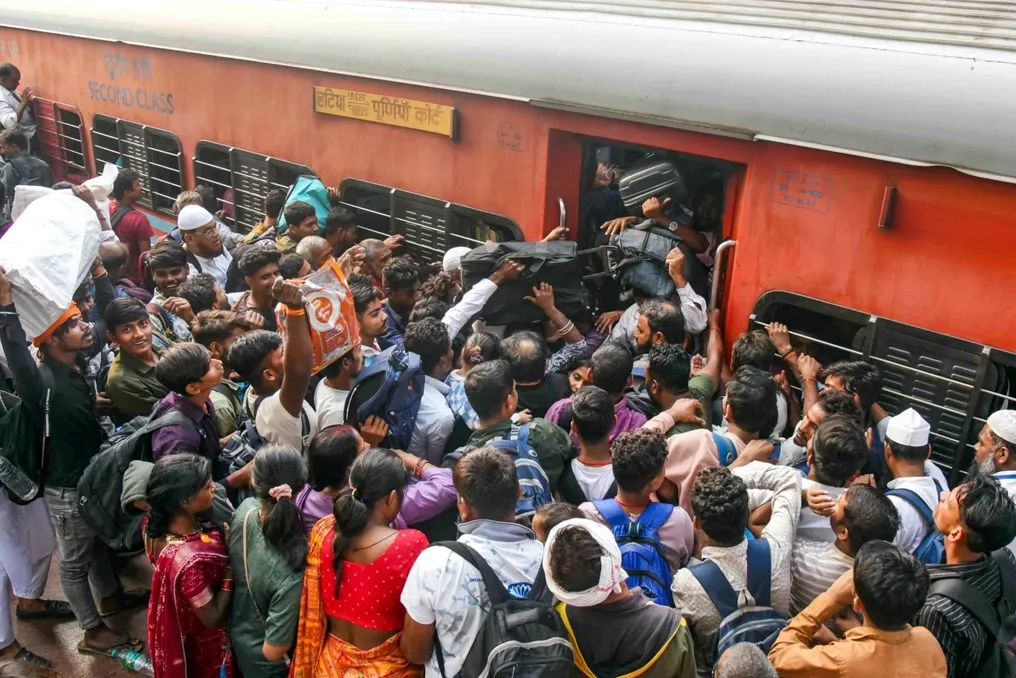
With the approaching Chhath festival, huge crowds have been observed at railway stations as people try to return home. At stations such as New Delhi, Karnal, and Saharanpur, trains heading to Bihar and Purvanchal are so overcrowded that there is not even room to stand. The situation has reached a point where many passengers cannot board the train, while others are forced to travel standing by the doors.

In Karnal, passengers traveling to Bihar show particular enthusiasm for Chhath. However, the excessive crowd has exacerbated their problems. Passengers noted that they could not travel home for Diwali, but are now going to Bihar to celebrate Chhath. They have also appealed to the government to organize additional trains during the holidays.

A large number of people heading home for Chhath Puja was also seen at Saharanpur railway station. The situation in trains bound for Bihar, Sitapur, and Purvanchal is extremely difficult. Passengers are not even provided with seating; many are traveling by hanging onto the doors, while some are forced to stay near the toilets.

One passenger traveling to Sitapur mentioned that although he is going home for Chhath Puja, due to the massive crowd, he could not find a seat and is forced to travel near the toilet. Another passenger traveling to Bihar, Sukesh Kumar, reported that due to lack of space, he ate in the train near the toilet door. Passengers also noted that due to the crush, many simply could not get into the train.

Given the situation, the government has started running special trains. In response to passenger requests between Delhi and Bihar, several additional services have been launched. A special train runs from Muzaffarpur to Anand Vihar. This special train will operate between Muzaffarpur and Anand Vihar Terminal and will pass through Gorakhpur, Basti, Gonda, Lucknow, Hardoi, Shahjahanpur, and Muradabad.

Additionally, the frequency of the weekly special train Ramnagar-Patliputra has been increased.

Currently, air tickets from Delhi to Patna have become very expensive. The cost of a flight from Delhi to Patna has reached 44 thousand rupees. The lowest available fare for the Delhi to Patna flight is 15,367 rupees, which is the non-stop SpiceJet fare. The most expensive ticket on this route cost 44 thousand rupees. Regarding the Mumbai-Patna route, the lowest fare starts from 10 thousand rupees, and the maximum ticket price on this route reaches 45 thousand rupees.

To ease the situation for passengers, the governments of Delhi and Bihar have launched 77 inter-state buses. By using these buses, passengers will receive a discount ranging from 134 to 1,028 rupees. The buses will run from the Anand Vihar bus terminal in Delhi to five districts of Bihar.

Delhi Transport Minister Pankaj Singh announced this on Thursday. He specified that both states jointly organized this system to ensure safe and affordable travel for people returning home for Chhath. An agreement was made between the governments of Delhi and Bihar for this purpose.

Popular