Honda presents Honda Sensing Ride, a radar assistance system for Japanese motorcycles
Read more
AutoPapo
autopapo.com.br

Honda presents Honda Sensing Ride, a radar assistance system for Japanese motorcycles

At EICMA 2026, held in Milan, Honda unveiled the new generation of the Africa Twin and introduced its first radar-equipped rider assistance system for motorcycles. This package, named Honda Sensing Ride, debuts on the CRF1150L Africa Twin Adventure Sports, bringing features previously known from Honda automobiles to the two-wheeled segment.

The CRF1150L line succeeds the CRF1100L and features a 1,131 cc parallel twin engine, generating 119 hp at 7,500 rpm and 12.1 kgfm at 5,700 rpm. There are three available models: the standard Africa Twin, the Adventure Sports, and the Enduro Sports, specifically designed for off-road use.

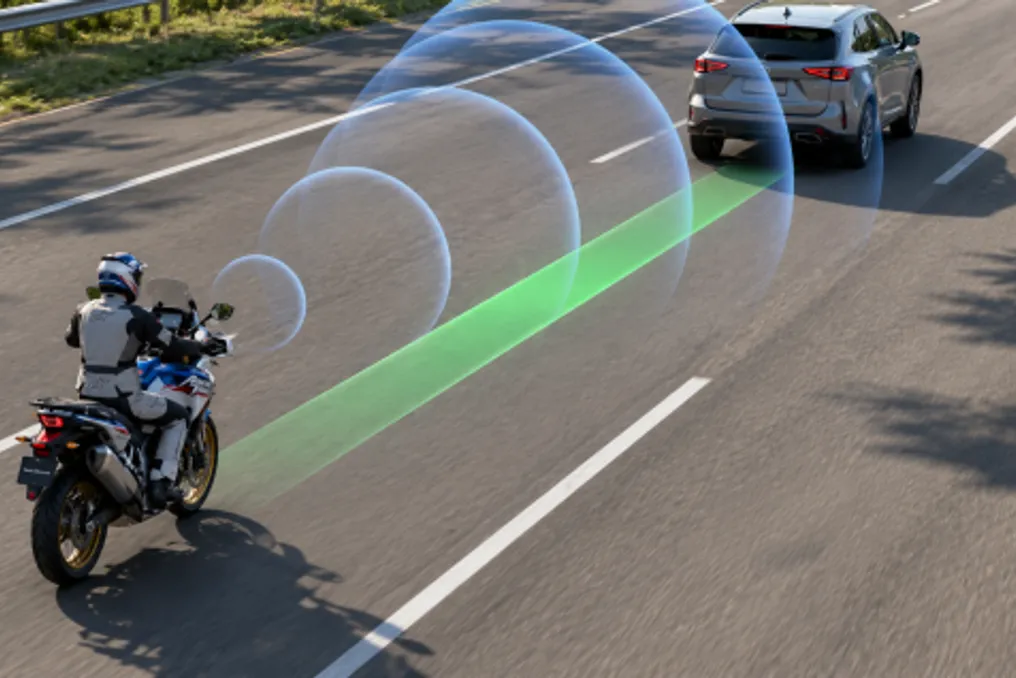
The operation of Sensing Ride is based on millimeter-wave radar units installed at the ends of the motorcycle—one at the front and one at the rear. These sensors read the surrounding environment, both ahead and behind. Based on these readings, Honda states that the system assesses the condition of the rider and the motorcycle itself, issuing alerts, notifications, or intervening directly in controls.

Honda segments the functions of Sensing Ride into three main areas. The first is dedicated to driving assistance, encompassing Adaptive Cruise Control (ACC), which adjusts speed according to the vehicle ahead; ACC with Stop & Go function, which allows the motorcycle to stop and restart autonomously; Group Riding Assistant; and Distance Assistant, responsible for maintaining appropriate spacing relative to the preceding vehicle.

The second area focuses on safe riding support, including a frontal collision warning, which notifies the rider of excessively fast approaches, and an emergency braking assistant, which intensifies brake action in critical situations.

Finally, the third front addresses risks coming from behind, where the motorcyclist is more exposed in traffic. This includes blind spot information, which warns if another vehicle is occupying the rear diagonal, rear distance information, and rear collision warning.

It is important to note that the motorcycle's ability to stop in congested traffic and resume movement on its own when ACC is active depends on the dual-clutch automatic transmission (DCT), which operates the clutch without the rider's intervention. According to Honda, this feature helps reduce rider fatigue during long periods in heavy urban traffic.

This technical dependency imposes a significant limitation on the package: Sensing Ride is offered as an optional item only on the CRF1150L Africa Twin Adventure Sports version equipped with DCT. The standard versions and the new Enduro Sports are not included in this offering.

Honda has not yet disclosed the cost of this accessory, the markets where it will be available, the speed ranges at which each function operates, or any other usage restrictions.

Despite this, there are positive expectations for the arrival of the Honda CRF1150L in Brazil. The Africa Twin sold in the country is not manufactured in Japan; it is assembled at the Honda factory in Manaus, although some parts are imported. Since 2023, this plant has also assembled the DCT transmission versions. Honda itself confirmed that the Brazilian unit is the only one outside of Japan to produce this transmission, a condition valid since October 2022. However, nothing can be guaranteed, given that the new Sensing Ride technology integrates into the model and there is no information about its future local manufacturing or assembly.

Even if the new Africa Twin arrives in Brazil, this does not guarantee the presence of the radar. Since Sensing Ride is optional even in launch markets, there is a possibility that the motorcycle will not be imported to the country.

Given the lack of confirmation, it remains to await the brand's decision for the Brazilian market.

Similar stories

Honda introduces Honda Sensing Ride technology for motorcycles to prevent accidents
Read more
www.aajtak.in

Honda introduces Honda Sensing Ride technology for motorcycles to prevent accidents

When riding a motorcycle, there is a risk that the driver may not notice approaching traffic from behind, especially due to blind spots. However, Honda has introduced a futuristic technology that can warn the rider about potential danger from behind, the risk of a frontal collision, and the need to brake.

The company demonstrated this system, called Honda Sensing Ride, at the EICMA 2026 exhibition. This radar technology includes ten safety features. Thus, the motorcycle will not only provide speed but also warn about road hazards around it.

It is important to note that the system not only alerts the rider but can also assist in controlling the motorcycle in certain situations. Initially, this feature will be available on the 2027 Honda Africa Twin Sport model.

The Honda Sensing Ride technology is similar to the Honda Sensing system used in the company's cars, but it has been specifically developed to meet the needs of motorcyclists. This system is equipped with millimeter-wave radar sensors at the front and rear of the motorcycle, which monitor surrounding vehicles and road conditions.

The system assesses the position of both the rider and the motorcycle, after which it issues a warning to the rider or assists in performing specific tasks. Below is a description of the ten key functions and their benefits.

  1. Adaptive Cruise Control (ACC): This function helps maintain the set speed of the motorcycle while keeping a safe distance from the vehicle ahead, reducing the need for frequent throttle adjustments by the rider.
  2. ACC with Stop & Go: This is an advanced version of adaptive cruise control. In heavy traffic with frequent stops, it regulates the motorcycle's speed according to the needs, relieving the rider from constant use of the throttle and brake.
  3. Group Ride Assist: This function is designed specifically for group rides. It helps maintain a proper distance between motorcycles traveling together.
  4. Distance Assist: If the rider accelerates and the motorcycle begins to approach the vehicle ahead, this function helps adjust the distance between them, thereby reducing the probability of a collision.
  5. Emergency Brake Assist: If there is a threat of collision with a vehicle ahead, and the rider suddenly presses the brake, this system provides additional braking assistance. It works in conjunction with the rider's brake application, applying balanced braking.
  6. Forward Collision Warning: If there is a high probability of colliding with a vehicle ahead, this function warns the rider in advance via the motorcycle's speedometer, using an audible signal and indicator.
  7. Brake Pulse: This function operates in conjunction with forward collision warnings. If the system determines that the rider is ignoring the warning, it more actively draws the rider's attention to the danger in case of a potential collision.
  8. Blind Spot Information: This addresses a common problem. If another vehicle enters the motorcycle's blind spot from the side, this function activates an indicator on the mirror, flashing or lighting up to warn the rider.
  9. Rear Collision Warning: If a threat of collision with a vehicle approaching from behind is detected, the system flashes the motorcycle indicators, warning the driver of the vehicle behind.
  10. Rear Distance Information: This function displays information on the dashboard about the speed, type, and size of a vehicle rapidly approaching from behind, helping the rider remain vigilant about traffic from behind.
Zontes T501 arrives in Brazil with a price of R$ 39,970, competing with the Honda NX500
Read more
autopapo.com.br

Zontes T501 arrives in Brazil with a price of R$ 39,970, competing with the Honda NX500

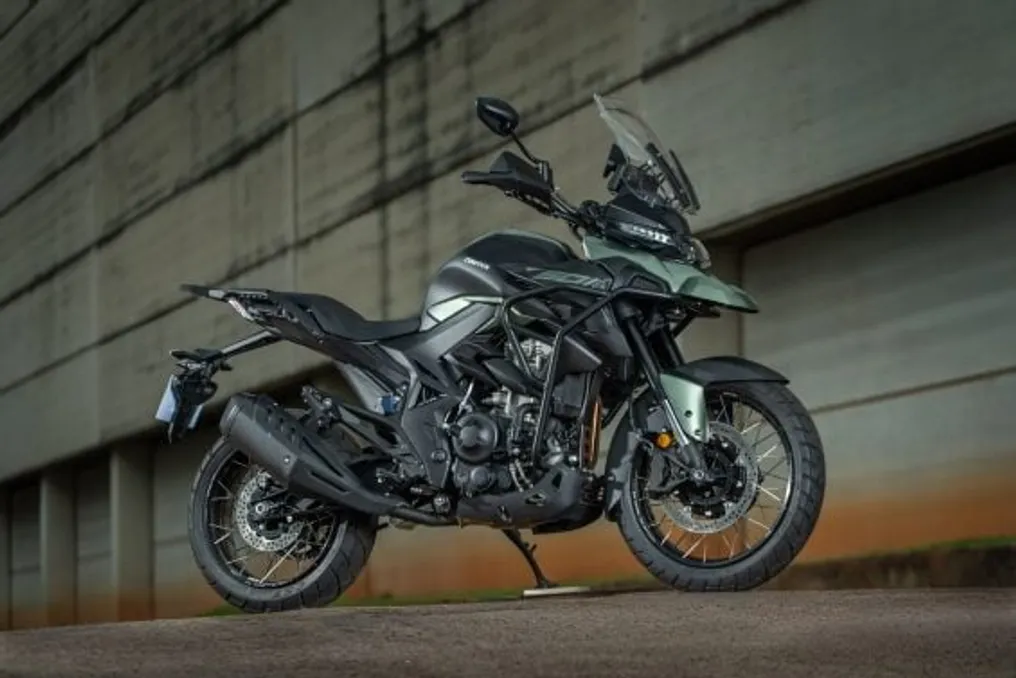
Zontes presented the T501 this Thursday, the 12th, as its new crossover motorcycle, developed specifically to order for the Brazilian market. This new model represents the largest from the brand and has a suggested retail price of R$ 39,970, excluding shipping costs. Sales of this vehicle will begin in December.

The T501 is an update of the T350X, which was introduced to the country in 2024. The brand's representation in Brazil is handled by Grupo J. Toledo, and the Chinese company confirmed that the project development arose from a request by the importer itself.

Demand for a more robust motorcycle

Fernanda Toledo, executive director of Grupo J. Toledo, detailed the origin of the need for a new model. She explained that market demand led to the request for an evolution of the T350x, aiming for a bike with greater capacity for travel, capable of carrying a passenger and luggage, and suitable for those who travel between asphalt and dirt on the same route. Thus, the T501 was created with a special focus on Brazil.

Although it maintains the same design concept as the T350X, the main modifications are concentrated on the overall size, riding ergonomics, exhaust height, and ground clearance, features that reinforce its more adventurous nature.

Technical specifications and performance

The four-stroke single-cylinder engine had its displacement increased from 348 cm³ to 499 cm³. This engine, which operates with DOHC and four valves technology and is liquid-cooled, generates 47.45 hp at 7,500 rpm and produces 4.9 kgf.m at 6,500 rpm, coupled with a six-speed gearbox.

The most significant gain lies in the torque, which increases from 3.3 to 4.9 kgf.m compared to the T350X, promising to facilitate acceleration on highways. The announced top speed reaches 160 km/h. The Dell’Orto electronic injection was adjusted to make the throttle response smoother at low RPMs, and the air filter box received an increase in volume and an elevated intake duct.

In terms of suspension, the front now uses a Marzocchi inverted fork with 150 mm of travel. The rear features a monoshock equipped with a progressive linkage system and spring preload adjustment. This arrangement makes the system more responsive to small imperfections and gradually stiffens during the stroke, which is advantageous on poor surfaces when carrying a passenger and luggage.

The aluminum wheels, with 19 inches in the front and 17 in the rear, have externally fixed spokes on the rims, allowing for the use of tubeless tires. This facilitates the repair of certain punctures in the tread without needing to remove the wheel from the motorcycle.

The braking systems include a 320 mm front disc with a four-piston radial caliper and a 240 mm rear disc with a single-piston caliper. It is possible to disable ABS on the rear wheel (a benefit for off-road) while keeping assistance active on the front.

The exhaust, which was previously on the side, has been repositioned with a low and centralized outlet under the engine. According to Zontes, this change contributes to lowering the center of gravity, keeping heat away from the rider's leg, and creating space for symmetrical side panniers. The declared ground clearance is 195 mm.

The manufacturer assures that the model has been tested on both paved roads and rough roads, ensuring performance on various terrains. However, the technical sheet points to a traditional crossover: the rear tire 160/60R17 is wide and road-oriented in profile, the 150 mm front travel is considered modest for severe off-road use, the ground clearance is 195 mm, and the curb weight reaches 211 kg. Furthermore, the model does not have traction control.

Despite these limitations, the T501 is not considered unsuitable for off-road; it should perform well on light trails, dirt roads, and private access roads, corresponding to the usual use of most buyers in this niche, although it is not classified as a 'super off-road.'

The main differential of the T501 is its balance: it is not excessively large for urban use nor too small for long trips. It has a seat 830 mm from the ground, an upright riding posture, and a fuel tank of 17 liters.

Technologically, the dashboard is TFT, presenting a more agile interface than the T350X and route mirroring functionality. The physical key is third generation, offering greater range and lower battery consumption. The lighting is fully LED. Other features include an electrically adjustable windscreen, handguards, engine protector, USB port, luggage rack, and maintenance reminders on the screen. Missing items are traction control and quick shifter.

Comparison with the competition

Its main competitor is the Honda NX500, which is quoted at R$ 46,260 for the 2027 version, excluding shipping. This difference of R$ 6,290 favors Zontes, being its strongest argument.

The rest of the comparison is more balanced, and in certain aspects, Honda presents advantages. The NX500 uses a 471 cm³ twin-cylinder engine, generating 49.6 hp at 8,500 rpm, but its torque is lower, reaching 4.5 kgf.m at 7,000 rpm, compared to the T501's 4.9 kgf.m at 6,500 rpm.

In terms of electronics, Honda has superiority by offering switchable HSTC traction control and emergency braking alerts, functionalities that Zontes does not include. Both share a TFT dashboard, inverted front suspension, and 19'' and 17'' wheels.

Another positive point for Honda is that the NX500 is an established model, boasting a vast dealership network, a predictable resale value, and a three-year warranty with no mileage limit.

There are also indirect competitors, such as the Kawasaki Versys 300, which is significantly smaller and more focused on the urban environment. The Royal Enfield Himalayan 450 and the Triumph Scrambler 400X are secondary rivals, as they cater to different audiences: the Himalayan aims for purer off-road use, while the Scrambler appeals more to style.

The T501 will be available at dealerships across the network starting in December, in two colors: white and green. There are fewer color options available compared to other models in the Brazilian Zontes line, and currently, there are no differentiated versions or equipment packages.

Honda develops motorcycles focused on women and Generation Z due to the growth of these demographics
Read more
autopapo.com.br

Honda develops motorcycles focused on women and Generation Z due to the growth of these demographics

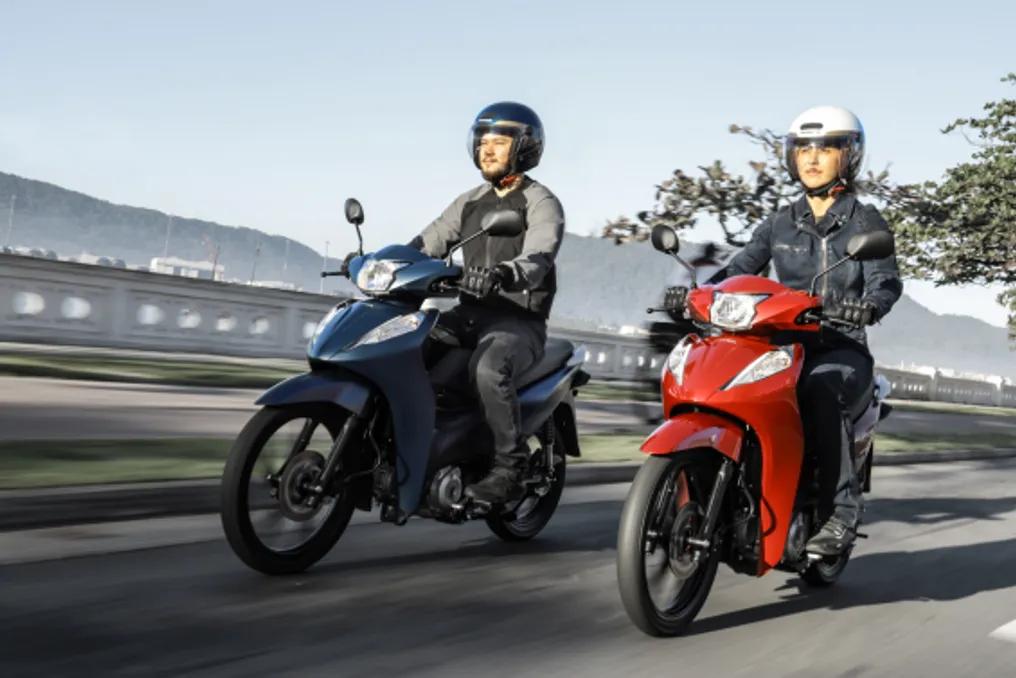
Honda is already developing new motorcycles aimed at serving both the growing female audience and young consumers belonging to Generation Z. This information was disclosed by executives of the Japanese manufacturer during a special press conference celebrating the company's 50th anniversary in Brazil, held on the 4th in Manaus (AM).

The announcement that new products are under study, focusing on these demographic groups, was the highlight of the event. Marcelo Takashi, responsible for Honda Planning, stated that the company is deeply analyzing these audiences not only to meet current demands but also to create a new motorcycle market.

Takashi clarified that, for now, the studies do not involve electric models, and the brand has not provided deadlines, nor specified segments or confirmed which studies will result in final products.

Data shows a significant increase in the number of women licensed in Category A, which jumped from 6.8 million to 10.8 million in the last decade, representing a growth of 58.9%, according to an Abraciclo survey using data from Senatran. Conversely, the advancement among men in the same period was 33.3%.

Despite this growth, women still constitute a minority, representing approximately a quarter of all licensed individuals in the country, which justifies Takashi's mention of the need to 'develop the market itself.'

Regarding young people, surveys conducted by the MAPFRE Foundation indicate that the start of riding practice occurs early in Brazil: 26.5% of motorcyclists started at age 18, and another 27.5% were between 19 and 24 years old, meaning more than half were already riding before the age of 25.

Globally, the number of Category A licensees in Brazil increased by 39% in ten years, rising from 30.7 million to 42.7 million. A survey conducted by Abraciclo associates in 2024 revealed that the moped is the best-selling category for the female public, accounting for 58% of sales, followed by the scooter, with 31%.

Popular