
Israeli specialists will hold a seminar on child rehabilitation in Tashkent
Read more
UzDaily
uzdaily.uz

Israeli specialists will hold a seminar on child rehabilitation in Tashkent

The Embassy of Israel in Uzbekistan announced that Israeli specialists are organizing a training seminar in Tashkent dedicated to modern methods of child rehabilitation, including occupational therapy.

The event is scheduled for November 23 to 26, 2026, and will take place at the Republican Center for Social Adaptation of Children. The organizers are the Embassy of Israel, MASHAV—Israel's agency for international cooperation under the Ministry of Foreign Affairs, and the Republican Center for Social Adaptation of Children.

The seminar will bring together Israeli experts and Uzbek specialists working in the field of child rehabilitation. The program includes theoretical classes and practical training, allowing participants to master professional methodologies and gain knowledge from their Israeli colleagues.

One of the central topics will be occupational therapy, which helps children develop skills necessary for daily life. These skills include independent eating, dressing, maintaining personal hygiene, playing, and learning.

Additional sessions will focus on assessing children's functional abilities, developing key skills, and creating individual therapy plans. Specialists will also examine issues of sensory integration, family support, and coordination among multidisciplinary teams.

These approaches are applied, among others, when working with children with developmental disorders, motor and sensory deviations, cerebral palsy, and autism spectrum disorders.

The goal of this training is to expand the professional competencies of Uzbek specialists and promote the development of rehabilitation services for children with special needs and disabilities. The organizers also hope that the seminar will strengthen the exchange of experience between the two countries in the fields of healthcare and social support.

Similar stories

Uzbekistan to study Turkey's workforce training model for technology parks
Read more
uzdaily.uz

Uzbekistan to study Turkey's workforce training model for technology parks

The Ministry of Preschool and School Education of Uzbekistan announced plans to study Turkey's experience in training specialists for technology parks and special economic zones.

Tashkent, Uzbekistan

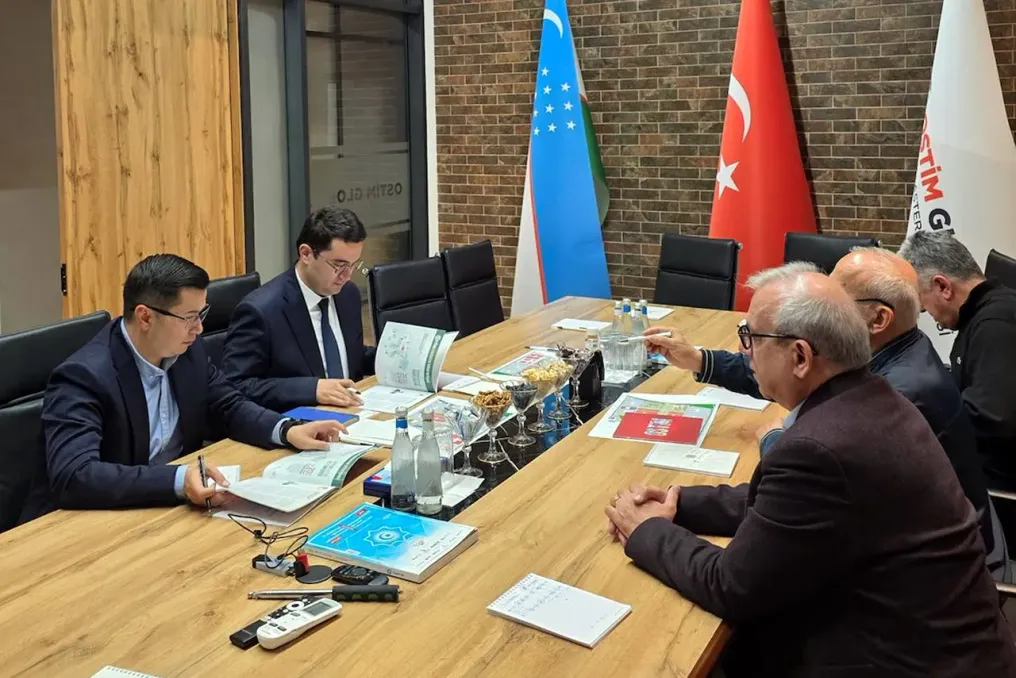
On November 20, 2026, Deputy Minister of Education and Science Sanjar Mirzaliyev met with the chairman of the OSTIM Organized Industrial Zone in Turkey. The parties discussed opportunities for cooperation in the field of vocational and higher education, as well as the training of qualified personnel that meets the needs of technology parks and special economic zones.

In particular, the participants in the negotiations considered the possibility of integrating education with production, training specialists in response to the demands of industrial enterprises, and exchanging experience in these areas.

Following this meeting, an agreement was reached to develop a program for a working group visit to Ankara. The goal of this visit is to move from discussing cooperation possibilities to implementing joint projects.

OSTIM Organized Industrial Zone

The OSTIM Organized Industrial Zone was established in Ankara in 1967 as a cooperative center and received the status of an organized industrial zone in 1997. More than 6,500 small and medium-sized enterprises, seven industry clusters, and OSTIM Teknopark operate on its territory. One of the distinguishing features of this ecosystem is the integration of education and production.

Uzbekistan may train specialists for Swedish companies under a pilot program
Read more
uzdaily.uz

Uzbekistan may train specialists for Swedish companies under a pilot program

The Migration Service of Uzbekistan reported that Uzbekistan and Sweden discussed the possibility of training specialists in Uzbek technical colleges to meet the needs of Swedish companies within an 18-month pilot program.

The negotiations took place in Sweden between an Uzbek delegation led by the Director of the Migration Service, Mukhsinhodjo Abdurakhmonov, and Annika Gottberg, Deputy CEO of the Swedish Migration Agency.

The parties discussed training qualified workers according to the requirements of Swedish employers, expanding opportunities for legal employment, and protecting the rights of workers.

One of the key areas of cooperation within the 18-month pilot program will be the gradual development of ties in the field of labor migration.

Furthermore, the parties considered organizing targeted vocational training and Swedish language courses in Uzbek technical colleges, taking into account the needs of Swedish enterprises. The idea of creating a center for assessing the level of Swedish language proficiency in Uzbekistan was also discussed.

Another topic was the exchange of experience regarding the issuance of work permits, conclusion of employment contracts, and protection of citizens' rights.

After the meeting, both sides expressed interest in continuing the dialogue to implement the pilot program and determine further practical steps.

International vocational education system is being implemented in 45 technical colleges of Uzbekistan
Read more
podrobno.uz

International vocational education system is being implemented in 45 technical colleges of Uzbekistan

The training program in 45 state technical colleges in Uzbekistan will be expanded to include international professional qualifications. It is planned that an additional 3.5 thousand students will join this program in the 2026/2027 academic year, bringing the total number of participants to 5 thousand.

The implementation of this program is carried out by the Agency for Vocational Education of Uzbekistan in cooperation with the British company Pearson. Initially, 1.5 thousand students began training under this system, and now the project will be scaled up to new educational institutions and additional fields of study.

The entire program will cover 79 different fields across six priority sectors. Students will be able to master specialties in areas such as construction, engineering, healthcare, tourism, hospitality business, social assistance, and information technology. Lessons will be conducted in Uzbek, Russian, and Karakalpak languages.

The educational process combines theoretical study of material with practical tasks simulating future professional activities. Upon completion of the training, students will receive a BTEC International Level 3 Extended Diploma, which, according to Pearson, is recognized in more than 70 countries.

The program includes colleges from Karakalpakstan, Tashkent, and all regions of the country. Among the mentioned institutions are Nukus City Technical College No. 1, Samarkand City Technical College No. 1, Chirchik City Technical College No. 1, Fergana City Technical College No. 4, Bukhara City Technical College No. 1, and Chilanzar District Technical College No. 1. Additionally, specialized medical educational institutions are included in the project.

To ensure the quality of education, over 380 vocational education teachers have been trained. Over the course of one week in Tashkent, they studied knowledge assessment methods, conducting practical classes, and pedagogical methodologies.

Participation in the project requires meeting several conditions: before the start of classes, each college must obtain approval from Pearson. This check includes assessing the existing qualifications of teachers, the availability of necessary educational materials, and quality control systems. Only after this can students be registered for the relevant educational courses.

The expansion of this project is part of the implementation of the 'Uzbekistan-2030' strategy for modernizing the vocational education system. In subsequent years, there are plans to increase the number of colleges and students involved in the program.

Previously, there was information about plans to transfer some vocational colleges to the management of large entrepreneurs for a period of 15 years. These institutions would be required to train personnel capable of starting work immediately after graduation, with an annual training target of at least 30 thousand people.

Popular