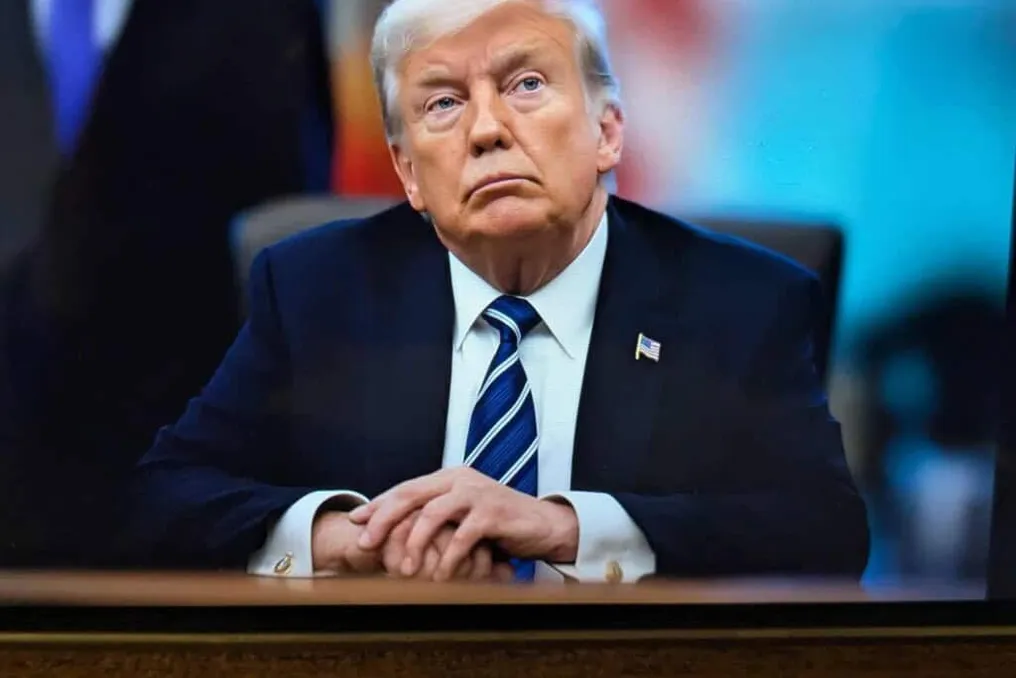
The United States President, Donald Trump, stated on Monday, the 23rd, that China might attempt to hire Jensen Huang if the executive was not reinstated to the CEO position at Nvidia. This statement was made during an interview given to CNBC, where Trump detailed the importance of ensuring the businessman's return to the leadership of the chip manufacturer.
According to the president, the prospect of Huang working for a Chinese corporation influenced his analysis of the case. Trump revealed that he had spoken, directly and indirectly, with members of the Nvidia board, and that he acted to persuade the group to readmit the executive. The final decision was communicated by the company in less than two weeks after his departure.
During the conversation with CNBC, Trump reiterated that China could seek to recruit Jensen Huang if he remained outside of Nvidia. He specifically mentioned Huawei as a Chinese company that might try to attract the executive. Trump also speculated about the reaction of Xi Jinping, the Chinese president, to Huang's departure, suggesting that Beijing might opt for a direct hiring rather than using spies.
Trump commented on China's capability, stating: 'I know how good, professional, and shrewd China is.' He then imagined a response from Xi, saying: 'We don't need to worry about all this stuff. We don't need spies. Let's hire Jensen.' The president also warned that the loss of the executive would constitute a risk to the United States, thus defending the choice to bring Huang back to Nvidia.
In another part of the interview, Trump described a possible Chinese approach to the businessman, such as China arriving and asking: 'Hey, Jensen, how about coming to China?' He added that Huang could travel to the country and receive any type of requested benefit.
In the same meeting, Trump took an active role in the negotiations preceding Huang's return. He assured CNBC that he spoke with the members of the Nvidia board and convinced them to make the decision, declaring: 'I talked to them, let's put it this way. And I convinced them. I made the deal.' The president also informed that the board requested guarantees regarding potential national security risks involving Huang, and that the government provided the information and ensured what was necessary for the company to consider the executive's return safe.
In an official statement, Nvidia clarified that the board received data from high-ranking officials of the United States government. Based on this data, the group concluded that reinstating Huang posed no threat to national security.
Trump also reported calling Huang after finalizing discussions with the board, at which time he only asked the executive to continue working hard, indicating that he would know what was appropriate to do.
Huang had left Nvidia's leadership after confessing to having betrayed his wife. This episode gained notoriety due to allegations that his relationships involved an alleged Chinese spy, identified as Alice Huang, and two collaborators from the chip manufacturer. Suspicions linked to Alice Huang and her activity as an executive at Megaspeed, based in Singapore, raised concerns about a possible diversion of advanced Nvidia semiconductors to China.
Although Trump defended that Jensen Huang had done nothing wrong, the decision to bring him back faced criticism from legislators. Chuck Schumer, leader of the Democratic minority in the Senate, expressed the party's intention to investigate any irregularities involving the Trump administration, Huang, and other Nvidia directors, should they gain control of Congress next year.
Additionally, the executive is scheduled to testify before three House committees in private meetings scheduled for December 1st. There is also a public hearing planned in the Senate Banking Committee, although the date has not yet been set.