Ombudsman of Uzbekistan met with US Ambassador in Tashkent
Read more
UzDaily
uzdaily.uz

Ombudsman of Uzbekistan met with US Ambassador in Tashkent

The Ombudsman for Business Affairs of Uzbekistan held a meeting with US Ambassador Jonathan Henick during the fifth International Forum on Business Integrity, which took place in Tashkent.

During the conversation, the parties discussed the development of cooperation in the fields of trade, economy, and investment, as well as the conditions for implementing joint projects and legal guarantees for protecting entrepreneurs and investors.

The Ombudsman for Business Affairs emphasized the critical importance of reliable protection of the rights and legitimate interests of investors operating in Uzbekistan.

The meeting was also dedicated to issues of interaction between the office of the Ombudsman for Business Affairs and the US Embassy. The parties considered the possibility of studying the experience of the National Ombudsman's Office at the U.S. Small Business Administration regarding the protection of entrepreneurs' interests and the improvement of state regulation mechanisms.

Furthermore, the participants discussed potential opportunities to establish direct dialogue with representatives of American businesses, exchange practical experience, and expand cooperation to strengthen investor confidence and improve the business climate in Uzbekistan.

Similar stories

Expansion of Artificial Intelligence Infrastructure Creates Pressure and Affects Other Economic Sectors
Read more
olhardigital.com.br

Expansion of Artificial Intelligence Infrastructure Creates Pressure and Affects Other Economic Sectors

The rapid expansion of artificial intelligence (AI) infrastructure is stimulating the United States economy; however, this competition for essential resources such as labor, equipment, energy, and capital has generated negative impacts on various other economic segments.

This phenomenon, termed 'crowding out' in economics, describes a situation where the high concentration of resources in a specific area decreases the availability of those same resources for other industries. In the current context, the construction of data centers and the advancement of AI infrastructure are consuming a growing share of available resources.

Jonathan Pingle, an economist at UBS, informed The Wall Street Journal that the growth of AI was responsible for more than half of the economic expansion observed in the United States last year.

The magnitude of investments is a key factor in understanding this impact. Stijn Van Nieuwerburgh, an economist at Columbia University (USA), projects that about US$ 1.3 trillion (equivalent to approximately R$ 7.1 trillion) will be allocated to AI infrastructure in the United States by 2026.

Furthermore, large financial transactions are taking place; American companies involved in AI infrastructure issued US$ 212 billion (about R$ 1.2 trillion) in stocks until October, according to data provided by S&P Global Market Intelligence.

The financial market is also being influenced by this race. To date, five technology giants—Alphabet, Amazon, Meta, Microsoft, and Oracle—have issued US$ 277 billion (approximately R$ 1.5 trillion) in debt this year, according to Fitch Ratings. This amount exceeds the US$ 108 billion (about R$ 594 billion) recorded by these corporations throughout the previous year.

Analysts express concern over this concentration of operations, as it could increase instability in the debt securities market. Data from Dealogic and Goldman indicates that AI-related issuances represented approximately one-fifth of all such transactions in 2026, compared to about one-tenth in 2025. If investors lose confidence in this financing, companies in other sectors may face higher costs to obtain loans or renegotiate debts.

Building data centers requires much more than just chips and servers; such facilities need gas turbines, transformers, circuit breakers, batteries, and cooling systems to operate. As tech companies are willing to pay higher prices for these components, energy providers have found it difficult to secure their own supplies.

The industrial sector seeks to increase its productive capacity to meet demand, but there is uncertainty about the duration of the current pace of data center construction. This uncertainty leads manufacturers of large equipment, such as gas turbines, to adopt a more cautious stance when expanding their activities.

Competition has also extended to the labor market. Public utility companies and other segments are competing with data centers for specialized professionals, especially in areas where these facilities are highly concentrated. In Loudoun County, Virginia, USA, this dispute is notably fierce.

Rodney Baker, general manager of M.E. Flow, a company dealing with electrical, heating, cooling, and plumbing installations, reported that data centers are attracting experienced employees by offering superior salaries, fixed schedules, and more attractive benefits.

To address this personnel shortage, the company implemented a professional training program.

The real estate sector may be one of the most affected by the expansion of AI infrastructure. Data centers use many of the same materials, equipment, and professionals needed to build homes and apartments. Although investments in data processing facilities have grown substantially since the end of 2023, spending on new residential construction, whether single-family or multi-family, has shown a retraction.

Another factor that could worsen the situation is the interest rate. Jonathan Pingle, from UBS, points out that AI investments are strengthening the American economy but simultaneously contributing to inflationary pressures, mainly due to the increased cost of components and equipment.

This scenario may strengthen the arguments for the Federal Reserve (Fed), the central bank of the United States, to maintain a more restrictive monetary policy or raise interest rates. The expectation of higher rates is already putting pressure on mortgage rates, decreasing demand for properties in a market that was already facing difficulties.

The economist considers this movement atypical, given that the real estate market usually shows greater dynamism during periods when the Fed raises interest rates. In Pingle's analysis, U.S. monetary policy could make the recovery of an already fragile sector even more challenging.


BYD reduces Shark price by R$ 45 thousand, bringing it closer to the Fiat Titano
Read more
autopapo.com.br

BYD reduces Shark price by R$ 45 thousand, bringing it closer to the Fiat Titano

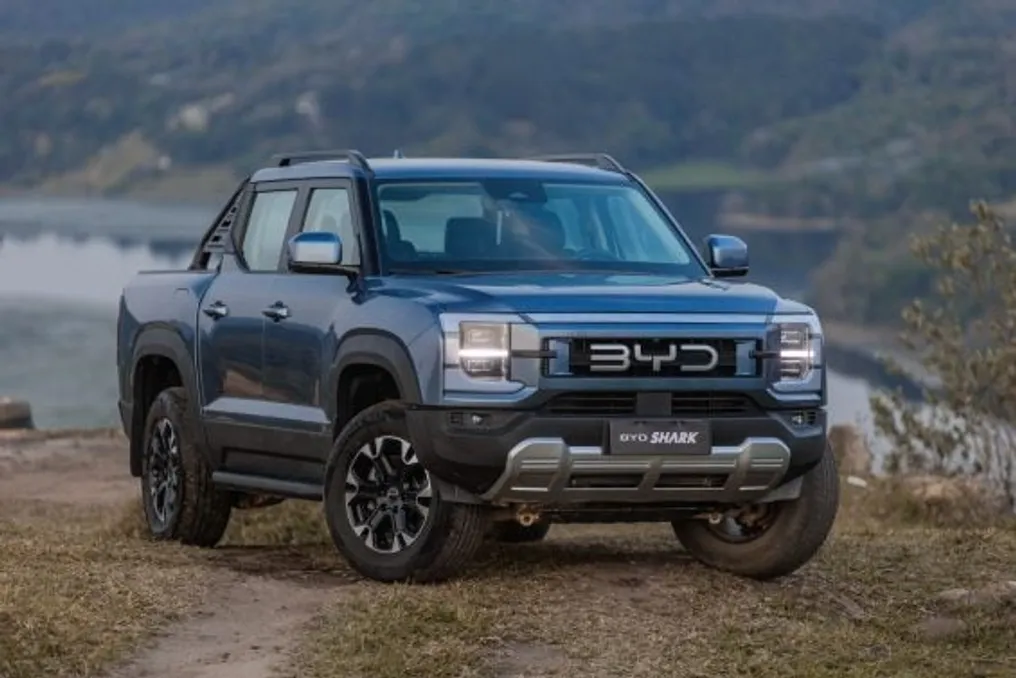
BYD implemented a discount of R$ 45 thousand on the Shark pickup truck to boost its sales in the Brazilian market. During the November campaign, the price of the plug-in hybrid model was adjusted from R$ 344,990 to R$ 299,990. This offer is valid only until the 30th and is restricted to individuals (CPF).

With this reduction, the Shark now costs only R$ 8 thousand more than the diesel Fiat Titano Ranch, which costs R$ 291,990. The discount aims to revitalize sales, which have not shown expected growth.

October data shows that the Shark registered only 63 registrations, according to the National Federation of Automobile Distributors (Fenabrave). In comparison, the Toyota Hilux, which leads the mid-size pickup segment, achieved 3,569 units, a volume 57 times greater.

Even the Ram 1500, a larger and more expensive pickup, sold more units, totaling 135. Analyzing the period from January to August, the Shark accumulated 455 units, representing a monthly average of 57. However, only in October did the Hilux sell almost eight times what the BYD pickup managed to sell in eight months.

This sales pace is below the performance recorded in 2025, when the Shark achieved 1,133 registrations for the full year. Furthermore, the pickup's performance contrasts with the rest of the BYD brand; in October, BYD sold 24,114 vehicles, with the Shark accounting for less than 0.3% of that total.

Technically, the Shark is equipped with a 1.5-liter turbocharged gasoline engine that generates 183 hp and 26.5 kgfm, complemented by two electric motors. The front motor provides 231 hp and 31.6 kgfm, while the rear delivers 204 hp and 34.7 kgfm. The combined power reaches 437 hp and 66.3 kgfm.

The Blade battery, with a capacity of 29.6 kWh, allows for 57 km of purely electric range, according to Inmetro. In terms of dimensions, the pickup has a length of 5.46 meters and a wheelbase of 3.26 meters. Its bed accommodates 1,200 liters, although its load capacity is limited to 790 kg, falling short of the approximately 1,000 kg offered by the Hilux and Ranger.

Standard features include dual-zone air conditioning, a 10.25-inch digital panel, a 12.8-inch rotating multimedia center, and leather seats with electric adjustments. In terms of safety, the vehicle has six airbags and driver assistance systems (ADAS), such as adaptive cruise control and automatic emergency braking.

Railway passenger traffic will reach pre-pandemic levels and exceed 820 billion in the current fiscal year
Read more
timesofindia.indiatimes.com

Railway passenger traffic will reach pre-pandemic levels and exceed 820 billion in the current fiscal year

According to a high-ranking ministry official, railway passenger traffic is expected to reach pre-pandemic levels, around 800 billion by March 2027. Furthermore, freight transport is projected to reach an all-time high.

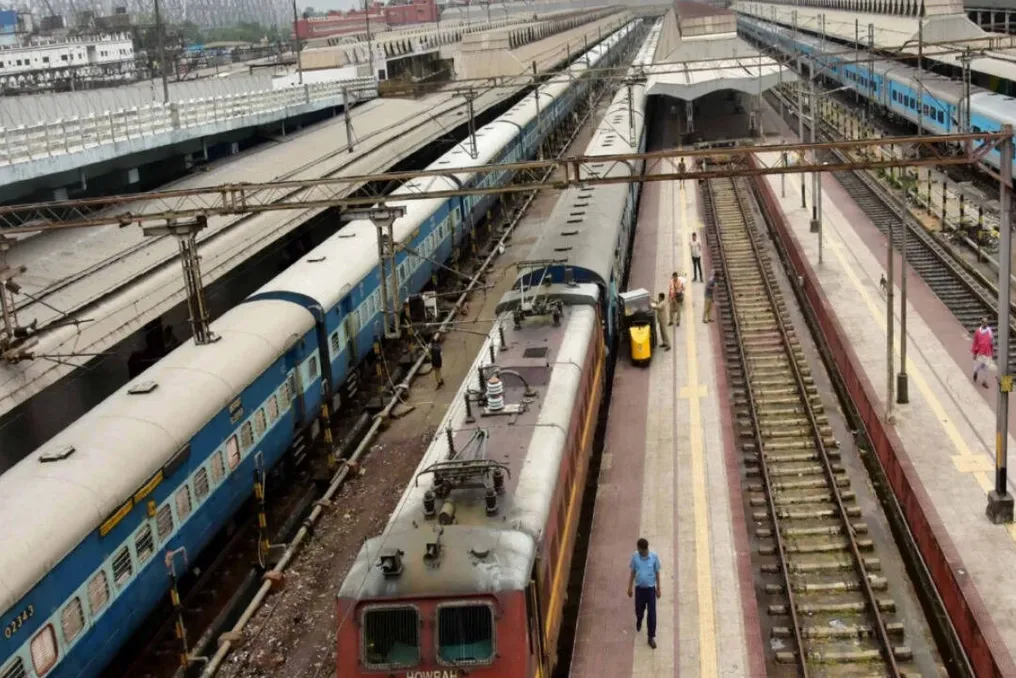
In 2019-20, railways transported 808.6 billion passengers, and according to forecasts, this figure is likely to be around 820 billion in the current year. The official noted that significant attention is being paid to increasing the number of trains and improving passenger conditions. Over the past five years, about 2,500 new passenger trains have been introduced to meet growing demand and expand transport accessibility.

The Ministry of Railways emphasized service expansion during the festive season, reporting that approximately 18,000 additional trains were launched this year during Durga Puja, Diwali, and Chhath. These extra services carried nearly 20 billion passengers, which is 8% more than in the corresponding festive period last year.

Additionally, officials highlighted the railways' efforts to increase their share in the country's freight transport market. This is being achieved through diversifying the cargo basket and implementing measures to attract more goods into the rail network. As one official stated, the share of goods transported by rail has increased from approximately 27% to almost 30%, with an emphasis on expanding the range of goods transported by the national carrier and improving logistical efficiency.

Popular