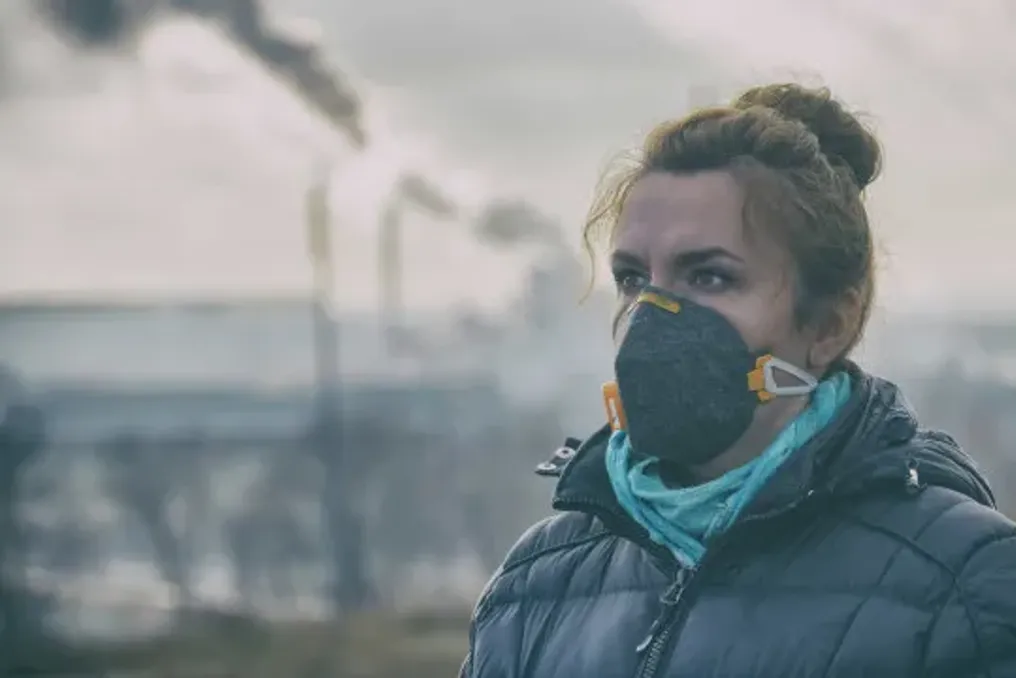
Exposure to air pollutants may be linked to 222,000 premature deaths in the European Union in 2024
Read more
Noticias ao Minuto
noticiasaominuto.com

Exposure to air pollutants may be linked to 222,000 premature deaths in the European Union in 2024

A recent estimate published by the European Environment Agency (EEA) indicates that around 222,000 individuals may have died prematurely in 2024 due to continuous exposure to fine particulate matter (PM2.5).

PM2.5 are defined as small solid or liquid particles suspended in the air, primarily generated by the burning of fossil fuels in motor vehicles and general industrial processes.

According to the analysis released by the EEA, these projected deaths result from prolonged exposure to the main atmospheric pollutant that exceeds the limits set by the World Health Organization (WHO).

Although the estimate refers to 2024 data, it corroborates a downward trend in the number of premature deaths across the entire European Union (EU) caused by fine particulate pollution.

Between 2005 and 2024, there was a 57.2% decrease in premature deaths in the EU attributed to PM2.5 concentrations above the level recommended by the WHO, which is five micrograms per cubic meter.

The EEA emphasizes that this progress puts the EU on a favorable path to meet the goal of the EU2030 action plan, which aims to reduce premature deaths from air pollution by 55%. However, the agency warns that additional actions are necessary to achieve the 2050 target, ensuring safe pollution levels for human health.

The EEA's investigation signals that countries located in Eastern and Southeastern Europe are those facing the greatest health damage due to high levels of air pollution.

The observed reduction is credited to several implemented policies, which contributed to a 42.5% decrease in total primary PM2.5 emissions (those emitted directly into the atmosphere) between 2005 and 2024.

Specifically, emissions from residential heating, which constitutes the largest source of primary PM2.5, fell by 35.1%. There were also notable drops in the other two main emitting sectors: transport, with a reduction of 61.5%, and industry, with 47.3%.

Precursor gas emissions, responsible for the formation of secondary PM2.5 in the atmosphere, also showed a significant decline: 85.7% for sulfur dioxide (SO2), 54.3% for nitrogen oxides (NOx), and 18.0% for ammonia (NH3).

The EEA stresses that, in addition to direct effects on conditions such as asthma, fine particles aggravate other diseases, including ischaemic heart disease and lung cancer.

Additionally, the EEA clarifies that the estimated increase in the number of premature deaths in 2024 and other years is due to an update in the methodology used to make the estimates.

Similar stories

Oceania Residents Live in the World's Cleanest Air Region, Free from Air Quality Worries
Read more
www.aajtak.in

Oceania Residents Live in the World's Cleanest Air Region, Free from Air Quality Worries

In major cities such as Delhi, Noida, Gurugram, Faridabad, and Mumbai, residents often start their mornings by checking the Air Quality Index (AQI). Before leaving home, they look for masks and hear reports of school closures or shifts to hybrid learning due to toxic air. Today, this has become a bitter reality for these metropolises.

However, not the entire planet lives under constant stress due to the AQI. There is a vast and picturesque region on Earth where the concepts of 'smog' or 'air purifier' are simply absent from the residents' lexicon. This region is Oceania, stretching into the Pacific Ocean and most of the Southern Hemisphere, including island nations like Australia, New Zealand, and French Polynesia. This is where the area with the cleanest air in the world is located. For local residents, air is not just a necessity for survival, but a tangible feeling of purity and freshness.

Analyzing the Global Air Quality Report presents a very interesting picture. While in Indian cities like Delhi and Mumbai, as well as in Lahore, Pakistan, and several regions of China, PM2.5 levels exceed the World Health Organization's (WHO) safe limits by several times, Oceania demonstrated the best air quality situation in the world last year.

Approximately 61 percent of cities in this region meet strict WHO air quality standards. In places like French Polynesia, the average annual PM2.5 level was only 1.8 micrograms per cubic meter, corresponding to an AQI of about 10—one of the cleanest indicators in the world. Nevertheless, there are local issues in different areas; for example, in some parts of Australia, people face discomfort due to wildfires, dust, and seasonal pollution.

For the residents of Oceania, the question of the current AQI is as foreign as breathing is to us. The history of how this region, situated among oceans, became an 'oxygen hub' is also curious. The clean air here is largely determined by natural factors. In these islands and coastal countries spread across the vast Pacific Ocean, there is no suffocating noise from heavy industry, coal-fired power plants, or millions of cars moving slowly on narrow roads.

Thanks to being surrounded by endless sea, fresh sea breezes blow year-round, preventing pollutants from settling in one place. Furthermore, the population here is small, and settlements are distributed over large areas, which reduces the environmental load. In Oceania countries, especially near the coast, mornings begin with the smells of fresh fruits and vegetables from markets, cool sea air, and birdsong. People lead their lives near open houses, beaches, and green forests.

Children play in open areas without fear or masks, and the elderly do not fear serious respiratory illnesses in cold weather. Although there are also minor challenges with energy and waste management in the large cities of this region, in terms of air quality, it is the safest place on the planet.

To keep their air clean, the countries in this region enforce a number of strict laws. Environmental protection legislation in Australia, New Zealand, and many Pacific islands is extremely stringent. Many cities and island administrations have introduced strict rules prohibiting open burning of waste. Strict environmental standards are also set for new projects.

Australia has set a goal to generate 82% of its electricity from renewable sources by 2030, while New Zealand is working to improve its waste recycling system. These countries are actively transitioning to using renewable energy sources such as solar, wind, and hydropower. Rapid steps are also being taken to promote electric vehicles.

The clean and healthy lifestyle in Oceania serves as an important lesson for the rest of the world. The IQAir report shows that only 14 percent of the world's cities meet WHO safety standards. The fact that Oceania ranks at the top of this list does not mean that every country must be located by the sea. The real lesson is that if clean air is a gift of nature, then the responsibility for preserving it also lies with us.

Pollutant emissions in the EU decreased by 0.5% in the second quarter compared to the previous period
Read more
noticiasaominuto.com

Pollutant emissions in the EU decreased by 0.5% in the second quarter compared to the previous period

According to Eurostat data, greenhouse gas (GHG) emissions in the European Union (EU) economy decreased by 0.5% in the second quarter, reaching 833 million tons compared to the previous period.

Concurrently, the EU statistical office noted that the EU's gross domestic product increased by 0.8% in the second quarter, although this office does not publish comparable data in its bulletin.

The energy, gas, steam, and air conditioning sectors contributed most significantly to the reduction in emissions (a decrease of 0.44 percentage points), followed by households (a decrease of 0.22 pp) and transport and storage (a decrease of 0.01 pp).

Nevertheless, this decrease was partially offset by an increase in emissions from other economic sectors (an increase of 0.14 pp), mainly in the service sector, as well as in manufacturing (an increase of 0.05 pp).

From April to June, GHG emissions decreased in 18 member states, including Portugal; meanwhile, they increased in eight countries, and remained stable in Germany.

The most significant drop in emissions was recorded in Estonia (a decrease of 15.5%), Lithuania (a decrease of 10.6%), and Finland (a decrease of 7.6%), while Portugal registered a reduction of 0.5%.

According to Eurostat estimates, the main increases in GHG emissions were observed in Malta (an increase of 4.8%), Ireland (an increase of 1.0%), and Romania (an increase of 0.8%).

European Union remains on track to achieve the 55% greenhouse gas emission reduction goal
Read more
noticiasaominuto.com

European Union remains on track to achieve the 55% greenhouse gas emission reduction goal

The European Union (EU) maintains its course toward achieving climate goals by 2030. According to a report published in Brussels today, equivalent greenhouse gas (GHG) emissions decreased by 1.6% in 2025.

In accordance with the 'Trends and Forecasts in Europe' report by the European Environment Agency (EEA), despite a slowdown in the rate of net GHG emissions reduction in 2025, the EU's mitigation plans and national plans remain on track to meet the target of a 55% net reduction by 2030.

Emissions covered by the EU Emissions Trading System (EU ETS) decreased by approximately 2% in 2025. Meanwhile, emissions in sectors regulated by the Effort Sharing Regulation remained globally stable, and preliminary data indicates an improvement in terrestrial carbon uptake in the EU.

In 2025, emissions were at a level 39% below 1990 levels, while the EU economy grew by 74% over the same period, according to data from Brussels.

However, the EEA warns that to achieve this emissions reduction goal, reductions in sectors regulated by the Effort Sharing Regulation must collectively match those achieved over the previous two decades within the next five years.

The Agency emphasizes the need to improve progress in the transport sector, as well as in end-use sectors such as buildings and agriculture.

The annual carbon market report also concludes that revenues from the EU ETS increased by 43.2 billion euros in 2025, representing an 11% growth compared to 2024.

Popular