Bernstein raises Nvidia stock rating to 'outperform' after Jensen Huang's return
Read more
Business Standard
business-standard.com

Bernstein raises Nvidia stock rating to 'outperform' after Jensen Huang's return

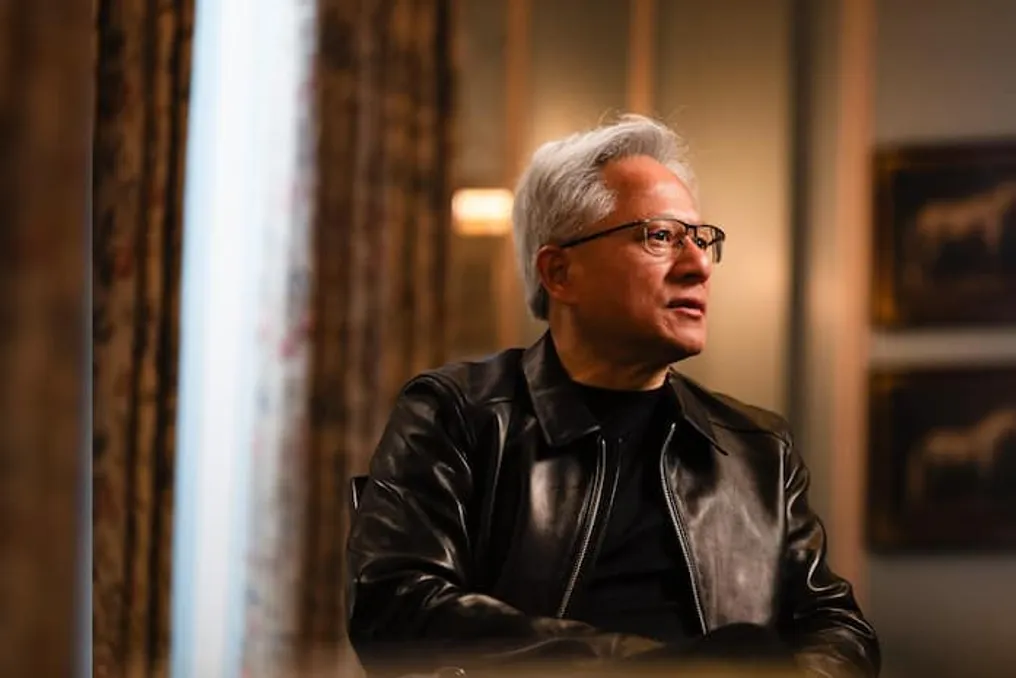
After the company's board of directors reinstated Jensen Huang as CEO, Nvidia shares were upgraded by analysts at Bernstein to 'outperform'. This decision followed rumors of Huang's dismissal, which had caused Nvidia's value to drop by over a trillion dollars in a month, with shares plummeting by 14 percent in one session.

Bernstein analysts, including Stacey A. Rasgon, Arpad von Nemes, and Alik Shaw, raised the rating on Nvidia stock to 'outperform'. Following this, the stock price rebounded by more than 30 percent in pre-market trading, and the NASDAQ technology index rose by nearly 7 percent.

Eleven days ago, Bernstein had downgraded Nvidia stock to 'Market Perform' due to the possibility of Huang leaving the company because of his conduct. However, in the new report, Bernstein stated: 'Since we maintain a positive view on the fundamental basis of AI development, and with Jensen returning to his post, we are upgrading the rating back to outperform today (as his departure was the main reason for the downgrade)'.

The Bernstein analytical note also noted: 'Nevertheless, the current valuation, with Jensen at the helm, seems sufficiently supportive for now. We will maintain our target price at $200 (approximately 10 times our average EPS for the 2028/2029 fiscal year), which, in our opinion, reflects significant downside potential. We are upgrading to Outperform.'

Furthermore, Nigel Green, CEO of deVere Group, a global consulting firm with approximately $12 billion in assets under management, believes that Huang's reinstatement sends a strong signal to the markets. He predicts that the stock could double from current levels. Green stated: 'I believe Nvidia can double from here. Washington wanted to bring Huang back, and this move has White House fingerprints on it; he brought him back. The White House put significant pressure on the board of directors, and the message is crystal clear. America needs Jensen Huang leading Nvidia and, consequently, the entire AI industry. His return gives him more control than ever. He has the support of the board of directors, the US President, and the market, and this is a phenomenal platform to take Nvidia to the next level.'

Despite reports that Huang is still undergoing closed hearings before three House committees on December 1 regarding Nvidia chips and export controls, Green believes that the support he received from Washington puts him in a dominant position.

Similar stories

Jensen Huang reinstated as CEO of Nvidia after scandal
Read more
techcentral.co.za

Jensen Huang reinstated as CEO of Nvidia after scandal

Nvidia shares rose significantly in pre-market trading in New York on Monday following the announcement of Jensen Huang's return. This reversal came less than a week after the board of directors publicly ruled out his return.

Chairman of the board, Harvey Jones, stated during the company's earnings conference call on November 17 that the Nvidia board had unanimously accepted Huang's resignation and did not intend to reinstate Jensen as CEO.

However, on Monday, the board announced that it was satisfied with Huang's integrity and leadership capabilities, and that after receiving information from high-ranking US government officials, he saw no national security threat in his return.

Huang founded Nvidia in 1993 and transformed the company from a video game chip developer into a leading provider of artificial intelligence processors. He resigned on November 12, concluding a 33-year tenure, with CFO Colette Kress taking over as interim CEO. Initially, it was unclear what role Kress would play.

Huang admitted in a memo to employees on November 8 that he had been disloyal to his wife. The New York Times reported that he had a relationship with Alice Huang, a former executive at Singapore's Megaspeed, who was unrelated to him and whom US authorities designated as a Chinese intelligence asset. China's Ministry of Foreign Affairs called these allegations 'unfounded.' The newspaper later reported that he also had ties to Kimberly Powell, Nvidia's VP of Healthcare, who reported to him.

This scandal led to a loss of about $430 billion in Nvidia's market capitalization over two trading days, amid claims that these relationships helped deliver at least $7.5 billion worth of Nvidia chips to China. At one point, the chip maker lost about $800 billion in market value since the news broke.

The campaign for Huang's swift return gained support. Over 180,200 people signed a petition, Elon Musk supported the effort, and US President Donald Trump stated he was not against Huang's reinstatement. The Financial Times reported that Huang had discussed a possible return with his confidants, and that allies were assembling a 'war room' of Silicon Valley executives to lobby on the issue. Huang stated on November 17 that he would be 'readied' to lead Nvidia again.

The company held up in his absence

The company's business was able to function in his absence. Nvidia reported third-quarter revenue of $115.8 billion, which is 103% higher than the previous year, and forecasts fourth-quarter revenue of around $130 billion, exceeding Wall Street projections. According to the FT, the board also approached Rene Haas, CEO of chip developer Arm Holdings, as a potential successor.

Questions regarding the affair have not disappeared. US intelligence agencies continue to investigate the extent of Alice Huang's connection to the Chinese Ministry of State Security and what information she might have passed to Beijing, Reuters reported last week.

Nvidia shares fall 12% at opening after Jensen Huang's resignation
Read more
olhardigital.com.br

Nvidia shares fall 12% at opening after Jensen Huang's resignation

Jensen Huang's immediate resignation from Nvidia's leadership resulted in a drop of up to 12% in the company's shares at the opening of the American market on Thursday. This event also generated instability in the technology sector and pressured major Wall Street indices.

Around 10 am New York time, securities continued to decline, losing more than 6% after a partial recovery. The founder's departure occurs during a crucial period for the artificial intelligence (AI) industry, especially considering the expected IPO of Anthropic in the following week.

In the absence of a formal succession plan, Nvidia appointed its long-time chief financial officer to assume provisional leadership. This change followed a series of reports about Huang's personal life, which involved a relationship with a subordinate executive and an affair with Alice Huang, described as a supposed Chinese spy.

The executive himself confirmed on Sunday that he had been unfaithful to his wife. This admission came after the Financial Times published an article on Saturday about an alleged extramarital affair. A source cited by NBC News suggested that the woman involved could be a Chinese spy, although this allegation has not been confirmed as fact.

The repercussion of these news coincided with a sharp devaluation of Nvidia's shares. The company registered a loss of approximately US$ 830 billion (equivalent to about R$ 4.61 trillion) in market value, falling below US$ 4 trillion (R$ 22.2 trillion), a level not seen since 2025.

The company's importance in the sector was highlighted by Huang in a Bloomberg interview in October, when he stated: 'We are probably the only AI company in the world that works with all the AI companies in the world.'

The crisis also raised concerns about possible restrictions on the semiconductor sector. Huang, who was close to President Donald Trump, led a corporation whose activity is seen as essential for the advancement of artificial intelligence.

Prior to the executive's departure, JPMorgan analysts had already warned about the growing risk of more restrictive regulations for shipping chips to China, including indirect routes. The bank maintains the expectation that Nvidia's team will maintain its leading position in the segment but warned that operational failures could generate new problems.

Market pressure was intensified by Nebius' results. The cloud computing startup exceeded financial expectations, but its projections ultimately disappointed investors, causing its shares to fall almost 20%. Simultaneously, competitor CoreWeave retreated 10% after a strong rise recorded on Wednesday.

The performance of these two companies reflects apprehension about the costs of infrastructure necessary for AI development. Building data centers demands tens of billions of dollars, while uncertainty persists about when investments in systems, equipment, and processing capacity will begin to yield returns.

This scenario gains greater relevance with the expectation that Anthropic will conduct its Initial Public Offering (IPO) the following week, with the potential to exceed US$ 1 trillion (R$ 5.55 trillion).

On Thursday, the technology sector showed the worst performance among S&P 500 segments. The negative pressure also affected major indicators of the American market and its component suppliers.

Popular