American YouTuber discovers broken timing belt in Chevrolet Trailblazer engine
Read more
AutoPapo
autopapo.com.br

American YouTuber discovers broken timing belt in Chevrolet Trailblazer engine

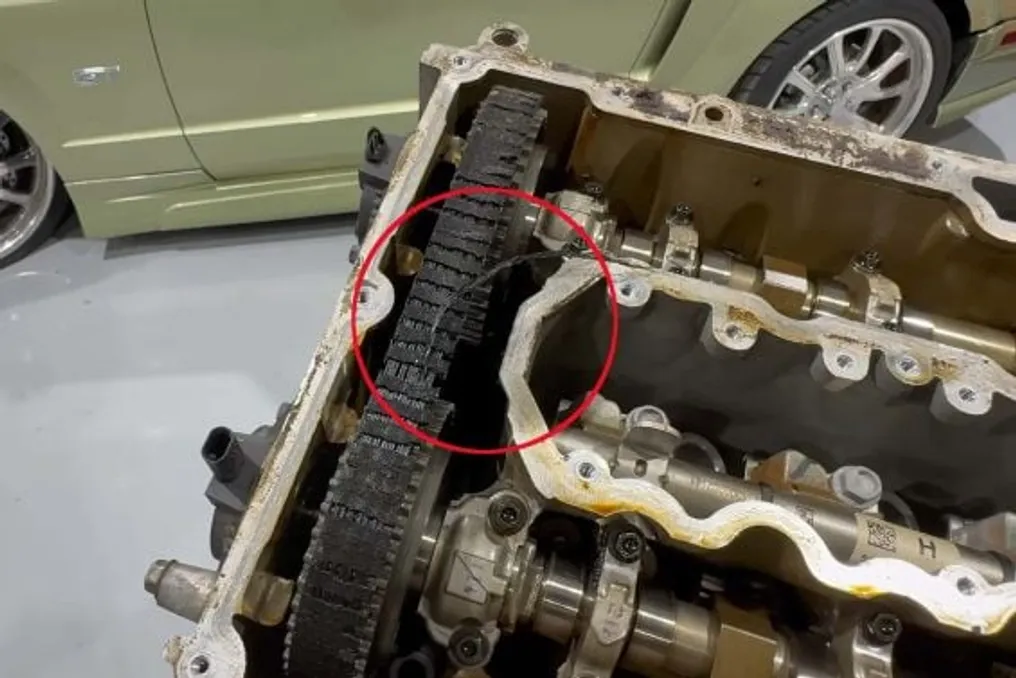
An American YouTuber disassembled the 1.2 turbo engine of a Chevrolet Trailblazer and discovered a problem that many owners of the Onix and Tracker fear: the oil-lubricated timing belt was found to be torn into pieces.

The video was published on the I Do Cars channel on the 15th and has already garnered over 470 thousand views. The vehicle examined was a 2021 Trailblazer with approximately 135 thousand kilometers on it.

Upon opening the engine, the presenter saw that the belt was destroyed, and three cylinders showed bent valves and deep marks on the camshafts. The belt fibers clogged the sediment filter that cleans the oil entering the pump, effectively disrupting the lubrication process.

This three-cylinder 1.2 turbo engine, producing 139 hp, is used in various GM SUVs in the USA. It belongs to the same family of 1.0 and 1.2 turbo engines used in Brazil in models such as Onix, Onix Plus, Tracker, Montana, and Sonic, all of which use oil-lubricated belts.

Replacement intervals are similar: US guidelines recommend replacement every 150 thousand miles (approximately 241 thousand km) or every 15 years, whereas the recommendation in Brazil is 240 thousand km or 15 years.

However, the YouTuber refrains from definitively condemning the engine, as this was the first unit he inspected, and the history showed that the car had undergone repairs before the incident, which might indicate that the engine had already been replaced.

Nevertheless, he advises against waiting until the mileage specified in the manual is reached before checking the belt. Owners of the Onix and Tracker in Brazil have reported belt failures significantly earlier than the prescribed period. GM attributes these failures to the use of non-specification oil, which damages the material of the part.

In November 2024, Chevrolet extended the warranty on the belt to 240 thousand km provided maintenance was performed through the official network. After that, the company began restoring coverage for those serviced outside the network: if the belt is fine, the dealer changes the oil for 660 Brazilian reais; if not, they replace the part for 700 Brazilian reais. In the 2026 lineup, the Onix and Tracker started using a reinforced belt from a different supplier.
Similar stories

Chevrolet launches pre-sale of plug-in hybrid Captiva with starting price of R$ 199,990
Read more
autopapo.com.br

Chevrolet launches pre-sale of plug-in hybrid Captiva with starting price of R$ 199,990

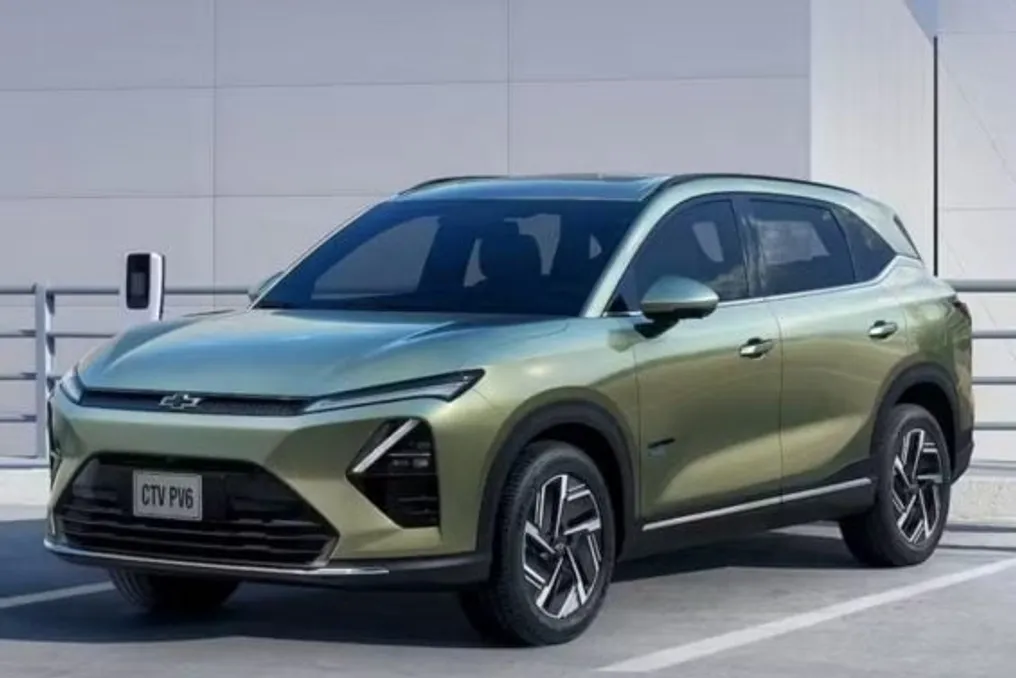
Chevrolet has started the pre-sale of the Captiva PHEV, the plug-in hybrid version of the SUV that was previously sold in Brazil only as a fully electric vehicle. The official launch of this model is scheduled for December.

Although the official price list has not yet been released by the manufacturer, dealerships are already announcing the vehicle at the price of R$ 199,990. This price represents a reduction of R$ 20 thousand compared to the Captiva EV, which costs R$ 219,990.

This is the first plug-in hybrid from Chevrolet to be manufactured domestically. The SUV will be produced at the Ceará Automotive Plant (Pace), located in Horizonte (CE), utilizing the former Troller facility. Production will begin using semi-knocked-down kits from China, where the model is known as the Wuling Starlight S, resulting from a collaboration between GM, SAIC, and Wuling.

In terms of performance, the mechanical unit combines a 1.5-liter gasoline engine with an electric motor, generating a combined power of 204 horsepower and a torque of 31.6 kgfm, according to Chevrolet. The drivetrain is front-wheel drive, and the maximum speed achievable is 170 km/h.

The 20.5 kWh battery allows for up to 90 km of travel using electricity alone under the European NEDC cycle, which is considered more optimistic. However, following the Inmetro standard, the dealership specifies a range of 60 km. When the fuel tank is full and the battery is charged, the vehicle's total range exceeds 1,000 km, according to the manufacturer itself.

An important point to note is that the Captiva PHEV operates exclusively on gasoline. In contrast, its main competitor, the BYD Song Pro, already has a flex plug-in hybrid version that also runs on ethanol.

The SUV dimensions are 4.74 meters in length, with a wheelbase of 2.80 meters, and a trunk capacity of 532 liters. Inside, the cabin features a 15.6-inch multimedia center and an 8.8-inch digital instrument panel. Included features cover a panoramic sunroof, electrically adjustable driver's seat, 360-degree view cameras, adaptive cruise control, autonomous emergency braking, and 18-inch wheels.

The warranty offered is three years or 100 thousand kilometers for the vehicle, and eight years or 160 thousand kilometers for the battery. The hybrid Captiva will also compete in the segment against models such as BYD Song Plus, GWM Haval H6, Geely EX5 EM-i, and Jaecoo 7.

Brabus developed Porsche 911 Turbo S model with 800 hp, adding 89 hp to the original version
Read more
autopapo.com.br

Brabus developed Porsche 911 Turbo S model with 800 hp, adding 89 hp to the original version

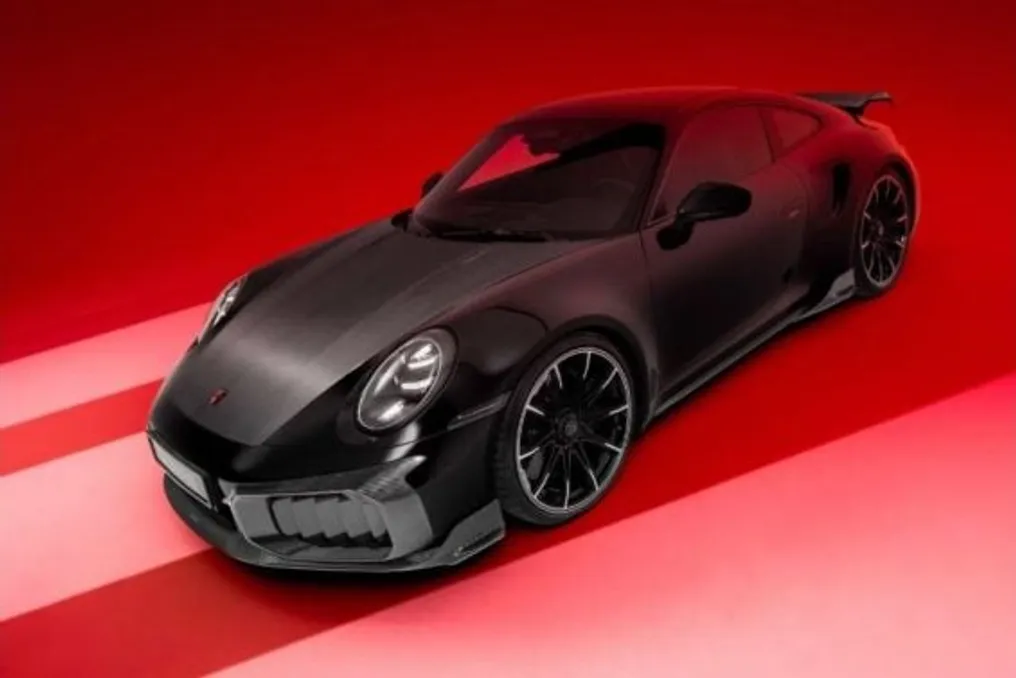
Brabus identified additional power capacity in the Porsche 911, considered the most powerful ever produced in series. The German tuner recently launched the Brabus 800, an adaptation of the current Porsche 911 Turbo S, which achieves 800 horsepower and 91.8 kgfm of torque.

This new performance represents an increase of 89 hp and 10.2 kgfm compared to the original sports car, whose starting price in Brazil is R$ 2.1 million. Although Brabus is known for modifying Mercedes-Benz vehicles, it also works with models from Land Rover, Rolls-Royce, Bentley, Lamborghini, and Porsche.

Previously, in 2022, the company had modified the previous 911 Turbo S, which did not have electrification, boosting its power to 820 hp by installing new turbines.

The challenge this time was that the modern 911 Turbo S integrates a 3.6 biturbo boxer engine with electric turbochargers and an electric motor coupled to the transmission. The implemented solution was the PowerXtra P36-800 kit, an auxiliary electronic unit that adjusts injection, ignition, and turbo pressure without altering the mechanical components or the existing hybrid system.

Thanks to this modification, the internal combustion engine goes from 640 hp and 77.5 kgfm to 729 hp and 87.7 kgfm, while the electric motor maintains its 71 hp. According to Brabus, the coupe can reach 100 km/h in just 2.4 seconds, and the convertible takes 2.5 seconds, beating the factory models' times by a tenth. The top speed remains at 322 km/h, equal to the original Porsche.

Aesthetically, the vehicle features visible carbon fiber parts, including a front spoiler, a higher rear wing, side skirts, and a diffuser equipped with four sporty exhaust outlets. The original active aerodynamics remain operational. The forged wheels, which have a center nut, are 21 inches in the front and 22 inches in the rear. Additionally, sports springs allow the car height to be reduced by up to 2.5 cm.

Inside, which is made to order, the open convertible has black leather upholstery, diamond-patterned padded seats, and carbon fiber details on the steering wheel and dashboard. An extra module has been added capable of memorizing the settings for the start-stop system, lane assist, and exhaust. In Germany, Brabus announced a ready convertible for approximately R$ 2.95 million (equivalent to 482,714 euros), already including local taxes.

GWM shows interest in US racing with prototypes and job openings
Read more
autopapo.com.br

GWM shows interest in US racing with prototypes and job openings

GWM, which has shown growth in the Brazilian market, is also demonstrating potential interest in competing on American tracks. This interest is evidenced by the opening of a job position for a Nascar and IndyCar specialist, as well as the sighting of a hybrid prototype with stock car characteristics near its headquarters in Baoding, China.

This vehicle, painted in shades of magenta and gold, was photographed by SugarDesign on Saturday (7) while it was on a cherry picker truck. This is not new, as GWM had already exhibited this model at the Beijing Auto Show in April, presenting it as its first plug-in hybrid race car in the Nascar style.

Although it has a specific look, the prototype deviates from the standards established by the Gen7 category cars. It features a rear spoiler in a swan-neck shape mounted on top, a prominent front splitter, a diffuser, and front fins. During the exhibition, it used a longitudinal V6 engine; however, GWM stated that this will be replaced by a hybrid system based on a V8.

The 'GF Nascar Specialist' vacancy, advertised on November 4, is intended for the automaker's research and development center located in Baoding. The term GF refers to GWM's high-performance program. The responsibilities of this role include working with the NASCAR Gen7 chassis and a 5.86-liter V8 engine, named Coyote in the announcement, in addition to conducting tests and calibrations on the track of the twin-turbo V6 engine used in IndyCar, whose vehicles use Dallara chassis.

The engine name causes confusion, as 5.86 liters corresponds to 358 cubic inches, the displacement of NASCAR Cup Series V8 engines. It is important to note that the Coyote used by Ford in passenger cars, such as the Mustang, is a 5.0-liter V8. GWM has not clarified the origin of the name or who the supplier of this engine is.

Additionally, the GF program includes the development of a mid-engine supercar built on a carbon fiber monocoque and equipped with a 4.0-liter twin-turbo hybrid V8 engine. This project is being supervised by Adam Thomson, who previously served as chief engineer at McLaren. The same technological platform will serve as the basis for creating a GT3 race car.

Despite these technical advances and demonstrated interest, GWM has not yet confirmed any partnerships with American teams, nor has it disclosed race schedules or concrete plans to enter the NASCAR Cup Series or IndyCar.

Popular