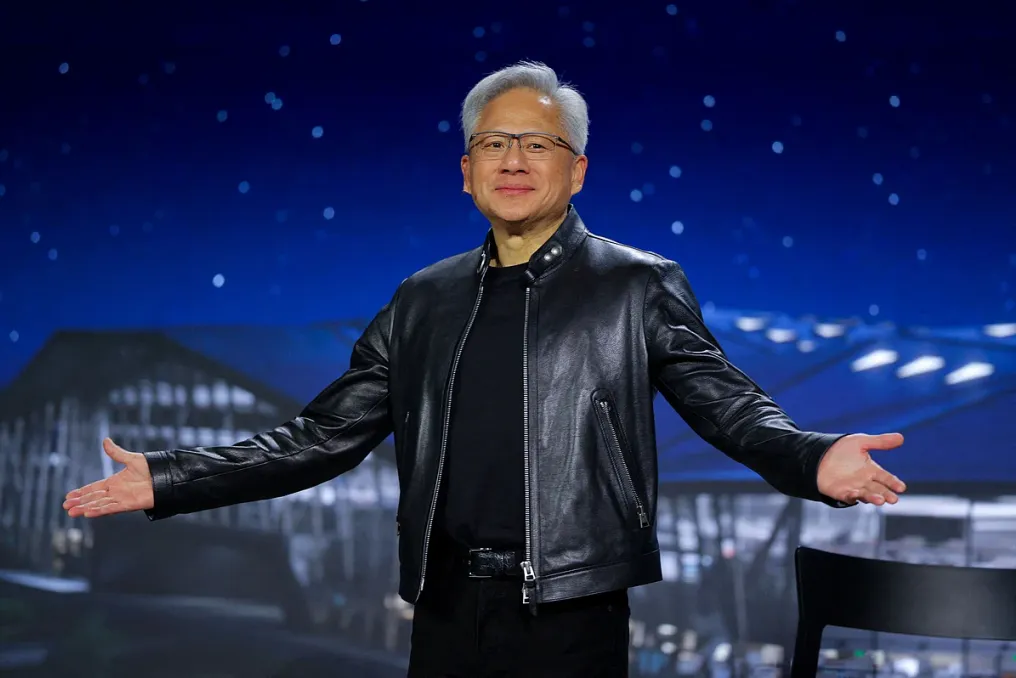
Analysts note that Jensen Huang's return to the position of CEO of Nvidia demonstrates how heavily the artificial intelligence (AI) trading sector depends on one person.
The markets reacted positively to this news, leading to an increase in Nvidia's shares by more than 30 percent in pre-market trading and triggering broader growth among technology stocks.
Sam North, a market analyst from eToro, stated that Jensen Huang's return underscores the dependence of AI trading on a single individual. He added that the sharp rise in Nvidia's shares in the pre-market session indicates that investors are quickly removing uncertainty related to his departure, while the overall growth of the tech sector reflects the company's influence on the AI industry.
North believes that the founder's restoration at the helm gives investors a solid reason to reconsider the selling observed last week. However, he also noted that the board's decision to change course just six days after ruling out Huang's return calls into question corporate governance and succession planning.
The independent investigation remains open, and investors await clarity regarding its findings and the company's compliance measures.
North emphasized that while Huang's reinstatement immediately boosts confidence, sustaining the recovery will require proof that AI spending continues to deliver the growth and profitability expected by shareholders.
Not only Nvidia investors felt the relief. North reported that US stock futures rose, Treasury bonds fell, and currencies with higher beta coefficients strengthened against the dollar. He added that losses in traditional safe havens indicate that investors are resuming risk exposure across various asset classes.
Nidal Abdel Hadi, CEO of Finoro, reported that the board's reversal occurred after high-ranking US officials assured him that Huang's return posed no threat to national security. According to him, this lifts the cloud over AI trading stocks and should provide a stronger foundation for the technology and broader stock market.
Abdel Hadi also mentioned that specific US data shows a slowing but still expanding economy. The services sector, which constitutes the majority of the US economy, has lost more momentum than expected, while manufacturing remained stable without gaining speed.
He noted that, alongside weaker producer prices last week and a rising number of unemployment claims, this suggests the economy is cooling on its own, 'just as the Fed wanted.' He predicts that the dollar will lose ground as arguments for a tight Fed policy weaken, and patience-leaning traders will begin buying Treasury bonds.
The next tests will be the US PCE inflation data, which will show whether lower price activity is achieved before the December Fed meeting, and whether Nvidia's stock can sustain its rally when attention shifts back to Huang's exit.