After thirteen years of waiting and a massive marketing campaign, Grand Theft Auto VI (GTA 6) was released with the expectation of surpassing the most important games in video game history. After 48 hours of gameplay on the PlayStation 5, advancing to the second chapter of the campaign, the analysis author concluded that the game not only maintains the essence that popularized the franchise but also demonstrates a notable evolution in terms of setting, narrative, and interactivity.
The title is visually spectacular, features captivating characters, and offers an open world that simulates real life. However, minor technical issues and certain gameplay choices indicate that even a launch of this magnitude is not free from flaws.
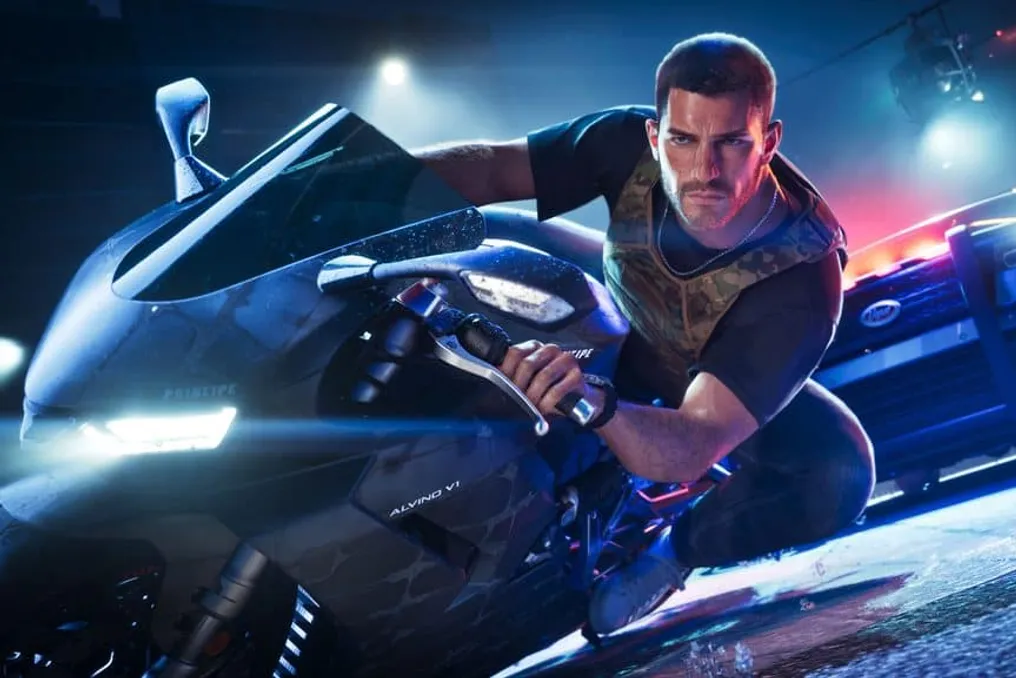
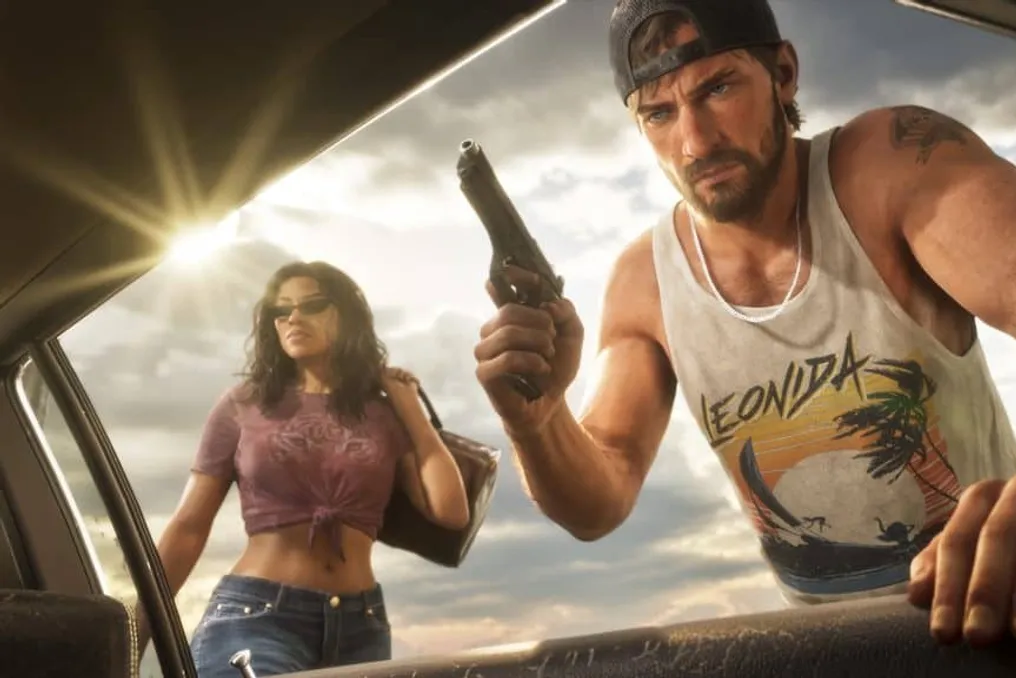
One of the greatest strengths of GTA 6 lies in the creation of its protagonists, Lucia and Jason, who form a criminal couple whose relationship transcends a mere partnership during missions. Lucia is described as an engaging character, possessing a strong personality and clear goals, requiring the player to understand her temperament to establish a good dynamic between the two. Jason, on the other hand, reflects the classic Grand Theft Auto archetype: a charismatic criminal capable of making the player momentarily forget they are supporting someone on the illegal side.
Beyond being a competent partner, Jason possesses growing depth as elements of his past are revealed. The most notable aspect is that the relationship between the protagonists does not seem entirely predetermined; the choices made by the player shape the development of this partnership, allowing for diverse dynamics throughout the campaign. In the reported experience, the focus on strengthening the bond between Lucia and Jason resulted in an engaging narrative, evoking the feeling of following a story of love and crime in the style of Bonnie and Clyde.
The campaign also stands out for presenting multiple twists and narrative paths, offering different endings depending on the decisions made during the adventure. Even before the end of the story, it is apparent that GTA 6 has a deeper narrative than its predecessor, maintaining the humor, criminality, and absurd events characteristic of the series.
The open world of GTA 6, named Leonida, is much more than just a large map. Rockstar Games has conceived visually striking environments, encompassing diverse landscapes, commercial establishments, natural areas, and a vast amount of detail that makes exploration fascinating. Compared to Los Santos in GTA 5, the new map exhibits superior scale and variety, but the difference lies in how the environment interacts with the player's presence.
The Non-Player Characters (NPCs) have been enhanced, exhibiting more human behavior; they react to traffic violations and player attitudes, displaying conduct consistent with the situations. This diversity of reactions transforms simple occurrences into memorable moments. During exploration, the player encountered restaurants and shops, interacted with various objects, and found wildlife scattered across the map. Wildlife, including crocodiles, can generate unforeseen situations, contributing to the feeling of an unpredictable environment.
The variety of scenarios ensures that even after countless hours, the desire to discover new regions and observations around persists. GTA 6 manages to make exploration as attractive as the campaign itself. The pace of the campaign is well-structured because it does not force constant advancement through main missions, allowing time for the player to explore, meet characters, and participate in side activities, such as solving codes, finding treasures, and shopping in Leonida. These activities complement the setting, reinforcing the idea of a cohesive universe.
The author's recommendation is to play calmly, as rushing can prevent taking advantage of the freedom of discovery. Despite this, the large size of the map poses challenges, as locating side missions can be tedious due to the distribution of activities. However, the richness of possibilities allows for hours of exploration without noticing the time passing.
Although it maintains a familiar gameplay structure for those who know GTA 5, GTA 6 introduces significant differences in the combat system. There is greater ease in hiding during confrontations, but aiming requires more precision to inflict damage, making firefights more challenging. The police also proved harder to deal with, with officers adopting more strategic tactics during chases, which makes escaping a six-star chase almost impossible without meticulous planning.
Vehicle handling has gained a more realistic touch, with each car having unique characteristics that affect its response to commands. Jason's primary vehicle, for example, requires a period of adaptation. Traffic rules and the reactions of other drivers reinforce this realism, which is relevant given the time spent behind the wheel. Nevertheless, driving remains one of the most enjoyable activities in Grand Theft Auto.
Visually, GTA 6 is considered one of the most impressive games experienced, thanks to the extremely realistic setting, with attention dedicated to lighting, facial expressions, movements, and object interaction. Climate changes are noticeable, reminiscent of São Paulo's unstable weather. Cinematic scenes have evolved, with more natural expressions and convincing dialogues. Underwater exploration also adds an interesting dynamic. On the PlayStation 5, performance was stable during the 48 hours, without significant crashes, and the 30 frames per second (fps) limit did not detract from the fun.
Nevertheless, isolated visual glitches persist, such as objects clipping through environmental elements. Although these are isolated flaws that did not compromise the overall experience, they draw attention given the high quality of the rest of the game. The soundtrack maintains the franchise's tradition, with excellent selections on the radio and tracks appropriate for the campaign moments. The actors' work is also praised for giving personality to the protagonists. The Portuguese subtitles are well localized, aiding in understanding the narrative, although the radio interface is seen as less practical than in previous titles.
A central goal of GTA 6 is to bring the experience closer to a real world, and this works well most of the time. However, there are inconsistencies in the application of realism: while some interactions are extremely detailed, other actions, such as Jason taking items from the refrigerator, seem to follow a less refined logic. Still, the balance found between realism and fun, combined with personalization and interaction with multiple elements, compensates for the adaptation difficulties.
In summary, after 48 hours, GTA 6 represents a significant leap for the franchise. Rockstar has not abandoned its identity but has enhanced it, adding depth that makes the world more believable. The improved narrative, charismatic protagonists, impressive graphics, and vast range of activities make exploration a major attraction. For fans of the series, the investment is recommended, as is for those who appreciate good stories and rich open worlds. It is important to note that this review covers only the first 48 hours and progress up to the second chapter, and is not a definitive analysis.